
Long shelf life food (UK): the long life foods that last longest, ranked
In this guide

 Written by James Frost, founder of Flaming Phoenix and the maker of Phoenix Bars. Updated 28 October 2026.
The foods with the longest shelf life are honey, salt, white sugar and white rice, which keep for decades, or practically indefinitely, as long as they stay dry and sealed. Next come dried beans, rolled oats and dried pasta packed without oxygen, which US food storage research found still acceptable to eat after around 30 years, then freeze-dried meals at up to 25 years, lifeboat-style emergency rations at 5 to 20 years, and tins at 2 to 5 years for fish, meat and beans or 12 to 18 months for tomatoes and fruit. For long life food you can eat straight from the pack, tins, ration biscuits and dense bars are the practical choices.
Shelf life has two meanings, and it helps to keep them apart. The date on a UK pack is usually a best before date, which is about quality; GOV.UK's food labelling guidance says food is usually safe to eat after it, though it may not be at its best. The long figures in this guide are how long food stays safe and acceptable to eat when it is stored well, which is often far longer than the printed date.
Why I wrote this guide. Shelf life is part of my job. Phoenix Bars keep for up to two years, and I keep bars back from every production run and taste them every three months to check how they hold up. The government's Be Ready campaign has many households building a food store for the first time, and this guide answers the question underneath all of it: what actually lasts, and for how long?
Long life foods ranked by how long they last
These are typical figures for unopened food stored somewhere cool, dry and dark. The date on your pack always comes first, and heat, damp and air shorten every one of them.
Decades, or practically indefinite, if kept dry and sealed
- Honey: its low moisture and natural acidity stop microbes growing. It may crystallise, which is harmless; stand the jar in warm water to loosen it.
- Salt: pure salt does not spoil.
- White sugar: keeps indefinitely if dry, and only sets hard if damp gets in.
- Distilled white vinegar: its acidity keeps it stable for years once the bottle is closed.
- White rice: sealed with oxygen absorbers and kept cool, polished white rice kept its nutrients and flavour for up to 30 years in Brigham Young University studies, according to Utah State University Extension. A supermarket bag carries a best before date of around 2 years.
Up to around 30 years, packed without oxygen
Brigham Young University's long-term storage studies tested low-moisture foods sealed in tins with the oxygen removed and kept at 24°C or cooler. Their life-sustaining shelf life estimates were:
- Wheat and white rice: 30 years or more.
- Dried pinto beans: around 30 years.
- Rolled oats: around 30 years.
- Dried pasta: around 30 years.
- Potato flakes and dried apple slices: around 30 years.
- Non-fat powdered milk: around 20 years.
Two cautions. These figures are for food sealed in tins or foil pouches with oxygen absorbers, not the plastic bags it comes in from the supermarket, which carry dates of a year or two. And life-sustaining means safe and acceptable in an emergency, not as good as new: some flavour and texture fade over the decades.
Up to 25 years: freeze-dried meals
Freeze-dried meals in sealed tins, pouches and buckets are sold in the UK with shelf lives of up to 25 years. They are light and complete, but every meal needs hot water, so they suit a home store with a stove more than a power cut. Our guide to freeze-dried meals compares the main brands.
5 to 20 years: emergency rations
Lifeboat-style ration bars and biscuits are made to be forgotten about until they are needed. In October 2026, Seven Oceans carried a 5-year shelf life, Datrex 5 years and NRG-5 up to 20 years, each with around 2,300 to 2,500 calories per pack of about 500g. Our guide to emergency rations in the UK compares them in detail.
2 to 5 years: tins and ration packs
- Low-acid tins such as fish, meat, beans, vegetables and soup: typically 2 to 5 years for best quality, based on USDA FoodKeeper guidance.
- British Army 24-hour ration packs: at least 24 months of shelf life left when delivered to the MOD, so two years or more. See our guide to army ration packs.
- US MREs: around 3 years at 27°C, longer if kept cool, according to the US Defense Logistics Agency.
Up to 2 years
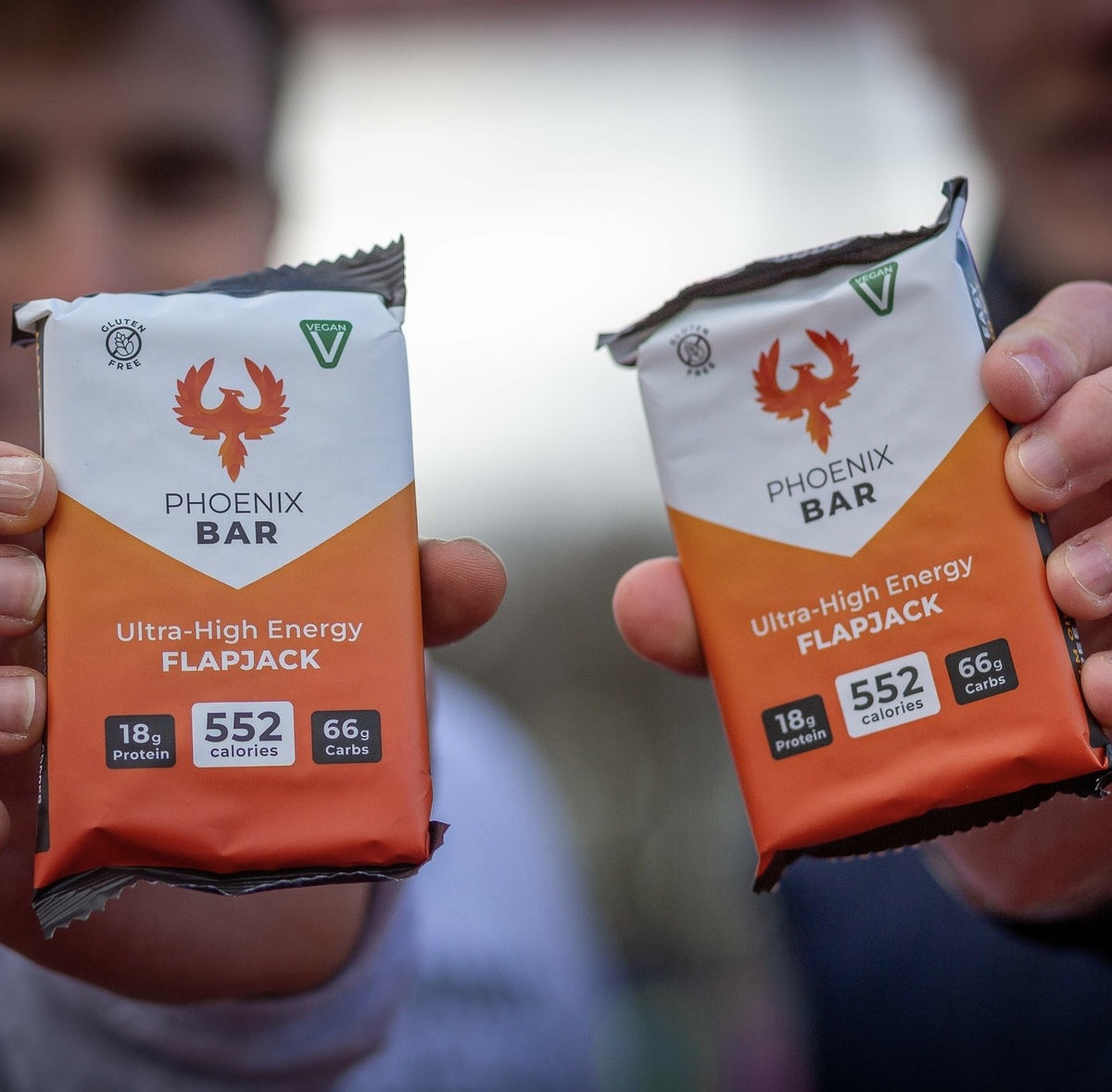
- Dense high calorie bars: Phoenix Bars keep for up to two years (12 months for Cherry Bakewell), need no cooking or water, and will not freeze or melt.
- White rice and dried pasta in supermarket packs: around 2 years.
- Peanut butter and other nut butters: usually 6 to 24 months unopened, so check the jar.
- Powdered milk from the supermarket: around a year.
- UHT milk and plant milk cartons: several months.
12 to 18 months: high-acid tins
- Chopped tomatoes, tomato soup and fruit in juice: the acid slowly works on the tin, so they keep for less time than low-acid tins.
Months, not years
- Nuts and seeds: their oils slowly go stale, so vacuum packs last longest.
- Brown rice and wholemeal flour: the natural oils in the bran make them go off much sooner than white rice and white flour; brown rice often keeps for under a year.
- Oatcakes, crackers and crispbread: usually months to around a year.
- Crisps: a few months.
What makes food last a long time?
Food goes off when microbes grow in it, when fats react with oxygen and turn stale, or when moisture and heat break it down. Long life foods resist all three: they are dry, very sugary, salty or acidic, or sterilised and sealed in a tin. Fat is the usual weak point, which is why nuts, brown rice and wholemeal flour keep for far less time than white rice and pasta.
The BYU food scientists behind the 30-year studies sum up storage with one word, HALT: keep humidity, air, light and temperature low. Food kept in a garage or loft through a British summer can lose years of shelf life compared with the same food in a cool cupboard.
How to make food last longer at home
- Store it somewhere cool, dry and dark, ideally below about 20°C. Under the stairs or an inside cupboard beats a loft, shed or garage.
- Move opened dry goods such as rice, oats and pasta into airtight containers.
- For a store you will not touch for years, seal dry staples in foil (mylar) pouches or food-grade buckets with oxygen absorbers. Only do this with dry foods, under about 10% moisture, such as white rice, oats, pasta and dried beans, because taking the oxygen out of moist food can let dangerous bacteria grow.
- Leave oxygen absorbers out of sugar and salt, which keep anyway and can set hard.
- Put new stock at the back, use the oldest first in everyday meals, and write the date on the front.
- Check your store every six months, as Be Ready suggests.
Long life food you can eat without cooking
A long shelf life is only half the job in a power cut. The food also has to be edible cold, straight from the pack:
- Tinned fish, corned beef and ham, ideally with ring-pull lids.
- Tinned beans, sweetcorn, fruit in juice and rice pudding.
- Lifeboat-style ration biscuits and bars.
- Dense bars such as Phoenix Bars, which can also be mixed with water into a porridge without heating.
- Peanut butter, nuts, dried fruit and chocolate.
- UHT milk and juice cartons.
Our non-perishable food list covers everyday cupboard food by category, and our guide to the best food to stockpile turns it into a 50-item shopping list.
Long life meals in the UK
- Tinned meals: stews, chilli, curry and soup keep for years and can be eaten cold, but are heavy for their calories.
- Ration packs: a whole day of ready-cooked meals in one box, with two years or more of shelf life, edible cold.
- Ambient ready meal pouches: lighter than tins; check the date on each pouch, as shelf lives vary by brand.
- Freeze-dried meals: the lightest and longest-lasting, but each one needs hot water.
Weight matters if the food might have to travel. A ready-to-eat chilli with rice carries about 116 calories per 100g in UK food tables, against 442 per 100g for a freeze-dried chilli, and a Phoenix Bar carries up to 557 calories in only 120g. For food you might need to carry, see our bug out bag list.
How to build a long life food store
- Start with 3 days: food you already eat that needs no fridge or cooking, as Be Ready asks. Our 3-day emergency food supply list does the maths.
- Grow it to a week or more with everyday tins and dry food that you rotate through normal meals, so nothing goes to waste.
- Add a sealed layer you rarely open, such as emergency rations, freeze-dried meals or oxygen-free dry staples, if you have the space and want cover for longer.
- Keep some calorie-dense, no-cook food within reach for power cuts, a grab bag and the car.
Where to buy long life food in the UK
Supermarkets cover the everyday layer: tins, UHT milk, white rice, pasta, oats, honey and nut butters, and own-brand tins store just as well as branded ones. Outdoor and prepper shops sell freeze-dried meals, lifeboat rations and oxygen absorbers, and most of these are also on Amazon UK. Phoenix Bars are sold direct from this site.
Common questions about long shelf life food
What food has the longest shelf life?
Honey, salt, white sugar and white rice stored dry and sealed keep for decades or practically indefinitely. Among packaged foods, freeze-dried meals are sold with shelf lives of up to 25 years and some emergency rations up to 20 years.
What food never expires?
Honey, salt and white sugar kept dry and sealed, and distilled vinegar kept closed, come closest. They do not let microbes grow, so they barely change over many years.
How long does tinned food last in the UK?
Typically 2 to 5 years for low-acid tins such as fish, meat, beans and vegetables, and 12 to 18 months for high-acid tins such as tomatoes and fruit. Tins carry a best before date, and an undamaged tin is usually still safe after it.
Can you eat 20-year-old tinned food?
The US Department of Agriculture says most commercially tinned food can stay safe indefinitely if the tin is undamaged and has not been stored hot or frozen, though taste, texture and nutrients fade. Throw away any tin that is bulging, leaking, rusty or badly dented, or that spurts or smells wrong when opened.
Does freeze-dried food really last 25 years?
The 25-year figures assume the food stays sealed and cool. Heat shortens shelf life, so a bucket kept in a hot loft will not last as long as one under the stairs.
How long do Phoenix Bars last?
Up to two years from production, or 12 months for Cherry Bakewell, and the date is on the pack. They need no fridge, will not freeze or melt, and we taste bars kept back from every production run every three months to check how they hold up.
What is the best long life food for emergencies?
A mix: everyday tins and dry food you rotate, calorie-dense food you can eat cold such as high calorie bars, nut butter and nuts, and if you want a sealed layer, lifeboat rations or freeze-dried meals.
Sources: GOV.UK, best before and use-by dates; Utah State University Extension, storing white rice; Deseret News, home food storage lasts 30 years or more (BYU research); USDA FoodKeeper and Food Safety and Inspection Service shelf-stable food guidance; US Defense Logistics Agency, MRE; CoFID 2021; GOV.UK Be Ready.

Big calories. Small bar.
Up to 557 calories in a compact, lightweight bar of only 120g, with up to 66g of carbs and 19g of protein. Eat it whole, break it into pieces over a few hours, or mix it with water or milk for porridge.
Easy to eat, easy to digest and not sickly sweet. Customers have eaten them at -45°C and through the heat of the Marathon des Sables, and they keep for up to 2 years, so they work on a mountain, on a night shift, or at home on days when eating enough feels hard.
- 557 calories in only 120g (529 to 557 by flavour)
- 4.6 calories per gram
- 66g carbs per bar (up to)
- 19g protein per bar (up to)
