

Pemmican: what it is, how to make it and where to buy it (UK)
In this guide

 Written by James Frost, founder of Flaming Phoenix and the maker of Phoenix Bars. Updated November 2026.
Quick answer: Pemmican is dried meat pounded to a powder and mixed with roughly the same weight of rendered fat, sometimes with dried berries. It was invented by Indigenous peoples of North America, adopted by fur traders and later carried by polar explorers including Shackleton, Scott, Amundsen and Nansen, because it packs a huge number of calories into a small, light block that keeps for months or years without a fridge. Depending on the fat ratio, it carries from about 400 calories per 100g in commercial bars to over 600 in traditional half-fat recipes. You can make it at home from lean beef or venison and beef suet, or buy pemmican bars online from a small number of UK makers.
The name comes from the Cree word pimîhkân, from pimî, meaning fat or grease, and fat is the point. Fat carries more than twice the calories of protein or carbohydrate gram for gram, and once the water is dried out of the meat there is very little left for anything to grow in. The result is one of the most calorie-dense natural foods there is.
Why I wrote this guide. I started Phoenix Bars as a university project to design a better emergency ration, and pemmican is where that idea begins: the most calories you can carry, in a food that keeps. I've spent years talking to polar travellers, ultra runners and expedition teams about what they eat when every gram counts, and pemmican still comes up. This guide covers its real history, what it does well and badly, and how to make it safely.
What is pemmican made of?
- Lean meat, dried until brittle. Traditionally bison, deer, elk or moose, and sometimes fish. In the UK, lean beef such as topside or silverside, or venison. It takes roughly 5kg of fresh meat to make 1kg of dried meat.
- Rendered fat. Tallow, from beef suet, mixed with the powdered meat at roughly 1:1 by weight.
- Optional dried fruit. Saskatoon berries or cranberries traditionally; a small amount only, as fruit adds moisture and shortens shelf life.
A short history of pemmican
- Indigenous origins. Peoples of the North American plains made pemmican from bison long before Europeans arrived, and Indigenous communities still make it for personal, communal and ceremonial use.
- The fur trade. European fur traders adopted it as the food that fuelled long canoe journeys, and the Métis of the Red River area made it on a huge scale, packing bison pemmican into bags of about 90 pounds. The North West Company relied on Métis supplies.
- The Pemmican War. In 1814 Governor Miles Macdonell issued the Pemmican Proclamation, banning pemmican exports from the Red River Colony, which sparked conflict with the Métis known as the Pemmican War.
- Polar exploration. Robert Peary used it on expeditions between 1886 and 1909, and it was a staple of British and Norwegian polar sledging rations. Members of Shackleton's 1914 to 1916 expedition ate dog pemmican when they were stranded on the ice. Our guides to sledging rations and Antarctica crossing food cover how polar food has changed since.
- The British Army. During the Second Boer War, British soldiers carried an iron ration of 4oz of pemmican and 4oz of chocolate and sugar, to be eaten only as a last resort.
Pemmican calories and nutrition
Pemmican's nutrition depends almost entirely on how much fat goes in. A traditional 1:1 mix by weight is roughly half fat, which is why it can top 600 calories per 100g. Commercial bars usually contain more moisture and less fat. One US maker's 92g bar, for example, carries 360 calories, about 390 per 100g. Here's how it compares with other dense, long-life foods:
| Food | Calories per 100g (about) | Mostly | Shelf life |
|---|---|---|---|
| Traditional pemmican (1:1 fat to meat) | Over 600 | Fat and protein, almost no carbohydrate | Months to years if dry and sealed |
| Commercial pemmican bars | Around 390 to 470 | Fat and protein | Usually a year or more; check the pack |
| Phoenix Bar | About 460 (up to 557 per 120g bar) | Carbohydrate, with up to 19g of protein | Up to 2 years (12 months for Cherry Bakewell) |
| Lifeboat-style ration biscuits | About 450 to 500 | Carbohydrate and fat | 5 to 20 years |
| Beef jerky | Varies widely by brand | Protein | Months; check the pack |
Typical values from manufacturer labels and published recipes, checked November 2026. Pemmican varies a lot by recipe.
That fat-and-protein profile is pemmican's strength and its weakness. It's superb for cold, slow, all-day work, and it's very filling. But it carries almost no carbohydrate, which is the body's fastest fuel for hard effort, and a 1945 study criticised it as a sole survival food because it is low in vitamins. Polar teams today pair fat-heavy food with carbohydrate for exactly that reason. It's also very high in saturated fat, so it's a food for hard physical work, expeditions and emergencies rather than everyday snacking.
How to make pemmican at home
This makes about 500g. You need an oven or dehydrator, a food processor and a little patience.
Ingredients
- About 1.25kg lean beef (topside or silverside) or venison, trimmed of all visible fat, to make about 250g dried meat.
- About 350g beef suet, to render about 250g tallow.
- Optional: 25 to 50g dried cranberries or blueberries, and a pinch of salt.
Method
- Slice the meat thinly, about 3 to 5mm, against the grain. Half-freezing it first makes this easier.
- Heat the meat to 71°C before drying. The US Department of Agriculture advises this for home-dried meat to kill bacteria such as E. coli and Salmonella; you can do it by heating the strips in the oven before you dry them at a lower temperature.
- Dry it until it snaps. In a dehydrator or an oven on its lowest setting with the door ajar, usually 8 to 12 hours. It must break rather than bend: any moisture left in shortens shelf life.
- Grind it to a fine powder in a food processor. Grind the dried fruit separately if you're using it.
- Render the suet. Chop it, melt it slowly over a low heat until the liquid fat runs clear and the solid pieces turn golden, then strain it through a fine sieve or muslin.
- Mix by weight, roughly equal weights of meat powder and warm, liquid tallow, plus any fruit and salt. It should look like wet sand.
- Press it into a lined tray or moulds, leave it to set somewhere cool, then cut it into bars.
- Wrap each bar in greaseproof paper or vacuum-seal it, and store it somewhere cool, dark and dry.
Work cleanly, as you would with any raw meat. If a bar ever smells rancid or sour, or shows any sign of mould, throw it away.
How long does pemmican last?
Properly dried and sealed, pemmican keeps without a fridge for many months, and historic accounts describe it lasting for years. Boer War pemmican was said to keep in perfect condition for decades. Home-made pemmican is a different matter: any moisture left in the meat, any fruit, and any air and warmth will shorten its life, and rendered fat slowly turns rancid. Store it in the dark, airtight and cool, keep it in the fridge or freezer for the longest life, and treat a year as a sensible limit for home-made bars kept at room temperature. Commercial pemmican carries a best before date: follow that.
Where to buy pemmican in the UK
Pemmican is a niche product here. A small number of UK makers sell pemmican bars online, such as The Pemmican Project, which says it sources its meat in the UK, and some American brands ship to the UK at a cost. Search for "pemmican bars" rather than "pemmican", and check the label for the fat-to-meat ratio, the calories per 100g and the best before date. Some imported brands advise keeping their bars frozen, which defeats the point of a store-cupboard ration.
Pemmican for emergencies and expeditions
For a polar trip or a winter expedition, pemmican and pemmican-style food still earn their place: dense, warming and almost impossible to freeze solid. For an emergency store at home, the case is weaker. It's fiddly to make, needs care to keep, and a power cut or a water outage is a bad time to discover your household won't eat it. Most people do better with food they already like that needs no cooking or water, as in our 3-day emergency food supply list, our guide to survival food in the UK and our comparison of long life meals.
That gap is why I make Phoenix Bars. They're high calorie bars designed around the same idea, the most calories in the least space, but built on gluten-free oats rather than fat and meat, so they're easy to eat, keep for up to two years and won't freeze. For more on choosing food by weight, see our guide to the lightest high-calorie food for backpacking, our list of high calorie foods and our guide to emergency rations.
Common questions about pemmican
What is pemmican?
Pemmican is dried meat pounded to a powder and mixed with roughly the same weight of rendered fat, sometimes with dried berries. It was invented by Indigenous peoples of North America and later carried by fur traders and polar explorers because it is very high in calories and keeps without a fridge.
What does pemmican taste like?
Rich, savoury and fatty, a bit like a dense, crumbly pâté of dried beef. Dried berries add a little sweetness. Most people find it filling rather than moreish.
How many calories are in pemmican?
It depends on the fat ratio. Traditional 1:1 pemmican can top 600 calories per 100g, while commercial bars are often around 390 to 470 calories per 100g.
How long does pemmican last?
Properly dried and sealed, it keeps for many months without a fridge, and historic pemmican was said to last for years. For home-made bars kept at room temperature, a year is a sensible limit; the fridge or freezer extends that.
Is pemmican healthy?
It is very high in calories, protein and saturated fat, and almost free of carbohydrate and low in vitamins. That suits hard physical work in the cold and emergencies, rather than everyday eating.
Can you buy pemmican in the UK?
Yes, though it's niche. A small number of UK makers sell pemmican bars online, and some American brands ship to the UK. Search for pemmican bars and check the calories, fat ratio and best before date.
Who used pemmican?
Indigenous peoples of North America, the Métis and European fur traders, and polar explorers including Peary, Nansen, Amundsen, Scott and Shackleton. British soldiers in the Second Boer War carried it as part of an emergency iron ration.
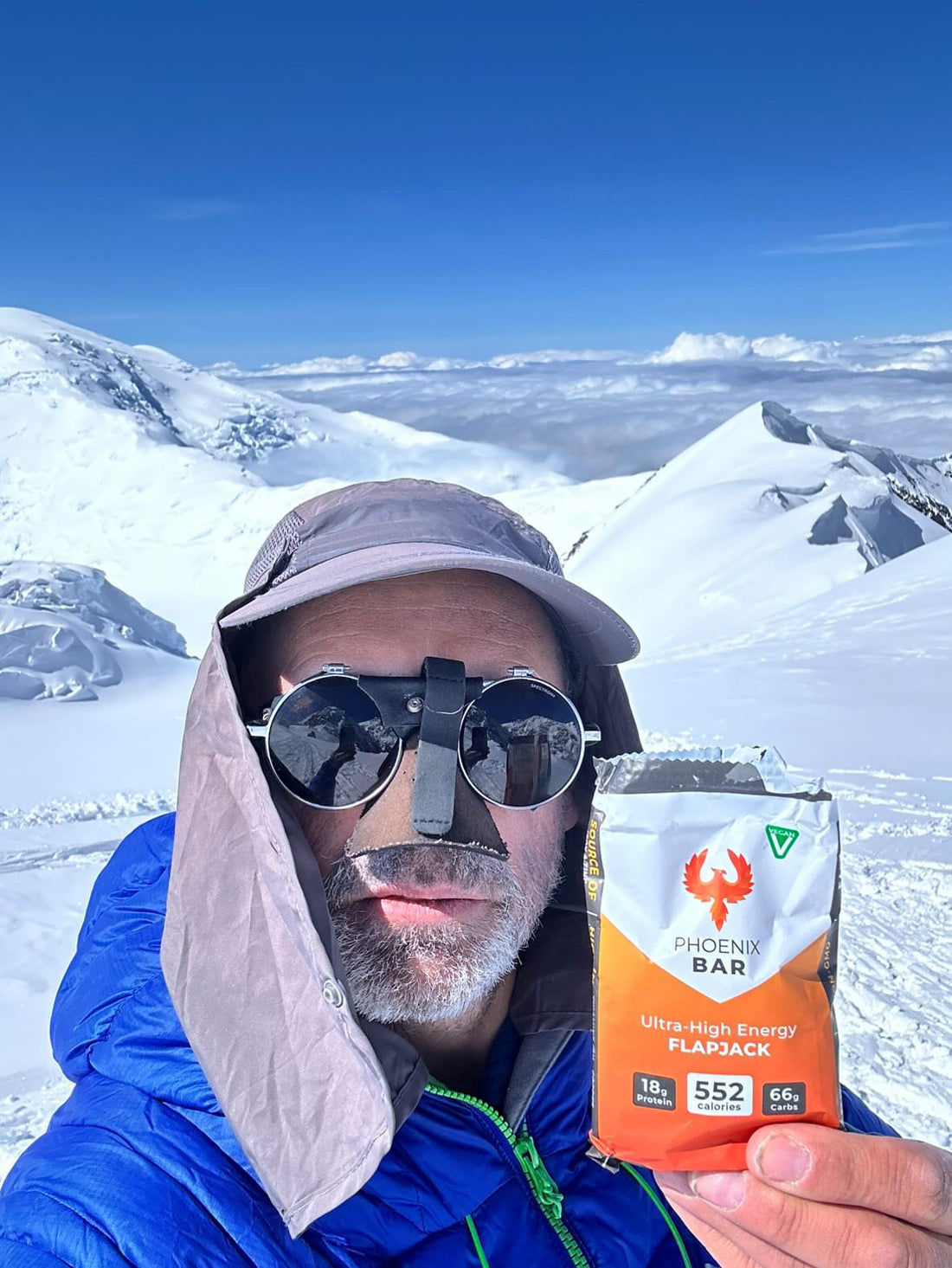
Big calories. Small bar.
Up to 557 calories in a compact, lightweight bar of only 120g, with up to 66g of carbs and 19g of protein. Eat it whole, break it into pieces over a few hours, or mix it with water or milk for porridge.
Easy to eat, easy to digest and not sickly sweet. Customers have eaten them at -45°C and through the heat of the Marathon des Sables, and they keep for up to 2 years, so they work on a mountain, on a night shift, or at home on days when eating enough feels hard.
- 557 calories in only 120g (529 to 557 by flavour)
- 4.6 calories per gram
- 66g carbs per bar (up to)
- 19g protein per bar (up to)
