

Emergency water calculator: how much water to store for your household
Dans ce guide

 Written by James Frost, founder of Flaming Phoenix and the maker of Phoenix Bars. Updated November 2026.
Quick answer: For drinking, the government's Be Ready advice is at least 3 litres per person per day for 3 days, so 9 litres each and 36 litres for a family of four. For drinking, cooking and basic washing, the Sphere humanitarian standard used by aid agencies is 15 litres per person per day. Pets need roughly 50ml per kg of body weight a day. Add your household below and the calculator turns it into litres, bottles, jerry cans and weight.
Why I built this. In desert races and on expeditions, people plan their water to the litre, because carrying too little ends the trip and carrying too much costs them every step. Most of us have never had to do the sum at home. This does it for you, using the same official figures as our emergency water storage guide.
Emergency water calculator
Water for your household
That is about
Email me my water plan
Get your numbers in your inbox so you have them when you need them, plus my free 3-day emergency food checklist.
Free. You'll also get the occasional email from me, James. Unsubscribe anytime. Privacy policy
Food next? Use the emergency food calculator to work out your household's calories.
Drinking water is the government's Be Ready advice. The 7.5 and 15 litre levels come from the Sphere humanitarian standard. Pets are worked out at about 50ml per kg of body weight a day. Water weighs about 1kg a litre.
How the calculator works
It adds up everyone in your household at the level you choose, adds your pets, then multiplies by the number of days. Babies are counted at the same rate so there's water for washing and bottles, though the Be Ready advice is to store ready-to-feed formula for feeds. The three levels come from official guidance:
| Level | Litres per person per day | What it covers | Where it comes from |
|---|---|---|---|
| Drinking only | 3 | Drinking water | UK government Be Ready advice |
| Drinking and the basics | 7.5 | Drinking, a little cooking and basic hygiene | The low end of the Sphere humanitarian standard |
| Drinking, cooking and washing | 15 | Drinking, cooking and basic hygiene for a longer outage | The Sphere humanitarian standard |
The old government Prepare website suggested about 10 litres per person per day for drinking, basic cooking and washing, between the two higher levels.
The Sphere Handbook, the standard humanitarian agencies use in emergencies worldwide, breaks the 15 litres down like this:
| Need | Litres per person per day |
|---|---|
| Drinking and food (survival) | 2.5 to 3 |
| Basic hygiene | 2 to 6 |
| Basic cooking | 3 to 6 |
| Total basic water needs | 7.5 to 15 |
Needs vary with climate and the person. Allow more in hot weather, for anyone who is unwell and for anyone pregnant or breastfeeding.
Pets
The calculator uses a rule of thumb of about 50ml of water per kg of body weight a day, so a 20kg dog needs about a litre a day. Dogs that are active or in hot weather need more, and if your pet eats dry food it will drink more than one on wet food. Ask your vet if you're unsure.
Free download
Free: your 3-day emergency food checklist
Two printable pages built around the government's Be Ready advice: how much water, how much food, and the three things to do first. Free, sent straight to your inbox.
Free. Unsubscribe anytime. Privacy policy
How to store the water once you know your number
Water weighs 1kg a litre, so storage is as much about weight and space as about volume. Here's what the common options hold:
| Container | Holds | Full weight (about) | Best for |
|---|---|---|---|
| 500ml bottle | 0.5 litres | 0.5kg | Grab bags, cars and handbags |
| 2-litre bottle | 2 litres | 2kg | Everyday rotation |
| Six-pack of 2-litre bottles | 12 litres | 12kg | A simple 3-day store for one adult |
| 5-litre bottle | 5 litres | 5kg | More water in less shelf space |
| 20-litre jerry can | 20 litres | 21kg | A larger home store of tap water |
| A full bath | Often 150 litres or more | Not for lifting | Flushing toilets and washing, not drinking |
Weights include a typical bottle or can. Bath capacity varies a lot from bath to bath.
For sealed bottles, see our guide to how to store bottled water. For larger amounts, our guide to water storage containers compares jerry cans, water carriers, tanks and water butts, and covers which plastics are food-grade. Stored tap water in clean, sealed, food-grade containers should be replaced every six months.
How to make your water go further
- Store food that needs no water. Tins and ready-to-eat food need none, while pasta, rice and freeze-dried meals all need water to cook. Phoenix Bars are high calorie bars you eat straight from the wrapper, and our long life meals page compares the ready-to-eat options.
- Fill up when a cut is announced. Fill the kettle, large pans and the bath. Bath water is for flushing and washing, not drinking.
- Use water in order. Drinking first, then food, then hygiene.
- Cut the washing up. Paper plates, wet wipes and hand sanitiser save litres a day.
- Go easy on salty food, because it makes you thirstier.
Your food next
Water and food go together on the Be Ready checklist. Our emergency food calculator works out the calories your household needs, and our emergency food kits give one adult 3, 9 or 16 days of food that needs no water at all. For the rest of the list, see the home emergency kit checklist, and if you're planning because of the news, our explainer on government stock-up and blackout warnings separates the official advice from the rumours.
Common questions about emergency water
How much water do I need for 3 days?
At least 9 litres per person for drinking, which is the Be Ready advice of 3 litres a day for 3 days. For drinking, cooking and basic washing, the Sphere humanitarian standard of 15 litres a day works out at 45 litres per person for 3 days.
How much water should a family of four store?
At least 36 litres for 3 days of drinking, which is eighteen 2-litre bottles or two 20-litre jerry cans. For drinking, cooking and washing at 15 litres per person per day, a family of four needs 180 litres for 3 days.
How much water does a person need per day in an emergency?
The UK Be Ready advice is at least 3 litres per person per day for drinking. Humanitarian agencies plan on 7.5 to 15 litres per person per day once cooking and basic hygiene are included.
How much water does a dog need in an emergency?
A rule of thumb is about 50ml per kg of body weight a day, so a 20kg dog needs about a litre a day, or 3 litres for 3 days. Active dogs, hot weather and dry food all mean more.
How many bottles of water should I store?
For 3 days of drinking water, five 2-litre bottles per person, or two 5-litre bottles. The calculator above works it out for your whole household, including pets and longer periods.
How long can I store water for an emergency?
Sealed bottled water keeps until its best before date. Tap water in clean, sealed, food-grade containers kept cool and dark should be replaced every six months.
Plein de calories. Petit format.
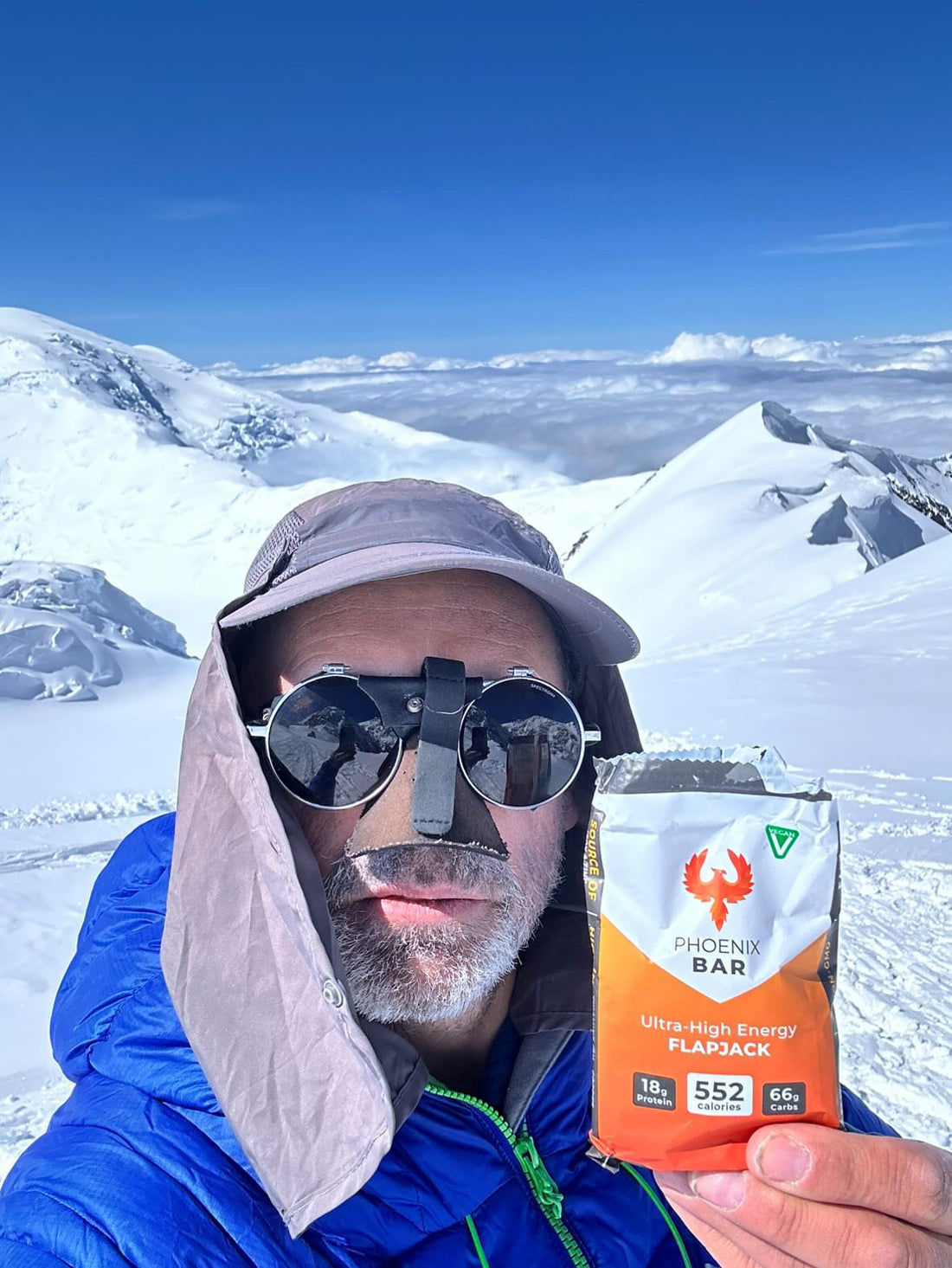
Jusqu’à 557 calories dans une barre compacte et légère de seulement 120 g, avec jusqu’à 66 g de glucides et 19 g de protéines. Mangez-la entière, en morceaux sur quelques heures, ou mélangez-la à de l’eau ou du lait pour en faire un porridge.
Facile à manger, facile à digérer et pas trop sucrée. Des clients les ont mangées à -45 °C et dans la chaleur du Marathon des Sables, et elles se conservent jusqu’à deux ans : elles conviennent en montagne, pendant un travail de nuit ou à la maison, les jours où manger suffisamment est difficile.
- 557 calories dans seulement 120 g (529 à 557 selon la saveur)
- 4,6 calories par gramme
- 66g glucides par barre (jusqu’à)
- 19g protéines par barre (jusqu’à)
