

Water storage containers (UK): jerry cans, tanks and water butts compared
In this guide

 Written by James Frost, founder of Flaming Phoenix and the maker of Phoenix Bars. Updated November 2026.
Quick answer: For emergency drinking water, the best containers for most UK homes are food-grade jerry cans or water carriers of 10 to 25 litres, made from HDPE plastic (recycling code 2), ideally blue or opaque and with a tap. Fill them from the kitchen cold tap, keep them somewhere cool and dark, and empty and refill them every six months. Bigger tanks and IBCs suit gardens and outbuildings, and water butts collect rainwater that's fine for flushing, washing and the garden but not safe to drink unless it's filtered and then boiled. Never reuse a container that has held fuel, chemicals or anything that isn't food or drink.
The government's Be Ready advice is at least 3 litres of drinking water per person per day for 3 days. For a family of four that's 36 litres, or two 20-litre jerry cans, which is a lot easier to store than eighteen bottles. For drinking, cooking and basic washing at the 15-litre humanitarian standard, the same family needs 180 litres, and that's where the choice of container really matters.
Why I wrote this guide. I make food for people far from a kitchen, and I talk every week to people who carry and ration their own water on expeditions and desert races. The container decides how safe the water stays, and the same rules apply in a cupboard at home. The advice here draws on the Drinking Water Inspectorate, UK water companies and the Be Ready checklist.
Which water container should you buy?
It depends on how much you want to store and where it will live. For most homes the answer is two to four 20-litre jerry cans of tap water plus some sealed bottled water, with a water butt in the garden for everything you don't drink.
| Container | Typical size | Best for | Watch out for |
|---|---|---|---|
| Water jerry can | 10 to 25 litres | The main home store: easy to carry and pour | 20 litres weighs over 20kg full; never use a fuel can |
| Water carrier with tap | 10 to 25 litres | Worktop use during an outage | Store upright and check the tap seal |
| Stackable water bricks | Around 10 to 15 litres each | Cupboards, under beds and small flats | Cost more per litre than jerry cans |
| Rolling water carrier | About 40 litres | Wheeling water rather than lifting it | Made for caravans, so bulky to store |
| Collapsible carrier | 5 to 20 litres | Grab bags, cars and collecting from water stations | Thin plastic, better for short-term use |
| Bath bladder | The size of your bath | Turning a full bath into drinking water when a cut is warned | Only useful if you get warning |
| Barrel or drum | 50 to 200 litres | Garages and outbuildings with room | Too heavy to move once full |
| IBC tank | About 1,000 litres | Gardens, allotments and smallholdings | A tonne when full; ground level only |
| Water butt | 100 to 300 litres | Rainwater for the garden, flushing and washing | Not safe to drink without filtering and boiling |
Typical sizes from UK retailers, checked November 2026.
How to tell if a container is food-grade
A container for drinking water needs to be made from plastic that is safe for food and drink, and to have only ever held food or drink. Look for:
- The food-contact symbol, a wine glass and fork, on the container or the packaging.
- A recycling code you trust: 2 for HDPE, the tough plastic most water carriers and jerry cans are made from; 1 for PET, used for drinks bottles; or 5 for polypropylene.
- Wording such as "food grade", "for drinking water" or "potable water" on the listing or label.
- Blue or opaque plastic. Blue is the usual colour for water containers, and opaque plastic keeps light out, which stops algae growing once the water has been opened to the air.
Never use a fuel can of any colour, a container that has held chemicals, paint or cleaning products, a builder's bucket, or old milk bottles, which are hard to clean properly and aren't made to last.
Jerry cans for water: what to look for
- Size. 20 litres is the standard and the best value for space, but it weighs over 20kg full. 10-litre cans are much easier for older people to lift, and easier to pour.
- A tap or spout, so you can pour without lifting the whole can.
- A vent so water pours smoothly rather than glugging.
- A wide neck so you can get a brush inside to clean it.
- Flat sides so cans stack and fit in a cupboard or along a garage wall.
- Metal military-style jerry cans are usually made for fuel. For water, buy one sold specifically for drinking water.
You'll find food-grade water jerry cans and carriers on Amazon UK and in camping, caravan and outdoor shops, and specialist kit in UK prepper shops.
How much water storage do you need?
| Household | Drinking only (3 litres a day) | Drinking, cooking and washing (15 litres a day) | 20-litre jerry cans |
|---|---|---|---|
| One adult | 9 litres | 45 litres | 1 for drinking, 3 for everything |
| Two adults | 18 litres | 90 litres | 1 for drinking, 5 for everything |
| A family of four | 36 litres | 180 litres | 2 for drinking, 9 for everything |
Drinking figures are the government's Be Ready advice; the 15 litres is the Sphere humanitarian standard.
For any other household, longer periods or pets, use the emergency water calculator, which turns your number into bottles and jerry cans.
How to clean and fill a water container
- Wash it inside and out with hot, soapy water, including the cap and tap, and rinse well.
- Sterilise it with a baby-bottle sterilising solution, following the instructions on the pack, then rinse if the pack says to.
- Fill it from the kitchen cold tap. In many UK homes this is the only tap fed directly from the mains; others may come from a storage tank in the loft, which isn't meant for drinking.
- Fill it to the top, seal it tightly and write the date on a label.
- Store it somewhere cool, dark and clean, off the floor and away from fuel, paint and chemicals.
- Empty and refill it every six months. Use the old water on the garden or for washing.
Once you open a container in an emergency, use the water within a day or two, as you would a jug of tap water. When a container is empty and you're putting it away, let it dry out with the cap off so it doesn't go musty. Our guide to emergency water storage covers how long tap water keeps and where to put it, and our guide to how to store bottled water covers the sealed bottles.
Water butts and rainwater: can you drink it?
Not straight from the butt. Rainwater runs off roofs and through gutters, picking up bird and animal droppings, leaves, dirt and bacteria, and a water butt is a warm, still place for them to grow. Use water butt water for flushing toilets with a bucket, washing, cleaning and the garden. If you ever had to drink it, it would need to go through a filter rated to remove bacteria and then be brought to a rolling boil and cooled, and even then it's a last resort. Our guide to water purification tablets explains when tablets help and when they don't. Keep the lid on so children, animals and insects can't get in.
IBC tanks and big tanks
An IBC, the square 1,000-litre tank in a metal cage, is popular with gardeners and allotment holders. Full, it weighs about a tonne, so it belongs on firm, level ground outdoors, never upstairs, in a loft or on a raised deck. Most second-hand IBCs have held industrial liquids, so they're for rainwater and the garden, not drinking. If you want to drink from one, it would need to be new and food-grade, kept out of the light, and the water would still need treating.
Filling the bath, and bath bladders
When a water cut is announced, fill the bath along with the kettle and a few large pans. A full bath often holds 150 litres or more, but because the bath isn't a sealed, clean container, keep that water for flushing toilets and washing. A bath bladder is a food-grade bag that sits in the bath and fills from the tap, so the water stays fit to drink. It's only useful if you get warning, so treat it as a top-up to your stored water, not a replacement.
Where to keep your containers
Indoors, somewhere cool and dark, is best: under the stairs, in a utility room or along the wall of a cool garage, away from fuel and chemicals. Spread the weight rather than stacking everything in one place, keep heavy containers off upstairs floors and out of the loft, and keep a couple of small bottles where you can grab them for the car or a grab bag.
Water and food together
The less water your food needs, the further your stored water goes. Tins and ready-to-eat food need none, while pasta, rice and freeze-dried meals need water to cook. Phoenix Bars are high calorie bars that need no water or cooking, and our emergency food kits give one adult 3, 9 or 16 days of food. For the rest of your kit, see the home emergency kit checklist and our power cut essentials.
Common questions about water storage containers
What is the best container to store water long term?
A food-grade HDPE jerry can or water carrier (recycling code 2), ideally blue or opaque, filled from the kitchen cold tap, sealed and kept cool and dark. Replace stored tap water every six months.
Can I store drinking water in a jerry can?
Yes, as long as it's a food-grade jerry can made for drinking water and has never held anything else. Never use a fuel can, even after cleaning.
How long can water be stored in a plastic container?
Tap water in a clean, sealed, food-grade container kept cool and dark should be replaced every six months. Sealed bottled water keeps until its best before date.
Is water butt water safe to drink?
No. Rainwater picks up droppings, dirt and bacteria from roofs and gutters. Use it for flushing, washing and the garden. In a true emergency it would need filtering and then boiling before drinking.
What size water container do I need?
For 3 days of drinking water, about 9 litres per person, so one 10-litre can each, or two 20-litre cans for a family of four. For cooking and washing too, allow about 15 litres per person per day.
Can I store drinking water in an IBC tank?
Only in a new, food-grade IBC kept out of the light, and the water should still be treated before drinking. Most second-hand IBCs have held industrial liquids and are only suitable for garden water.
Where should I store water containers at home?
Somewhere cool, dark and indoors, such as under the stairs or in a utility room, off the floor and away from fuel, paint and chemicals. Spread the weight and keep full containers out of the loft.
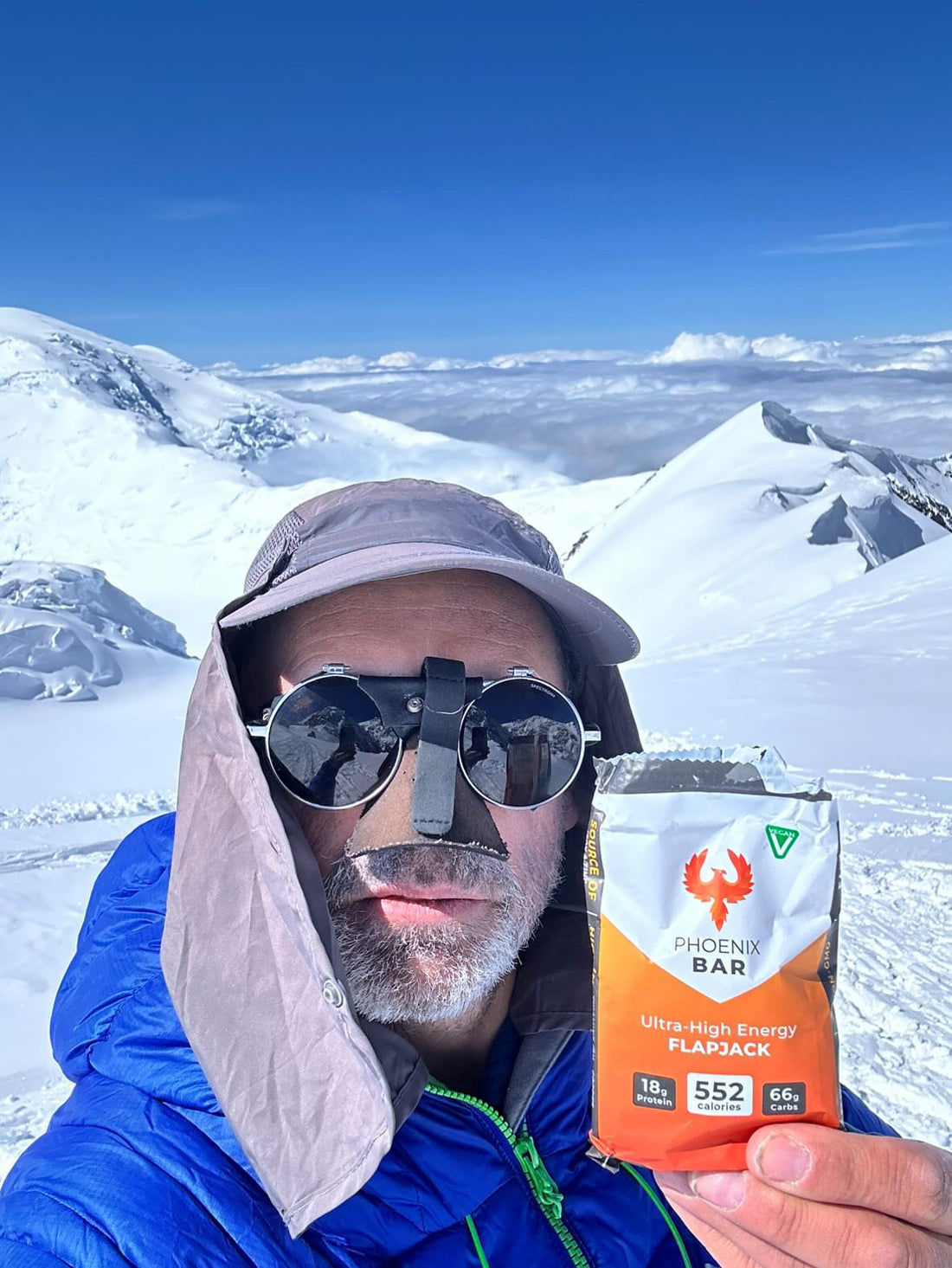
Big calories. Small bar.
Up to 557 calories in a compact, lightweight bar of only 120g, with up to 66g of carbs and 19g of protein. Eat it whole, break it into pieces over a few hours, or mix it with water or milk for porridge.
Easy to eat, easy to digest and not sickly sweet. Customers have eaten them at -45°C and through the heat of the Marathon des Sables, and they keep for up to 2 years, so they work on a mountain, on a night shift, or at home on days when eating enough feels hard.
- 557 calories in only 120g (529 to 557 by flavour)
- 4.6 calories per gram
- 66g carbs per bar (up to)
- 19g protein per bar (up to)
