

High Calorie Drinks, Smoothies and Milkshakes
In this guide

 Last reviewed: July 2026. Written by James Frost, founder of Flaming Phoenix.
A high calorie drink is any beverage delivering 300 calories or more per serving, typically built from whole milk, nut butter, banana, oats, ice cream, double cream, coconut milk or coconut oil. Drinks are quick to make, can be sipped slowly across an hour or more, and pack a lot of energy into a small volume. For endurance athletes refuelling after long sessions, hard gainers building mass, and anyone with high daily calorie demands, two or three high calorie drinks a day can add 1,000 to 1,800 calories on top of normal meals.
This guide contains nine specific recipes with exact ingredients and calorie counts, the most calorie-dense ingredients to keep in your kitchen, and practical advice for fitting high calorie drinks into a training day.
On this page
- The most calorie-dense drink ingredients
- How many calories drinks can deliver in a day
- Smoothie recipes (four recipes from 430 to 800 calories)
- Milkshake recipes (two recipes from 480 to 650 calories)
- Hot drink recipes (three recipes from 200 to 350 calories)
- Practical tips for drinking more calories
- Phoenix Bars: up to 557 calories with no blender required
- Frequently asked questions
Free download
Free guide: how to eat 500+ calories in under 2 minutes
A short PDF of the simplest ways people get more calories from less food. Free, sent straight to your inbox.
Free. Unsubscribe anytime. Privacy policy
The most calorie-dense drink ingredients
These are the building blocks. Knowing the calorie load of each makes it easy to design a drink to hit any target.
The highest-calorie liquids in a normal supermarket are tinned coconut milk at around 400 calories per half a 400ml tin, double cream at around 225 calories per 50ml, and whole milk at around 65 calories per 100ml.
The highest-calorie additions you can stir into anything else are smooth peanut butter at around 95 calories per tablespoon, almond or cashew butter at the same, coconut oil at around 120 calories per tablespoon, and butter at around 50 calories per knob.
The highest-calorie blendable solids are vanilla ice cream at around 140 calories per scoop, rolled oats at around 150 calories per 40g, full-fat Greek yoghurt at around 133 calories per 150g pot, banana at around 100 calories per medium fruit, dates at around 20 calories each, and honey at around 64 calories per tablespoon.
Tinned coconut milk and double cream are the most calorie-dense liquids you can build a smoothie around. Nut butters and coconut oil are the densest additions you can stir into anything else without changing the volume meaningfully.
Tinned coconut milk and double cream are the highest-calorie liquids in a normal supermarket. Nut butters and coconut oil are the highest-calorie additions you can stir into anything else.
How many calories drinks can deliver in a day
A day with four well-chosen drinks alongside normal meals:
- Breakfast: 650-calorie peanut butter and banana smoothie
- Mid-morning: 350-calorie fortified hot chocolate
- Afternoon: 500-calorie classic milkshake
- Evening: 280-calorie warm milk with honey and butter
That is approximately 1,780 calories from four drinks, on top of solid meals. For an endurance athlete pushing for 4,500 to 5,000 calories on a long training day, drinks can cover roughly a third of total intake. For a hard gainer trying to move from 2,800 to 3,800 calories per day, two of these drinks deliver the full 1,000-calorie surplus. If you'd rather eat that surplus in one sitting, these 1,000 calorie meals show how.
Smoothie recipes
Smoothies are the most flexible high calorie drinks because the ingredients can be adjusted to land on any target. The base formula is straightforward: a high-calorie liquid (whole milk, coconut milk, or full-fat yoghurt thinned with milk), a fat source (nut butter, coconut oil, double cream, avocado), a carbohydrate source (banana, oats, honey, dates, frozen fruit), and optionally a protein source (protein powder, Greek yoghurt, silken tofu).
Shakes versus bars is a genuine trade-off: shakes go down easier, bars travel better and skip the blender. I've weighed it up properly in my guide to which meal replacement bar type is best.
The 650-calorie peanut butter and banana smoothie
Blend 250ml whole milk (160 cal), one medium banana (100 cal), two tablespoons smooth peanut butter (190 cal), 40g rolled oats (150 cal), and one tablespoon honey (64 cal). Total: approximately 650 calories.
Thick, dense and tastes like peanut butter and banana. The oats slow the carbohydrate release, which makes it a strong choice before a long training session. If 650 calories in one drink feels like a lot, pour it into a 750ml flask and sip across the morning.
The 500-calorie tropical smoothie
Blend 200ml tinned coconut milk (200 cal, half a 400ml tin), 100g frozen mango (60 cal), one banana (100 cal), one tablespoon honey (64 cal), and 100ml pineapple juice (50 cal). Total: approximately 475 calories.
Half a tin of coconut milk adds 200 calories and a creamy texture without dairy. Useful for anyone training in heat or following a vegan diet, where dairy can sit heavily on the stomach.
The 800-calorie mass gain smoothie
Blend 300ml whole milk (195 cal), two tablespoons smooth peanut butter (190 cal), one banana (100 cal), one tablespoon coconut oil (120 cal), 40g rolled oats (150 cal), and a handful of dates or two tablespoons of honey (80 cal). Total: approximately 835 calories.
The densest single-serving recipe on this page. Often easier to make once and split into two 400-calorie portions, drinking one immediately and keeping the second in the fridge for later. One blender session, two large drinks. For more builds at this level, see our homemade weight gainer shakes guide.
The Phoenix Bar smoothie (430 to 800+ calories)
Crumble half a Phoenix Bar into a blender with 250ml of warm whole milk and blend until smooth. The result is a thick, porridge-textured drink at approximately 430 calories. Add a banana and a tablespoon of peanut butter and the same drink moves past 700 calories. Use a whole bar with 350ml of milk and a banana and you are above 800 calories.
Phoenix Bars crumble cleanly, blend smoothly, and pack into kit for races and expeditions. Our high calorie bars were designed to work as a drink base as much as a bar. Several Marathon des Sables athletes and ultra-distance runners use this drink in training and on multi-day events because the bars do not melt in heat or freeze in sub-zero temperatures.
Milkshake recipes
Classic high calorie milkshake (550 calories)
Blend 250ml whole milk (160 cal), two large scoops of vanilla ice cream (~280 cal), and one tablespoon of honey (64 cal). Total: 500 to 550 calories depending on the ice cream brand.
For a chocolate version, add a tablespoon of cocoa powder and a second tablespoon of honey. For a peanut butter version, add a tablespoon of smooth peanut butter, which brings the total to approximately 650 calories.
Banana and malt milkshake (480 calories)
Blend 250ml whole milk (160 cal), one banana (100 cal), two tablespoons of Horlicks or malt powder (80 cal), and one large scoop of ice cream (140 cal). Total: approximately 480 calories.
Malt gives milkshakes a distinctive warming flavour that works particularly well in cooler weather. Can be served warm or cold.
Hot high calorie drinks
Hot drinks are often overlooked. Small adjustments to how they are made can add several hundred calories across a day with no extra effort. The same approach works in a bowl: our high calorie soup recipes build on cream, coconut milk and butter too.
Fortified hot chocolate (350 calories)
Heat 250ml whole milk (160 cal) and stir in two tablespoons of drinking chocolate powder (80 cal) and two tablespoons of double cream (120 cal). Total: approximately 350 calories.
Standard hot chocolate made with semi-skimmed milk is around 150 calories. Switching to whole milk and adding cream more than doubles it. Two minutes in a microwave.
High calorie coffee (200 calories)
Use 100ml of whole milk (65 cal) and add a tablespoon of coconut oil (120 cal). The coconut oil melts into hot coffee and gives a rich, creamy texture similar to a bulletproof-style coffee. Total: approximately 200 calories. Three coffees a day prepared this way adds 600 calories.
Warm milk with honey and butter (280 calories)
A traditional method used by expedition teams and endurance athletes for adding calories before sleep. Heat 250ml whole milk (160 cal), stir in one tablespoon of honey (64 cal), and add a knob of butter (~50 cal). The butter melts into the milk and adds richness without changing the flavour significantly. Total: approximately 280 calories.
Practical tips for drinking more calories
Sip, do not gulp. A 600-calorie smoothie does not need to be finished in five minutes. Pour it into a 750ml bottle or flask and carry it through the morning, sipping 50ml every ten minutes.
Make a batch and refrigerate. Most smoothie and milkshake recipes keep in the fridge for 24 hours. One blender session per day means you only wash the blender once.
Drink between meals, not with them. Liquid fills the stomach quickly. A large smoothie alongside lunch usually means a smaller lunch. Timing high calorie drinks between meals adds them on top of solid food rather than displacing it.
Build the habit gradually. Start with a 350-calorie hot chocolate or a 200-calorie coconut oil coffee. Add larger drinks as the routine settles.
Keep ingredients simple. The most effective high calorie drink is the one that actually gets made. Whole milk, peanut butter, banana and honey blend into a 500-calorie drink in three minutes and live in any normal kitchen.
Phoenix Bars: up to 557 calories with no blender required
For days when even three minutes with a blender is more than you want, a Phoenix Bar is 120g of food delivering up to 557 calories. No preparation, no refrigeration, no cooking. Vegan, six flavours, shelf life of up to two years. Eat the bar whole or crumble it into 250ml of warm milk or water and stir for a thick, porridge-textured drink in 90 seconds.
Phoenix Bars have been used on Everest, at the South Pole, on the Atlantic crossing, on Rat Race's Coast to Coast, and by 50+ Marathon des Sables athletes. They do not melt in heat or freeze in sub-zero temperatures, so they pack into a race vest, a kit bag or a desk drawer without going off. £5.25 per bar. Rated 4.9 out of 5 from nearly 400 reviews.
If you'd rather take those calories as something solid than a drink, see how the top calorie-dense bars compare.
Frequently asked questions
What is the highest calorie drink I can make at home?
The highest calorie recipe in this guide is the 800-calorie mass gain smoothie, made with whole milk, peanut butter, banana, coconut oil, oats and honey. Adding a scoop of protein powder or an extra tablespoon of nut butter pushes a single drink past 900 calories.
What is the best high calorie smoothie for mass gain?
The 800-calorie mass gain smoothie is the densest single-serving recipe here. For sustained mass gain, two 600-calorie smoothies between meals each day, alongside three normal meals, will produce a meaningful daily surplus of around 1,200 calories.
How many high calorie drinks should I have in a day?
Two to three drinks providing 400 to 600 calories each adds 800 to 1,800 calories to a day on top of normal meals. Endurance athletes on long training days often have three or four. Hard gainers building mass typically have two between main meals.
What is the difference between a high calorie smoothie and a meal replacement shake?
Meal replacement shakes are formulated products designed to replace a meal entirely, typically engineered for a specific macro and micronutrient ratio. Homemade high calorie smoothies are made from whole-food ingredients and are usually higher in total calories. Most athletes prefer homemade smoothies for daily use because the ingredients can be adjusted to specific calorie targets.
Can I use Phoenix Bars in smoothies?
Yes. Phoenix Bars crumble easily and blend smoothly into warm milk to create a thick, porridge-textured drink. Half a bar with 250ml of warm milk delivers approximately 430 calories. A whole bar in 350ml of milk with a banana exceeds 800 calories.
Are liquid calories more efficient than solid food for adding calories?
Drinks are quicker to prepare and consume than equivalent calorie meals, and a single drink can sit at 600 to 800 calories without requiring a full plate of food. Most athletes and hard gainers use both, with drinks added between meals on top of normal eating.
Related guides
- Calorie-Dense Foods: the full list of foods that pack the most energy into the smallest volume
- High Calorie Snacks Ranked by Calories Per Bite
- High Calorie Breakfast Ideas
- High Calorie Porridge
- How to Gain Weight
- 3,000 Calorie Meal Plan
- Phoenix Bars: up to 557 calories per compact 120g bar
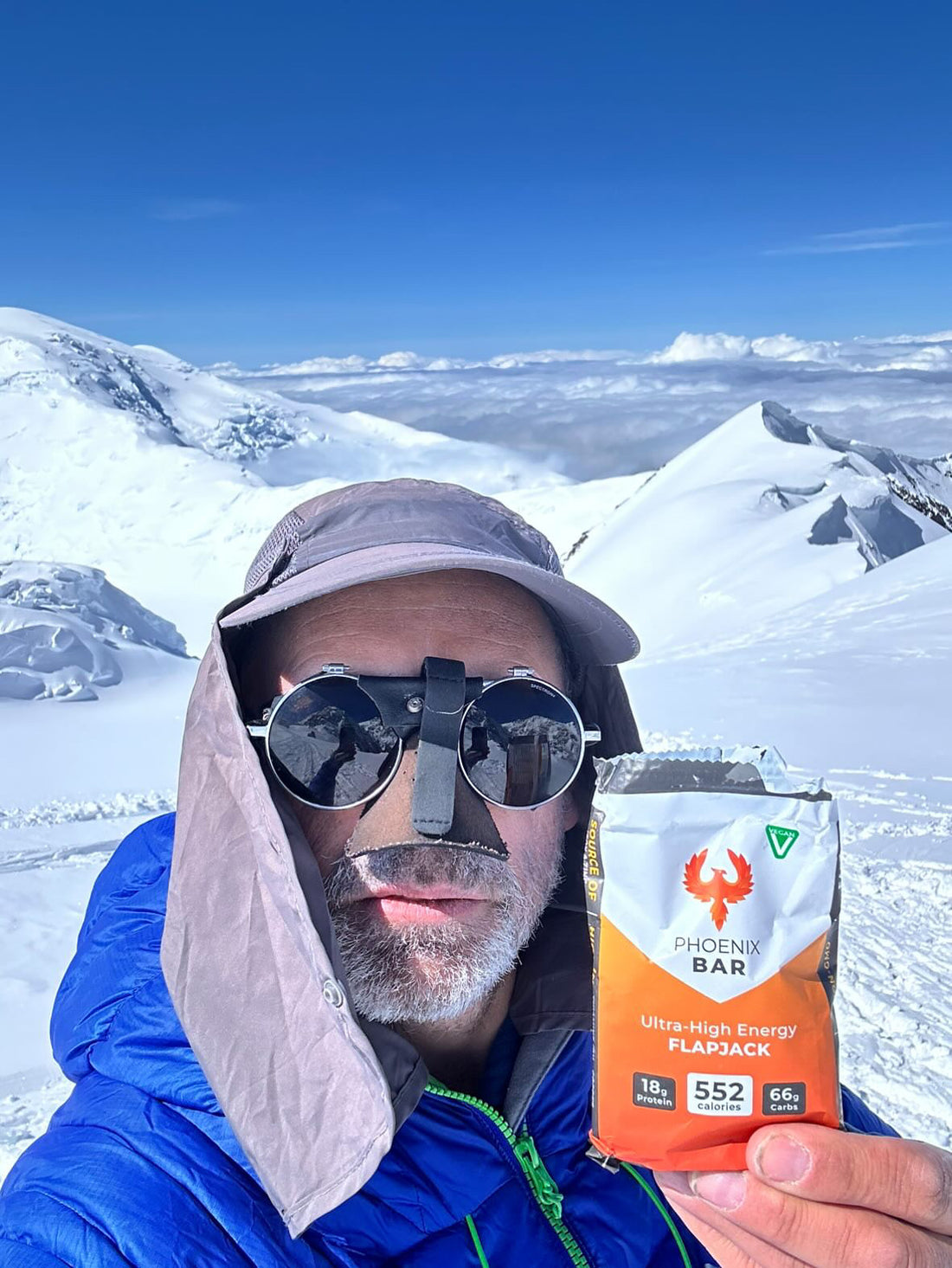
Big calories. Small bar.
Up to 557 calories in a compact, lightweight bar of only 120g, with up to 66g of carbs and 19g of protein. Eat it whole, break it into pieces over a few hours, or stir it into hot water or milk for porridge.
Easy to eat, easy to digest and not sickly sweet. Phoenix Bars do not melt in heat or freeze in sub-zero temperatures and have an up to 2-year shelf life, so they work on a mountain, on a night shift, or at home on days when eating enough feels hard. Vegan and gluten-free too.
- 557 calories in one compact 120g bar (529 to 557 by flavour)
- 4.6 calories per gram
- 66g carbs per bar (up to)
- 19g protein per bar (up to)
