
Best tinned food to stockpile (UK): tins ranked by calories
In this guide

 Written by James Frost, founder of Flaming Phoenix and the maker of Phoenix Bars. Updated November 2026.
Quick answer: The best tinned food to stockpile is food you can eat cold, straight from the tin, that carries plenty of calories: oily fish in oil (mackerel, sardines), corned beef, baked beans and other pulses, and rice pudding. The tins with the most calories are sweetened condensed milk (about 1,280 per tin), chopped pork and ham such as Spam (about 990) and corned beef (about 755). Choose ring-pull lids or keep a manual tin opener, and rotate your tins through everyday meals.
Tins are the backbone of most UK stockpiles, and for good reason: they are cheap, familiar, keep for years and need no fridge. The government's Be Ready checklist, published on 22 October 2026, names tinned meat, fish and vegetables as examples of the non-perishable food every household should keep for 3 days. What most tinned food lists do not tell you is how few calories many tins actually hold, which is the number that decides how many you need.
How I approached this. I make Phoenix Bars, a compact, high-calorie food designed for people who cannot easily cook or carry much, so I look at every food through one question: how many calories does it give you for the space it takes and the effort it needs? Below, the common supermarket tins are ranked on that, using calorie figures from UK pack labels and supermarket listings checked in November 2026.
How the tins are ranked
Every tin on this page was judged on four things:
- Calories per tin. A tin that gives 200 calories and a tin that gives 750 take up the same space on the shelf.
- Whether you can eat it cold. In a power cut you may have no way to heat anything, so tins that work cold come first.
- Shelf life. Low-acid tins such as fish, meat and beans typically keep 2 to 5 years; high-acid tins such as tomatoes and fruit typically keep 12 to 18 months.
- Whether people will eat it. Be Ready's advice is to buy food you would usually eat, because a stockpile only works if it gets eaten and replaced.
The 12 best tins to stockpile
Ranked for a household stockpile, balancing calories, eating cold, shelf life and how useful each tin is in a real emergency.
1. Mackerel and sardines in oil
About 240 calories in a 125g tin of mackerel in sunflower oil (drained) and about 200 in a tin of sardines in olive oil. Protein, fat and calories in one ring-pull tin, eaten cold on oatcakes or crackers, and they keep for years. Choose fish in oil over fish in brine or spring water, because the oil carries more calories in the same tin. Tuna in oil works too, with fewer calories than mackerel.
2. Corned beef
About 755 calories in a 340g tin, ready to eat cold and sliced onto crackers or into a sandwich while the bread lasts. It is one of the most calorie-dense everyday tins and keeps for years.
3. Baked beans
About 335 calories in a 415g tin. Cheap, filling, vegan, and fine eaten cold straight from the tin. Beans are the tin most households already rotate, which makes them easy to keep fresh.
4. Chickpeas, lentils and mixed beans
About 275 calories in a 400g tin of chickpeas once drained. Already cooked, so they can be eaten cold with a drizzle of oil, which adds calories cheaply. A good protein tin for vegetarian and vegan households.
5. Rice pudding
About 370 calories in a 400g tin. Soft, sweet, eaten cold and easy to manage when appetite is low, which makes it one of the best tins to keep in for older relatives or children.
6. Chopped pork and ham (Spam and similar)
About 990 calories in a 340g tin, fully cooked and labelled as ready to eat hot or cold. Few tins give you more calories for the shelf space.
7. Full-fat coconut milk
About 600 to 700 calories in a rich, full-fat 400ml tin, though some brands are much lighter, so check the label. Not a meal on its own, but stirring it into oats, cereal or curry adds calories quickly. Dairy-free and vegan.
8. Sweetened condensed milk
About 1,280 calories in a 397g tin, the most of any common tin. It is a calorie booster rather than a meal: a spoonful in tea, porridge or on crackers makes plain food more appealing when everyone is fed up with tins.
9. Tinned meals: chilli, stew and curry
Often 300 to 500 calories in a 400g tin, depending on the recipe. Best warm, but edible cold. Avoid tinned pies and puddings that need an oven, which are no use when the power is off.
10. Fruit in juice
About 150 to 200 calories in a 410g tin including the juice. Vitamins, some fluid and something sweet. Fruit is high-acid, so it keeps for less time than fish or beans; rotate it every year or so.
11. Soup
About 205 calories in a 400g tin of cream of tomato soup. Comforting if you can warm it, drinkable cold if you cannot, but low in calories, so do not let soup be most of your stockpile.
12. Vegetables: sweetcorn, peas, carrots and potatoes
Usually around 100 to 250 calories a tin. Already cooked, so they can be eaten cold, and they add variety, colour and fluid. Buy a few for balance rather than for calories.
| Tin | Typical size | Calories per tin (about) | Eat it cold? |
|---|---|---|---|
| Sweetened condensed milk | 397g | 1,280 | Yes, as a topping |
| Chopped pork and ham (Spam) | 340g | 990 | Yes |
| Corned beef | 340g | 755 | Yes |
| Full-fat coconut milk | 400ml | 600 to 700 | Yes, mixed into food |
| Tinned meals (chilli, stew, curry) | 400g | 300 to 500 | Yes, best warm |
| Rice pudding | 400g | 370 | Yes |
| Baked beans | 415g | 335 | Yes |
| Chickpeas, drained | 400g | 275 | Yes |
| Mackerel in oil, drained | 125g | 240 | Yes |
| Cream of tomato soup | 400g | 205 | Yes, best warm |
| Sardines in oil, drained | 120g | 200 | Yes |
| Fruit in juice | 410g | 150 to 200 | Yes |
| Chopped tomatoes | 400g | 80 to 90 | Better cooked |
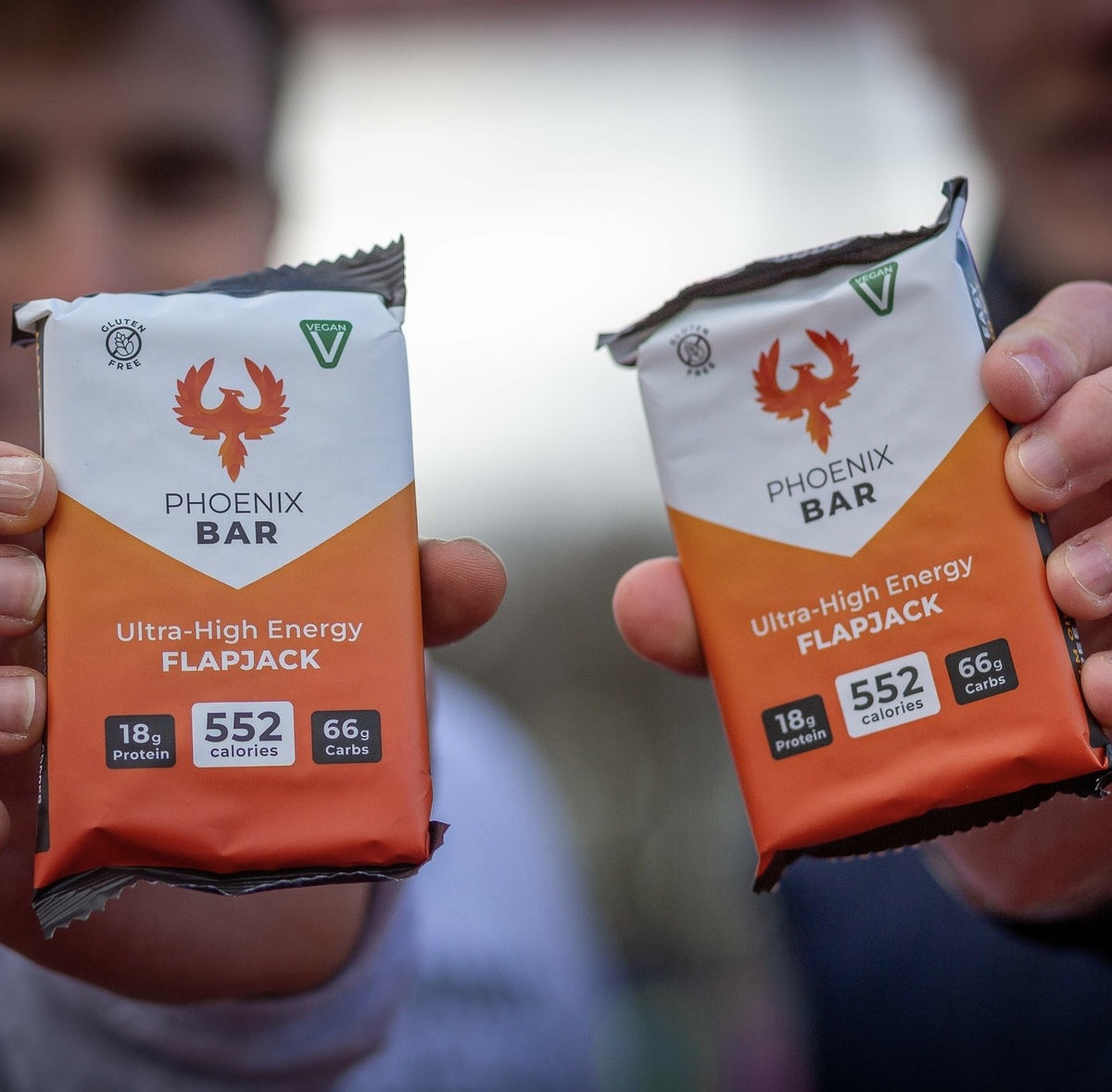
| For comparison: Phoenix Bar | 120g bar | Up to 557 | Yes, no tin opener |
Calories worked out from per-100g values on UK brand and supermarket listings checked November 2026 (including Carnation, Spam, Princes, Ambrosia, Heinz and John West). Recipes and tin sizes vary, so always check the label. Phoenix Bar values are from our own pack labels.
Tinned food you can eat cold
Almost everything in a tin has already been cooked during canning, so most tins are safe to eat cold as long as the tin is in good condition. The ones that are genuinely pleasant cold, and worth keeping for a power cut, are:
- Fish in oil: mackerel, sardines, pilchards, tuna and salmon.
- Corned beef and chopped pork and ham.
- Baked beans, chickpeas, kidney beans and mixed bean salads.
- Rice pudding, custard and fruit in juice.
- Sweetcorn, peas and new potatoes.
Soups, stews and curries are edible cold but much nicer warm, and chopped tomatoes are really an ingredient. If the electricity goes off, our guide to what to eat in a power cut has a full 3-day menu that needs no cooking at all, and explains how to heat food safely outdoors if you want to.
How long does tinned food last?
Most tins carry a best before date rather than a use-by date. GOV.UK explains that a best before date is about quality: after it, food is usually still safe to eat but may not be at its best. A use-by date is about safety and should not be passed. As a rule of thumb:
- Low-acid tins such as fish, meat, beans and vegetables typically keep 2 to 5 years.
- High-acid tins such as tomatoes and fruit typically keep 12 to 18 months.
Check the condition of the tin as well as the date. The Food Standards Agency says food in a tin with a shallow dent should be safe to eat as long as there are no other obvious signs of damage. Throw away tins that are bulging, leaking, badly rusted or deeply dented, especially along the seams. Once a tin is open, move any leftovers into a sealed container and keep them cold, which is why it pays to buy tin sizes your household finishes in one go. For other foods that keep for years, see our guide to long shelf life food.
How many tins do you need for 3 days?
An adult normally needs around 2,000 to 2,500 calories a day, so 6,000 to 7,500 for the three days Be Ready asks you to plan for. If an average tin gives about 300 calories, that is 20 to 25 tins per adult, weighing roughly 8 to 10kg. That is fine on a shelf at home, but it is a lot of weight and space, and a lot of tins to eat cold.
Most households get there more easily with a mix: tins for proper meals, plus dense dry food for the rest of the calories. Nuts, peanut butter, oatcakes and Phoenix Bars all carry about 450 to 600 calories per 100g, against under 250 for most tins, so a few of them cut the number of tins you need sharply. Our emergency food calculator works out the totals for your household in calories, tins and bars, and our best food to stockpile guide covers everything beyond tins.
Tins to buy less of
- Low-calorie tins as the main food. Chopped tomatoes, most soups and many vegetables add variety, but they will not keep anyone going on their own.
- Tins that need an oven. Tinned pies and sponge puddings are no help in a power cut.
- Anything nobody in the house likes. A tin that never gets eaten is wasted money and wasted space.
- Big catering tins. Once opened they need a fridge, so smaller tins you finish in one sitting are safer.
How to store a tinned food stockpile
- Somewhere cool, dry and dark. Heat and damp shorten shelf life and rust tins. A cupboard or under-stairs space is better than a garage or loft.
- Oldest at the front. Put new tins at the back and eat from the front, so nothing passes its date unnoticed.
- Write the year on the lid. A marker pen makes rotation a ten-second job.
- Keep a manual tin opener with the tins, even if most are ring-pull.
- Check twice a year. Be Ready suggests a reminder every six months to check dates and swap items.
Tinned food for vegan or gluten-free households
Beans, chickpeas, lentils, coconut milk, vegetables and fruit cover most of a vegan tinned stockpile. If anyone avoids gluten, check soups, meatballs and tinned meals, which can contain wheat flour as a thickener; plain fish, beans and vegetables usually do not. Phoenix Bars are vegan and made with gluten-free oats, which makes them an easy dense food to sit alongside a plant-based tin cupboard. One customer, Jill, put her finger on why they are easy to eat: "The fact they melted so quickly when you add water made them very easy to eat on the go." Our guide to gluten-free and vegan emergency food has a full 3-day plan.
For older relatives, or anyone whose appetite drops when life is disrupted, soft tins such as rice pudding and custard are worth keeping, along with something dense for getting more calories in from small portions, such as high calorie bars. Our guide to high-calorie foods for older adults has more ideas.
Common questions about tinned food
What is the best tinned food to stockpile?
The best tins to stockpile are ones you can eat cold that carry plenty of calories: mackerel and sardines in oil, corned beef, baked beans, chickpeas and rice pudding. Add a few calorie boosters such as condensed milk or full-fat coconut milk, and choose tins your household already eats.
What tinned food has the most calories?
Among common UK tins, sweetened condensed milk has the most, at about 1,280 calories in a 397g tin, followed by chopped pork and ham such as Spam (about 990 in 340g), corned beef (about 755 in 340g) and full-fat coconut milk (about 600 to 700 in 400ml). Most other tins give 80 to 400 calories.
What tinned food lasts the longest?
Low-acid tins such as fish, meat, beans and vegetables typically keep 2 to 5 years, while high-acid tins such as tomatoes and fruit typically keep 12 to 18 months. Store them somewhere cool and dry and check the best before date on each tin.
Can you eat tinned food after the best before date?
Usually, yes. A best before date is about quality, not safety, so food is usually still safe after it if the tin is undamaged, though it may not be at its best. Never eat food after a use-by date, and throw away tins that are bulging, leaking or badly damaged.
Is it safe to eat food from a dented tin?
The Food Standards Agency says food in a tin with a shallow dent should be safe to eat as long as there are no other obvious signs of damage. Throw away tins that are bulging, leaking, badly rusted or deeply dented, especially along the seams.
Which tinned foods can you eat cold?
Most tinned food is already cooked and safe to eat cold if the tin is undamaged. The best cold tins are fish in oil, corned beef, chopped pork and ham, beans and chickpeas, rice pudding, custard, fruit in juice, sweetcorn and new potatoes.
How many tins do I need for 3 days?
An adult needs around 6,000 to 7,500 calories over 3 days. At about 300 calories per average tin, that is 20 to 25 tins per adult. Mixing tins with dense dry foods such as nuts, peanut butter, oatcakes and high-calorie bars cuts the number of tins sharply.
Phoenix Bars are rated 4.9 out of 5 from 400+ reviews, and I hand-pack every order myself.
Sources: GOV.UK Be Ready checklist; GOV.UK Be Ready, power cuts; GOV.UK, best before and use-by dates; Food Standards Agency, food safety management (dented tins); calorie values from UK brand and supermarket listings for Carnation, Spam, Princes, Ambrosia, Heinz, John West and supermarket own-label coconut milk, checked November 2026; Phoenix Bar values from our own pack labels.
Related guides
Non-perishable food list · 3-day emergency food supply list · Emergency rations UK · British Army ration packs · Gifts for preppers

Big calories. Small bar.
Up to 557 calories in a compact, lightweight bar of only 120g, with up to 66g of carbs and 19g of protein. Eat it whole, break it into pieces over a few hours, or mix it with water or milk for porridge.
Easy to eat, easy to digest and not sickly sweet. Customers have eaten them at -45°C and through the heat of the Marathon des Sables, and they keep for up to 2 years, so they work on a mountain, on a night shift, or at home on days when eating enough feels hard.
- 557 calories in only 120g (529 to 557 by flavour)
- 4.6 calories per gram
- 66g carbs per bar (up to)
- 19g protein per bar (up to)
