
Non-perishable food list (UK): what lasts, and for how long
In this guide

 Written by James Frost, founder of Flaming Phoenix and the maker of Phoenix Bars. Updated 25 October 2026.
Non-perishable foods are foods that keep at room temperature, unopened, for months or years without a fridge. In the UK that means tinned fish, meat, beans, vegetables, fruit and soup; dry staples such as rice, pasta, oats and lentils; oatcakes, crackers and crispbread; nut butters, nuts, seeds and dried fruit; UHT and plant milk cartons and powdered milk; long-life bars; and honey, sugar, salt, oil, tea and coffee. As a rough guide from USDA FoodKeeper guidance, low-acid tins keep for 2 to 5 years, high-acid tins such as tomatoes and fruit for 12 to 18 months, and white rice and dried pasta for around 2 years. Always go by the date on the pack.
The government's Be Ready campaign, launched on 22 October 2026, asks households to keep 3 days of non-perishable food that needs no fridge or cooking. For a ready-made shopping list with calories, see our 3-day emergency food supply list.
Why I wrote this guide. Shelf life is part of my job. Phoenix Bars keep for up to two years, and I keep bars back from every production run and taste them every three months to check how they hold up. This list applies the same thinking to the whole cupboard: what lasts, how long for, and what is actually worth storing.
What counts as non-perishable food?
A food is non-perishable, or shelf-stable, if it can be kept unopened at room temperature without spoiling for a long time. Tinning, drying, low moisture, high sugar or salt, and sealed packaging are what make it last. Fresh meat, fish, dairy, most fruit and vegetables, and fresh bread are perishable. Once you open a non-perishable food, it usually needs to be treated like fresh food.
Non-perishable food list by category
Typical shelf lives are for unopened packs stored somewhere cool and dry, based on USDA FoodKeeper guidance and food bank storage charts. UK packs carry their own dates, which always take priority.
Tinned protein (low-acid tins, typically 2 to 5 years)
- Tuna, sardines, mackerel and salmon.
- Corned beef, ham, chicken and meatballs.
- Baked beans, chickpeas, kidney beans, mixed beans and lentils.
Tinned vegetables and soups
- Sweetcorn, peas, carrots, potatoes and mixed vegetables: low-acid, typically 2 to 5 years.
- Most soups and stews: typically 2 to 5 years.
- Chopped tomatoes and tomato-based soups: high-acid, typically 12 to 18 months.
Tinned fruit and puddings
- Peaches, pineapple, pears and fruit cocktail in juice: high-acid, typically 12 to 18 months.
- Rice pudding and custard in tins or cartons.
Dry staples
- White rice: around 2 years, longer in an airtight container. Brown rice keeps for much less, often under a year, because of its natural oils.
- Dried pasta and noodles: around 2 years.
- Porridge oats, couscous, dried lentils and dried beans.
- Flour, sugar and salt.
Ready-to-eat carbohydrates
- Oatcakes, crackers, rye crispbread and rice cakes: usually months to around a year.
- Breakfast cereal, cereal bars and flapjack.
Fats, spreads, nuts and seeds
- Peanut butter and other nut butters: usually 6 to 24 months unopened, so check the jar.
- Nuts and seeds: months rather than years, because their oils slowly go stale. Vacuum packs last longest.
- Cooking oils: usually a year or more unopened.
Dried fruit, chocolate and snacks
- Raisins, sultanas, apricots, dates and figs.
- Dark and milk chocolate.
- Crisps: shelf-stable, but only for a few months.
Drinks
- UHT milk and plant milk cartons: several months, so check the carton.
- Powdered milk: around a year.
- Juice cartons, tea bags, instant coffee and hot chocolate.
- Bottled water. Our guide to emergency water storage covers how much to keep.
Long-life basics
- Honey, which keeps almost indefinitely if sealed and dry.
- Vinegar, stock cubes, dried herbs and spices.
Purpose-made long-life food
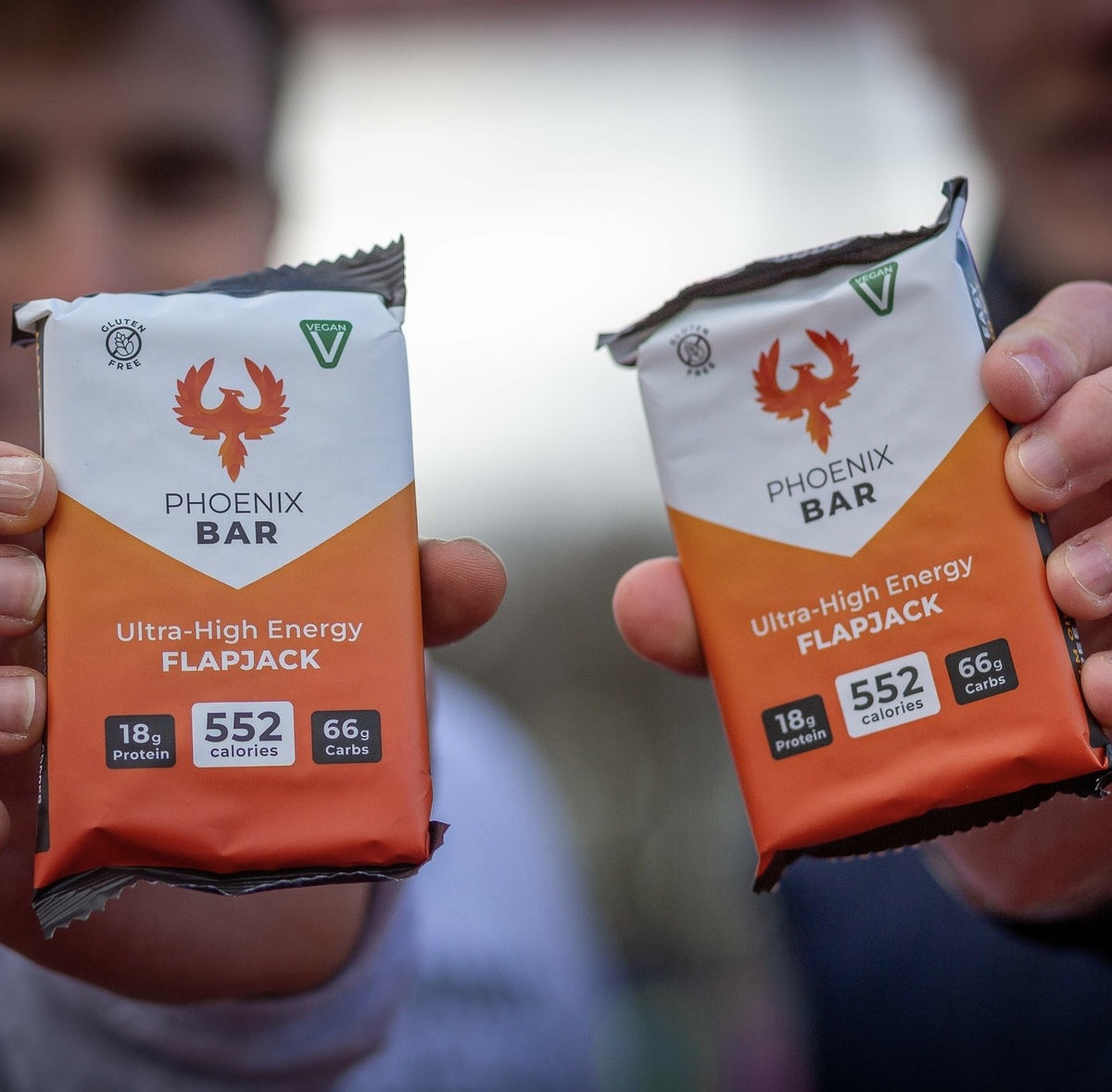
- Dense high calorie bars such as Phoenix Bars: up to 2 years (12 months for Cherry Bakewell).
- Military-style 24-hour ration packs: around 2 to 3 years.
- Lifeboat-style emergency rations: 5 to 20 years. Our guide to emergency rations compares them.
- Freeze-dried meals in tins: up to 25 years, but every meal needs hot water.
Non-perishable foods that need no cooking
In a power cut you may have no way to cook, so the most useful non-perishables are the ones you can eat straight from the pack:
- Tinned fish, corned beef and ham.
- Baked beans and other tinned beans, which are fine cold.
- Tinned fruit, rice pudding and custard.
- Oatcakes, crackers, crispbread and breakfast cereal.
- Nut butter, nuts, seeds, dried fruit and chocolate.
- UHT milk and juice cartons.
- Dense bars and emergency rations.
Rice, pasta, oats, lentils, dried beans and freeze-dried meals all need water and heat, so keep them for a longer supply alongside a safe way to cook.
The most calorie-dense non-perishable foods
If space is limited, choose food that packs the most calories into the least room. Approximate calories per 100g, from UK food tables:
- Cooking oil: around 900.
- Peanut butter: around 600.
- Salted peanuts: around 600.
- Milk chocolate: around 520.
- Phoenix Bars: around 460, with up to 557 calories in only 120g.
- Oatcakes: around 450.
- Flapjack: around 430.
- Sardines in oil: around 220.
- Corned beef: around 205.
- Baked beans: around 80.
- Fruit cocktail in juice: around 45.
Tins are heavy for what they give but hold fluid and keep a long time; dense dry foods are the opposite. A good supply mixes both. Our guide to calorie-dense foods ranks many more.
Healthy non-perishable foods
A balanced cupboard is easy to build from long-life food: oily fish such as sardines and mackerel, tinned beans and lentils, tinned vegetables and fruit in juice rather than syrup, oats, wholegrain crackers, nuts and seeds. Check labels for salt and sugar, and aim for a mix of protein, carbohydrate, fat and some fruit or vegetables each day.
Best before and use by dates
Most non-perishable foods carry a best before date, which is about quality, not safety. An undamaged tin or packet past its best before date is usually still safe, though the taste or texture may have faded. A use by date is about safety: do not eat food past its use by date. Throw away any tin that is bulging, leaking, rusty or badly dented.
Once opened, treat non-perishable food as fresh. The Food Standards Agency advises putting leftover tinned food into a bowl or container, covering it and keeping it in the fridge, rather than leaving it in the open tin.
How to store non-perishable food
- Keep it somewhere cool, dry and dark, away from the cooker, boiler and direct sun.
- Avoid lofts, sheds and garages, where heat, cold and damp shorten shelf life.
- Move opened dry goods such as rice, oats and pasta into airtight containers to keep out moisture and pests.
- Put new stock at the back and use the oldest first.
- Write the best before date on the front of anything where it is hard to read.
- Check your stock every six months, as Be Ready suggests, and use anything close to its date in everyday meals.
Non-perishable foods to donate
Food banks rely on non-perishable donations, and the Trussell Trust network's emergency parcels hold three days of nutritionally balanced, non-perishable food. Needs change from week to week, so check your local food bank's current shopping list before you buy, and only donate food that is well within its date.
Common questions about non-perishable food
What is the longest-lasting non-perishable food?
Honey, salt, sugar and white rice stored airtight keep almost indefinitely. Among packaged foods, freeze-dried meals in tins are sold with shelf lives of up to 25 years and some emergency rations up to 20 years.
Is bread non-perishable?
No. Fresh bread lasts only a few days. Rye crispbread, crackers, oatcakes and long-life wraps are the non-perishable alternatives.
Are crisps non-perishable?
Crisps are shelf-stable but only keep for a few months, so they suit everyday snacking more than a long-term supply.
Do non-perishable foods expire?
Yes, eventually. Their quality fades over time, which is why most carry a best before date. Rotate them into everyday meals so nothing goes to waste.
What non-perishable food is highest in calories?
Cooking oil, peanut butter, nuts, chocolate, dense bars, oatcakes and flapjack. Gram for gram they carry many times the calories of tins.
What non-perishable food can I eat without cooking?
Tinned fish and meat, cold beans, tinned fruit, rice pudding, oatcakes, crackers, nut butter, nuts, dried fruit, chocolate, cereal, UHT milk and dense bars.
Sources: GOV.UK Be Ready, be ready for emergencies; USDA FoodKeeper guidance; Food Standards Agency; CoFID 2021; Trussell Trust.

Big calories. Small bar.
Up to 557 calories in a compact, lightweight bar of only 120g, with up to 66g of carbs and 19g of protein. Eat it whole, break it into pieces over a few hours, or mix it with water or milk for porridge.
Easy to eat, easy to digest and not sickly sweet. Customers have eaten them at -45°C and through the heat of the Marathon des Sables, and they keep for up to 2 years, so they work on a mountain, on a night shift, or at home on days when eating enough feels hard.
- 557 calories in only 120g (529 to 557 by flavour)
- 4.6 calories per gram
- 66g carbs per bar (up to)
- 19g protein per bar (up to)
