
How to Recover After an Ultramarathon: A Day-by-Day Timeline by Race Distance
Written by James, founder of Flaming Phoenix and the maker of Phoenix Bars. Updated September 2026.
Quick answer: recovering from an ultramarathon takes one to two weeks after a 50K, two to three weeks after 50 miles or 100 km, three to four weeks after 100 miles, and four to six weeks after a multi-day race or a big backyard ultra. In the first 24 hours the priorities are calories, fluids, a shower, blister care and sleep. For the first week, no runs longer than 20 minutes, eight to ten hours of sleep a night and lots of food. Muscle soreness usually settles within five to seven days, but measured muscle function can take up to 18 days to return, and your immune system is weaker for about two weeks, so the mistake to avoid is a hard session in week two because you "feel fine". Below is the full day-by-day timeline, what to eat, the red flags that need a doctor, and a checklist for when to start training again.
What actually happens to your body after an ultra
The research on ultra recovery is better than most blogs suggest, because a handful of medical teams have followed finishers of races like the 100-mile Western States Endurance Run for years.
Muscle damage is the headline. Creatine kinase (CK), an enzyme that leaks from damaged muscle, was measured at a median of 20,850 IU/L in finishers of the 2010 Western States (normal resting levels are under about 200), with 6 percent of runners above 100,000 IU/L and three cases of clinical rhabdomyolysis but no acute kidney failure (Hoffman and colleagues, Wilderness and Environmental Medicine, 2012). A 2018 review in Frontiers in Physiology by Knechtle and Nikolaidis found CK still elevated five days after a 200 km race, muscular function restricted for around 18 days, a temporary dip in kidney function, and a high rate of upper respiratory infections in the weeks after long ultras.
Function recovers faster than the numbers. In a study of 72 finishers of the 2015 Western States, muscle pain returned to baseline within about five to seven days, running speed on a short test was 26 percent slower than pre-race on day three and 12 percent slower on day five, and the runners with the highest CK reported the most pain. The practical translation is that the soreness you can feel disappears well before the damage you cannot feel, which is why every credible coach tells you to run nothing meaningful for a week even when the stairs stop hurting.
Then there is everything else: glycogen stores that are empty, a calorie deficit that can exceed 7,000 kcal after a 100-miler (the ultra running calorie calculator will show you yours), blistered and swollen feet, sleep debt if you ran through a night, sodium disturbance (the same review reports exercise-associated hyponatraemia in anywhere from 3 to 51 percent of ultra finishers depending on the race), and a hormonal comedown that shows up as flat mood a few days later.

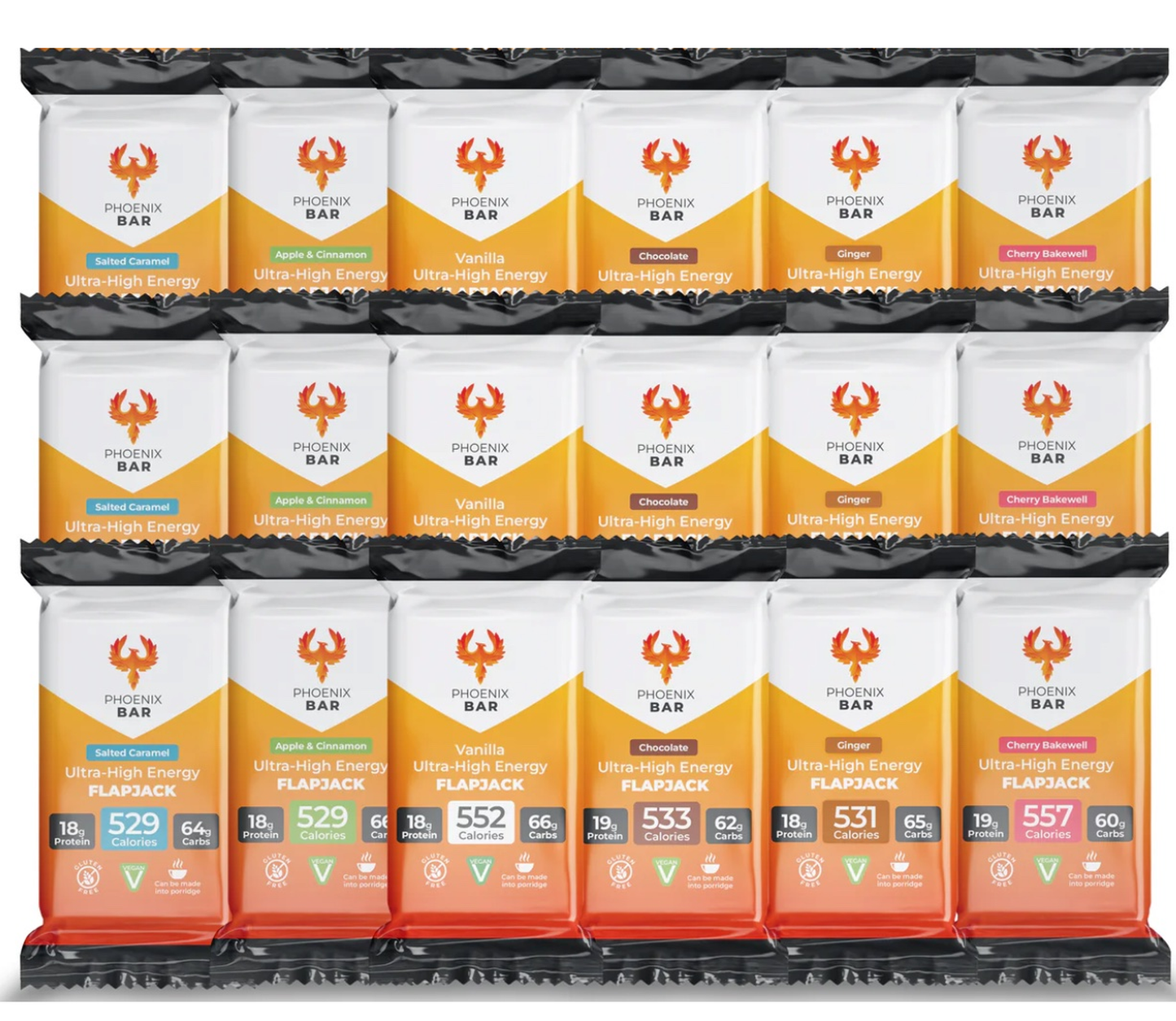
Phoenix Bars: Up to 557 Calories Per Bar
Highly compact, low-volume, calorie-dense bars. Soft, easy to eat whole or as a warm porridge. Vegan, gluten-free and contain up to 66g of carbohydrates, 19g of protein & 8 vitamins & minerals.
The recovery timeline, day by day
The first hour. Sit or lie down with your legs raised, get something warm on, and drink to thirst rather than to a schedule; sipping over the next four to six hours until your urine is pale is safer than downing litres at the finish. Eat what you can face within 30 to 60 minutes: something with carbohydrate and protein in roughly a three to one ratio (chocolate milk, a rice pudding, a sandwich, or a calorie-dense bar if solid food is easier than sweet drinks). Change out of wet kit, deal with your feet, and if you are driving home after a hundred, do not: sleep first.
The first 24 hours. Shower, then walk for a few minutes every hour you are awake to keep blood moving. Eat little and often; many runners have no appetite at all for the first day, so small, dense portions matter more than big meals. Aim for 20 to 30 g of protein every three to four hours and keep carbohydrate coming in. Go to bed early and expect to sleep badly the first night (sore legs and a racing mind are normal) and very well the second.
Days two to three. This is usually the low point: soreness peaks, stairs are comedy, swelling in the feet and ankles is common, and the day-three speed test in the Western States study was the slowest. Do not run. Walk, swim gently or spin easily on a bike for 15 to 20 minutes if you want to move. Eat more than feels necessary, including breakfast, which is the meal most people skip when they are stiff and tired. Keep sleeping eight to ten hours.
Days four to seven. Soreness fades and energy starts to come back. Easy movement every day is fine (a 20 to 30-minute walk, a swim, some mobility work), but hold to the rule of no runs longer than 20 minutes. Watch for the two things that catch people out this week: a cold or sore throat, because immune function is suppressed, and a flat, empty mood, which has a name (see the FAQ on post-race syndrome) and passes.
Week two. Introduce short, easy runs of 20 to 40 minutes on soft ground, every other day, with no hills and no watch pressure. If a run feels laboured, stop; the 18-day figure for muscle function is an average and you may be on the slow side of it. Sleep is still the priority and appetite is usually roaring back, which is the body asking for repair material.
Weeks three to four. Runs of up to an hour, and the first gentle strides or hills at the end of week three if everything feels normal. Structured training resumes when you pass the readiness checklist below, typically three to four weeks after a hundred and two to three weeks after a 50-miler.
Recovery by race distance
After a 50K. Most runners are back to easy running within four to seven days and to normal training within two weeks. Treat the first three days as above, then let the legs decide.
After 50 miles or 100 km. Allow a full week off running, a second week of short easy runs, and two to three weeks before any hard session. The muscle damage from 12 to 20 hours on trail is closer to a hundred than to a marathon.
After 100 miles. Three to four weeks, and often longer if you ran through a night or had stomach trouble. Coaches who work with elite hundred-milers typically hold them to runs under 20 minutes in week one and under an hour in weeks two and three, and expect proper readiness after three to four weeks.
After a backyard ultra or multi-day race. Sleep deprivation changes everything. Plan four to six weeks, with the first week almost entirely about sleep and food. If you ran 30-plus laps of a backyard ultra or six days of a stage race, expect the mood dip to be bigger and the appetite swing to be wilder.
What to eat after an ultramarathon
The immediate goal is refilling glycogen and starting muscle repair, so the first few hours are carbohydrate-led with some protein: roughly three grams of carbohydrate to one of protein, repeated as small snacks. Over the following days the balance shifts towards protein at 1.2 to 1.7 g per kilogram of bodyweight per day, spread across four or five feeds of 20 to 30 g each, plus plenty of carbohydrate, fruit and vegetables and enough fat to make food appealing again. Salty food is welcome, and electrolytes in your drinks for the first day or two help if you finished cramping or bloated.
Appetite is the real problem. After a long ultra most people cannot face a plate of food for a day or more, which is exactly when the deficit is largest. This is where dense, easy-to-eat options earn their place: a smoothie or high-calorie drink when chewing feels like work, porridge or rice pudding when you want something warm, and a bar you can eat in bed. Our own high-calorie bars are 527 to 557 kcal with around 18 g of protein and 60 to 66 g of carbohydrate in 120 g, and a lot of our customers keep a couple in the finish-line bag for precisely this reason; crumbled into hot water they also make a very quick recovery porridge. If your appetite is slow to return over several days, my guide to what to eat when your appetite is low has small, dense ideas, and easy to digest high calorie foods covers the gentle options for a stomach that took a beating in the race (and if it did, this explains why nausea and appetite loss happen during endurance events so you can prevent it next time).
Two things to avoid: calorie restriction (some runners try to "undo" race-week eating, which stalls repair) and anti-inflammatory painkillers such as ibuprofen in the first couple of days, because the kidneys are already working hard after an ultra and the same research groups that measured CK also documented the kidney strain. Paracetamol is the usual choice if you need something, and if in doubt ask a pharmacist.
Sleep, feet, immunity and the other details
Sleep is the recovery tool that outperforms every gadget: aim for eight to ten hours a night for two weeks, and add a daytime nap in the first few days if you ran through the night. Feet need draining and dressing (leave blister roofs on where possible, keep them clean, and see a podiatrist for anything black or infected). Compression, massage and foam rolling are pleasant and may ease soreness, though the controlled trials on massage and pneumatic compression after 100-mile races show modest benefits at best, so do them because they feel good rather than because they are essential. Ice baths are optional. A cold in week one or two is common enough that it is worth planning for: wash your hands, sleep, and skip the crowded office if you can.
Skin and chafing need a few days of care, and any nagging niggle that was there before the race will be louder afterwards; that is the moment to see a physiotherapist rather than to run through it.
Post-race blues: why you feel flat after the biggest thing you have ever done
A dip in mood a few days after a big race is so common it has a name in the marathon world (post-marathon syndrome or post-race blues). Months of training end suddenly, the hormones that carried you through the night drop away, you are sleep deprived and underfed, and the thing you built your identity around for half a year is finished. It usually lifts within a week or two. What helps: sleep and food first, a small non-running goal for the next fortnight, talking to people who understand (your crew, your club, the online groups), and resisting the urge to enter another race in the first 48 hours just to fill the hole. If low mood lasts beyond a few weeks or feels heavier than "flat", talk to your GP.
Red flags: when recovery is not just recovery
See a doctor promptly if you have dark, cola-coloured urine or you are passing very little urine (possible rhabdomyolysis or kidney strain), chest pain or an irregular heartbeat, confusion, vomiting that will not stop, fever with a rapidly worsening cold, or a limb that is swollen, hot and painful out of proportion to the race. These are rare, but the people who get into trouble after ultras are almost always the ones who assumed feeling awful was normal.
When to start training again: a readiness checklist
Start structured training only when all of these are true: soreness is gone on stairs and downhill walking; your resting heart rate is back to normal (a wrist or chest monitor will show it elevated for days after a hundred); you are sleeping through the night; your appetite is normal or better; the first few 20 to 40-minute easy runs felt easy rather than laboured; and, importantly, you want to run rather than feel you should. If you are planning the next race, my guide to the best ultra marathons in the UK can wait a fortnight, and when you do restart, the ultramarathon training plan begins with an easy base block for exactly this reason. Some of the best runners I know take a full month of unstructured running after their main race of the year, and it shows in how long they last in the sport.
Frequently asked questions
How long does it take to recover after an ultramarathon? One to two weeks after a 50K, two to three weeks after 50 miles or 100 km, three to four weeks after 100 miles, and four to six weeks after a multi-day or a long backyard ultra. Soreness fades in five to seven days, muscle function can take around 18 days, and immune suppression lasts about two weeks.
What is post-marathon syndrome? The flat, low or aimless mood that follows a big race, driven by the sudden end of a long goal, hormonal comedown, sleep debt and under-eating. It usually passes within one to two weeks; food, sleep, a small new goal and talking to other runners help.
What should I eat for recovery after running an ultramarathon? In the first few hours, small carbohydrate-rich snacks with some protein (about three to one). Over the following days, 1.2 to 1.7 g of protein per kilogram of bodyweight spread across the day, plenty of carbohydrate, fruit, vegetables and salt, and dense, easy-to-eat foods such as smoothies, porridge and high-calorie bars while your appetite is missing.
What happens to your body 48 hours after a marathon or ultra? Soreness and stiffness peak, swelling in the feet and lower legs is common, running speed on a test is around a quarter slower than normal, creatine kinase is still high, and appetite and sleep are often disrupted. It is the worst day, and it passes.
How long should I rest after a 50K? Take three to four days completely off running, then short easy runs; most people are back to normal training in about two weeks.
Is it normal to be exhausted for a week after an ultramarathon? Yes. Fatigue for five to seven days is typical after 50 miles or more, and longer after a hundred or a race with no sleep. Exhaustion that gets worse rather than better, or that comes with fever or dark urine, needs a doctor.
Can I run the day after an ultramarathon? A five-minute shuffle to loosen up is fine if it feels good, but a "recovery run" of any length in the first three days slows repair. Walking is better.
This page is general information for healthy adults, written by an energy bar maker rather than a doctor, and draws on published research from Hoffman and colleagues (2012, Western States) and Knechtle and Nikolaidis (2018, Frontiers in Physiology). If you have any concerns after a race, seek medical advice. Flaming Phoenix is not affiliated with any race named here.


Flaming Phoenix



Contact Us
Declare withdrawal
Please fill out the following form to declare your withdrawal from the contract.

