
Cheap High Calorie Foods: Every Budget Option Ranked by Pence Per Calorie
In diesem Leitfaden

 Written by James Frost, founder of Flaming Phoenix. Updated October 2026; prices checked October 2026.
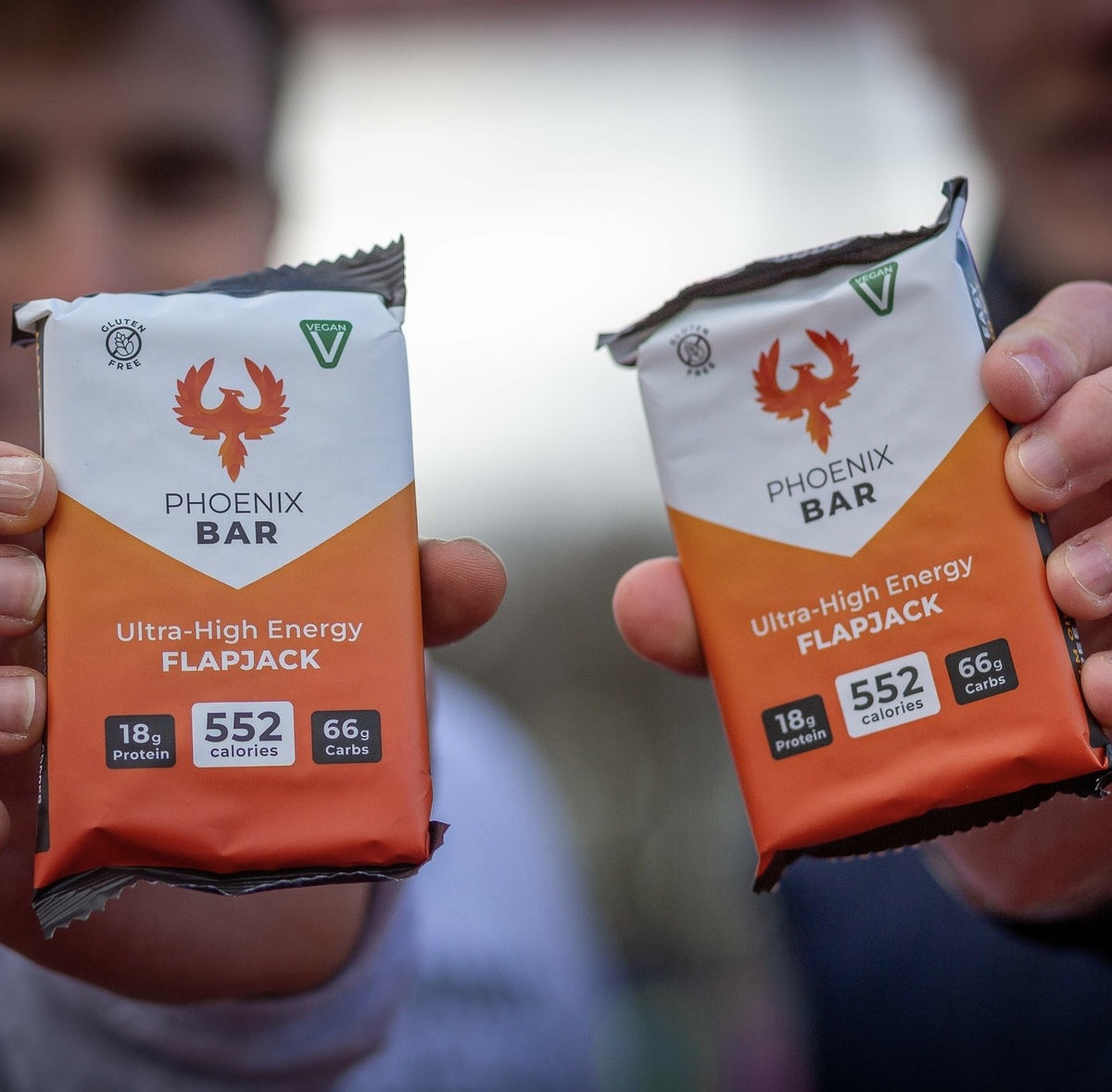
The cheapest high calorie foods in a UK supermarket are plain flour, white rice, dry pasta, vegetable oil and porridge oats, all under 2.5p per 100 calories on Tesco's value ranges in October 2026. Peanut butter, peanuts and granola cost about 5p per 100 calories. When there is no time or kitchen, a Phoenix Bar gives you up to 557 calories in a compact, 120g bar with no cooking, and keeps for up to two years.
How I checked: every price below is from Tesco's website on 19 October 2026, using the cheapest own-label line on the site (Grower's Harvest, Hearty Food Co, Stockwell & Co, H.W. Nevill's, Creamfields or Tesco) and ignoring Clubcard offers. Calories per 100g come from the UK's McCance and Widdowson tables, with USDA figures for peanut butter. Prices change weekly and differ between shops, so read the pence as a guide to the order, not a receipt. I make Phoenix Bars.
How do you work out the cheapest food per calorie?
Divide the price in pence by the calories in the pack, then multiply by 100. A 1kg bag of Grower's Harvest porridge oats costs 85p and holds about 3,810 calories, so 85 divided by 3,810, times 100, is 2.2p per 100 calories. The price per kg on the shelf label does half the sum for you.
Price per pack tells you almost nothing. A £2.90 protein bar with 233 calories is expensive food; an 85p bag of oats with 3,810 calories is some of the cheapest food you can buy.
Two patterns hold throughout. Fat carries 9 calories per gram and oil is cheap, which is why it sits near the top. And dry staples beat that protein bar by a wide margin: porridge oats at 2.2p per 100 calories against £1.24.
Free download
Free guide: how to eat 500+ calories in under 2 minutes
A short PDF of the simplest ways people get more calories from less food. Free, sent straight to your inbox.
Free. Unsubscribe anytime. Privacy policy
Cheap high calorie foods ranked by pence per 100 calories
Tesco online prices, 19 October 2026, cheapest own-label line unless stated.
Under 3p per 100 calories: the cheapest calories in the shop
- Plain flour: 1.3p. Stockwell & Co, 1.5kg for 70p. The cheapest calories of all, and the reason home baking (flapjacks, scones, pancakes) is the budget route to snacks.
- White rice: 1.5p. Grower's Harvest long grain, 1kg for 52p. Tesco's own easy cook rice is 3.6p at £1.25 a kilo.
- Dry spaghetti: 1.6p. Hearty Food Co, 500g for 28p; Tesco's own-label spaghetti is 4.4p at 75p.
- Vegetable oil: 1.8p. Tesco Pure Vegetable Oil, £1.45 a litre. A tablespoon stirred into pasta, rice or soup adds about 120 calories for 2p.
- Porridge oats: 2.2p. Grower's Harvest, 1kg for 85p; Tesco Scottish oats are 3.3p at £1.25. The base of cheap breakfasts, flapjacks and homemade weight gainer shakes.
- White sugar: 2.8p. A 1kg bag for £1.09. Cheap calories, best used in baking, not eaten by the spoon.
- White bread: 2.9p. H.W. Nevill's medium sliced 800g loaf for 55p, which exists to carry butter and peanut butter.
3p to 10p per 100 calories: still exceptional value
- Peanut butter: 4.8p. Tesco smooth, 340g for 95p. The best mix of price, calorie density and protein on this list; two tablespoons add 188 calories for 9p.
- Roasted salted peanuts: 4.9p. Stockwell & Co, 200g for 59p. The cheapest ready-to-eat snack in the ranking; my guide to high calorie snacks compares them per bite.
- Granola: 4.9p. Tesco's 1kg granolas at £2.20, and 60g turns a glass of whole milk into a 400-calorie bowl.
- Baked beans: 8.2p. Stockwell & Co, 420g for 28p, about 340 calories a tin; Tesco's own tin is 39p, or 11.5p per 100 calories.
- Red lentils: 8.4p. Tesco, 1kg for £2.60. Cheap calories that bring protein and fibre with them, and a thick base for high calorie soups.
- Butter: 9.9p. Tesco British salted block, 250g for £1.85.
10p to 20p per 100 calories: everyday building blocks
- Sultanas: 10.8p. Grower's Harvest, 500g for £1.49. Easy by the handful or stirred through porridge.
- Whole milk: 11.5p. Four pints for £1.65 carry about 1,430 calories. Switching to whole milk is one of the easy ways to eat more calories.
- Mature Cheddar: 14.7p. Creamfields, 400g for £2.45. A 30g handful grated over beans or pasta adds 125 calories for 18p.
- Bananas: 17.6p. Loose at 90p a kilo, weighed with the skin on. The cheapest fresh fruit calories here, and the natural partner for oats and peanut butter.
Over 20p per 100 calories: worth it for what they bring
- Eggs: about 30p to 40p. 19p to 25p an egg (15 mixed-size free range for £2.85, or 12 medium for £2.95), taking about 65 calories per egg. Not cheap calories, but cheap protein, and scrambled in butter with cheese two eggs pass 300 calories.
- Soya drink: 29p sweetened, 44p unsweetened (Tesco, £1.25 and £1.15 a litre). Fine for a vegan diet, but three to four times the price of whole milk per calorie.
- Skimmed milk powder: 57p. £5 for 250g. It is worth buying to add protein and calories to milk without adding volume, not for cheap calories.
For the same foods ranked by calories per gram rather than per penny, see my guide to calorie-dense foods.
What is the cheapest way to add calories?
Add fat to food you already buy. Four additions to a normal day, at the prices above, come to about 500 calories for under 40p, with no extra meals and no extra cooking:
- A tablespoon of vegetable oil stirred into pasta or rice: about 120 calories for 2p.
- A 10g knob of butter in mash: 74 calories for 7p.
- 30g of grated Cheddar over beans: 125 calories for 18p.
- Two tablespoons of peanut butter on morning toast: 188 calories for 9p.
That is 507 calories for 37p. It is the same fortification logic that runs through the high calorie breakfast ideas guide, done with the cheapest ingredients on the shelf. If a full plate is the problem rather than the money, the same additions are the heart of high calorie low volume foods.
A 3,500 calorie day for about £2
Here is the arithmetic, at the Tesco value-range prices above:
- Breakfast: 100g porridge oats with 300ml whole milk, two tablespoons of peanut butter and a small banana. About 840 calories for 52p.
- Lunch: 150g dry spaghetti with two tablespoons of vegetable oil and 40g grated Cheddar. About 925 calories for 37p.
- Dinner: 125g dry rice with two eggs fried in a tablespoon of oil and half a tin of beans. About 865 calories for 61p.
- Snacks: 60g roasted peanuts, two slices of bread with two tablespoons of peanut butter, and another 300ml of whole milk. About 925 calories for 54p.
Total: about 3,560 calories for £2.03. Swap every value line for Tesco's standard own-label version and the same day comes to about £2.85. The honest catch is that this day is short on vegetables and fruit; frozen vegetables cost more per calorie but are what it lacks. For a fully planned version, see the 3,000 calorie meal plan.
Cheap high calorie foods for vegan and gluten-free diets
Most of the top of the ranking is already plant-based: flour, rice, pasta, oil, oats, bread, peanut butter, peanuts, lentils and bananas. The one costly swap is milk: soya drink is 29p to 44p per 100 calories against 11.5p for whole milk, so on a vegan budget it pays to get calories from oil, oats and peanut butter and use soya for what it brings beyond calories. Gluten-free budgets lean on rice, potatoes, oats labelled gluten-free, lentils, eggs, dairy and peanut butter in place of bread and standard pasta.
Who needs cheap calories most?
Students and anyone bulking on a budget can build a full surplus from this list alone; the best high calorie foods for bulking guide shows how to structure it for training. And if you are supporting an older relative on a fixed income through a spell of smaller appetite, the same small additions (whole milk, butter, cheese) do the most work for the least money; there is a fuller, gentler guide in high calorie foods for older people.
When does a high calorie bar make sense?
A bar earns its place in the moments staples cannot cover: no kitchen, no time, or food that has to live in a bag or a drawer for weeks. That is the job I designed Phoenix Bars for: our high calorie bars carry up to 557 calories in a compact, 120g bar, need no cooking and keep for up to two years in a bag or drawer. To see how other bars measure up, my ranking of the highest calorie bars in the UK compares the main options per gram and per bar.
Frequently asked questions
What is the cheapest food with the most calories? By cost per calorie, plain flour is the cheapest food in a UK supermarket, at about 1.3p per 100 calories on Tesco's Stockwell & Co range in October 2026, followed by white rice, dry pasta, vegetable oil and porridge oats, all under 2.5p. Peanut butter, at 4.8p, is the cheapest food that combines high calorie density with useful protein.
How can I eat 3,000 calories a day cheaply? Build every meal on a dry staple (oats, pasta, rice or bread), add a fat to each (oil, butter, peanut butter or cheese), drink whole milk, and snack on peanuts and peanut butter toast. At Tesco value-range prices in October 2026, a 3,500-calorie day like the one above costs about £2.
What are the best high calorie meals I can buy at a convenience store? Pick the items with the most calories for the money, even at corner-shop prices. A snack-sized pork pie (about 240 calories), a 50g bag of salted peanuts (about 300) and a pint of whole milk (358) come to about 900 calories with no cooking. A loaf and a jar of peanut butter go further still if you have somewhere to keep them.
Are high calorie foods expensive? Usually the opposite. In this ranking the densest staples are also the cheapest per calorie: oil, flour, pasta and oats all cost under 2.5p per 100 calories, against 17.6p for bananas. High cost per calorie mostly comes from water and packaging.
What cheap foods help with weight gain? The ones that combine a low cost per calorie with being easy to eat: peanut butter, whole milk, oats, granola, cheese, eggs, bananas and rice. Making small portions richer with oil, butter and cheese usually works better than trying to eat larger amounts, and the NHS suggests adding around 300 to 500 calories a day, gradually.
Related guides: Calorie-dense foods ranked · High calorie snacks · High calorie low volume foods · Best high calorie foods for bulking · 3,000 calorie meal plan

Viele Kalorien. Kleiner Riegel.
Bis zu 557 Kalorien in einem kompakten, leichten Riegel von nur 120 g, mit bis zu 66 g Kohlenhydraten und 19 g Protein. Im Ganzen essen, über ein paar Stunden in Stücken essen oder mit Wasser oder Milch zu Porridge verrühren.
Leicht zu essen, leicht verdaulich und nicht zu süß. Kunden haben sie bei -45 °C und in der Hitze des Marathon des Sables gegessen, und sie sind bis zu zwei Jahre haltbar: für die Berge, die Nachtschicht oder zu Hause, an Tagen, an denen genug zu essen schwerfällt.
- 557 Kalorien in nur 120 g (529 bis 557 je nach Sorte)
- 4,6 Kalorien pro Gramm
- 66g Kohlenhydrate pro Riegel (bis zu)
- 19g Protein pro Riegel (bis zu)
Widerruf erklären
Füllen Sie das folgende Formular aus, um Ihre Widerrufserklärung abzugeben.

