
Climbing Mount Toubkal: The Complete UK Guide
Written by James Frost, founder of Flaming Phoenix and the maker of Phoenix Bars. Updated October 2026.
Mount Toubkal is the highest mountain in North Africa, and the most achievable 4,000 metre summit a UK hiker can reach: a three and a half hour flight to Marrakech, a ninety minute taxi into the High Atlas, and a two day round trip on a path mules use daily. No ropes, no glacier travel in summer, no week of leave required. That accessibility is exactly why people underestimate it, because 4,167 metres delivers real altitude, real cold and a 3am summit morning whether you respected it or not.
We make expedition food, and trekkers have carried our bars up mountains from Kilimanjaro to Manaslu, so this guide covers the practical questions the brochures skip, including the one nobody warns you about: what altitude does to your appetite.
Mount Toubkal quick facts
The summit stands at 4,167m, the roof of the Atlas Mountains and the Arab world. The trailhead village is Imlil at about 1,740m, roughly 64km and an hour and a half by taxi from Marrakech. The standard round trip is about 27km with around 2,700m of total ascent, done over two days via the Toubkal refuge at about 3,200m. Winter conditions, meaning crampons and an ice axe, typically run from late November into April.
Do you need a guide to climb Toubkal?
Yes, in practice. Since early 2019, local authorities have required trekkers in the Toubkal area to be accompanied by a qualified local guide, a rule introduced after the December 2018 attack near Imlil, and it is enforced through security checkpoints in the valley, including at Aroumd, the shrine at Sidi Chamharouch and the refuge, where passports are checked. Carry your passport on the mountain. Guides are easy to arrange: through a UK operator before you fly, through a Marrakech agency, or directly in Imlil, where the bureau des guides and the trekking lodges can pair you with an accredited guide, usually with a mule to carry kit as far as the refuge.
The standard route, day by day
Day one: Imlil to the Toubkal refuge. Around 11km and 1,400m of ascent, five to seven hours. The trail climbs through walnut terraces to the village of Aroumd, crosses the flood plain, then settles into a steady valley path past the whitewashed shrine at Sidi Chamharouch (about 2,350m), where a checkpoint and the last proper snack stalls sit. The afternoon is honest, grinding switchbacks to the refuges at 3,200m. Eat a big lunch low; appetite shrinks with every hundred metres after the shrine.
Day two: summit and all the way down. Alarm around 3 to 4am. The route climbs the south cwm on scree and, for much of the year, snowfields, gaining almost 1,000m to the ridge, then an airy final rise to the summit pyramid and its iron frame marker. Three to four hours up for most parties, sunrise over the Sahara side if you time it, then the long 2,400m descent all the way to Imlil. It is a 10 to 12 hour day and the descent is what your legs will remember.
Got an extra day? The three day version (an acclimatisation loop via the Tizi n’Mzik pass or a night at Azzaden, or simply two nights at the refuge with an afternoon walk to 3,600m) noticeably improves summit-day comfort. If you are new to altitude, read our guide on how to acclimatise to altitude before you book flights, because the two day itinerary leaves zero margin for acclimatisation.

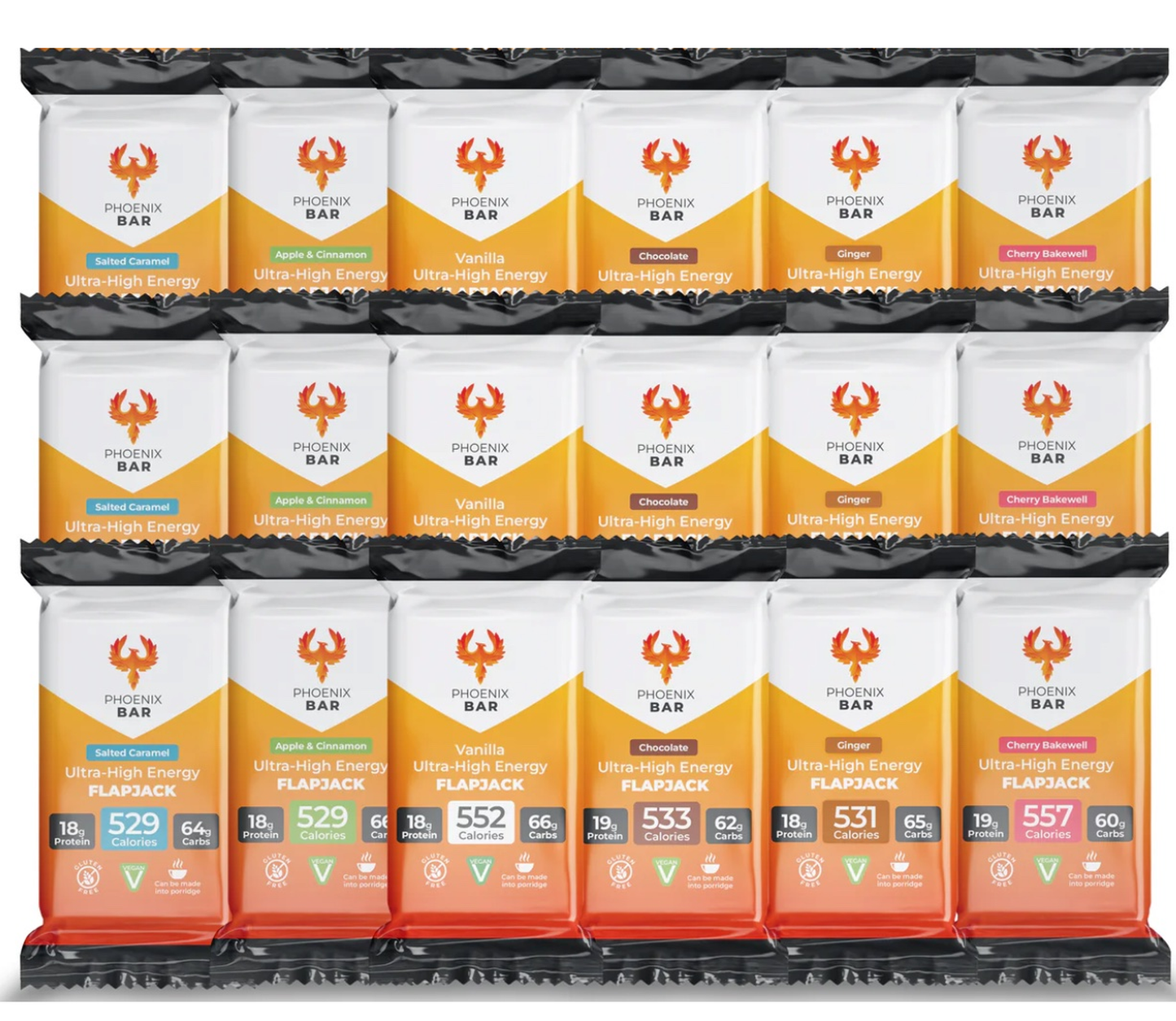
Phoenix Bars: Up to 557 Calories Per Bar
Highly compact, low-volume, calorie-dense bars. Soft, easy to eat whole or as a warm porridge. Vegan, gluten-free and contain up to 66g of carbohydrates, 19g of protein & 8 vitamins & minerals.
When is the best time to climb Mount Toubkal?
April to May and September to October are the sweet spots: stable weather, mild refuge nights, and in spring enough leftover snow to make the cwm kinder underfoot than bare scree. June to August works too, with heat in the lower valley and afternoon haze, and the refuge gets its busiest. Late November to April is a genuine winter mountaineering trip: crampons, ice axe and a guide who reads avalanche terrain, with hire kit available in Imlil. December and January are the hardest months, and also the most beautiful.
How hard is climbing Toubkal, and how fit do you need to be?
It is a long, non-technical trek that most hill-fit people complete: if you can enjoy consecutive 6 to 8 hour mountain days in Snowdonia or the Lakes with 1,000m plus of ascent, your legs are ready. What catches people is the altitude. At 4,167m the air delivers roughly 40 per cent less oxygen than at sea level, so summit morning feels like someone doubled the gradient. Walk slower than feels natural, drink constantly, and tell your guide about any headache that paracetamol does not shift. For a bigger objective afterwards, our Kilimanjaro guide and the list of the best mountains to climb are the natural next reads.
What does climbing Toubkal cost?
Booked locally, a two day guided trip from Imlil typically lands between £120 and £250 per person including guide, mule, refuge bed and meals, depending on group size and season. UK adventure operators charge roughly £400 to £700 for longer packaged itineraries with Marrakech transfers and extras. On top, budget for flights to Marrakech, around £20 to £30 for the Imlil taxi each way, a few pounds for mint tea and snacks at Sidi Chamharouch, tips for guide and muleteer, and winter kit hire if applicable. Travel insurance must cover trekking to 4,500m; most standard policies stop at 3,000m unless you add it.
Eating at altitude: the problem nobody briefs you on
Above 3,000m, most people’s appetite drops exactly when their calorie burn jumps. Refuge dinners are generous tagines, but summit morning at 3am your stomach wants nothing, and the climb ahead will burn well over 1,000 calories before breakfast-time. The answer is food that is dense, soft and easy to get down half-asleep in the cold.
This is the exact problem our customers use Phoenix Bars for. Graham, back from the Indian Himalayas: “Phoenix Bars saved the day when I was struggling with high-altitude appetite issues and I needed substantial calories with food I could trust during my particularly tough expedition.” Tom, from 6,000m plus on Peak Lenin: “the Phoenix Bars were valuable, easily digestible calories... Having the bars helped to keep me energized even above 6,000m.” And Matt, who carried 33 of them up Manaslu: “I like the calorie density of these flapjacks, the fact they don’t freeze easily at cold temperatures and their taste.”
One 120g bar holds up to 557 calories, breaks into chunks for pocket-eating on the move, stays soft in the cold, and mixes into a warm porridge at the refuge, which is the easiest breakfast an altitude-suppressed stomach will accept. Two to three bars covers summit day. They sit alongside the rest of your mountain food in our mountaineering nutrition guide and the best energy bars for expeditions, and because every bar is vegan and made with gluten free oats, they travel well where dietary options are thin. Plenty of trekkers finish a mountain lighter than they started; if that is you, high calorie bars for weight gain help rebuild afterwards too.
Toubkal kit list essentials
Year-round: broken-in boots, 30 litre pack, warm layer plus insulated jacket for the summit, hat, gloves, headtorch with spare batteries, 2 litres of water capacity, sun protection (the African sun at 4,000m is ferocious), passport, cash in dirhams, and your own snack supply because beyond Sidi Chamharouch the shop options end. Winter adds crampons, ice axe, and goggles. A sleeping bag liner makes refuge dormitories more pleasant.
FAQ
Can a beginner climb Mount Toubkal? Yes, provided they are hill-fit and guided. It is widely treated as a first 4,000m peak because the trail is non-technical in summer. Beginners should take the three day itinerary rather than two, purely for altitude.
How long does it take to climb Toubkal? Two days is standard: five to seven hours to the refuge, then a 10 to 12 hour summit-and-descent day. Three day itineraries are kinder and increasingly popular.
Is Mount Toubkal harder than Kilimanjaro? No. Kilimanjaro is nearly 1,730m higher, takes five to nine days, and its altitude affects almost everyone. Toubkal is the training ground; Kilimanjaro is the exam.
Is it safe to climb Mount Toubkal? The mountain has an excellent safety record for guided parties; the main risks are altitude, winter conditions and the heat of the lower valley. The post-2018 guide requirement and checkpoints exist precisely to keep trekkers accounted for.
Can you climb Toubkal without a guide? Not any more in practical terms: the checkpoint system in the valley enforces the guide requirement introduced in 2019, and refuges and agencies will expect you to be accompanied.
Flaming Phoenix is a UK company; Phoenix Bars are rated 4.9 out of 5 from nearly 400 reviews and have been carried on expeditions on five continents. If Toubkal is your first 4,000er, pack food your summit-morning stomach will actually accept.


Flaming Phoenix



Contact Us
Widerruf erklären
Füllen Sie das folgende Formular aus, um Ihre Widerrufserklärung abzugeben.

