
The Hardgainer's Guide: How to Gain Weight and Muscle When You Can't
A guide from the team at Phoenix Bars. Last reviewed July 2026.
Quick answer: A hardgainer is someone who struggles to gain weight or muscle despite eating what feels like plenty, usually a naturally lean ectomorph with a fast metabolism, a high fidget level, and an appetite that fills up fast. The reason is almost never genetics alone. It is that they are not in a consistent calorie surplus, because a high burn and early fullness keep their real intake below what they assume. The fix is to eat a steady surplus of calorie-dense, low-fullness food on a schedule rather than by hunger, lean on liquid calories, get enough protein, and lift heavy. Done consistently, hardgainers absolutely can build muscle.
I'm James, I make Phoenix Bars, and I built the business around exactly this problem: getting a lot of energy into people for whom eating enough is the hard part. Hardgainers are the clearest case there is. If you have ever said "I eat loads and still can't put on weight," this guide is for you, and the short version is that you are almost certainly eating less than you think relative to what you burn. Here is how to fix that without forcing down food you cannot finish.
What is a hardgainer?
A hardgainer is a person who finds it unusually hard to gain weight and muscle. The typical picture is an ectomorph body type, naturally lean and lightly built, paired with a fast metabolism and a lot of unconscious movement, the fidgeting, foot-tapping and restlessness that sports science calls non-exercise activity thermogenesis and which quietly burns hundreds of extra calories a day. On top of that, most hardgainers fill up quickly and lose interest in food fast, so they stop eating well before they have hit a surplus. Put those together and you get someone who genuinely feels like they eat a lot, while their actual daily intake sits at or below the amount they burn.
Why can't hardgainers gain weight?
Because gaining weight is not about how much you feel you eat, it is about being in a consistent calorie surplus, and hardgainers usually are not, for three reasons that stack up. Their maintenance calories are high, because a fast metabolism and all that background movement raise the number they have to beat. Their appetite caps their intake early, so they physically stop before reaching that number. And their intake is inconsistent, a big day followed by a couple of light ones that wipe out the surplus. None of this means your body is incapable of growing. It means the energy balance has never actually tipped into surplus for long enough. Fix the surplus and hardgainers gain like anyone else. If you have been eating big for weeks with nothing to show for it, our guide on why you can't gain weight walks through the specific culprits, and how to gain weight with a fast metabolism covers the metabolism side in detail.
How should a hardgainer eat?
The whole game is hitting a surplus without needing to eat a volume of food you cannot face. Six things do that.
First, run a consistent surplus and actually track it, at least at the start. Aim for roughly 300 to 500 calories a day above maintenance, and eat to that number on a schedule rather than waiting to feel hungry, because for a hardgainer hunger arrives too late and leaves too early. Work out your own target with our calories to gain weight guide.
Second, and this is the single most important tactic for a hardgainer, eat calorie-dense, low-fullness food. The reason you fill up before hitting your surplus is volume, so the fix is energy that takes up little room: oils and nut butters, full-fat dairy, dried fruit, nuts, granola and dense bars. Our calorie-dense foods guide ranks the lot, and high-calorie snackscovers the grazing between meals that quietly does the work.
Third, drink some of your calories. Liquids bypass fullness in a way solids never will, so a weight-gainer shake or a calorie-loaded smoothie is often the easiest few hundred calories a hardgainer will get all day.
Fourth, eat frequently, four to six times a day rather than three, so no single sitting has to be enormous. Fifth, get enough protein, around 1.6 to 2.2 grams per kilogram of bodyweight, so the surplus builds muscle rather than only fat, using high-calorie high-protein foods. And sixth, be patient and weigh yourself weekly, aiming for a gain of about 0.25 to 0.5 percent of your bodyweight a week. Faster than that on a hardgainer usually just means extra fat.

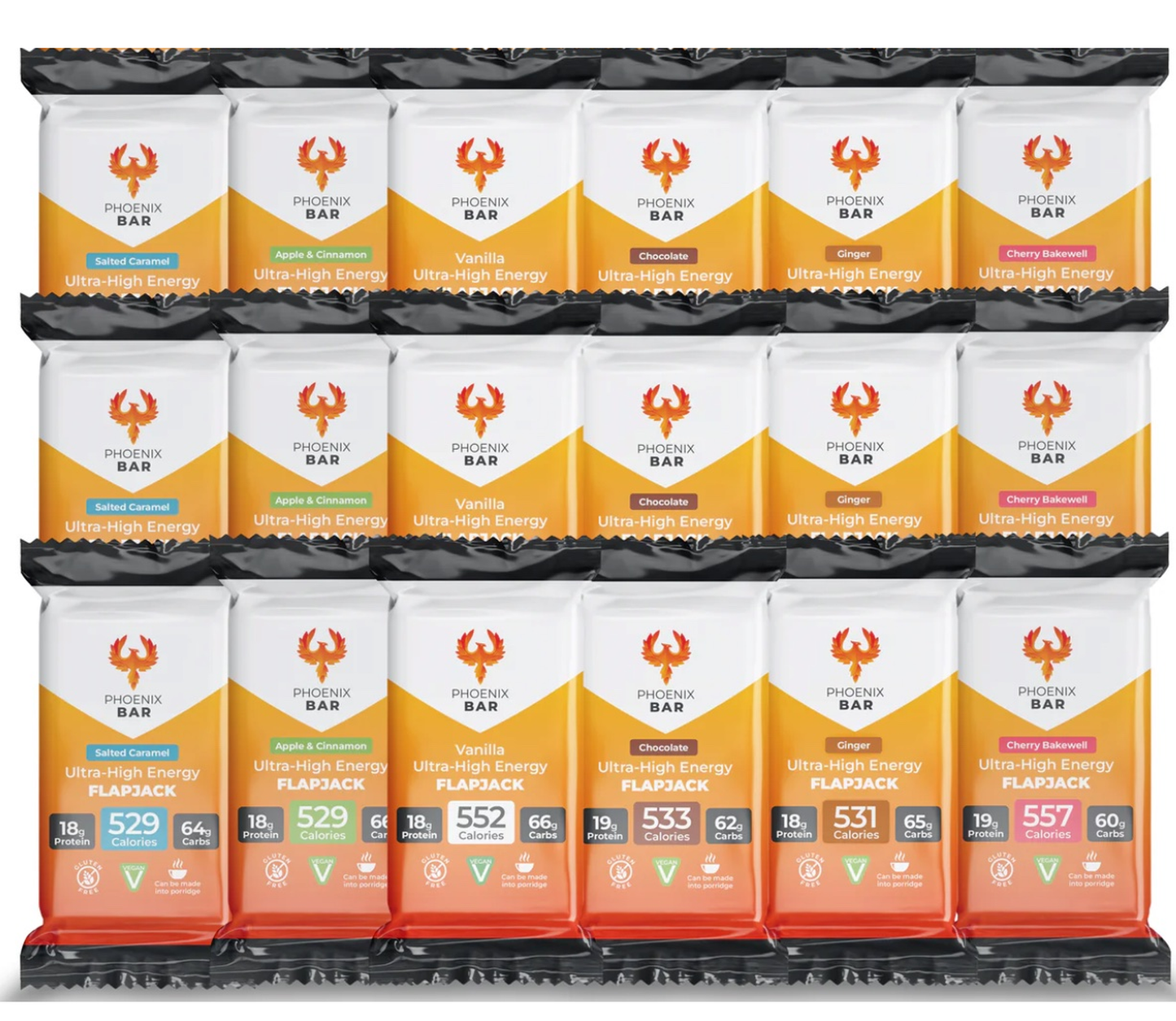
Phoenix Bars: Up to 557 Calories Per Bar
Highly compact, low-volume, calorie-dense bars. Soft, easy to eat whole or as a warm porridge. Vegan, gluten-free and contain up to 66g of carbohydrates, 19g of protein & 8 vitamins & minerals.
How should a hardgainer train?
Nutrition puts the weight on, but training decides how much of it is muscle. The principle that matters is progressive resistance training built on compound lifts, squats, deadlifts, presses and rows, with the weight or reps creeping up over time so your muscles have a reason to grow into the surplus you are feeding them. Rest and sleep matter as much as the sessions. The one hardgainer-specific warning is cardio: a lot of endless running on top of an already high burn makes the surplus even harder to hold, so keep it moderate while you are trying to gain. We are a nutrition brand, not a training one, so treat this as the frame rather than a full programme, but the nutrition without the lifting just adds fat, and the lifting without the surplus adds nothing.
Are hardgainers just ectomorphs?
Largely, yes. Ectomorph is the body-type label, naturally lean, narrow-framed and light, while hardgainer is the practical experience of that type, struggling to add size. Most ectomorphs are hardgainers and most hardgainers are ectomorphs, and the plan is the same for both: a consistent surplus of calorie-dense food, enough protein, and progressive lifting. The label matters far less than the habits.
Common hardgainer mistakes
The same errors trip up almost every hardgainer. Believing you eat a lot without ever tracking it, which is how a felt surplus turns out to be maintenance. Eating well on training days and coasting on rest days, so the weekly average never tips over. Filling up on low-calorie, high-volume food like salads and lean chicken breast that leave no room for the energy you actually need. Doing too much cardio on top of a high metabolism. And program-hopping in the gym instead of progressively loading a few compound lifts for months. Fix those and the scale moves.
Where Phoenix Bars fit
The hardgainer's core problem, a lot of calories in a form small enough that a fast-filling appetite can actually get through it, is the exact problem Phoenix Bars were built for. Each bar carries up to 557 calories in a 120g bar with protein built in, so it slots a dense few hundred calories between meals without the volume of another full plate, which is precisely where hardgainer bulks stall. It needs no prep, so it covers the busy day when cooking a fourth meal is not happening, and you can stir one into hot milk as a porridge or blend it into a shake when you would rather drink the calories. It is the thing to reach for when you know you should eat more but cannot face more food. For the different ways to use them, see how to use Phoenix Bars.
Frequently asked questions
What is a hardgainer?
Someone who finds it unusually hard to gain weight and muscle, typically a lean ectomorph with a fast metabolism, high background activity, and an appetite that fills up quickly, so their real intake stays below what they burn.
Can hardgainers build muscle?
Yes. Hardgainers can build muscle like anyone else once they hold a consistent calorie surplus with enough protein and progressive resistance training. The difficulty is in eating enough consistently, not in the body's ability to grow.
Why can't I gain weight even though I eat a lot?
Because feeling like you eat a lot is not the same as being in a surplus. A high metabolism and early fullness usually mean your actual intake is at or below maintenance. Track it for a week and the gap is almost always there.
What should a hardgainer eat to gain weight?
Calorie-dense, low-fullness foods so you can hit a surplus without huge volume: oils, nut butters, full-fat dairy, dried fruit, nuts, dense bars, and liquid calories like weight-gainer shakes. Eat on a schedule, four to six times a day, with enough protein.
Should hardgainers do cardio?
Some is fine for health, but keep it moderate while gaining, because heavy cardio on top of an already high metabolism makes the surplus much harder to hold.
Is a hardgainer the same as an ectomorph?
Nearly. Ectomorph is the lean body type and hardgainer is the experience of struggling to add size to it. Most people are both, and the plan is identical for each.
Related guides
Build the rest of your plan from here: why you can't gain weight and how to gain weight with a fast metabolism for the diagnosis, calorie-dense foods, high-calorie snacks and weight-gainer shakes for what to eat, bulking meals and the main bulking guide for putting it into practice, and calories to gain weight for your target.
About this guide: I'm James, founder of Flaming Phoenix and Phoenix Bars, developed from more than 150 conversations with people who find it hard to eat enough, including plenty of self-described hardgainers. The bars are rated 5.0 out of 5 across more than 370 verified reviews. This guide reflects that experience alongside established nutrition and training principles. It is general information, not medical advice. Last reviewed July 2026.


Flaming Phoenix



Contact Us
Widerruf erklären
Füllen Sie das folgende Formular aus, um Ihre Widerrufserklärung abzugeben.

