
Best food to stockpile (UK): 50 foods to buy, and how much
In diesem Leitfaden

 Written by James Frost, founder of Flaming Phoenix and the maker of Phoenix Bars. Updated 25 October 2026 and checked against the government's Be Ready checklist.
The best food to stockpile in the UK is food your household already eats that needs no fridge, keeps for months or years, and ideally needs no cooking: tinned fish, meat, beans and fruit, oatcakes and crackers, peanut butter, nuts, dried fruit, UHT milk and dense bars, backed up by rice, pasta and oats for longer stretches. For the government's Be Ready advice of 3 days, that is about 6,000 to 7,500 calories of food per adult, plus 9 litres of drinking water.
If you only buy ten things:
- 1. Tinned fish, such as sardines, mackerel or tuna.
- 2. Tinned beans, including baked beans and chickpeas.
- 3. Peanut butter.
- 4. Oatcakes or crackers.
- 5. Salted peanuts or mixed nuts.
- 6. Tinned fruit in juice.
- 7. UHT milk cartons.
- 8. Porridge oats.
- 9. Dense, long-life bars.
- 10. Bottled water.
The government's Be Ready campaign, launched on 22 October 2026, asks every household to keep 3 days of supplies and to build them gradually during normal shopping trips. This guide is the shopping list: 50 foods, aisle by aisle, and how much to buy.
Why I wrote this guide. Phoenix Bars began as my university project to design a better emergency ration, and I spend my working life thinking about which foods give the most calories in the least space, keep longest, and still get eaten when people are tired, stressed or off their food. That is exactly what a good stockpile needs.
How much food to stockpile
Plan around 2,000 to 2,500 calories per adult per day, which comes from the NHS guide of about 2,000 a day for women and 2,500 for men:
- 3 days (the Be Ready target): about 6,000 to 7,500 calories per adult. Our 3-day emergency food supply list reaches 7,178 calories from supermarket food that needs no cooking.
- 1 week: about 14,000 to 17,500 calories per adult, or roughly two and a third times the 3-day list.
- 1 month: about 60,000 to 75,000 calories per adult. At this scale, dry staples become the cheapest calories: rice, pasta and oats carry around 350 to 375 calories per 100g dry, but they need water and a safe way to cook.
- Children: roughly 1,600 to 2,000 calories a day for primary school age, and close to adult amounts for teenagers.
A family of two adults and two primary-age children needs about 24,000 calories for 3 days, plus 36 litres of drinking water. Water usually takes up more space than food; our guide to emergency water storage covers how to store it.
The 50 best foods to stockpile in the UK, aisle by aisle
Typical shelf lives are for unopened packs, based on USDA FoodKeeper guidance; the date on the pack always comes first. No-cook means you can eat it cold, straight from the pack.
Tinned fish and meat
- 1. Sardines in oil: oily fish and protein in a ring-pull tin, no-cook. Low-acid tins typically keep 2 to 5 years.
- 2. Mackerel: in oil or tomato sauce, no-cook and filling.
- 3. Tuna: the most versatile tin in the cupboard, no-cook.
- 4. Salmon: pricier, but a welcome change by day three.
- 5. Corned beef: dense, no-cook and long-lasting.
- 6. Tinned chicken or ham: no-cook protein for sandwiches on crackers.
Tinned beans and pulses
- 7. Baked beans: fine cold, cheap and familiar to children.
- 8. Chickpeas: no-cook once drained, and good with tuna or in a salad.
- 9. Kidney or mixed beans: protein and fibre, no-cook once drained.
- 10. Tinned lentils: ready to eat, unlike dried lentils.
Tinned vegetables, soups and meals
- 11. Sweetcorn: sweet enough to eat cold.
- 12. Peas, carrots or mixed vegetables: vegetables for days without fresh food.
- 13. Tinned potatoes: already cooked and surprisingly useful.
- 14. Chopped tomatoes: high-acid, so typically 12 to 18 months rather than years.
- 15. Soup: best warm, but most can be eaten cold.
- 16. Tinned stews, chilli or curry: a whole meal in one tin, edible cold if need be.
Tinned fruit and puddings
- 17. Fruit in juice: peaches, pears, pineapple or fruit cocktail, and the juice counts as fluid. High-acid, typically 12 to 18 months.
- 18. Rice pudding or custard: soft, sweet comfort food that is easy to eat.
Dry staples that need cooking
- 19. White rice: around 2 years, longer in an airtight container. Brown rice keeps for much less.
- 20. Dried pasta: around 2 years.
- 21. Porridge oats: can be soaked overnight in milk or water if you cannot cook.
- 22. Instant noodles: quick if you can boil a kettle.
- 23. Couscous: needs only hot water and a lid.
- 24. Dried red lentils: cheap protein for a longer supply.
- 25. Flour: only worth it if you bake and can cook.
Ready-to-eat carbohydrates
- 26. Oatcakes: around 450 calories per 100g and very filling.
- 27. Crackers: the base for tinned fish and nut butter.
- 28. Rye crispbread: keeps far longer than bread.
- 29. Breakfast cereal or granola: good dry or with UHT milk.
- 30. Rice cakes: light and long-lasting.
- 31. Long-life wraps: a bread substitute that lasts for weeks.
Nuts, seeds, spreads and oils
- 32. Peanut butter: around 600 calories per 100g, no-cook and loved by most children.
- 33. Salted peanuts or mixed nuts: around 600 calories per 100g. Vacuum packs keep longest.
- 34. Sunflower or pumpkin seeds: dense and easy to add to anything.
- 35. Olive or rapeseed oil: around 900 calories per 100g for cooking, or drizzled on tins.
Sweet things and treats
- 36. Chocolate: around 520 calories per 100g and a real morale lift, though it melts in heat.
- 37. Dried fruit: raisins, apricots and dates for sweetness and fibre.
- 38. Flapjack: around 430 calories per 100g.
- 39. Biscuits: digestives or oat biscuits, for tea and comfort.
- 40. Honey: keeps almost indefinitely.
- 41. Jam or marmalade: turns crackers into a treat.
Drinks and milk
- 42. UHT milk: keeps for months unopened, so check the carton.
- 43. Plant milk cartons: long-life oat, soya or almond milk.
- 44. Powdered milk: around a year, and light to store.
- 45. Tea bags and instant coffee: if you can boil water, worth their weight in morale.
- 46. Juice cartons: small cartons avoid waste once opened.
- 47. Bottled water: 3 litres per person per day for drinking.
Long-life extras
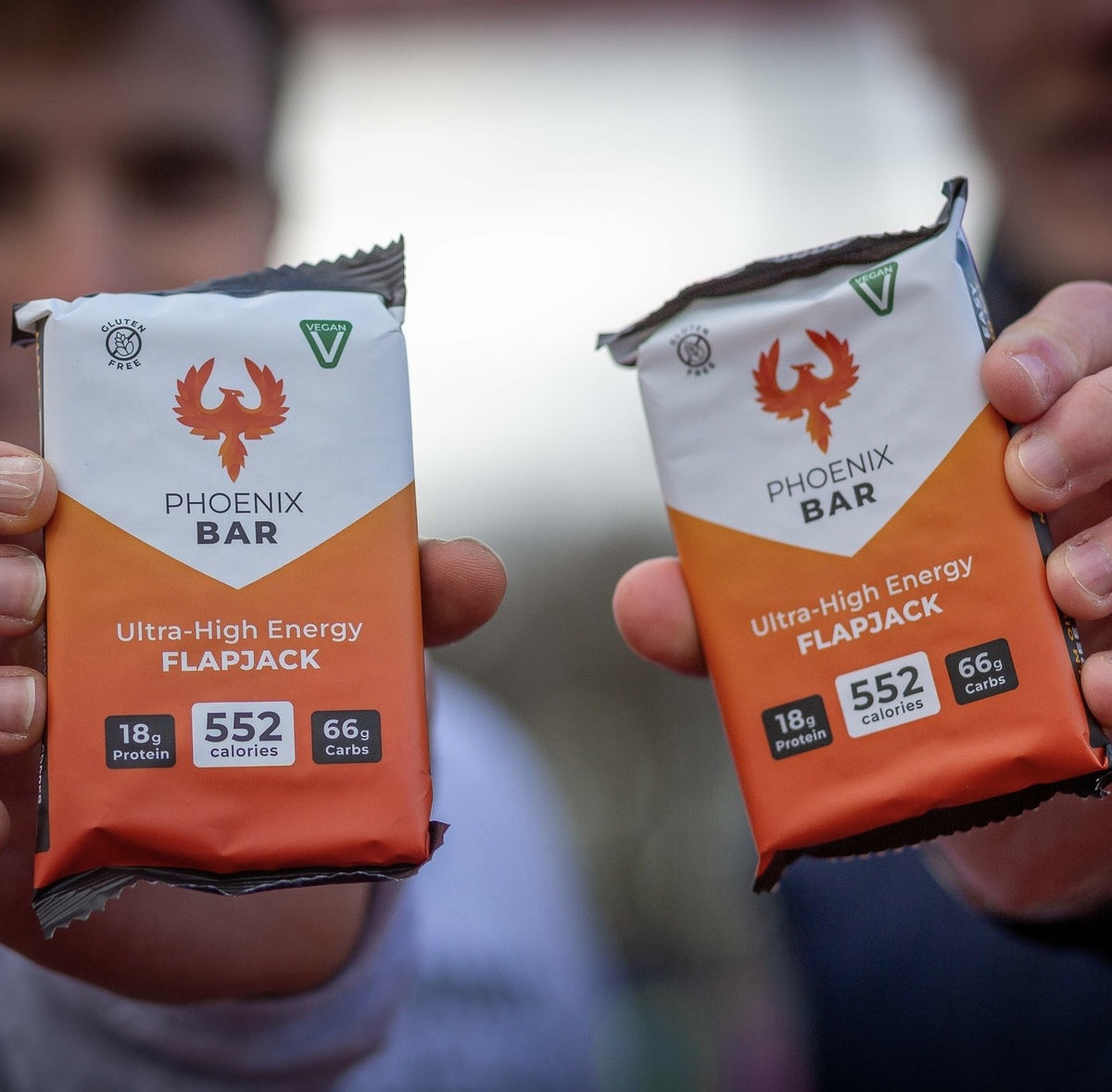
- 48. Dense, long-life high calorie bars: Phoenix Bars carry up to 557 calories in only 120g, need no cooking or water, will not freeze or melt, and keep for up to two years (12 months for Cherry Bakewell).
- 49. Emergency rations or ration packs: lifeboat-style rations keep for 5 to 20 years. Our guide to emergency rations compares them.
- 50. Salt, sugar, stock cubes and spices: they make plain food worth eating.
Add pet food, ready-to-feed baby formula and anything your household needs for medical or dietary reasons. For how long each type of food keeps, see our non-perishable food list.
What not to stockpile
- Food nobody in your house eats. It will sit there until it expires.
- A cupboard that is all rice and pasta. In a power cut you may not be able to cook, so keep plenty of no-cook food.
- Lots of very salty food unless you have water to spare, because salt makes you thirstier.
- Anything that needs a fridge or freezer.
- Giant bulk packs you will never get through before their date.
How to stockpile without panic buying
Be Ready is clear that there is no need to panic buy. Start with what you already have, then add one or two extra items to each normal shop until you reach 3 days. Supermarket own-brand tins are as good as branded ones for this. Once you have 3 days, decide whether a week or more makes sense for your household and space.
How to store a food stockpile
- Keep it somewhere cool, dry and dark, such as a cupboard, under the stairs or under a bed.
- Avoid lofts, sheds and garages, where heat, cold and damp shorten shelf life.
- Put new stock at the back and use the oldest first in everyday meals.
- Move opened dry goods into airtight containers to keep out moisture and pests.
- Check dates every six months, as Be Ready suggests.
Common questions about stockpiling food
What are the top 10 foods to stockpile?
Tinned fish, tinned beans, peanut butter, oatcakes or crackers, nuts, tinned fruit in juice, UHT milk, porridge oats, dense long-life bars and bottled water.
What emergency food should I buy?
Buy food your household already eats that needs no fridge and no cooking: ring-pull tins of fish, beans and fruit, oatcakes or crackers, peanut butter, nuts, UHT milk and dense long-life bars, plus 9 litres of bottled water per person. Start with 3 days' worth, then add a little to each shop. New to all this? Our beginner's guide to prepping in the UK walks through it step by step.
Should I stockpile food in the UK?
The government's Be Ready advice is to keep enough food and water for 3 days, built up gradually rather than all at once. It is about coping with short disruptions such as storms, floods and power cuts, not panic buying.
How much food should I stockpile for a family of four?
For 3 days, about 24,000 calories for two adults and two primary-age children, plus 36 litres of drinking water. Our 3-day emergency food supply list has amounts for other households.
What food lasts the longest?
Honey, salt, sugar and white rice stored airtight keep almost indefinitely. Low-acid tins typically keep 2 to 5 years, emergency rations 5 to 20 years, and freeze-dried meals up to 25 years.
What tinned food is best for emergencies?
Ring-pull tins you can eat cold: fish, corned beef, beans, chickpeas, sweetcorn, fruit in juice and rice pudding. Low-acid tins such as fish, meat and beans keep longer than high-acid tins such as tomatoes and fruit.
Is it worth stockpiling high-calorie food?
Yes, where space is limited. Peanut butter, nuts, oatcakes, chocolate and dense bars carry several times the calories of tins for their size, which matters in a small home, a grab bag or the car.
Sources: GOV.UK Be Ready, be ready for emergencies; NHS, understanding calories; CoFID 2021; USDA FoodKeeper guidance.

Viele Kalorien. Kleiner Riegel.
Bis zu 557 Kalorien in einem kompakten, leichten Riegel von nur 120 g, mit bis zu 66 g Kohlenhydraten und 19 g Protein. Im Ganzen essen, über ein paar Stunden in Stücken essen oder mit Wasser oder Milch zu Porridge verrühren.
Leicht zu essen, leicht verdaulich und nicht zu süß. Kunden haben sie bei -45 °C und in der Hitze des Marathon des Sables gegessen, und sie sind bis zu zwei Jahre haltbar: für die Berge, die Nachtschicht oder zu Hause, an Tagen, an denen genug zu essen schwerfällt.
- 557 Kalorien in nur 120 g (529 bis 557 je nach Sorte)
- 4,6 Kalorien pro Gramm
- 66g Kohlenhydrate pro Riegel (bis zu)
- 19g Protein pro Riegel (bis zu)
