
Soft High-Calorie Foods That Are Easy to Eat
Written by James Frost, Founder of Flaming Phoenix | Last reviewed: March 2026
When eating feels difficult, texture matters as much as calories. Foods that are soft, smooth, or easy to break apart can make the difference between managing a few bites and not eating at all. This guide focuses specifically on foods that combine two things: high calorie density and a soft texture that requires minimal chewing effort.
This is not a guide about what calorie-dense foods are in general (we cover that here). This page is for people who already know they need more calories but are finding the physical act of eating hard, whether because of fatigue, soreness in the mouth or throat, dental issues, post-procedural tenderness, or simply because the effort of chewing a full meal feels overwhelming right now.
Every food listed below meets two criteria: it provides meaningful calories in a small portion, and it can be eaten with little to no chewing.
Why texture matters when appetite is already low
When someone is struggling to eat enough, the problem is rarely just about hunger. Often, the mechanical act of eating is part of the barrier. Chewing is tiring. Hard or dry foods can feel unpleasant. Large portions are visually overwhelming. Foods that require preparation feel like too much effort when energy is already depleted.
Soft foods reduce the effort required at every stage. They need less jaw movement, less time to eat, and less energy to digest. For someone who can only manage a few mouthfuls at a time, those mouthfuls need to deliver as many calories as possible. That is why the combination of soft texture and high calorie density is so important.
This is relevant for anyone dealing with fatigue, mouth or jaw discomfort, swallowing difficulties, reduced energy for meal preparation, or simply a period where eating full meals is not manageable. It is a practical food challenge, and it has practical food solutions.
Soft foods with the highest calories per portion
The following foods all share a soft or smooth texture and a high ratio of calories to volume. Calories listed are approximate and based on standard UK portion sizes.
Nut butters (smooth)
Smooth peanut butter, almond butter, and cashew butter are among the most calorie-dense soft foods available. A single tablespoon of smooth peanut butter provides roughly 95 calories. Two tablespoons, which is a comfortable amount to spread on soft bread or stir into porridge, provides around 190 calories. Nut butters require no chewing at all when eaten off a spoon or mixed into other foods. They can be stirred into warm porridge, blended into smoothies, spread on soft banana slices, or eaten directly. For people who find the thickness difficult to swallow, thinning nut butter with a small amount of warm milk or water makes it easier to manage.
Avocado
Half a medium avocado provides approximately 160 calories. Avocado has a naturally creamy, smooth texture that requires almost no chewing. It can be mashed onto soft toast, blended into smoothies, mixed into yoghurt, or eaten plain with a spoon. For an even higher calorie option, mashing avocado with a drizzle of olive oil and a pinch of salt creates a simple, calorie-dense food that takes less than a minute to prepare. A whole avocado with a tablespoon of olive oil provides over 440 calories in a portion that fits in the palm of your hand.
Full-fat yoghurt and fromage frais
A 150g pot of full-fat Greek yoghurt provides around 150 to 200 calories depending on the brand. Adding a tablespoon of honey (64 calories) and a tablespoon of smooth nut butter (95 calories) turns a simple yoghurt into a 310 to 360 calorie snack that is entirely soft, requires no preparation beyond stirring, and can be eaten slowly over time. Full-fat fromage frais with fruit compote is another option with a similar calorie profile and an even smoother texture.
Cream-based soups
Cream soups are one of the most versatile soft, calorie-dense options. A 300ml serving of a cream of mushroom, cream of chicken, or cream of tomato soup typically provides between 200 and 350 calories. Adding a tablespoon of double cream (around 60 calories) or a tablespoon of olive oil (around 120 calories) to any soup significantly increases its calorie content without changing the texture. Soup can be sipped slowly from a mug, which is often easier than eating from a bowl with a spoon when energy is very low. For maximum calories with minimum effort, shop-bought cream soups fortified with extra cream or butter at home are a practical choice.
Mashed potato with butter and cream
Mashed potato is soft, easy to eat, and easy to fortify with additional calories. A 200g serving of mashed potato made with butter and whole milk provides roughly 180 calories. Adding an extra tablespoon of butter (around 100 calories) and a tablespoon of double cream (around 60 calories) brings a single serving to approximately 340 calories. Mashed potato is also one of the foods that can be prepared in advance and reheated, reducing the effort needed at mealtimes. Adding grated cheese while the potato is still warm increases both calories and protein without changing the soft texture.
Porridge made with whole milk
A bowl of porridge made with whole milk rather than water provides around 250 to 300 calories. Adding a tablespoon of smooth nut butter, a drizzle of honey, and a handful of ground seeds can push a single bowl to over 500 calories. Porridge has a naturally soft, smooth texture and can be made thicker or thinner depending on preference. It is warm, comforting, and one of the most practical calorie-dense breakfasts for people who find solid food difficult first thing in the morning.
Phoenix Bars can also be made into a porridge by crumbling or breaking the bar into a bowl and adding hot water or warm milk. This creates a warm, soft, calorie-dense porridge providing over 500 calories per serving. This can be especially useful when cooking feels like too much effort, as it requires no preparation beyond boiling a kettle.
Smoothies and milkshakes
Blended drinks are among the easiest ways to consume significant calories when eating solid food feels unmanageable. A smoothie made with a banana (around 100 calories), 200ml of whole milk (around 130 calories), a tablespoon of smooth peanut butter (95 calories), and a tablespoon of honey (64 calories) provides roughly 390 calories and requires no chewing at all. Adding a scoop of protein powder, a tablespoon of coconut oil, or a handful of oats before blending can push a single smoothie above 500 calories. Smoothies can be sipped slowly over an hour or two, which is often more manageable than sitting down to a meal.
Scrambled eggs with butter
Scrambled eggs cooked with butter are soft, easy to eat, and surprisingly calorie-dense. Two large eggs scrambled with a tablespoon of butter and a splash of double cream provide approximately 300 calories. Adding grated cheese while the eggs are still warm increases this further. Scrambled eggs can be cooked in under five minutes and eaten with a fork or spoon, requiring very little chewing. They are also a good source of protein, which is important when food intake is reduced.
Rice pudding and custard
Ready-made rice pudding from a tin or pot provides around 130 to 200 calories per 200g serving, depending on the brand. A 200g serving of custard provides around 160 to 220 calories. Both are entirely soft, require no preparation, and can be eaten cold or warm. Eating a pot of rice pudding topped with a spoonful of jam or honey is one of the simplest ways to add 250 to 300 calories between meals without any cooking.
Soft cheese and cream cheese
Soft cheeses like Brie, Camembert, and cream cheese are calorie-dense and require minimal chewing. A 30g portion of Brie provides around 100 calories. Cream cheese is even more versatile: a 30g serving of full-fat cream cheese provides approximately 75 calories and can be spread on soft bread, crackers, or eaten directly. Mixing cream cheese with smoked salmon, avocado, or chives creates a calorie-dense snack that is entirely soft.
Compact, soft nutrition bars
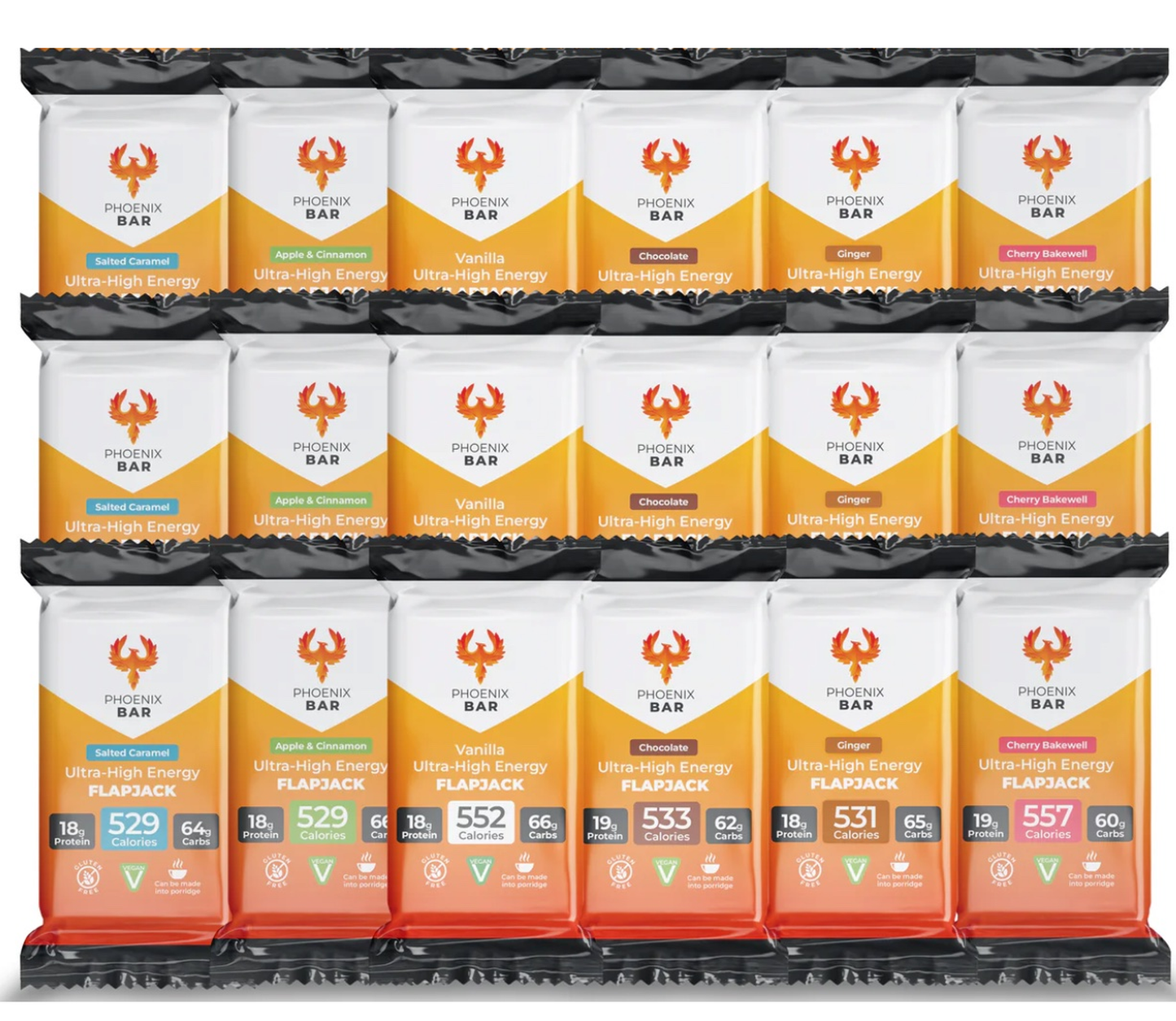
Some nutrition bars are specifically designed to be soft enough to eat without significant chewing effort. Phoenix Bars, for example, have a soft texture that can be eaten gradually in small pieces, broken apart by hand, or made into porridge with warm water or milk. Each Phoenix Bar provides over 550 calories in a 120g portion, making it one of the most calorie-dense single-serving soft foods available. It requires no refrigeration, no preparation, and can be eaten slowly over the course of several hours, which is often more manageable than trying to finish a meal in one sitting.
Phoenix Bars are a food product, not a medical treatment. They are used by ultra-endurance athletes, expedition teams, and individuals who need calorie-dense food to gain weight.
If a full plate feels like too much some days, a bar-sized option can be an easier way to get a decent amount of energy in. I've compared the meal replacement bars available in the UK, including which are softest and easiest to get down.

Phoenix Bars: Up to 557 Calories Per Bar
Soft, low-volume, calorie-dense bars. Easy to eat whole or as a warm porridge. Vegan, gluten-free and contain up to 66g of carbohydrates, 19g of protein & 8 vitamins & minerals.
Practical tips for eating more with less effort
Small practical changes can make a meaningful difference to total calorie intake over the course of a day.
Choose full-fat versions of everything
Swapping skimmed milk for whole milk, low-fat yoghurt for full-fat, and diet products for regular versions adds calories without adding volume. This is one of the simplest changes and it requires no additional effort or preparation.
Fortify foods you already eat
Stirring a tablespoon of olive oil or butter into soup, porridge, mashed potato, or pasta adds around 100 to 120 calories per tablespoon. Sprinkling ground nuts or seeds onto yoghurt or cereal adds both calories and nutrients. These additions are small enough that they do not change the taste or texture significantly.
Eat small amounts frequently
Five or six small eating occasions across the day, each providing 200 to 400 calories, is often more achievable than sitting down to large meals. Keeping ready-to-eat soft foods nearby (yoghurt pots, nut butter, nutrition bars, rice pudding) means food is always available without preparation.
Sip calories through drinks
Warm milk with honey, hot chocolate made with whole milk, fruit juice, or blended smoothies all provide meaningful calories without requiring any chewing. Liquid calories complement solid food and are often easier to consume in larger volumes.
Reduce preparation effort
Ready-made soups, pre-made smoothies, tinned rice pudding, yoghurt pots, and soft nutrition bars all require no cooking. A supply of these in the cupboard or fridge removes the barrier of having to cook in order to eat. Phoenix Bars store at room temperature for up to two years and can be kept anywhere you spend time, eliminating the preparation barrier completely.
Where Phoenix Bars fit
Phoenix Bars are high-calorie food bars designed to provide a compact, soft, calorie-dense option that requires no preparation. Each bar provides up to 557 calories and has a soft texture that can be eaten in small pieces or made into porridge with warm water or milk. They are vegan, gluten-free, and store at room temperature for up to two years.
The format suits anyone who wants soft calorie-dense food without the effort of cooking or assembly. The bar can be broken into pieces and grazed across the day, eaten whole as a quick snack, or made into a hot porridge by adding boiling water or warm milk. They do not melt in heat or freeze in sub-zero temperatures, so they can be kept in a kit bag, a desk drawer, a car, or a coat pocket without going off.
For someone trying to hit a high calorie target consistently, having a 557-calorie soft food option always within reach removes one of the biggest barriers to eating enough: the friction between deciding to eat and actually eating.
"I particularly like that they melt in my mouth — making them really easy to eat on the move, which easily allows me to consume a substantial amount of energy."
"I love the taste and while initially I thought it might be a little dry, it melted in my mouth quite quickly. I now have the option of an easy-to-eat bar containing over 550 calories, which takes the stress out of keeping on top of my energy."
Related guides
- Calorie-Dense Foods: What They Are and When They Help
- How to Get More Calories Without Eating More Food
- How to Gain Weight
- High-Calorie Snacks Ranked by Calories Per Bite
- High-Calorie Drinks, Smoothies and Milkshakes
Frequently asked questions
What soft foods have the most calories?
The soft foods with the highest calorie density per portion include smooth nut butters (around 95 calories per tablespoon), avocado (around 160 calories per half), full-fat cream cheese (around 250 calories per 100g), and fortified porridge or smoothies which can exceed 500 calories per serving when made with whole milk and calorie-dense additions like nut butter, honey, or coconut oil. Phoenix Bars at up to 557 calories per 120g bar are also one of the most calorie-dense soft food servings available.
How can I increase my calorie intake without eating more food?
The most effective approach is to make the food you already eat more calorie-dense. Add butter, oil, or cream to soups and mashed vegetables. Choose full-fat dairy products instead of low-fat versions. Stir nut butter into porridge or yoghurt. These changes increase calories without increasing the volume of food you need to eat. Our guide to getting more calories without eating more food covers this in more detail.
What are good high-calorie foods when you can only eat small amounts?
When you can only manage small portions, focus on foods that provide the most energy in the smallest volume. Nut butters, full-fat cheese, avocado, cream-based soups, and compact nutrition bars like Phoenix Bars all provide high calories in small servings. A single Phoenix Bar provides up to 557 calories in a portion that can be eaten gradually throughout the day rather than in one sitting.
What is the difference between calorie-dense foods and soft high-calorie foods?
Calorie-dense foods are any foods that provide a high number of calories relative to their size or weight. Some calorie-dense foods, like nuts or dried fruit, are hard and require significant chewing. Soft high-calorie foods specifically combine high calorie density with a texture that requires minimal chewing effort. Our calorie-dense foods guide covers the broader category, while this page focuses on the subset that is also soft and easy to eat.
Are Phoenix Bars soft?
Yes. Phoenix Bars have a soft, slightly crumbly texture that melts in the mouth and can be eaten gradually in small pieces. They can also be broken or crumbled into a bowl and mixed with hot water or warm milk to make a soft, calorie-dense porridge that requires no chewing at all.
Can soft foods provide enough protein?
Yes. Soft, high-protein foods include scrambled eggs, full-fat Greek yoghurt, cottage cheese, smooth nut butters, soft cheeses, lentil-based dahl or soup, hummus, and protein-fortified smoothies. A single Phoenix Bar contains up to 19g of protein, which makes it both calorie-dense and a meaningful contributor to daily protein intake in a soft format.


Flaming Phoenix




Why I built Phoenix Bars
Hi, I'm James.
I started Phoenix Bars at 23 after 150 conversations with ultra endurance athletes, extreme adventurers and people who struggle to eat enough calories.
Every design choice came directly from one of those conversations.
I pack every order from my home in Surrey, and I reply to every email myself, usually the same day.
Made in the UK. Hand-packed by James in Surrey. Used at Marathon des Sables, the South Pole, and in everyday situations where food feels hard.
