
What to Eat When Your Appetite Is Low: Foods for the Days Eating Feels Hard
By James Frost, founder of Flaming Phoenix. I designed Phoenix Bars after more than 150 conversations with people who struggle to eat enough, many of them dealing with low appetite. I am not a dietitian, and nothing here replaces advice tailored to you, but this is what I have learned about making eating feel possible on the harder days. Last reviewed June 2026.
When your appetite is low, what you eat matters less than two simple things: that it is small, and that every mouthful carries as much energy as possible. You do not need to face a full plate, and you do not need to wait until you feel hungry, because when appetite drops, hunger often stops arriving on time. The most useful approach is to eat little and often, choose food that is dense in calories rather than large in volume, and match what you reach for to how much you can actually manage that day. Some days that is almost nothing. Some days it is a few mouthfuls. Some days a small plate feels possible. This guide is organised around exactly that, so you can meet yourself where you are rather than where you think you should be.
The rules that hold on every day
A few principles are worth keeping in mind no matter how you feel. Every mouthful counts, so it is usually better to make a small amount of food richer than to try to eat more of it. There is a fuller explanation of this idea on the calorie-dense foods guide, and practical ways to add calories to food you already eat on the food fortification guide. Eat little and often, roughly every two to three hours, rather than relying on three big meals. Eat the most at the time of day your appetite tends to be best, which for many people is the morning. Choose full-fat versions of things rather than diet, light, or low-calorie ones while your appetite and weight are low, because those are not the right foods for you right now. And keep drinks for after meals rather than before, since filling up on fluid leaves less room for food. With those in place, the rest is just choosing the right option for the day.
On the days you can barely face food
Some days the thought of chewing anything is too much. On those days, calories you can sip are far better than calories you skip. Nourishing milky drinks do a lot of quiet work here: full-fat milk made richer with a little milk powder, milkshakes, smoothies, hot chocolate, or a milky coffee. Cold and bland often goes down more easily than hot and strong-smelling, so a small smoothie, a few spoons of ice cream, or a cold milk drink can be more achievable than a meal. Smooth soups count too, ideally enriched with cream, butter, or grated cheese stirred through. The aim is simply to keep something going in, gently, across the day.
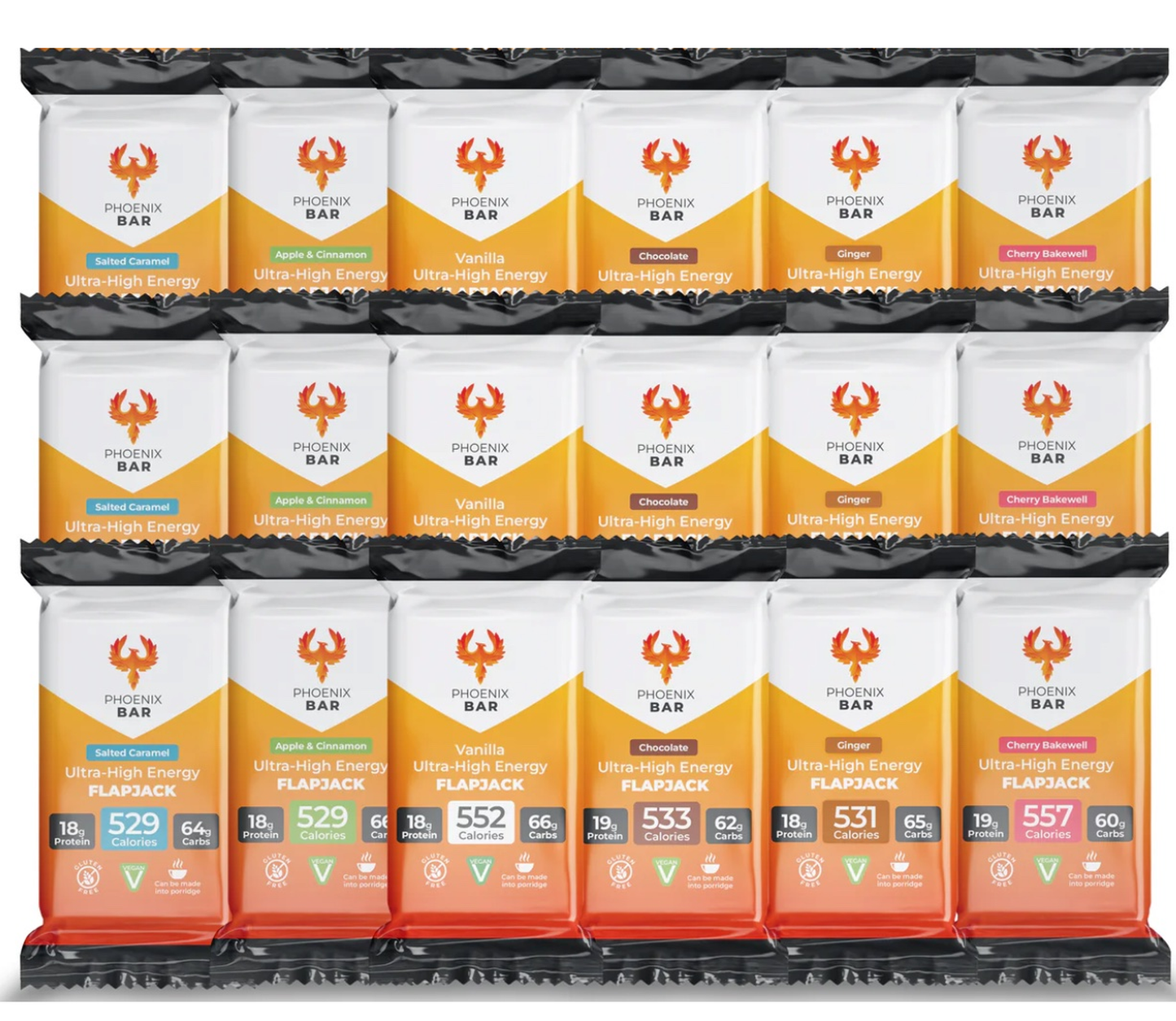
A Phoenix Bar works on these days made into porridge: add hot water and stir, and you can keep it as a soft, spoonable porridge or loosen it further into something closer to a drink. It asks almost nothing of you to eat, and one bar still carries up to 557 calories in a very small volume. If even that feels like a lot, half a bar made up and sipped slowly is a perfectly good thing to have done. For more ideas in this register, the soft high-calorie foods guide covers foods that need little or no chewing.
On days when a full plate feels like too much, soft high calorie bars like Phoenix Bars can be eaten slowly in small pieces, or stirred into warm milk as porridge, so one bar quietly covers a meal's worth of energy.
On the days you can manage a few mouthfuls
On slightly better days, the goal is small portions of soft, dense food that need little effort and no real cooking. Thick and creamy full-fat yoghurt with a spoon of honey and some nut butter stirred in. A few squares of cheese. Half a small bowl of porridge made with full-fat milk and topped with something sweet. A little avocado on buttered toast, cut small. A milky pudding, custard, or rice pudding. The trick is to keep the serving genuinely small so it does not feel daunting, while keeping it rich so the small amount still counts.
This is where many people who struggle to eat enough find a bar easiest to manage. Broken into small pieces and eaten cold, a Phoenix Bar gives you something to graze on a mouthful at a time without any cooking smells, which matters on days when the kitchen is off-putting. The same bar warmed into porridge is softer and easier again if you feel weak or tired. They are vegan and gluten-free, and the milder flavours like Vanilla or Apple and Cinnamon tend to be the easiest when nothing much appeals, though some people find a sharper one like Ginger or Cherry Bakewell cuts through better. If you would like a few flavours to test which sits best, the 12-bar Starter bundle is the simplest way to do that. There is a short guide to both the cold and the porridge method on how to use Phoenix Bars.
On the days a small plate feels possible
When you have a little more in you, take advantage of it, especially if it lands at your best time of day. Keep portions small but make each one rich: eggs cooked in butter on buttered toast, cheese on toast, a small bowl of fortified porridge, a buttered jacket potato with a generous filling, or a small ready-made pasta dish with extra cheese or olive oil stirred through. Choosing foods you actually enjoy matters more than choosing what looks virtuous, because enjoyment is what gets the next mouthful in. If preparing food is hard, ready meals and easy-to-grab options are completely sensible, not a compromise.
Even on a good day, a small plate rarely adds up to enough on its own, so this is where a between-meal top-up earns its place. A bar eaten a couple of hours after a small meal closes the gap quietly without needing another sit-down meal. If you are doing this regularly, or buying for someone you care for, the 18-bar Essential or 36-bar Complete box keeps a steady supply within reach. The wider picture of eating enough across the day, including for an older relative, is covered on the eating when it is difficult guide and the elderly low appetite guide, and there is a companion piece on the patterns and habits that help on the low appetite guide.

Phoenix Bars: Up to 557 Calories Per Bar
Soft, easy to eat whole or as a warm porridge. Low volume, two-year shelf life.
Small things that make eating easier
A handful of small adjustments tend to help across all of the above. If the smell of cooking turns you off, cold food often works better, so lean on things that do not need heating. Keep easy snacks within arm's reach, by your chair or bed, so eating does not depend on getting up and preparing something. Give yourself plenty of time and do not rush a mouthful. A little fresh air or gentle movement before eating can lift appetite slightly for some people. And let yourself eat the rich, sweet, or comforting things you might normally avoid, because while your appetite and weight are low, those foods are doing a useful job.
When it is worth asking for more help
Eating richly in small amounts helps a great deal, but it is not the whole answer for everyone, and there are times to bring someone else in. If you are losing weight without meaning to, if a low appetite has lasted more than a couple of weeks, or if eating is steadily getting harder rather than easier, it is worth speaking to your GP or asking to be referred to a dietitian. They can tailor all of this to you, check whether anything underlying needs attention, and make sure you are getting enough of everything, not just enough calories. Reaching out early tends to make things easier, not harder. If you have already been given a plan by a dietitian, follow that first, and treat anything here as a supplement to it rather than a replacement.
Common questions
What can I eat if I do not feel like eating anything at all? Reach for calories you can sip rather than chew: a small milky drink, a smoothie, a few spoons of ice cream, an enriched soup, or a Phoenix Bar made into a loose porridge. Something small and gentle is far better than nothing, and it often makes the next mouthful a little easier.
Is it better to eat something rich and indulgent than to eat nothing? While your appetite and weight are low, yes. Full-fat, calorie-dense foods are the right choice for now, and the usual low-fat or diet advice does not apply in the same way. The priority is simply getting enough energy in, in whatever form you can manage.
How do I get enough calories without eating large meals? Focus on density rather than size. Make small portions richer with butter, oil, cream, cheese, nut butter, or honey, and add small frequent snacks and nourishing drinks between meals. A single, compact 120g bar carrying up to 557 calories is one easy way to fit a lot of energy into a small amount.
Do Phoenix Bars need cooking? No. You can eat one cold, broken into small pieces, or add hot water to make a soft warm porridge. There is no preparation and no cooking smell, which is why many people with a low appetite find them easy to keep down.
Which flavour is easiest when nothing appeals? It varies, but the milder flavours such as Vanilla and Apple and Cinnamon are usually the gentlest starting point, while a sharper flavour like Ginger can help on days when sweetness feels like too much. Trying a few is the only reliable way to find yours.
Be kind to yourself on the hard days. Eating well when your appetite has gone is not about willpower or big meals, it is about small, rich, easy things kept within reach, and forgiving yourself for the days that do not go to plan. If you want to read on, the calorie-dense foods guide and the soft high-calorie foods guide go further, and the simplest first step is a small mix of flavours from the Starter bundle to find what sits most easily.


Flaming Phoenix



Contact Us
Declare withdrawal
Please fill out the following form to declare your withdrawal from the contract.

