
UK Gravel Races and Bikepacking Events 2027
Written by James Frost, founder of Flaming Phoenix and the maker of Phoenix Bars. Updated October 2026.
Gravel in Britain has split into two sports that share a bike: timed mass-start races where you chase a number plate for a day, and self-supported bikepacking ultras where you chase nothing but the route and your own decisions for a week. Most calendars only cover the first. This one covers both, month by month through the 2027 season, with a note on what each format does to your eating, because I spend my working life making high calorie bars for people who ride these events and the food failures are remarkably predictable.
Dates shift year to year and entries open at odd moments, so treat months below as the usual slot and confirm on each organiser’s site. If you are after riding routes rather than events, our long distance cycling routes guide is the page you want. Flaming Phoenix is not affiliated with any event named here.
What are the biggest gravel races in the UK?
The three with the biggest fields and reputations are the Dirty Reiver (Kielder Forest, late April, up to 200km of forest road), The Gralloch (Galloway, mid May, the UK’s UCI Gravel World Series round, confirmed for 14 to 16 May 2027), and Grinduro Scotland (late June, the party-meets-race format). All three sell out, Dirty Reiver fastest of all.
The 2027 gravel race season, month by month
March. The season traditionally wakes up in Wales and the Midlands: Battle on the Beach at Pembrey mixes sand and gravel into the strangest season opener in Britain, and Cannock Chase Gravel X gives the Midlands a sharp early hit-out.
April. The Dirty Reiver, Kielder Forest, is the closest thing UK gravel has to a monument: 65, 130 or 200km of remote forestry roads from a castle start, borderline weather guaranteed. North Wales Gravel X out of Ruthin is the same month’s rawer, hillier cousin.
May. The Gralloch turns Gatehouse of Fleet into Britain’s gravel capital for a weekend, with World Series qualification on the line and distances from a 53km taster to a 330km ultra. At the other end of the month, the Grand Old Dukes brings big-distance gravel to Aberfoyle.
June. Gritfest stages three timed days in the Cambrian Mountains, the nearest thing to a gravel stage race in Britain. Dalby Grit takes over the North York Moors, and Grinduro Scotland closes the month with its four-timed-segments, everything-else-is-a-party format.
July. The South Downs Century rides the old chalk highway out of Winchester, fast and exposed; this is the month heat becomes your main rival.
September. The Dukes Weekender at Aberfoyle is the community heart of Scottish gravel, Raiders Gravel strings multiple days through Galloway, and the Struggle’s Borderlands event finds the hardest tracks in the Yorkshire Dales.
Add the British National Gravel Championships (date and venue announced annually) if you hold a licence and ambitions.

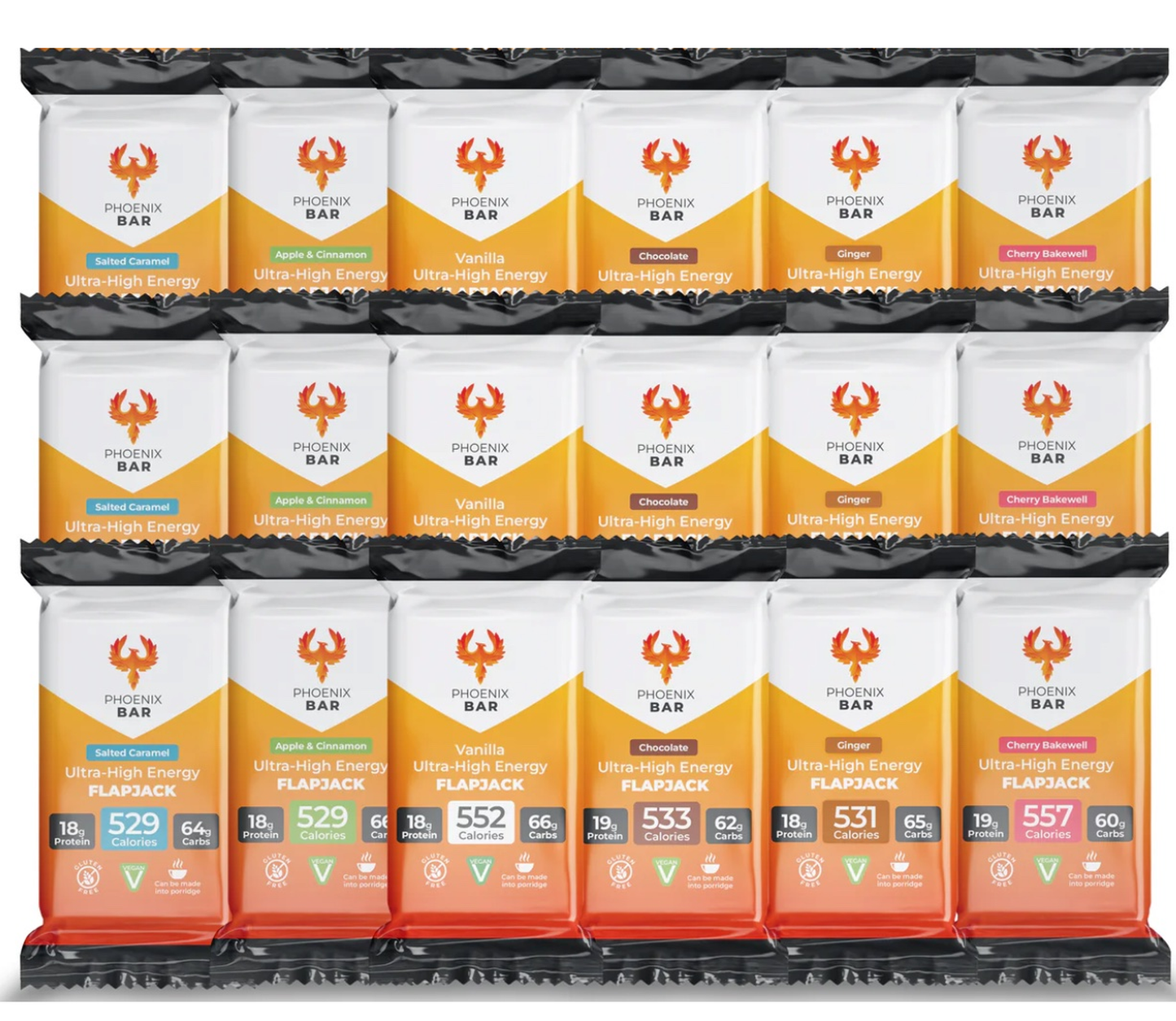
Phoenix Bars: Up to 557 Calories Per Bar
Highly compact, low-volume, calorie-dense bars. Soft, easy to eat whole or as a warm porridge. Vegan, gluten-free and contain up to 66g of carbohydrates, 19g of protein & 8 vitamins & minerals.
The bikepacking ultras: the other half of the calendar
These are unsupported, mostly self-timed, and measured in days. No feed stations, no arrows, just a GPX file, resupply shops and your judgement.
Highland Trail 550 (late May). The benchmark. Roughly 550 miles of Highland tracks, bothies and hike-a-bike, ridden as an individual time trial from Tyndrum. Finishing at all is the result.
All Points North (early summer, Sheffield). Checkpoints scattered across the north of England; you choose the route between them. Around 1,000km of your own navigation decisions.
GBDURO (summer). Land’s End to John o’Groats, off-road wherever possible, roughly 2,000km, entry by application, fiercely self-supported.
Pan Celtic Race (July). A rotating route through the Celtic nations, road-leaning but ridden in full bikepacking style, typically 1,500km or more with shorter options.
Great British Divide (summer). The off-road LEJOG line ridden as an ITT, for riders who found GBDURO’s waiting list too long.
How do you fuel gravel races and bikepacking events?
Races are a carbohydrate-per-hour game: 60 to 90 grams an hour, mostly from your pockets because feed stops cost race time. Ultras are a total-calories game: 5,000 to 8,000 a day, from whatever village shops exist, which makes the food you carry the only part of your diet you control.
The shared failure is sweetness fatigue. Gels and sweet bars work for three hours, then your mouth refuses them. Nigel Mitchell, former Head of Nutrition at British Cycling and Team Sky, reviewed our bars after a long-distance ride: “The overall concept of the product is excellent - how it has natural, high-quality ingredients and that it is loaded with carbohydrates and calories, as well as the fact it is highly palatable.” Kevin’s review after his 100 mile Solstice Century: “They gave me plenty of energy on my 100 mile cycle and they meant I didn’t have to eat much other food.” And Janet’s, from London to Brighton: “I did not want to take lots of food with me so this bar was perfect. Compact, easy to eat, lovely taste and calorie dense.”
The practical trick riders have taught us: chop a bar into chunks in a top tube bag before the start, so eating never needs two hands. One 120g bar carries up to 557 calories and 60 to 66g of carbs, which makes it the densest thing in a frame bag by some distance; see how it compares in the best energy bars for long distance cycling, go deeper with the gravel cycling nutrition guide, and plan multi-day food strategy with the bikepacking nutrition guide. Riders chasing hard training blocks also use them as high calorie bars for weight gain between events, because big gravel seasons eat body weight.
FAQ
When do UK gravel race entries open? Mostly October to January for the following season, and the famous ones (Dirty Reiver, The Gralloch, Grinduro) sell out within days or weeks. Set organiser newsletters now for 2027.
Do I need a gravel bike to enter? No event checks. A rigid mountain bike or a cross bike with 38mm plus tyres finishes everything on this page; the Highland Trail is the one where most riders choose a hardtail.
What is the difference between a gravel race and a bikepacking event? A gravel race is a timed, supported, single-day mass start. A bikepacking event is multi-day and self-supported: you carry or buy everything, outside help is against the rules, and most are individual time trials rather than races with podiums.
How much food should I carry for a bikepacking ultra? Enough to cover the longest gap between shops plus a reserve, usually 1,500 to 3,000 calories of carried food in Scotland’s remoter sections. Weight matters, which is why calorie density per gram, not pack size, should drive what you pack.
Rated 4.9 out of 5 from nearly 400 reviews. Made in the UK, hand-packed by James, and built to survive a frame bag.


Flaming Phoenix



Contact Us
Declare withdrawal
Please fill out the following form to declare your withdrawal from the contract.

