
Protein for Older Adults: How Much You Need and Easy Ways to Get Enough
Older adults need more protein than younger adults, not less. Most healthy people over 65 do better on roughly 1.0 to 1.2 grams of protein per kilogram of body weight per day, which is noticeably above the standard UK reference intake of 0.75 grams. For a 70kg person, that is around 84 grams a day rather than 53. The difficulty is that appetite often shrinks with age at exactly the point protein needs rise, so the goal becomes getting more protein from less food.
This guide explains why the requirement goes up, how much protein is actually useful, which everyday foods deliver it, and what to do when a full plate feels like too much.
Why Older Adults Need More Protein
As we age, the body becomes less efficient at turning the protein we eat into muscle. Researchers call this anabolic resistance: an older person has to eat more protein than a younger person to trigger the same amount of muscle building. One reason the standard 0.75g per kilogram figure falls short for older adults is that it was set to prevent deficiency across the whole population, not to protect muscle in later life.
Muscle matters far beyond the gym. It is what lets someone rise from a chair, carry shopping, stay steady on their feet and recover well after an illness or a spell in bed. Age-related muscle loss, known medically as sarcopenia, tends to accelerate from around the age of 60, and periods of illness or reduced movement speed it up further. Keeping protein intake up is one of the most practical things that helps maintain muscle through those years, and protein contributes to the maintenance of muscle mass as part of a normal diet.
The scale of the shortfall in the UK is striking. In a study of 256 adults aged 65 to 89 in South Yorkshire, fewer than 15% were reaching the higher age-specific protein target, and only one person in the whole group was hitting the recommended amount spread evenly across their meals. Morning intake was especially low. So if you are reading this on someone's behalf and worried they are not getting enough, you are looking at a very common gap, not an unusual one.
How Much Protein Does an Older Adult Actually Need?
The European Society for Clinical Nutrition and Metabolism recommends that healthy older people aim for at least 1.0 to 1.2 grams of protein per kilogram of body weight per day. During or after illness, or when someone is losing weight, the useful amount is higher still, often in the region of 1.2 to 1.5 grams per kilogram.
In practical terms, take the person's weight in kilograms and aim for a little over that number in grams of protein. A 60kg woman is looking at roughly 72 grams a day; a 75kg man, around 90 grams. It is worth writing that daily number down, because most people underestimate how much food it represents.
The other half of the picture is timing. Because older muscle responds less readily, a single large protein hit does less good than the same protein spread across the day. The evidence points to aiming for roughly 25 to 30 grams of protein at each of three meals, rather than a token amount at breakfast and lunch and most of the day's protein at dinner. Breakfast is usually the meal with the most room for improvement. For more ways to lift the total painlessly, see our guide to easy ways to eat more calories.
The Best Protein Foods for Older Adults
You do not need special products to hit these targets. Everyday foods do most of the work, and the amounts below are approximate but useful for planning.
Among animal sources, 100g of cooked chicken or a similar portion of meat carries around 30 grams of protein, a tin of oily fish such as salmon or mackerel around 20 to 25 grams, two eggs about 13 grams, a 150g pot of Greek yoghurt around 15 grams, a 200ml glass of milk about 7 grams, and a matchbox-sized 30g piece of cheese roughly 7 grams. Dairy is particularly useful in later life because it is soft, familiar and easy to add to other foods.
Among plant sources, three tablespoons of baked beans give around 5 grams, 100g of tofu about 8 grams, a 30g handful of nuts around 6 grams, and two tablespoons of peanut butter roughly 7 grams. Plant proteins are slightly less efficiently used by the body, so mixing sources across the day helps. For the full ranking of foods that deliver protein and calories together, see high calorie high protein foods that do both.
The recurring theme is that hitting 25 to 30 grams at a meal takes real volume of food. A slice of toast with a scrape of butter might be 5 grams. That is fine when appetite is strong. It becomes a problem when it is not.
Getting Enough Protein When Appetite Is Small
This is where most older adults actually struggle, and it is a different problem from simply knowing which foods contain protein. When someone can only manage a few mouthfuls, those mouthfuls have to carry as much protein and energy as possible, or the day's total quietly falls short meal after meal.
A few approaches help. Fortifying existing food adds protein without adding bulk: stirring skimmed milk powder into porridge, soup or mashed potato, adding grated cheese, or blending Greek yoghurt or milk into a smoothie. Smaller, more frequent eating often works better than three large meals, because a big plate can be off-putting before the first bite. And keeping something protein-rich and ready to eat within reach means a brief return of appetite is not wasted looking for something to prepare. For softer options that need little chewing, see our guide to soft high-calorie foods, and for the wider picture of eating well on a small appetite, our carer's guide to nutrition for elderly people with low appetite.
Protein drinks and shakes have a place too, particularly on days when solid food is hard, and we cover those separately in our guide to high calorie drinks.
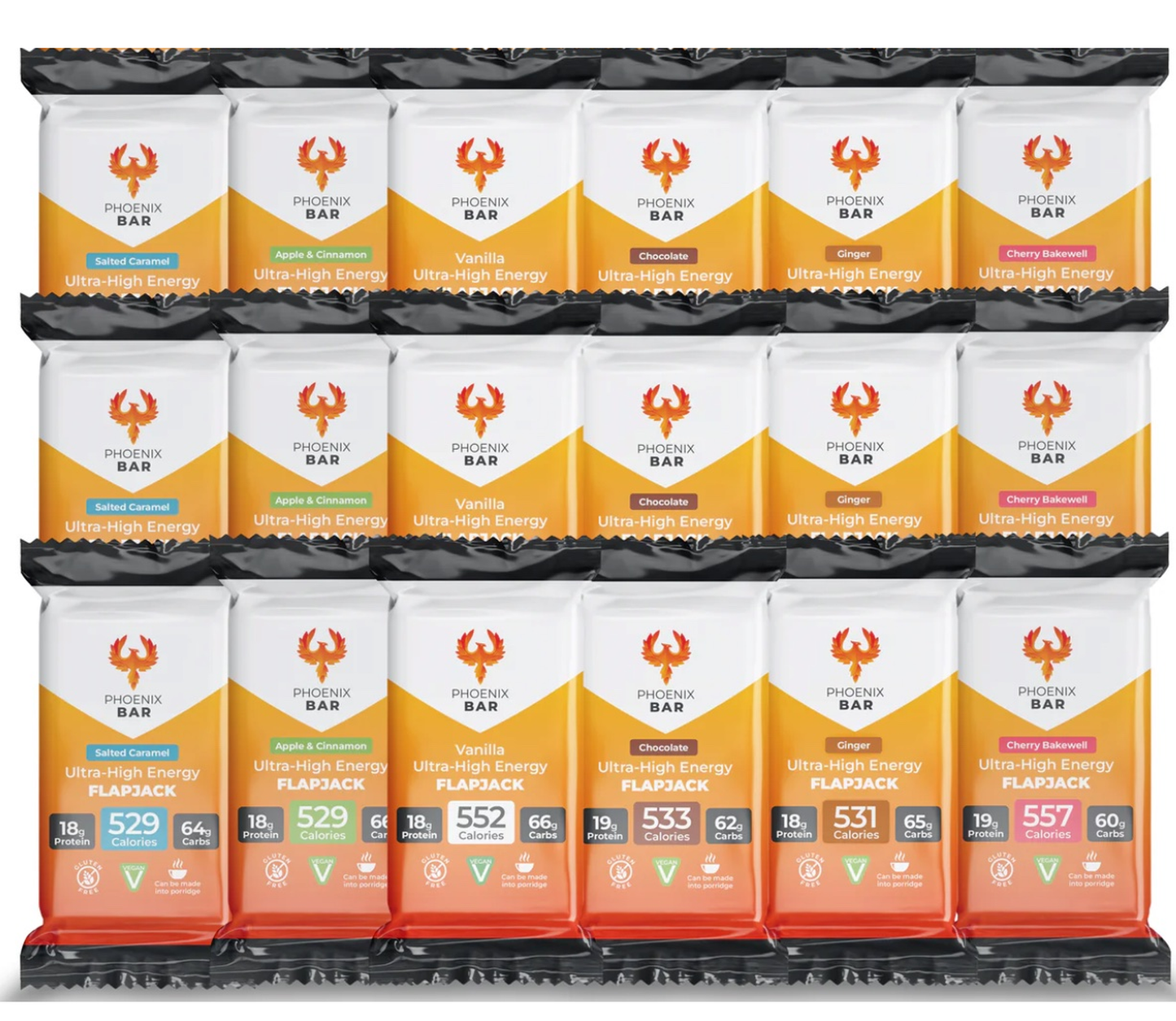
One compact option some people use is a Phoenix Bar. Each bar is a source of protein, carrying around 19 grams alongside 557 calories in a soft 120g format, and it can be eaten in small pieces over time or stirred into warm milk or water to make a soft porridge. It was originally built for endurance athletes and expeditions, where the same problem appears in a different form: needing a lot of protein and energy from as little bulk as possible. It is a food, used as one option among the everyday foods above, not a replacement for a varied diet.

Phoenix Bars: Up to 557 Calories Per Bar
Highly compact, low-volume, calorie-dense bars. Soft, easy to eat whole or as a warm porridge. Vegan, gluten-free and contain up to 66g of carbohydrates, 19g of protein & 8 vitamins & minerals.
Protein and Strength Training
Food is only half of muscle maintenance. Protein gives the body the raw material, but it is resistance activity that signals the body to use it. Encouragingly, muscle responds to training at any age, including well into the eighties and beyond. Gentle strength work two or three times a week, such as sit-to-stands from a chair, resistance bands or carrying light weights, combined with reaching a daily protein target, does far more together than either does alone.
Frequently Asked Questions
How much protein does an elderly person need per day?
Most healthy older adults do better on around 1.0 to 1.2 grams of protein per kilogram of body weight daily, which is more than the standard UK reference intake of 0.75 grams. For a 70kg person that is roughly 84 grams a day. During or after illness, the useful amount is often higher.
What are the best protein foods for older adults?
Soft, familiar, protein-rich foods tend to work best: eggs, Greek yoghurt, milk, cheese, fish, chicken, beans and nut butters. Dairy is especially practical because it is easy to eat and easy to add to other foods.
How much protein should an older adult eat per meal?
Spreading protein across the day works better than one large serving, because ageing muscle responds less readily to a single big dose. Aiming for roughly 25 to 30 grams at each of three meals, breakfast included, is a practical target.
Why do older adults need more protein than younger adults?
The body becomes less efficient at turning dietary protein into muscle with age, a process called anabolic resistance. More protein is needed to achieve the same muscle-maintaining effect, which is why the general adult reference intake is often too low for later life.
Can protein drinks help older adults get enough?
They can help on days when solid food is difficult, as a supplement to meals rather than a replacement. Everyday foods and fortifying existing meals should do most of the work where possible.
Written by James Frost, founder of Flaming Phoenix. James started Flaming Phoenix in 2024 and has spent the years since working out how to get the most protein and calories into the least food, building and testing compact, calorie-dense recipes with input from over 2,100 customer orders, many from people supporting an older relative who was not eating enough. He can be reached at jfrost@flaming-phoenix.co.uk. Last reviewed: July 2026.


Flaming Phoenix



Contact Us
Widerruf erklären
Füllen Sie das folgende Formular aus, um Ihre Widerrufserklärung abzugeben.

