

No-Cook Backpacking Meals: The Complete Stoveless Food System
In this guide

Quick answer: No-cook backpacking means eating well on the trail with no stove, no fuel and no washing up, using two methods: assembly eating, food that's ready the moment you unwrap it, and cold soaking, rehydrating dry food in a leakproof jar with cold water while you walk. Done properly it saves around half a kilo of stove, pot and gas, removes every fire risk and faff, and costs you nothing nutritionally: a full stoveless day comfortably clears 3,500 calories at under a kilo of food weight. The complete system is below: both methods, a UK shopping list, a worked day plan with the maths, and the honest cases where you should keep the stove.
I feed people who eat this way at the extremes, ultra runners who can't stop to cook and expedition customers for whom simplicity is safety, and the striking thing is how much of their approach transfers straight to an ordinary weekend on a British hill. Stoveless is not deprivation eating; it's a different system with different strengths, and most people who try it for a summer trip keep at least half of it forever.
Why go stoveless
Five reasons, in the order people discover them. Weight: a stove, pot and gas canister run 400 to 700 grams before you've boiled anything, and stoveless deletes the lot. Simplicity: no fuel maths, no wind shielding, no waiting, no washing up in a cold stream, dinner takes ninety seconds and morning camp breaks twice as fast. Reliability: nothing to fail, leak or run out, which is why a no-cook day always lives in my pack as the reserve plan, the same logic as our emergency food guide. Fire safety and discretion: no flame means zero fire risk in dry spells and nothing glowing on a discreet pitch, which is why the wild camping kit list recommends a first stoveless camp outright. And heat: in a hot spell, cold food isn't the sacrifice, it's the upgrade.
The honest downsides
Because this only works if you know when it doesn't. In cold, wet British conditions a hot meal and a hot drink keep morale up and warm you, the kind of comfort that gets people through a grim evening, and a stove can warm more than dinner when someone's properly chilled. Cold-soaked food is texturally humbler than cooked food, and a few staples simply refuse to work without heat. So the honest guidance: stoveless is brilliant from late spring to early autumn, for one-to-three night trips, for hot weather, for stealthy overnighters and for anyone who hates faff; keep the stove for winter, for long cold expeditions where morale is load-bearing, and for anyone whose day is built around the brew. And there's a lovely middle path for UK conditions: the flask hybrid, boil once at home, carry the evening's hot drink in a small flask, and run everything else no-cook.
Method one: assembly eating
The simpler school: food that is a meal the moment it leaves the bag. Wraps built from squeeze-pack peanut butter, hard cheese and chorizo; oatcakes with anything; tuna pouches straight in; a proper cheese-and-salami board on a sit mat with a view. No water, no waiting, no container to clean, and it's the method that works mid-stride. Daytime fuelling is where trail eating usually fails, the same principle our ultra high carb solid foods guide is built on. Most people's stoveless system is eighty percent assembly, and it should be.
Method two: cold soaking
The thru-hiker's trick for turning dry staples into dinner. Take a leakproof screw-lid jar (a wide-mouth peanut butter jar is the classic), add the dry food and roughly twice its volume in filtered water, seal it, and let time do the cooking, ideally while you walk, so you add water at the last rest stop and dinner is ready when the tent's up. Timings from fast to slow: instant couscous is edible in ten to fifteen minutes, instant mash is minutes, instant noodles want about half an hour, and porridge oats are best soaked overnight for breakfast. What doesn't work: rice, pasta, and most freeze-dried meals whose instructions say boiling water, some soak eventually but it's a gamble not a plan. Season hard, carry olive oil sachets to finish everything, and in a UK spring, when the water is cold, add fifteen minutes to everything.
The UK no-cook shopping list
All of it from an ordinary supermarket. Breakfasts: porridge oats plus milk powder soaked overnight with raisins and honey, granola with milk powder, breakfast biscuits, or a bar eaten while the tent comes down (our guide to the best energy bars for hiking compares them). Daytime and lunch: tortilla wraps (they don't crush), squeeze peanut butter, hard cheeses and individually waxed ones, chorizo and cured meats, oatcakes, tuna and mackerel pouches, nuts, dried mango and dates, flapjack, dark chocolate, and the quiet king of British trail food, malt loaf, dense, indestructible and improved by being sat on. Dinners: instant couscous with oil, chorizo and tomato paste from a tube; instant mash with cheese and crispy onions; cold-soaked noodles with peanut butter and soy sachets. Pudding: chocolate, or a bar in the sleeping bag. Our ranking of the densest of these foods is in calorie-dense foods.
The density check
The one failure mode of stoveless eating is drifting snacky: a bag of ricecakes and jelly sweets is no-cook and also barely food. The fix is deliberate fat and density (oil sachets, nut butters, cheese, nuts, chocolate, high calorie bars), chosen so the whole day averages well above 4 calories per gram where possible. That is the same arithmetic behind high calorie low volume foods, and the reason a stoveless food bag can be lighter than a cooked one carrying the same calories.
A full stoveless day, with the maths
Here's roughly 3,600 calories at around 900 grams, all cold. Breakfast: 80g oats soaked overnight with 30g milk powder, 30g raisins and honey, about 600 calories. Morning: a Phoenix Bar and 50g of nuts, about 860. Lunch: two wraps with 60g peanut butter and two waxed cheeses, about 750. Afternoon: half a malt loaf and a handful of dried mango, about 450. Dinner: 100g couscous cold-soaked with an olive oil sachet, 50g chorizo and tomato paste, about 750. Pudding: 40g dark chocolate, about 220. Add it up and the day comes to about 3,630 calories. Nothing was lit, nothing was washed, and the day's food weighed less than a stove-and-gas setup plus its equivalent cooked menu. To trim it further, our table of the lightest high calorie food for backpacking ranks common trail foods by calories per gram. Scale the template up or down using the hiking nutrition guide.
Where bars fit in a stoveless system
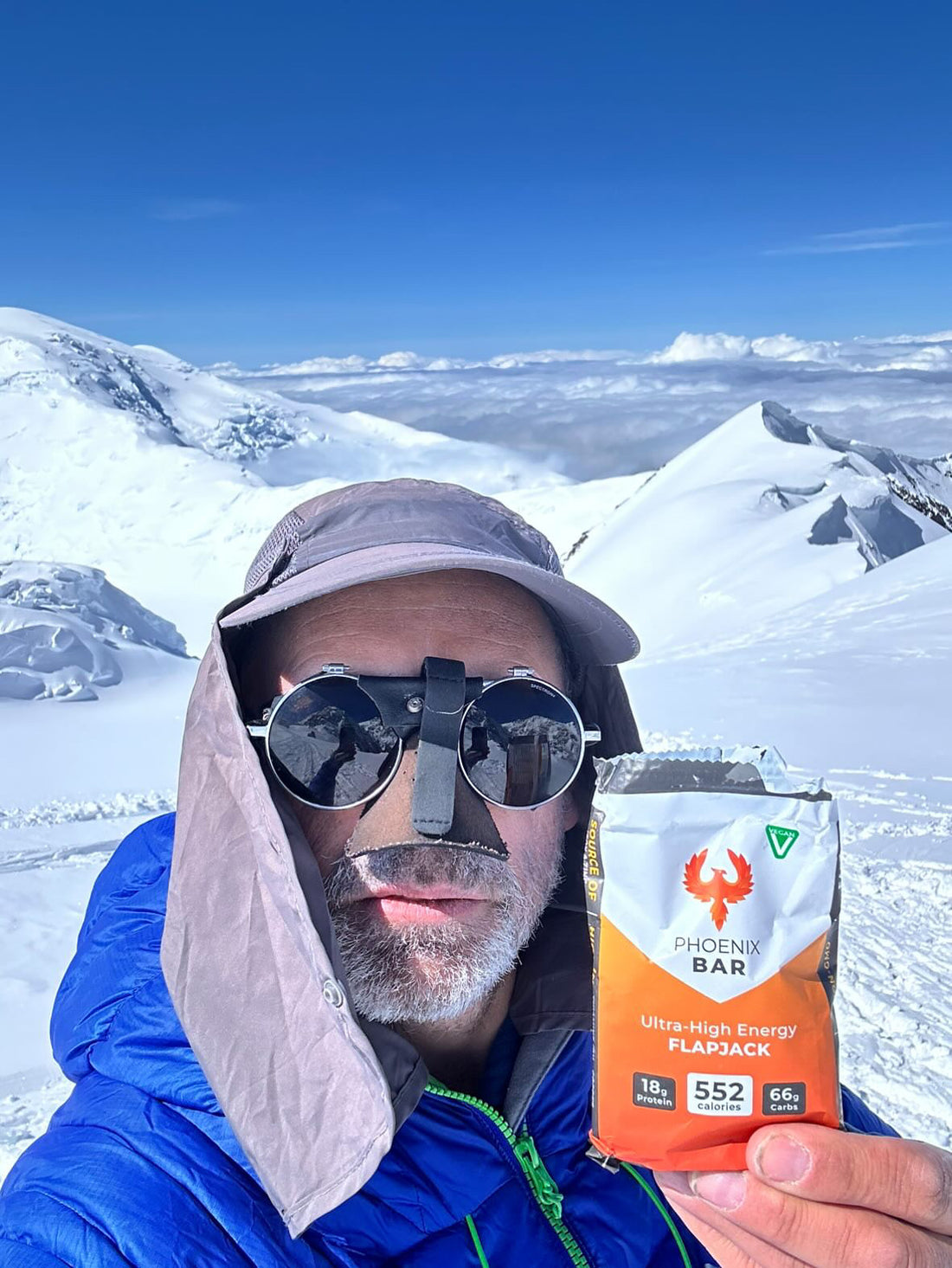
Bluntly, this is the system our product was designed inside. A Phoenix Bar is a no-cook meal in the strictest sense: up to 557 calories in 120 grams, about 4.6 calories per gram, needing no water, no jar, no waiting and no hands beyond one, eatable in rain, in gloves, mid-stride, and available in six flavours because flavour fatigue kills appetite for any food you eat every day on the trail. Our ultra and expedition customers already run them as the anchor meal of exactly the day plan above, one at breakfast or morning, one as pudding, with assembly food between. If you're building a stoveless system from scratch, the Starter Bundle is twelve anchor meals of it.
The coffee question
If you can't face a morning without coffee, instant does dissolve in cold water with enough stirring, cold-brew sachets do it more gracefully, and neither is the same as a hot mug, which is why the flask hybrid exists and why some stoveless converts carry caffeine tablets and make peace. Decide this one before the trip, not at 6am on a hill.
Frequently asked questions
What backpacking food needs no cooking? Wraps with nut butter, cheese and cured meats, oatcakes, tuna pouches, nuts, dried fruit, malt loaf, flapjack, chocolate, overnight oats with milk powder, cold-soaked couscous, mash and noodles, and dense bars. A full day of it clears 3,500 calories comfortably.
What is cold soaking and how long does it take? Rehydrating dry food in a sealed jar of cold filtered water instead of cooking it: couscous in ten to fifteen minutes, noodles in about thirty, oats overnight. Add water while you walk and dinner is ready at camp.
How much weight does going stoveless save? Around 400 to 700 grams of stove, pot and fuel, plus bulk, plus every minute of cooking and cleaning. With density-led food choices, the food bag itself often gets lighter too.
Is stoveless a good idea in the UK? From late spring to early autumn, absolutely, and it's the easiest version of a stealthy wild camp. In cold, wet conditions the morale and warmth of hot food argue for the stove, or for the flask hybrid in between.
Can you cold soak freeze-dried meals? Sometimes, slowly, and unreliably; most are designed for boiling water. Test any specific meal at home before trusting a trip to it, or build dinners from staples that soak predictably.
Written by James Frost, founder of Flaming Phoenix. We make no-cook fuel for people who eat on the move, from UK hills to desert ultras, and this system is theirs. Last updated July 2026.
Big calories. Small bar.
Up to 557 calories in a compact, lightweight bar of only 120g, with up to 66g of carbs and 19g of protein. Eat it whole, break it into pieces over a few hours, or mix it with water or milk for porridge.
Easy to eat, easy to digest and not sickly sweet. Customers have eaten them at -45°C and through the heat of the Marathon des Sables, and they keep for up to 2 years, so they work on a mountain, on a night shift, or at home on days when eating enough feels hard.
- 557 calories in only 120g (529 to 557 by flavour)
- 4.6 calories per gram
- 66g carbs per bar (up to)
- 19g protein per bar (up to)
Declare withdrawal
Please fill out the following form to declare your withdrawal from the contract.

