High Calorie Snacks: Ranked by Calories Per Bite
Written by James Frost, Founder of Flaming Phoenix | Last reviewed: March 2026
Not all snacks are equal. A rice cake delivers 30 calories. A tablespoon of peanut butter delivers 95. They take the same time to eat. One does almost nothing for your energy intake. The other meaningfully contributes to it.
When I was developing Phoenix Bars, I spent weeks comparing every portable, shelf-stable, ready-to-eat food I could find, measuring them all the same way: calories per gram. That single number cuts through all the marketing and tells you exactly how much energy you are getting for each bite. I have used that same approach here.
This guide ranks common snacks by calorie density so you can make informed choices about what to reach for between meals. Whether you are trying to gain weight, maintain calorie intake during a difficult period, fuel endurance training, or simply get more energy from less food, the numbers below will show you which snacks deliver and which ones waste your time.
How to read calorie density
Calorie density is measured in calories per gram (cal/g). The higher the number, the more energy a food delivers relative to its weight and volume. For context:
Water has a calorie density of 0 cal/g. Raw vegetables sit around 0.2 to 0.4 cal/g. Bread is roughly 2.5 cal/g. Chocolate is around 5.3 cal/g. Olive oil is 8.8 cal/g. Pure fat is 9.0 cal/g.
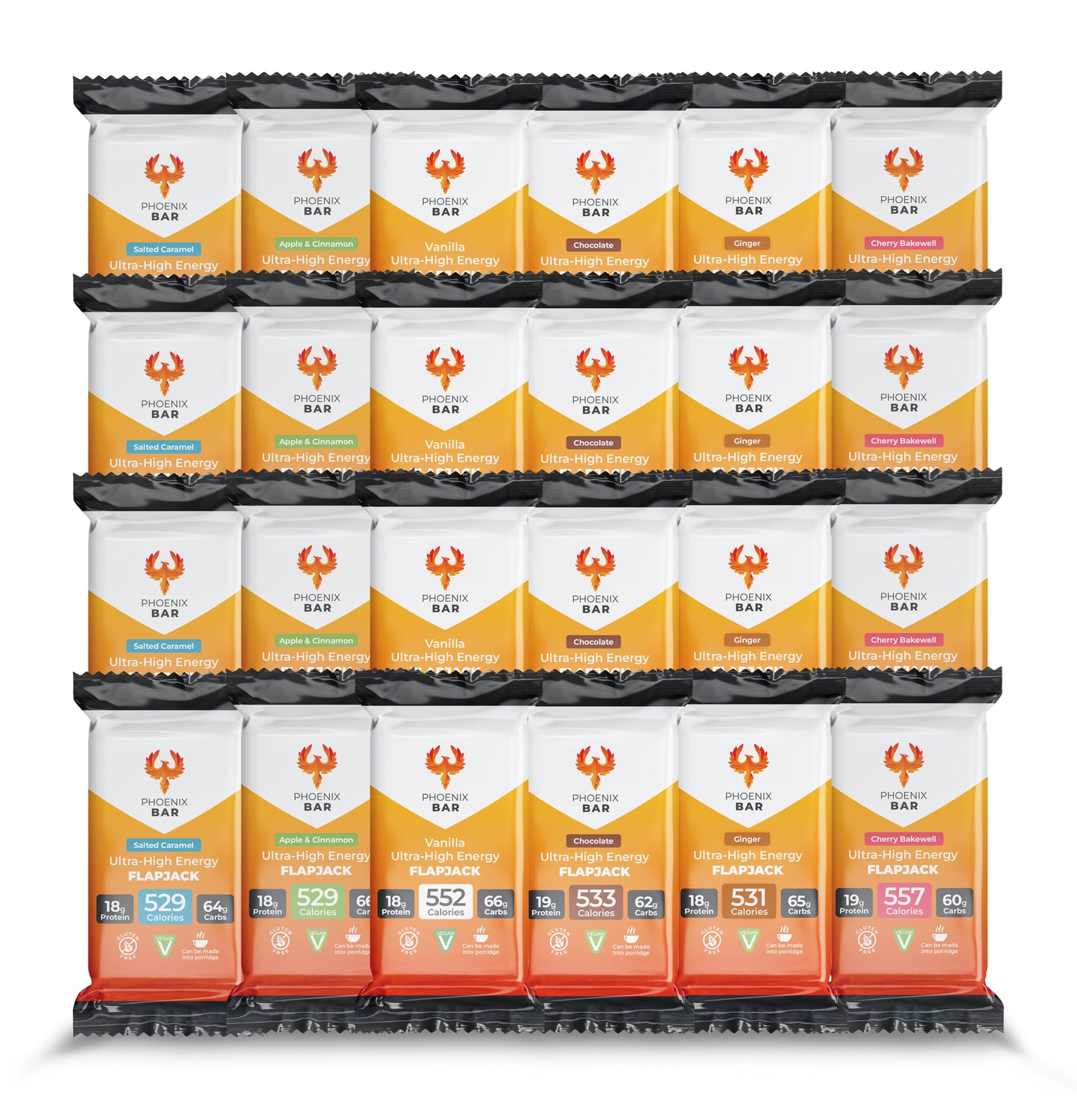
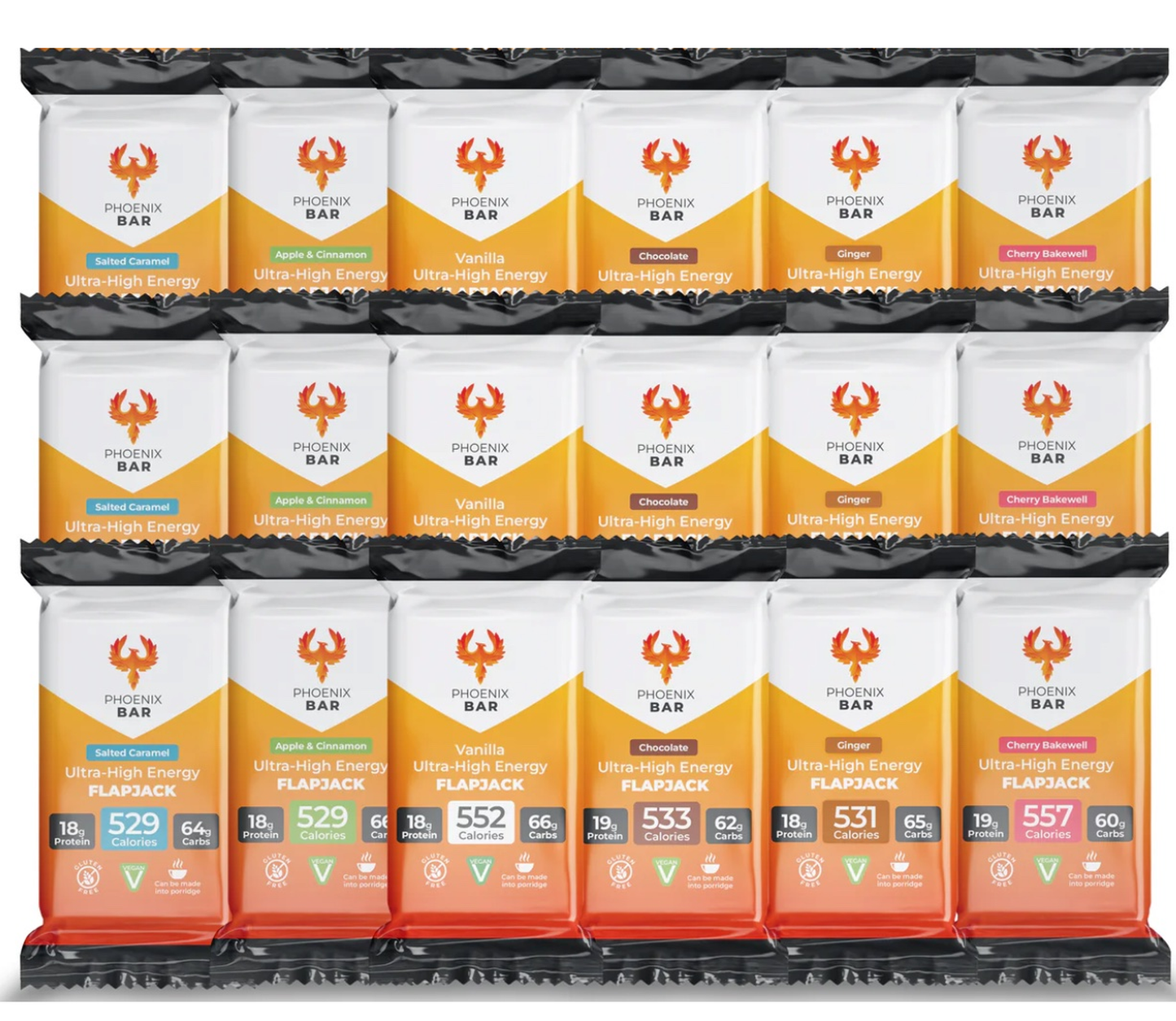
Any snack above 4.0 cal/g is genuinely calorie-dense. Anything above 5.0 cal/g is exceptionally energy-efficient. Most standard snack bars on the market sit between 3.5 and 4.5 cal/g. For comparison, a Phoenix Bar delivers 4.6 cal/g with 557 calories in a single 120g bar.
Understanding this number changes how you look at food. A "healthy" snack bar that weighs 40g and contains 150 calories (3.75 cal/g) is not necessarily a bad choice, but if your goal is maximum energy from minimum food, it is less efficient than a 30g portion of macadamia nuts at 7.2 cal/g delivering 215 calories.
High calorie snacks ranked by calorie density
I have grouped these from highest to lowest calorie density. Every figure is based on standard UK nutritional data. Portion calories are based on realistic single-serving sizes, not the tiny portions manufacturers sometimes use on labels.
Top tier: above 5.0 cal/g
Macadamia nuts come in at 7.2 cal/g. A 40g handful provides roughly 290 calories. They are the most calorie-dense commonly available nut and require no preparation. They are also naturally soft, which makes them easier to eat than harder nuts like almonds.
Pecans sit at 6.9 cal/g. A 40g handful delivers around 275 calories. Like macadamias, they have a softer texture than many nuts and a rich, buttery flavour that most people find easy to eat in quantity.
Dark chocolate (70%+ cocoa) comes in at approximately 5.5 cal/g. A 40g portion, roughly four squares of a standard bar, provides around 220 calories. Dark chocolate also contains iron, magnesium, and antioxidants, making it one of the more nutrient-dense indulgent snacks available.
Peanut butter (smooth) delivers 5.9 cal/g. Two tablespoons, roughly a heaped dessert spoon, provides around 190 calories. Eaten straight from the jar, spread on anything, or stirred into yoghurt or porridge. I have lost count of the number of customers who have told me that a jar of peanut butter and a spoon became their most important nutritional tool during periods when eating was difficult.
Trail mix (nuts, seeds, dried fruit, chocolate chips) varies but typically sits around 4.8 to 5.2 cal/g. A 60g portion provides roughly 300 calories. The advantage of trail mix over plain nuts is variety of flavour and texture, which helps prevent palate fatigue if you are eating the same snacks every day.
High tier: 4.0 to 5.0 cal/g
Phoenix Bars deliver 4.6 cal/g with 557 calories per 120g bar. I include this not just because it is my product, but because it genuinely sits in a different category from standard bars. Most nutrition bars weigh 40 to 60g and deliver 150 to 250 calories. A single Phoenix Bar delivers more than double the calories of two standard bars combined, in a format that can be eaten in pieces over several hours or made into porridge.
Flapjacks (homemade or bakery style, not diet versions) typically sit around 4.3 to 4.8 cal/g. A 100g flapjack provides roughly 430 to 480 calories. The calorie density varies significantly depending on how much butter, syrup, and oats are used. Shop-bought "healthy" flapjacks are often much lower because they reduce the fat content.
Cheese (Cheddar) delivers 4.1 cal/g. A 40g portion, roughly a thumb-sized piece, provides about 165 calories. Cheese is also high in protein and calcium. It keeps well in a bag for several hours, does not need to be kept cold for short periods, and requires no preparation. Several expedition athletes I work with carry cheese as a primary snack alongside their bars.
Dried mango sits at around 3.2 cal/g but a 60g bag delivers roughly 190 calories. Dried fruit in general is significantly more calorie-dense than fresh fruit because the water has been removed. A fresh mango provides about 60 calories per 100g. The same weight of dried mango provides roughly 320 calories. If you currently snack on fresh fruit and need more calories, switching to dried versions is one of the simplest changes you can make.
Seed and nut butter energy balls (homemade or shop-bought) typically sit around 4.0 to 4.5 cal/g. Three to four small balls provide roughly 200 to 300 calories. They can be batch-made at home in 15 minutes using oats, nut butter, honey, and seeds, then kept in the fridge for a week.
Mid tier: 2.5 to 4.0 cal/g
Standard protein bars and cereal bars typically deliver 3.5 to 4.2 cal/g and weigh 40 to 60g, giving 150 to 250 calories per bar. These are fine as snacks but not particularly calorie-efficient. If your goal is maximum calories, you would need to eat two or three of these to match the calorie content of one Phoenix Bar or a handful of macadamia nuts.
Crackers with cheese or nut butter are variable but a reasonable serving of four crackers with two tablespoons of peanut butter delivers roughly 350 calories. The crackers themselves are only around 4.0 cal/g, but they act as a vehicle for the much more calorie-dense topping.
Yoghurt (full-fat Greek) sits at roughly 1.0 cal/g on its own, but a 150g pot topped with a tablespoon of honey and a tablespoon of mixed seeds comes to roughly 300 calories. Yoghurt is a useful snack base because it is soft, requires no preparation, and can be significantly boosted with calorie-dense additions. See our soft high-calorie foods guide for more options in this category.
Low tier: below 2.5 cal/g (avoid if you need more calories)
Rice cakes deliver 3.9 cal/g but each cake weighs only 9g, giving just 35 calories per cake. You would need to eat 16 rice cakes to match the calories in one Phoenix Bar. They are filling relative to the calories they provide, which makes them a poor choice for anyone who needs more energy.
Fresh fruit varies from 0.3 cal/g (watermelon) to 0.9 cal/g (banana). A banana provides roughly 100 calories, which is decent for a fruit, but nowhere near enough as a standalone snack for someone who needs high calorie intake.
Vegetable sticks with hummus provide roughly 150 calories for a generous serving. The vegetables contribute almost nothing calorically. The hummus does the work at around 3.0 cal/g. If you enjoy this snack, keeping the vegetables small and the hummus generous increases the calorie yield.

Phoenix Bars: Up to 557 Calories per Bar
Calorie-dense, easy to eat, low volume nutrition bars for people who need to maximise their calorie intake.
How to build a high calorie snacking routine
Knowing which snacks are calorie-dense is only useful if you actually eat them consistently. From working with customers and athletes, I have found that the snacking routines that stick share three characteristics.
First, the snacks are always within reach. Not in the kitchen. Not in a cupboard. On the desk, in the bag, on the bedside table, in the car. The people who maintain the highest calorie intake between meals are the ones who never have to go and get food. It is already there. This is especially important for anyone whose appetite comes and goes unpredictably. When a window of willingness to eat opens, having food immediately available means you use that window instead of losing it to the time it takes to prepare something. For more on this approach, see our guide on what to eat when you feel full after a few bites.
Second, variety matters more than people expect. Eating the same snack every day for two weeks creates flavour fatigue, which accelerates appetite loss. Rotating between three or four different high calorie snack options across a week keeps things tolerable. Monday might be trail mix. Tuesday might be cheese and crackers. Wednesday might be a Phoenix Bar. Thursday might be peanut butter on banana. The calories are similar. The experience is different enough to prevent the "I cannot face that again" feeling.
Third, the snacks do not require decisions. Decision fatigue is real, especially when energy is low. The most successful routine I have seen is a "snack box" approach: at the start of the week, fill a container or bag with pre-portioned high calorie snacks for each day. When it is time to eat between meals, you open the box and eat whatever is in it. No thinking required. No choosing. No preparing. This removes the mental barrier that stops many people from snacking consistently.
Snacking for different goals
The best high calorie snack depends on why you need it.
If you need to gain weight or stop losing weight, prioritise calorie density above all else. Nuts, nut butters, cheese, chocolate, dried fruit, and compact bars like Phoenix Bars should form the core of your snacking. Aim for at least two to three high calorie snacks per day between meals, each providing 200 to 400 calories. Combined with high calorie drinks, snacking alone can add 600 to 1,200 calories per day to your intake.
If you are fuelling endurance training or expeditions, the priority shifts to calorie density per gram of pack weight. Every gram you carry needs to earn its place. Nuts, nut butters, chocolate, and compact bars are the standard choices for ultra-endurance athletes and expedition teams because they provide the most energy for the least weight. For detailed fuelling strategies, see our ultra-endurance and expedition nutrition guide.
If your appetite varies day to day, keep a mix of snacks available that cover different textures and flavour profiles. Some days you might want something savoury (cheese, crackers, nuts). Other days something sweet (chocolate, dried fruit, flapjack). Having both options available means you can match the snack to whatever your appetite will tolerate on that particular day.
A note on "healthy" snacking advice
Most snacking advice on the internet is written for people who are trying to eat fewer calories. It recommends low-calorie snacks, portion control, and filling up on vegetables between meals. That advice is the opposite of what someone who needs more calories should be doing.
If you are reading this because you need to increase your calorie intake, ignore any advice that tells you to snack on carrot sticks, choose low-fat options, or watch your portion sizes. Those strategies are designed to reduce calorie intake. You need to increase it. Full-fat, calorie-dense, generous portions are the goal. If you are unsure whether this approach is appropriate for your situation, speak with your GP or a registered dietitian who can provide personalised guidance.
When to seek professional advice
If you are struggling to maintain your weight despite eating regularly, if your appetite has changed significantly, or if you are losing weight without intending to, please speak with a GP or registered dietitian. This guide provides general information about high calorie snack options. It is not a substitute for personalised medical or dietary advice.
How People Use Phoenix Bars as a High-Calorie Snack
"Perfect as a lunchtime snack to get me through the day, keeping energy levels high. Also tastes great."
"I like these. I don't buy a lot of sports nutrition, but these flapjacks are a really good bit of regular kit. They are robust and worth their weight and price, not just as emergency rations and part of your minimum mandatory kit, but they taste good too."
Frequently asked questions
What are the highest calorie snacks?
The highest calorie snacks per gram are macadamia nuts (7.2 cal/g), pecans (6.9 cal/g), peanut butter (5.9 cal/g), and dark chocolate (5.5 cal/g). For a single-item snack with the highest total calories, a Phoenix Bar provides 557 calories in one 120g bar.
How many calories should a snack have?
For someone trying to maintain or gain weight, aim for snacks that provide at least 200 to 400 calories each. Two to three snacks at this level across a day adds 400 to 1,200 calories to your total intake without requiring bigger meals.
Are nuts the best high calorie snack?
Nuts are among the most calorie-dense snacks available, but they are not always the most practical. They require chewing, can be hard on teeth, and some people find large quantities difficult to digest. Nut butters deliver the same calories in a softer, easier-to-eat format. Compact nutrition bars, cheese, and dried fruit are also strong options depending on preference and situation.
What high calorie snacks do not need refrigeration?
Nuts, dried fruit, nut butters (in sealed packets or jars), dark chocolate, cereal bars, flapjacks, and Phoenix Bars all store at room temperature and do not need refrigeration. These are also the most portable options for carrying in a bag, keeping in a desk drawer, or storing by the bed.
What is the difference between a high calorie snack and a calorie-dense food?
All high calorie snacks are calorie-dense foods, but not all calorie-dense foods are convenient snacks. Olive oil is extremely calorie-dense but you would not eat it as a snack on its own. This guide focuses specifically on calorie-dense foods that are ready to eat, portable, and require no preparation.


Flaming Phoenix
Share