Military Field Nutrition: How to Supplement Ration Packs When You Need More Calories
About This Guide
Standard UK Operational Ration Packs deliver around 3,000–4,000 calories per 24 hours. For regular peacekeeping and field exercises, that is broadly sufficient. But for high-intensity exercises, prolonged infantry patrols, cold weather operations, Special Forces selection, and sustained periods of high physical output, it often is not enough.
NATO STANAG 2937 recommends 3,600 calories per day for standard operations and up to 4,900 calories for combat operations or Special Forces missions. In practice, many soldiers on demanding exercises find that their issued rations leave a calorie gap — particularly when the pace of operations means meals are rushed, skipped, or only partially eaten.
This guide focuses specifically on practical approaches to supplementing military ration packs with compact, calorie-dense food when the issued rations are not enough.
It is not a guide to replacing rations. It explores:
- why calorie intake often falls short on exercise despite adequate ration provision
- the practical barriers to eating enough in the field
- what characteristics make supplementary food useful in a military context
- how compact, calorie-dense options can close the gap between ration calories and actual energy expenditure
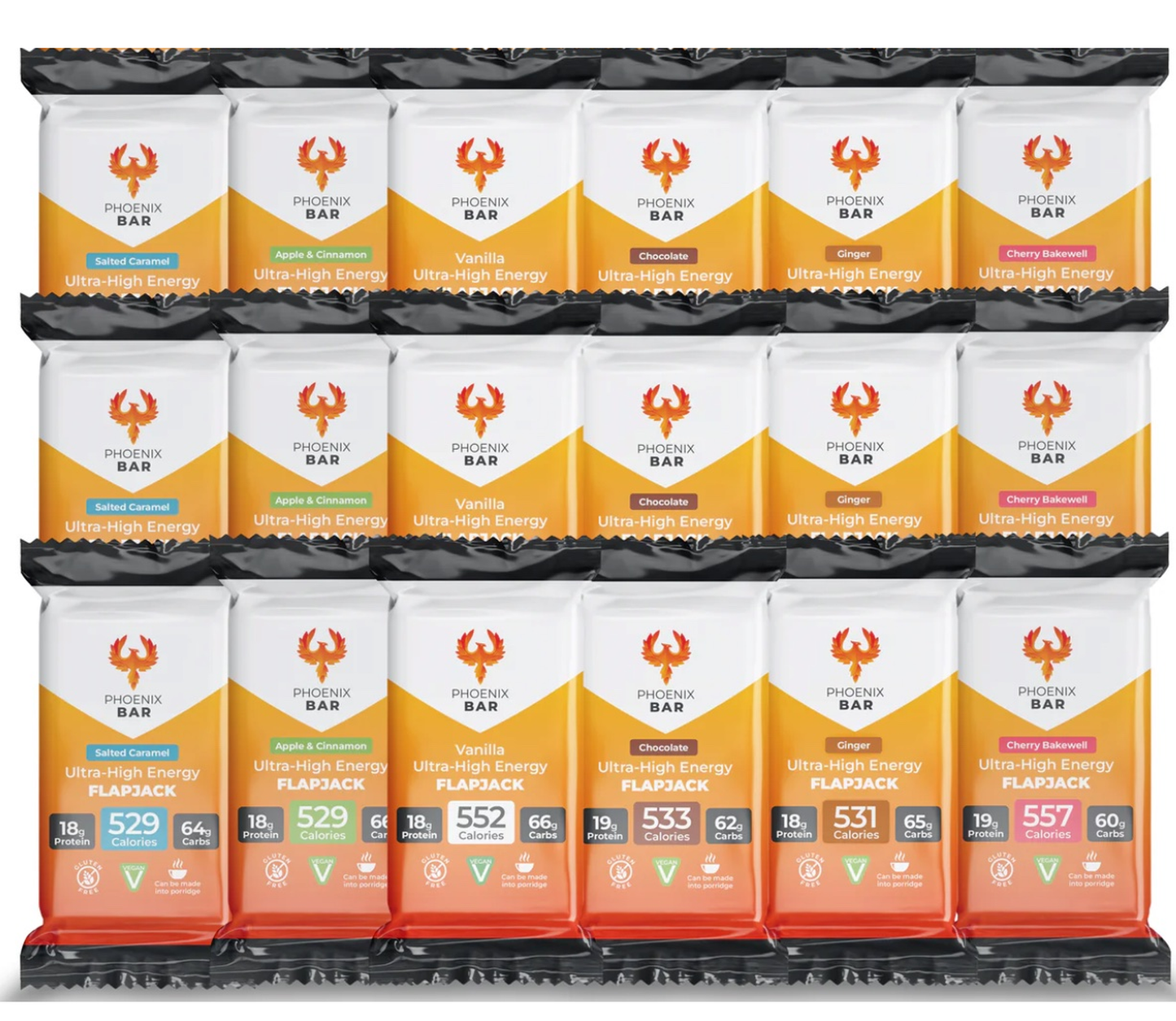
It also explains how some military personnel use Phoenix Bars, compact 557-calorie flapjacks, as a personal supplement to issued rations on exercise and operations.
Written by James Frost, Founder of Flaming Phoenix. Phoenix Bars were developed for extreme endurance and expedition use. They are used by military personnel, ultra-endurance athletes, and expedition teams.
Last updated: March 2026
Key points: UK Operational Ration Packs provide 3,000–4,000 kcal per 24 hours but high-intensity operations can demand 4,000–6,000+ kcal. Soldiers frequently eat less than their ration provides due to time pressure, fatigue, and operational tempo. The calorie gap accumulates across multi-day exercises, leading to performance decline, cognitive impairment, and increased injury risk. Phoenix Bars deliver up to 557 calories per 120g bar, are heat and cold stable, require no preparation, and fit in a pocket.
Contents
- The calorie gap on exercise
- Why soldiers don't eat enough in the field
- Why the calorie deficit matters operationally
- What makes supplementary food useful in the field
- Practical strategies for maintaining calorie intake on exercise
- Why calorie density matters in a military context
- How Phoenix Bars fit into field nutrition
- Practical suggestions for exercise and operations
- Frequently asked questions
- Related guides
The Calorie Gap on Exercise
The UK 24-hour Operational Ration Pack (ORP) is designed to provide approximately 3,000–4,000 calories across three main meals, snacks, and drinks. For standard duties and moderate-intensity field exercises, this is broadly adequate.
However, energy expenditure on demanding exercises routinely exceeds what ration packs provide.
Infantry soldiers on sustained patrol can burn 4,000–6,000+ calories per day depending on load carried, terrain, pace, and environmental conditions. Cold weather operations increase calorie expenditure significantly — the body burns additional energy simply to maintain core temperature. High-altitude operations, selection courses, and prolonged tabbing with heavy loads push expenditure even higher.
NATO guidelines recognise this gap. STANAG 2937 recommends up to 4,900 calories per day for combat operations and Special Forces missions. The UK MOD's Multi-Climate Ration was specifically developed to address nutritional shortfalls identified during operations in Iraq and Afghanistan.
In practice, the gap is widened further by the fact that many soldiers do not consume all of their issued rations. Studies of UK military personnel in the field have consistently found that actual calorie intake is lower than what is provided — sometimes significantly so.
The result is a cumulative calorie deficit that builds across multi-day exercises. By day 3, 4, or 5 of a demanding exercise, the accumulated shortfall can amount to thousands of missing calories.
Why Soldiers Don't Eat Enough in the Field
Even when rations are adequate on paper, several factors consistently reduce actual calorie intake in the field.
Operational tempo. When the pace of operations is high, meals get compressed, interrupted, or skipped entirely. There is often no protected time for eating — food competes with tasks, movement, and rest.
Time to prepare. Boil-in-the-bag main meals require water, a heater or stove, and time. In tactical situations or during rapid movement, the 10–15 minutes needed to prepare a hot meal may not be available. Cold food straight from the pouch is an option but is significantly less appealing and often only partially eaten.
Weight management. Soldiers carrying heavy loads often strip non-essential items from their ration packs to save weight. Snack items, drinks, and sundries are frequently the first things removed — yet these account for a significant proportion of total ration calories.
Fatigue and appetite suppression. Physical exhaustion suppresses appetite. After hours of tabbing under load, the desire to eat can be minimal even when the body desperately needs fuel. Sleep deprivation compounds this — hunger signals become unreliable.
Stomach discomfort. Eating large meals during sustained physical activity can cause nausea, cramping, and GI distress. Many soldiers avoid eating significant amounts before or during movement for this reason.
Environmental conditions. In extreme cold, handling food with gloved hands and eating in exposed positions is difficult. In extreme heat, some ration components deteriorate and appetite drops.
Monotony. The limited menu rotation of ration packs across multi-day exercises creates food fatigue. By day 3 or 4, motivation to eat the same meals again can be genuinely low.
Why the Calorie Deficit Matters Operationally
Calorie deficit in the field is not just a nutrition problem — it is an operational performance issue.
Cognitive function degrades. Decision-making, reaction time, situational awareness, and judgement are all impaired by calorie deficit. Research on military populations shows that underfeeding during exercises leads to measurable cognitive decline within 48–72 hours.
Physical performance drops. Endurance, strength, and load-carrying capacity all decline as calorie deficit accumulates. Soldiers performing at a calorie deficit are slower, weaker, and fatigue faster.
Injury risk increases. Fatigue and reduced concentration from underfeeding increase the risk of training injuries, accidents, and poor decision-making in high-risk environments.
Recovery slows. After demanding exercise phases, calorie-depleted soldiers take longer to recover physically and mentally. This affects readiness for subsequent phases of an exercise or operation.
Morale suffers. Hunger, fatigue, and the psychological effect of running on empty compound the mental demands of field conditions. Adequate fuelling is a morale factor as well as a performance one.
The UK Armed Forces Personal Guide to Nutrition emphasises the link between adequate nutrition and military performance, injury prevention, and recovery.
What Makes Supplementary Food Useful in the Field
The most useful supplementary food for military field use shares specific characteristics.
Compact and lightweight. Every gram competes with ammunition, water, equipment, and other essentials. Supplementary food must deliver meaningful calories without adding significant weight or bulk. It needs to fit in a pocket, pouch, or the top of a bergen without taking up space needed for other kit.
High calorie density. The ratio of calories to grams carried is the defining metric. A supplement that delivers 557 calories at 120g is significantly more efficient than one delivering 150 calories at 50g.
No preparation required. Open and eat. No water, no stove, no time. Anything that requires preparation will not get eaten when the operational tempo is high.
Climate stable. Must not melt in desert heat or freeze solid in arctic conditions. Food that becomes unusable in extreme temperatures is a liability, not a supplement.
Robust packaging. Must survive being compressed in a bergen, exposed to rain, handled with dirty or gloved hands, and carried for days. Packaging that tears, splits, or disintegrates under field conditions is useless.
Quiet to open and eat. In tactical situations, noise discipline matters. Food that requires noisy packaging or extended chewing may not be appropriate for all phases of an exercise.
Not sickly sweet. Sweetness fatigue is a real issue over multi-day exercises. Supplements that are excessively sweet become difficult to tolerate after the first day or two. A neutral, savoury, or mild flavour profile sustains better over time.
Soft texture. When fatigued, dehydrated, or cold, chewing hard or dry food is difficult and slow. Soft food that melts in the mouth can be eaten quickly and with minimal effort.

Phoenix Bars: Up to 557 Calories Per Bar
Highly compact & ready to eat on the move. Up to 66g of carbs and 19g of protein per bar.
Practical Strategies for Maintaining Calorie Intake on Exercise
Several approaches can help close the calorie gap in the field.
Carry personal supplements alongside issued rations. Don't rely on rations alone for multi-day exercises. Add 500–1,000 extra calories per day in the form of compact, calorie-dense food that fits in a pocket or the top lid of your bergen.
Eat on the move. Rather than waiting for meal breaks that may be shortened or cancelled, eat small amounts during movement. Food that can be eaten one-handed, in small bites, without stopping, keeps calorie intake ticking over throughout the day.
Don't strip food from your rations to save weight. The snacks and sundries in a ration pack are not luxuries — they are a significant proportion of the daily calorie total. If weight is a concern, carry a compact calorie-dense supplement instead of removing ration components.
Eat before you're hungry. Hunger signals are suppressed by exertion, sleep deprivation, and cold. By the time you feel hungry in the field, you are already in calorie deficit. Eat by the clock or by opportunity — not by appetite.
Front-load calories at the start of the day. A calorie-dense breakfast before the day's activity begins sets a foundation. If the rest of the day is disrupted, at least the morning calories are banked.
Use the evening meal window. When the pace slows — whether at a harbour area, bivouac, or end of a phase — take advantage of the opportunity to eat a full meal plus additional supplementary calories.
Why Calorie Density Matters in a Military Context
Calorie density — calories per gram of weight carried — is the most important metric for field nutrition.
A soldier on a demanding exercise is already carrying 25–40kg of equipment. Every gram of food added to that load must justify itself in calorie value. Carrying 500g of food that delivers 1,000 calories is far more efficient than 500g that delivers 500.
For context: a standard issue biscuit from a ration pack delivers approximately 80–100 calories at 25g. A handful of trail mix delivers approximately 150 calories at 30g. A Phoenix Bar delivers up to 557 calories at 120g — approximately 464 kcal per 100g.
Two Phoenix Bars weigh 240g and deliver 1,114 calories. Achieving the same calories from standard ration snacks would require significantly more weight and volume.
When pack weight is already at its limit and the calorie gap is real, the most calorie-dense option available is the one that closes the gap without breaking the bergen.
How Phoenix Bars Fit into Field Nutrition
Phoenix Bars were designed for extreme conditions — and the demands of military field use align closely with the conditions they were built for.
Each bar delivers up to 557 calories and 19g of protein in a 120g package. They are specifically suited to military use because they:
Won't melt in desert heat. Phoenix Bars are heat-stable above 50°C. They remain solid and edible in conditions that turn chocolate bars and many energy bars into liquid.
Won't freeze in arctic conditions. The soft, oat-based texture remains edible in sub-zero temperatures. Standard bars and many ration snacks become brick-hard in cold weather — Phoenix Bars don't.
Are robust. Water-resistant packaging that won't crush or tear under the compression and rough handling of a loaded bergen.
Require zero preparation. Unwrap and eat. No water, no stove, no time, no utensils. Can be eaten one-handed while moving.
Are soft and quick to eat. The melt-in-the-mouth texture means fast consumption with minimal chewing — important when eating windows are short and fatigue is high.
Are not sickly sweet. Six neutral flavour options (Vanilla, Cherry Bakewell, Chocolate, Salted Caramel, Ginger, Apple & Cinnamon) avoid the sweetness fatigue that makes many commercial energy bars intolerable after day one.
Can be made into porridge. Adding hot water from a flask or heater creates a calorie-dense porridge — a quick, warm meal option that requires no ration pack preparation time. For instructions, see how people use Phoenix Bars.
Have a two-year shelf life. Can be bought in advance, stored in a locker or kit bag, and used whenever needed — no expiry concerns for exercise planning.
"I bought Phoenix Bars as I was looking for high-calorie, lightweight nutrition for military exercises and they were really good. The taste much better than I expected for something that's so nutritious."
Practical Suggestions for Exercise and Operations
Pre-exercise preparation: Pack 1–2 Phoenix Bars per day into the top lid of your bergen or in smock/trouser pockets. Over a 5-day exercise, that's 5–10 bars adding 2,785–5,570 supplementary calories at 600–1,200g of additional weight.
Morning routine: Before first light or before moving off, eat a bar or make a quick porridge with hot water. This front-loads 557 calories before the day's activity begins — a significant buffer against missed or shortened meals later in the day.
On the move: Break half a bar into pieces before stepping off. Eat a piece every 30–60 minutes during movement. This adds approximately 275 calories across a march phase without stopping, without preparation, and without noise.
In harbour areas or admin periods: Eat a full bar alongside your issued ration. The additional 557 calories and 19g of protein on top of the main meal helps close the cumulative deficit.
Night routine: Keep a bar in your sleeping system. If you wake during the night or before first light, eat half a bar to prevent the overnight calorie gap that leaves soldiers starting the next day already depleted.
Cold weather: In arctic or cold weather conditions, the bars remain soft and edible. The porridge format is particularly useful — adding hot water creates a warm, calorie-dense meal that helps maintain core temperature.
Selection and assessment courses: For prolonged high-output courses where calorie expenditure is extreme and eating opportunities are limited, Phoenix Bars provide a pocket-sized calorie source that can be consumed in seconds during brief rest windows.
Frequently Asked Questions
How many calories do soldiers need on exercise?
NATO STANAG 2937 recommends 3,600 calories for standard operations and up to 4,900 for combat operations or Special Forces missions. In practice, high-intensity exercises with heavy loads, cold exposure, or prolonged movement can push requirements above 5,000 calories per day.
Are UK ration packs enough?
The UK 24-hour ORP provides approximately 3,000–4,000 calories, which is broadly sufficient for moderate-intensity exercise. However, for demanding multi-day exercises, selection courses, and sustained high-output operations, many soldiers find a calorie gap — particularly when operational tempo limits eating time.
Will Phoenix Bars melt in hot conditions?
No. Phoenix Bars are heat-stable above 50°C and have been tested in desert conditions. They will not melt in conditions that render chocolate and many standard bars inedible.
Will Phoenix Bars freeze in cold conditions?
No. The soft, oat-based texture remains edible in sub-zero temperatures, unlike many bars and ration snacks that become too hard to chew.
How many Phoenix Bars should I take on exercise?
1–2 bars per day provides 557–1,114 supplementary calories. Over a 5-day exercise, 5–10 bars (600–1,200g) adds meaningful calorie insurance without significant weight penalty.
Can Phoenix Bars replace ration packs?
No. Phoenix Bars are a supplement, not a replacement. They add calorie density alongside issued rations — filling the gap between what rations provide and what demanding exercises require.
Are Phoenix Bars suitable for vegan or gluten-free soldiers?
Yes. Phoenix Bars are 100% vegan and made with certified gluten-free oats. They are suitable for soldiers with dietary requirements that standard ration packs may not fully accommodate.
Related Guides
You may also find these guides helpful:
- Ultra-Endurance & Expedition Nutrition Guide — broader guide to nutrition for extreme endurance situations
- Calorie-Dense Foods: What They Are and When They Help — a full explanation of calorie density
- How To Use Phoenix Bars — practical guidance including the porridge method
- High Altitude & Mountaineering Nutrition — if operating at altitude
James Frost
Founder, Flaming Phoenix
07990 519422


Flaming Phoenix
High-Calorie Protein Bars for Endurance, Expeditions and Weight Gain