Long-Distance Walking Nutrition: How to Fuel Multi-Day Trails Without Hitting the Wall
Written by James Frost, founder of Flaming Phoenix and creator of Phoenix Bars. James has spent over two years developing calorie-dense nutrition for ultra-endurance athletes, expedition teams, and individuals who need maximum calories in minimum weight. For broader guidance on day hikes and weekend walking, see the Hiking & Trekking Nutrition page.
Most people who attempt a long-distance walk, whether that is the South West Coast Path, Hadrian's Wall, the West Highland Way, or the Camino de Santiago, think about boots, waterproofs, and accommodation long before they think about food. Nutrition gets treated as an afterthought: grab a few cereal bars, hope there is a pub at lunch, worry about it later.
Then day three arrives. Legs feel heavier than they should. The morning enthusiasm has disappeared. Every incline feels steeper than it looked on the map. The afternoon becomes a slog, and the thought of doing it all again tomorrow feels genuinely daunting.
This is rarely a fitness problem. It is almost always a calorie problem. The food was not calorie-dense enough, there was not enough of it, or it was not eaten consistently enough across the day. This guide explains how to get your nutrition right so that day seven feels as strong as day one.
How Many Calories Does Long-Distance Walking Actually Burn?
The numbers are higher than most people expect. Walking 15 to 25 miles per day with a pack, across mixed terrain, burns somewhere between 3,000 and 5,000 calories. That is roughly double a typical day at home or in an office.
The exact figure depends on body weight, pack weight, terrain, gradient, and weather conditions. Wind, rain, and cold all increase energy expenditure because your body works harder to regulate temperature. A 75kg person walking 20 miles on undulating terrain with an 8kg pack will burn approximately 4,000 calories.
Compare that to the standard recommended daily intake of around 2,000 to 2,500 calories. On a multi-day walk, you need to eat significantly more than normal just to break even. Fall short, and your body starts drawing on glycogen reserves and then muscle tissue. You will feel it within 48 hours.
The critical insight most walkers miss is this: you cannot make up a calorie deficit after the fact. If you undereat on day one and two, day three will punish you regardless of what you eat for breakfast that morning. Consistent, adequate fuelling from the very first mile is what separates people who finish strong from people who limp to the end.
Why Standard Trail Snacks Fall Short on Multi-Day Walks
A day walk and a multi-day walk have completely different nutritional demands. On a single day out, you can get away with a few flapjacks and a sandwich because you will eat a proper meal that evening and recover overnight. Over five, ten, or thirty consecutive days, the accumulated calorie deficit from inadequate trail food compounds into real physical decline.
The typical long-distance walker's food bag contains cereal bars, crisps, chocolate, dried fruit, and maybe a few packets of nuts. These are all fine foods individually, but most cereal bars contain 150 to 250 calories. To hit 4,000 calories from food like that, you would need to eat 16 to 25 bars per day on top of your meals. Nobody wants to do that, and nobody does. The result is a daily deficit that grows with every mile.
The other problem is volume. Carrying five days of food between resupply points is a significant weight penalty. A kilogram of typical trail snacks provides around 4,000 to 5,000 calories. If you need 4,000 calories per day from trail food alone (assuming cooked meals at either end of the day), that is nearly a kilogram of snacks per day, or 5kg for a five-day stretch. This is where calorie density per gram becomes a practical, weight-saving decision rather than a marketing claim.
What to Look for in Long-Distance Walking Food
The ideal food for multi-day walking shares a few characteristics that become more important the longer the walk lasts.
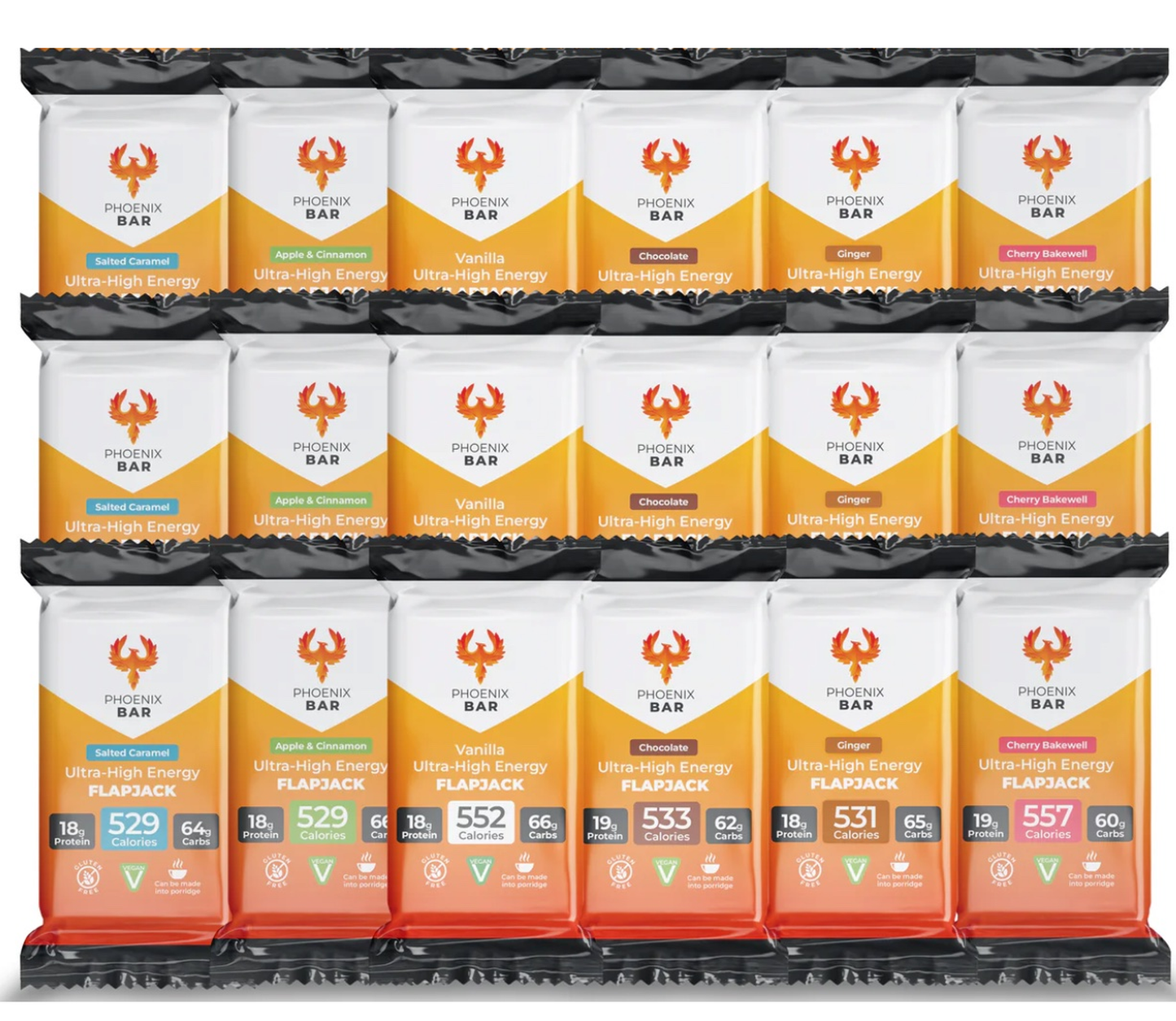
High calorie density. More calories per gram means less weight in the pack. This matters most between resupply points. Nuts deliver around 5.5 to 6 calories per gram, nut butters around 6, and most energy bars around 3 to 4. Phoenix Bars - our high calorie protein bars - deliver approximately 4.6 calories per gram, which puts them among the most calorie-dense ready-to-eat options available in a bar format. Each 120g bar contains up to 557 calories.
Palatability over many days. Flavour fatigue is one of the most underappreciated problems in long-distance walking. Foods that taste great on day one can become genuinely unpleasant by day five. Overly sweet bars, gels, and sweets are the worst offenders. The key is variety and restraint in sweetness. Phoenix Bars were specifically designed to taste satisfying without being sickly sweet, with six different flavours that rotate well across multiple days.
Easy to eat while moving. Stopping for a full lunch every day is a luxury that weather, daylight, and schedule do not always allow. Food that can be eaten on the move, in rain, without utensils, and without much chewing effort keeps your pace consistent. Phoenix Bars have a soft texture that breaks apart easily and can be chopped into bite-sized chunks for snacking across a morning or afternoon.
Versatility. On cold, wet evenings, the last thing most walkers want is another cold snack. Phoenix Bars can be crumbled into hot water or milk to make a warm porridge, turning a trail bar into a hot meal. For more detail on this and other ways to use them, see How To Use Phoenix Bars. This versatility is genuinely useful on long walks where you want hot food but do not want to carry heavy dehydrated meals for every evening.
Shelf stability. Long-distance walks require planning weeks or months ahead. Food that goes off, melts in heat, or freezes in cold weather creates problems. Phoenix Bars have a two-year shelf life and are climate-resilient, designed to hold their texture from sub-zero conditions to summer heat.
Dietary inclusivity. Group walks, charity challenges, and guided treks bring together people with different dietary needs. Phoenix Bars are vegan and gluten-free, which means they work for almost everyone without needing separate options.

Phoenix Bars: Up to 557 Calories Per Bar
Highly compact, lightweight, calorie-dense bars. Soft, easy to eat whole or as a warm porridge. Vegan, gluten-free and contain up to 66g of carbohydrates, 19g of protein & 8 vitamins & minerals.
A Practical Fuelling Strategy for Multi-Day Walks
Rather than prescribing exact meals, here is a framework that works across most long-distance walking scenarios.
Before you start walking each day, eat a substantial breakfast containing complex carbohydrates, some protein, and some fat. Porridge, eggs, toast, or a combination. If you are wild camping or do not have cooking facilities, a Phoenix Bar crumbled into hot water with a handful of nuts makes a calorie-dense breakfast that takes two minutes to prepare.
During the first two hours, eat a small snack every 45 to 60 minutes. The goal is to top up energy before you feel hungry. Once you feel hungry, you are already behind. A quarter of a Phoenix Bar (roughly 140 calories) every hour is a practical starting point.
Through the middle of the day, alternate between savoury and sweet snacks. Cheese, salted nuts, or crackers followed by dried fruit, chocolate, or another portion of bar. This rotation prevents flavour fatigue and keeps your appetite engaged.
In the final hours, do not taper your eating. Many walkers reduce food intake as they approach their destination because they know dinner is coming. This is a mistake. The last two hours are when your glycogen is most depleted, and underfuelling here means poor recovery overnight, which shows up as heavy legs the next morning. Keep eating right up until you stop.
After you finish for the day, eat a meal containing carbohydrates and protein within 45 minutes of stopping. This recovery window is when your muscles are most receptive to replenishing glycogen stores.
Hydration on Long-Distance Walks
Dehydration compounds the effects of calorie deficit and is just as likely to ruin your walk. A practical target is 250ml of water per hour in mild conditions, increasing to 500ml per hour in hot weather or on steep terrain.
Small, regular sips are more effective than large drinks at rest stops. Electrolytes become important after four or five hours of continuous walking, especially in warm weather. Adding an electrolyte tablet to one of your water bottles is an easy habit to build.
Watch the colour of your urine. Pale straw is ideal. Dark yellow means you are already dehydrated.
Common Long-Distance Walking Nutrition Mistakes
Mistake one: relying on pubs and cafes. On popular trails, this can work. On quieter routes, or on days when timing is tight, you may walk eight hours with nothing available. Always carry enough calories to get through the entire day without relying on external food sources.
Mistake two: packing food you do not enjoy. This sounds obvious, but many walkers pack "practical" food they do not actually like eating, and then do not eat enough of it. If you do not enjoy your trail food, you will not eat enough of it. Carry food you genuinely look forward to.
Mistake three: eating too much in the evening, too little during the day. Your body needs fuel while you are moving, not just when you stop. A huge pub dinner does not compensate for six hours of underfuelling on the trail.
Mistake four: ignoring the weight-to-calorie ratio. Between resupply points, every gram matters. Carrying two kilograms of food that provides 6,000 calories is significantly better than carrying two kilograms that provides 4,000 calories. That difference compounds over five or six days.
How Many Phoenix Bars to Pack for a Long-Distance Walk
A practical guideline based on common UK and European long-distance walks:
For a weekend walk (two to three days), a Starter Bundle of 12 bars provides approximately 6,600 calories of trail food, which supplements cooked meals at either end of each day.
For a week-long walk (five to seven days), an Essential Bundle of 18 bars gives you approximately 9,900 calories. Three bars per day, eaten in portions across the walking hours, covers the high-calorie trail snack portion of your daily intake alongside meals.
For walks of two weeks or longer, a Complete Bundle of 30 bars (approximately 16,500 calories) provides a substantial portion of your trail nutrition, especially on sections where resupply is limited. For guidance on other high-calorie snack options to combine with Phoenix Bars, see that guide.
These are supplementary to meals, not replacements. The bars cover the consistent, between-meal fuelling that most walkers get wrong.
Final Thought
Long-distance walking is one of the most rewarding things you can do with your legs. Getting the nutrition right does not require complicated plans, expensive supplements, or specialist knowledge. It requires enough calories, eaten consistently, from food that is compact enough to carry and palatable enough to eat for days on end.
If you have any questions about using Phoenix Bars for a specific walk or trail, contact me directly. I am always happy to help with quantities, flavour selection, and fuelling strategies for your route.


Flaming Phoenix