Cheese (3.5 to 4.5 calories per gram)
Parmesan — 431 calories per 100g. The most calorie-dense common cheese. Grating parmesan over pasta, soup, or vegetables adds significant calories with minimal volume.
Stilton — 410 calories per 100g. One of the most calorie-dense cheeses commonly available in the UK.
Cheddar — 403 calories per 100g. A 30g portion (roughly a matchbox-sized piece) provides approximately 121 calories. Grating cheese over meals is an effective way to increase calorie content.
Cream cheese — 342 calories per 100g. Slightly lower than hard cheeses but easier to spread and add to meals.
Dried Fruit (3.0 to 3.5 calories per gram)
Raisins — 299 calories per 100g. A small 40g box provides approximately 120 calories.
Dates — 282 calories per 100g. Three medjool dates provide approximately 200 calories. Dates are one of the easiest calorie-dense snacks to eat because of their soft texture and natural sweetness.
Dried figs — 249 calories per 100g. Soft and easy to eat.
Dried apricots — 241 calories per 100g. Slightly less calorie-dense than dates and raisins but still significantly more calorie-dense than fresh fruit.
Grains, Cereals and Baked Goods (3.5 to 5.0 calories per gram)
Granola — 471 calories per 100g. A 60g bowl with whole milk provides approximately 400 calories. Granola is one of the easiest high-calorie breakfasts.
Oats (dry) — 389 calories per 100g. Porridge made with whole milk, honey, and a tablespoon of peanut butter can exceed 500 calories per bowl. A Phoenix Bar broken into a bowl with hot water or warm milk also makes a calorie-dense porridge with no cooking required.
Wholemeal bread — 247 calories per 100g. Two slices with butter and peanut butter provide approximately 400 calories.
Dairy and Dairy Alternatives (0.6 to 4.5 calories per gram)
Double cream — 449 calories per 100g. Adding two tablespoons of double cream to soup, porridge, or a hot drink adds approximately 135 calories.
Coconut cream — 330 calories per 100g. A vegan alternative to dairy cream with high calorie density.
Full-fat Greek yoghurt — 133 calories per 100g. A 150g serving provides approximately 200 calories. Topped with granola, honey, and nuts, this can become a 400+ calorie snack.
Whole milk — 64 calories per 100ml. Switching from skimmed milk (34 calories per 100ml) to whole milk across all daily drinks and cereals can add 150 to 300 calories per day with no change in eating habits.
Protein Sources (1.5 to 3.0 calories per gram)
Lamb shoulder — 294 calories per 100g. Fattier cuts of meat are significantly more calorie-dense than lean cuts.
Chicken thigh (skin on) — 229 calories per 100g. More calorie-dense than chicken breast (165 calories per 100g) because of the higher fat content.
Salmon — 208 calories per 100g. One of the most calorie-dense fish options. A standard 125g fillet provides approximately 260 calories.
Eggs — 155 calories per 100g. Two large eggs provide approximately 186 calories. Scrambled with butter and cheese, two eggs can provide over 300 calories.
How to Add More Calories Without Eating More Food
For many people, the challenge is not knowing which foods are calorie-dense. It is being able to eat enough of them. The most effective approach is usually to increase the calorie content of food already being eaten, rather than trying to eat more food.
Add fat to meals already being eaten. A tablespoon of olive oil drizzled over pasta adds 120 calories. A knob of butter melted into mashed potato adds 100 calories. Grating cheese over soup adds 80 to 120 calories. These small additions require no extra eating effort.
Switch to higher-calorie versions of foods already consumed. Whole milk instead of skimmed. Full-fat yoghurt instead of low-fat. Cheddar instead of cottage cheese. These swaps can add 200 to 400 calories across a full day without changing what or how much is eaten.
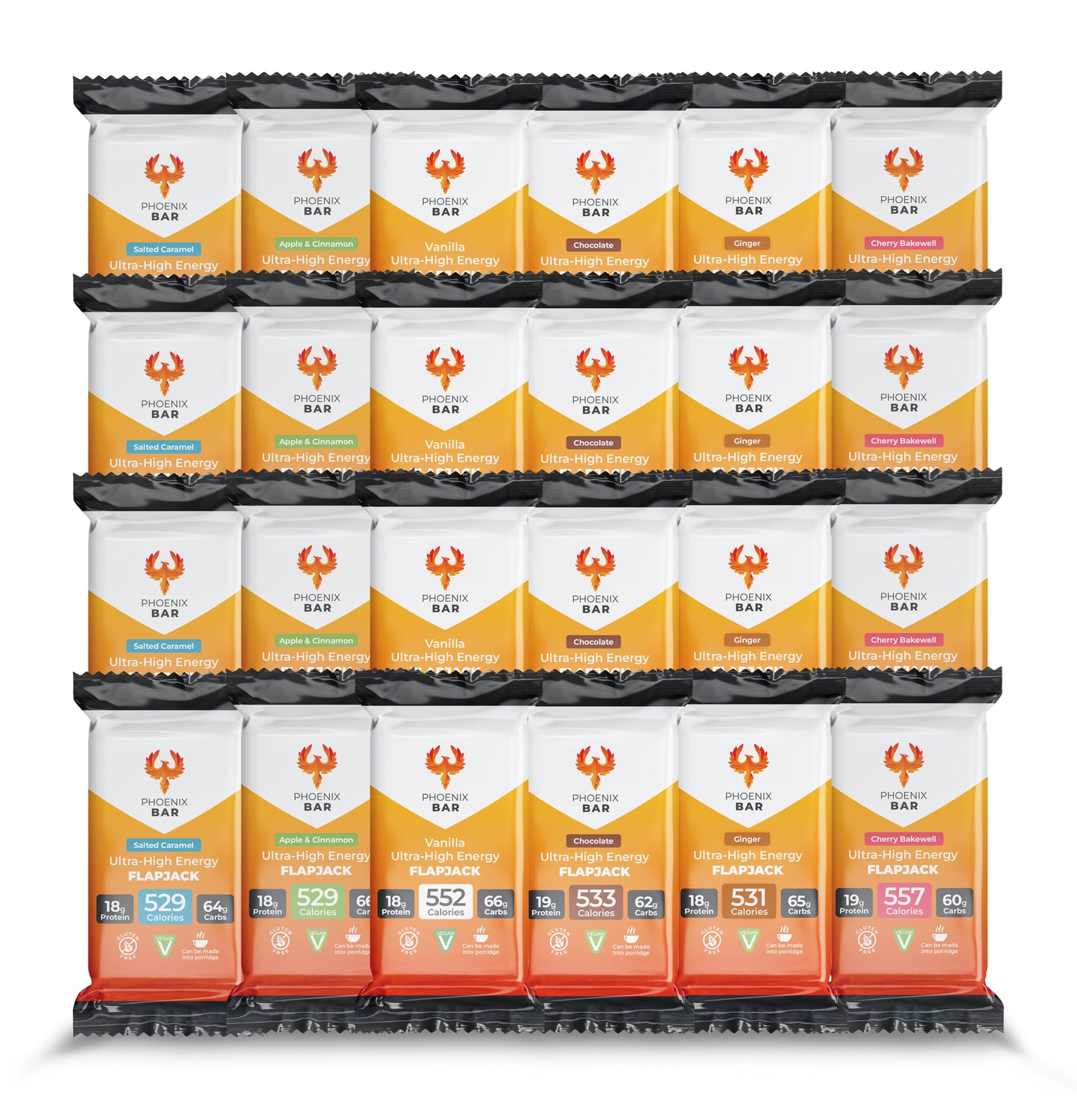
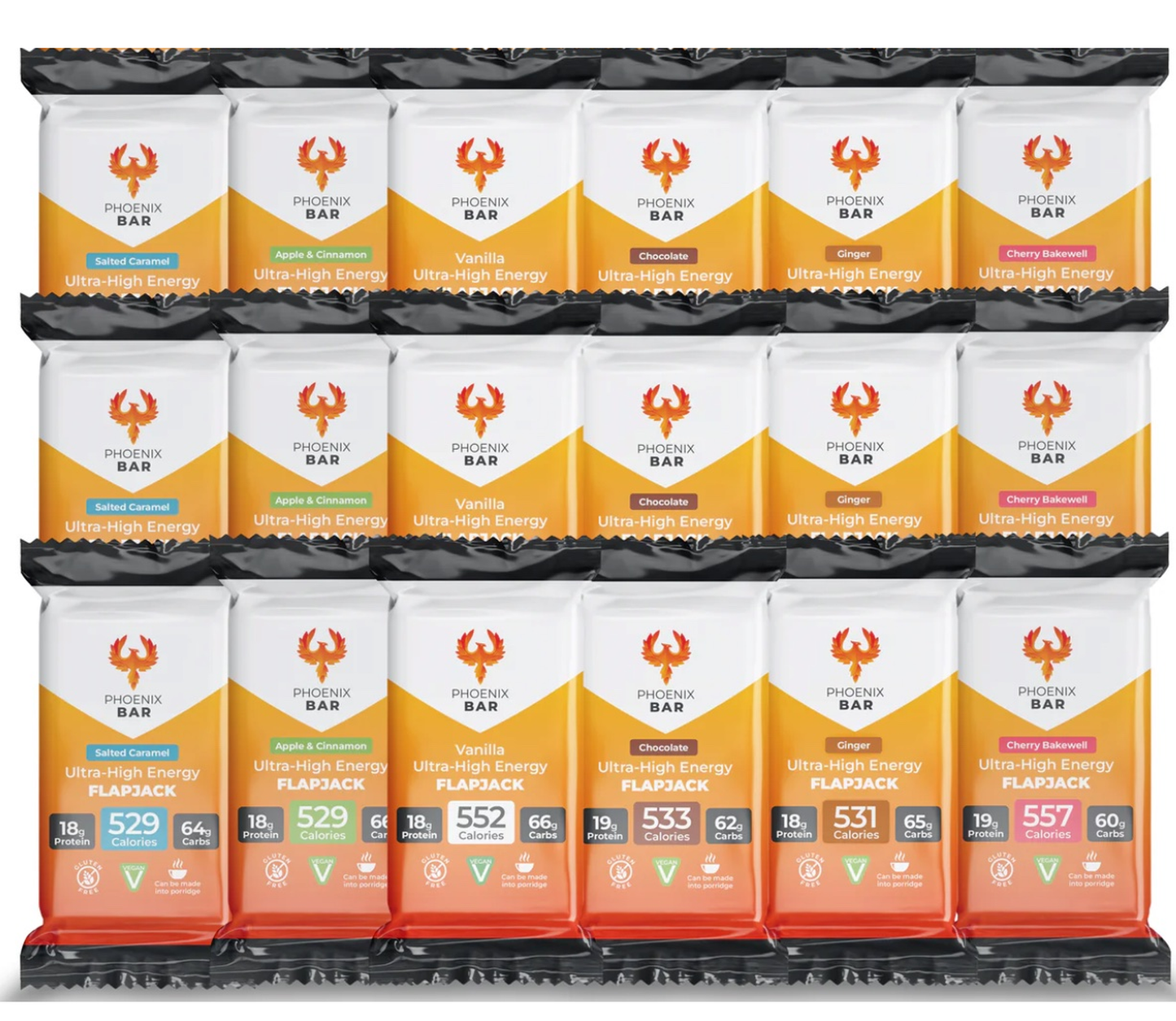
Eat smaller amounts more often rather than three large meals. For many people, five or six small snacks spread across the day are easier to manage than three full meals. Keeping calorie-dense snacks within reach (nuts, dried fruit, cheese, Phoenix Bars) allows eating to happen consistently rather than being tied to set mealtimes. A 120g Phoenix Bar broken into pieces and eaten across several hours delivers up to 557 calories without needing a single sitting.
Use drinks as a calorie source. A Phoenix Bar blended with 200ml of whole milk makes a smoothie containing over 680 calories. Full-fat hot chocolate made with whole milk provides approximately 200 calories per mug. Smoothies made with banana, peanut butter, whole milk, and honey can exceed 500 calories per serving. Liquid calories are often easier to consume in larger volumes than solid food.
Compact Calorie-Dense Foods for Specific Situations
Different situations call for different approaches to calorie-dense eating.
During endurance events and expeditions: the priority is calories per gram of pack weight. Oils, nut butters, nuts, chocolate, and compact energy bars provide the highest calorie return per gram carried. Phoenix Bars deliver up to 557 calories in a 120g package, which is a calorie-to-weight ratio of approximately 4.6 calories per gram, comparable to peanut butter for pack-weight efficiency without needing a container. Phoenix Bars also do not melt in heat or freeze in sub-zero temperatures, which gives them an advantage over chocolate-based bars in extreme conditions.
For hard gainers and people in bulking phases: hitting a calorie surplus consistently is more important than perfect nutrient timing. Calorie-dense snacks between meals are often the difference between hitting and missing daily targets. Nut butters, full-fat dairy, granola, dried fruit, and high-calorie bars like Phoenix Bars all help close the gap. A single Phoenix Bar between meals adds 529 to 557 calories without requiring a full meal break.
For physically demanding jobs and long shifts: portable calorie-dense food matters when meal breaks are short or unpredictable. Nuts, dried fruit, cheese, nut butters with bread, and ready-to-eat bars all work without preparation. Phoenix Bars have a two-year shelf life, making them suitable for keeping in a bag, lunchbox, or vehicle for situations when calories are needed but a full meal is not possible.
When cooking is not possible or practical: ready-to-eat calorie-dense foods remove the barrier of preparation. Nuts, dried fruit, cheese, nut butters with bread, and Phoenix Bars all require zero cooking. Phoenix Bars can also be made into a warm porridge by adding hot water or milk, which provides the option of a hot meal without a stove.
Phoenix Bars: A Compact, Calorie-Dense Food Option
Phoenix Bars are high-calorie food bars designed for compact, calorie-dense nutrition.
Each Phoenix Bar provides up to 557 calories in a single 120g bar. The bars are soft in texture, easy to eat, and can be eaten whole, broken into smaller pieces and eaten gradually over several hours, or mixed with hot water or milk to make a high-calorie porridge.
Phoenix Bars are vegan, gluten-free, and have a two-year shelf life. They do not melt in heat or freeze in sub-zero temperatures, which makes them suitable for extreme environments as well as everyday use.
"With bold claims about how many calories have been packed into a flapjack, I was intrigued to see if it worked. It did. Highly portable, a great option for a self-supported adventure. Tastes OK too. Mild, not sugary. Can imagine having many before flavour fatigue sets in."
"Their calorie-to-weight ratio is superb. I found that if I cut it in half and took half before starting and then nibbled another quarter each subsequent hour, that staved off hunger. Highlight was turning a bar into porridge on the rest day."
Buy Phoenix Bars — £4.99 per bar, up to 557 calories
Related Guides
Frequently Asked Questions
What are calorie-dense foods?
Calorie-dense foods are foods that provide a high number of calories relative to their weight or portion size. The most calorie-dense foods include oils (approximately 9 calories per gram), nuts and nut butters (5.5 to 7.0 calories per gram), seeds (5.0 to 6.0 calories per gram), and chocolate (5.0 to 5.5 calories per gram). These foods allow people to increase their calorie intake without eating large volumes of food.
What is the most calorie-dense food?
Pure fats and oils are the most calorie-dense foods available, at approximately 9 calories per gram. Ghee (900 calories per 100g), olive oil (884 calories per 100g), and coconut oil (862 calories per 100g) are the most calorie-dense common cooking ingredients. Among solid foods, macadamia nuts (718 calories per 100g) and dark chocolate (598 calories per 100g) are among the highest.
How can I eat more calories without eating more food?
The most effective approach is to increase the calorie density of food you already eat. Adding olive oil, butter, cream, cheese, or nut butters to existing meals can add 100 to 200 calories per meal without increasing portion size. Switching from low-fat dairy to full-fat dairy across all daily consumption can add 200 to 400 extra calories per day. Using compact, calorie-dense snacks between meals, such as Phoenix Bars at up to 557 calories per bar, is also effective.
What are good calorie-dense foods for weight gain?
Foods that combine high calorie density with ease of eating tend to be most effective for weight gain. Nut butters, full-fat dairy products, granola, dried fruit, eggs cooked with butter and cheese, and compact high-calorie bars are all commonly used. Phoenix Bars at 529 to 557 calories per bar provide a portable option between meals when hitting a daily calorie surplus is the goal.
Are calorie-dense foods useful for endurance athletes?
Yes. Ultra-endurance athletes and expedition participants often rely on calorie-dense foods because they provide more energy per gram of pack weight. This reduces the weight carried while maintaining sufficient calorie intake. Foods with a calorie density above 4 calories per gram, such as nuts, chocolate, nut butters, and compact high-calorie bars, are typically prioritised for endurance events. Phoenix Bars deliver 4.6 calories per gram with no melt or freeze risk.
What is calorie density vs nutrient density?
Calorie density measures energy per gram. Nutrient density measures vitamins, minerals and other nutrients per calorie. The two are independent. Olive oil is high in calorie density but low in nutrient density. Spinach is the opposite. Nuts and seeds are unusual in being high in both.