How to Gain Weight: A Practical Guide to Eating More Calories
Gaining weight requires eating more calories than your body burns, consistently, over weeks and months. This guide explains how much you need to eat, why most people fail, and practical strategies that actually work.
In this guide
- Why gaining weight is harder than it sounds
- How to calculate your calorie target
- The calorie surplus you actually need
- Why most weight gain attempts fail
- Five strategies that work
- Where Phoenix Bars fit
- Frequently asked questions
About this guide
This guide is for anyone who needs or wants to gain weight: people who are underweight, people recovering from illness or surgery, people with naturally fast metabolisms, and anyone who has been told by a doctor or dietitian to increase their body weight.
If your weight loss is unintentional or unexplained, see the guide on unintentional weight loss and speak to your GP. If you are losing weight due to a specific medical condition, the condition-specific guides listed at the bottom of this page may be more relevant.
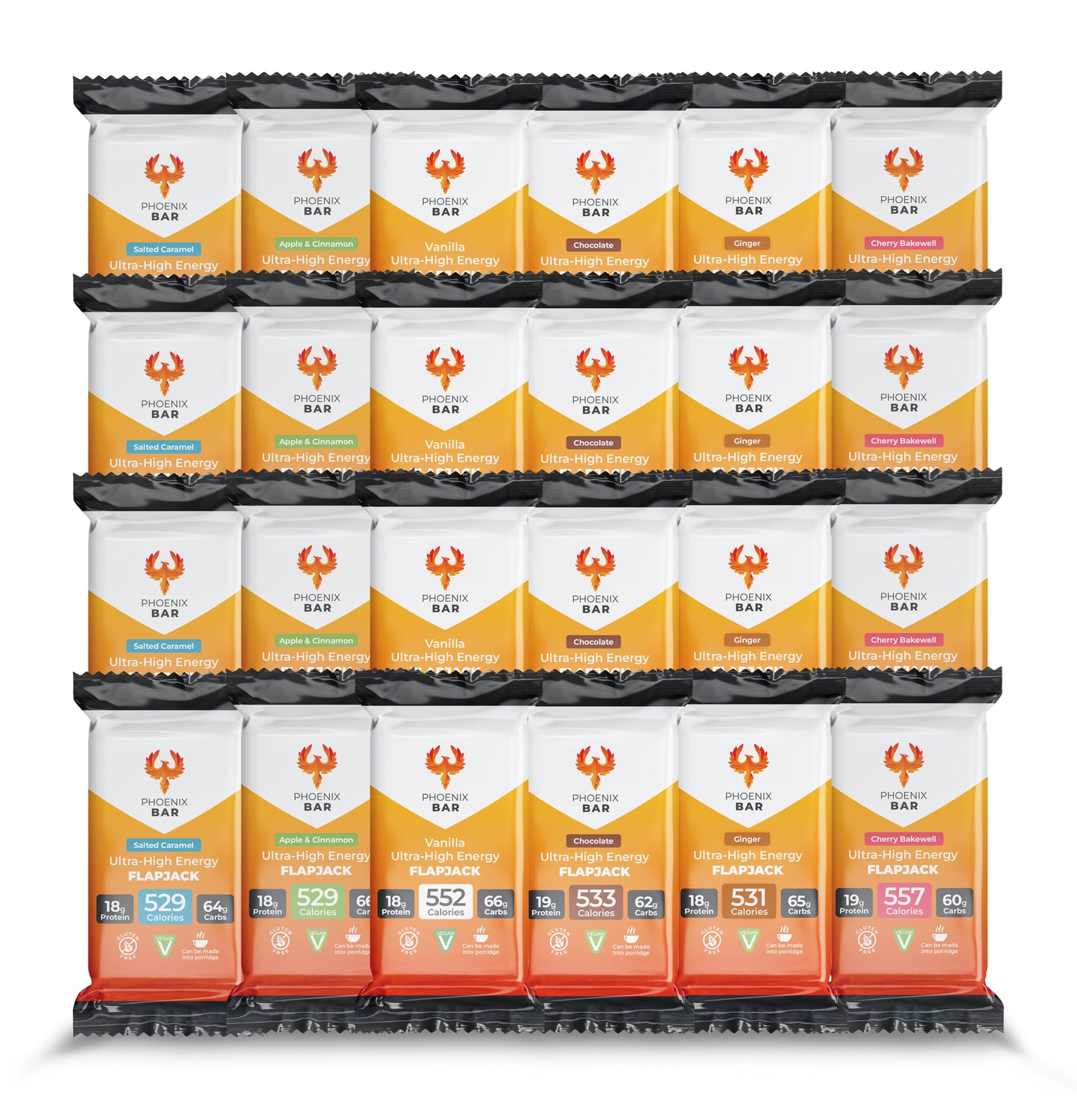
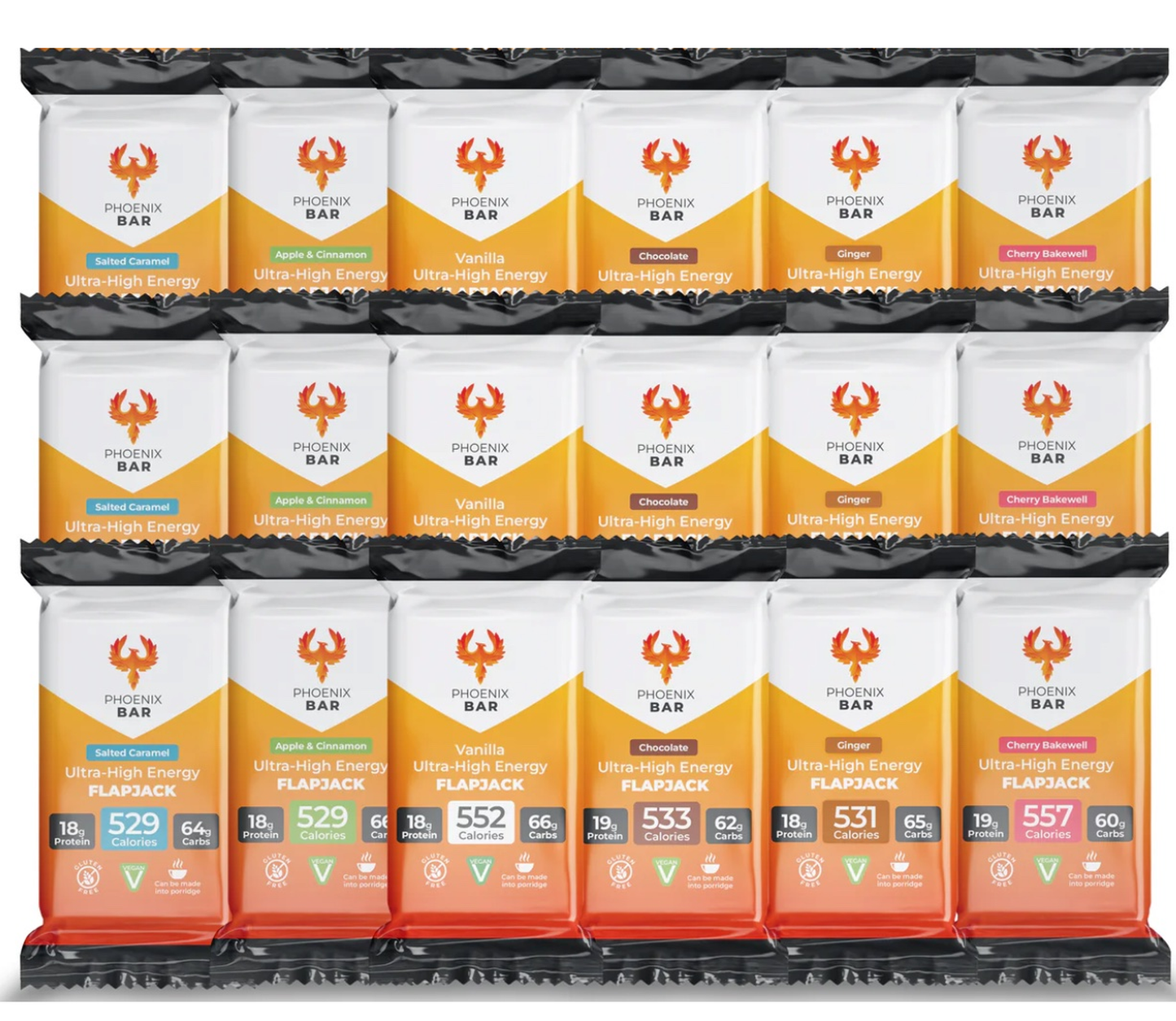
Phoenix Bars are a calorie-dense food product that delivers up to 557 calories per bar. They are not a medical treatment or a weight gain supplement. They are food.
Last reviewed: 2026
Gaining weight should be simple. Eat more than you burn. The surplus gets stored. Weight goes up.
In practice, it is one of the most frustrating goals in nutrition. People who need to gain weight hear the same advice repeatedly: "just eat more." But for anyone who has actually tried to gain weight, whether because they are naturally underweight, recovering from illness, managing a fast metabolism, or rebuilding after a period of weight loss, "eat more" is not helpful advice. The problem is not understanding what to do. The problem is doing it consistently when your body, your appetite, and your daily life are all working against you.
The NHS considers a BMI below 18.5 to be underweight. Being underweight increases the risk of weakened immunity, bone fractures, nutritional deficiencies, fatigue, fertility problems, and poor wound healing. For people recovering from illness or surgery, regaining lost weight is often a critical part of recovery.
This guide focuses on the practical reality of gaining weight: how many extra calories you actually need, why most attempts stall, and specific strategies that make it easier to consistently eat enough without relying on willpower or forcing down huge meals.
How to Calculate Your Calorie Target
Before you can eat in a surplus, you need to know your baseline: how many calories your body burns in a normal day without any intentional exercise. This is your Total Daily Energy Expenditure (TDEE).
A rough estimate for most adults is 2,000 to 2,500 calories per day for maintenance, depending on age, sex, height, weight, and activity level. Women typically sit toward the lower end, men toward the higher end, and active people above that.
For a more personalised estimate, multiply your body weight in kilograms by 28 to 35 depending on activity level. Someone weighing 55kg with a moderately active lifestyle would estimate a maintenance intake of roughly 1,540 to 1,925 calories per day.
This is your starting point, not your target. To gain weight, you need to eat above this number consistently.
The Calorie Surplus You Actually Need
NHS guidance recommends aiming for an additional 300 to 500 calories per day above your maintenance level to support gradual, healthy weight gain. This is expected to produce weight gain of roughly 0.25 to 0.5kg per week.
For faster weight gain (which may be appropriate during recovery from illness or severe underweight), a surplus of 500 to 1,000 calories per day can produce 0.5 to 1kg per week. Higher surpluses should be discussed with a dietitian to ensure the weight gained includes muscle mass and not just fat.
The important word is "consistently." A 500-calorie surplus on Monday followed by a 500-calorie deficit on Tuesday because you forgot to eat lunch results in zero net gain. Weight gain happens over weeks, not individual meals. The strategies that work are the ones you can sustain every day.
In concrete terms: if your maintenance is 2,200 calories, your weight gain target is 2,500 to 2,700 calories per day, every day. That is not an enormous amount of extra food. It is roughly one substantial snack or one additional calorie-dense food item per day.
A single Phoenix Bar delivers 557 calories. Adding one bar per day to an otherwise normal diet provides a surplus that is sufficient for steady weight gain without requiring any changes to your existing meals.
Why Most Weight Gain Attempts Fail
Understanding why weight gain is difficult helps explain which strategies actually work.
Appetite does not match need. People who are underweight often have naturally low appetites. Their hunger signals do not drive them to eat enough to gain weight. Telling someone with a low appetite to "eat more" is like telling someone with insomnia to "just sleep." The mechanism that should make it happen is the thing that is broken.
Large meals feel overwhelming. The standard advice is to eat bigger portions. But for someone who is already struggling to finish normal portions, a larger plate of food is not motivating. It is demoralising. The food sits there getting cold while the person feels increasingly full and frustrated.
Inconsistency kills progress. Weight gain requires a sustained surplus over weeks. One good eating day followed by two days of under-eating results in no net gain. Life gets in the way: busy mornings, skipped lunches, evenings where cooking feels like too much effort. The surplus evaporates.
The wrong foods are chosen. People trying to gain weight often reach for junk food because it is high in calories. This works briefly but causes energy crashes, poor digestion, and a general feeling of being unwell that makes sustained eating harder. The goal is calorie-dense food that you can eat consistently without feeling terrible.
No strategy for the gaps. Most people can eat reasonable meals. The problem is the hours between meals where no calories go in. Breakfast at 8am, lunch at 1pm, dinner at 7pm. That is three eating events in a 12-hour window. The gaps are where the surplus should come from, but without a plan for those gaps, they remain empty.
Five Strategies That Work
These are not about eating more food. They are about getting more calories from the food you already eat and filling the gaps between meals with calorie-dense options that require minimal effort.
1. Add calories to meals you already eat, without increasing portion size.
This is the food fortification approach recommended by NHS dietitians. Add butter, cream, cheese, olive oil, nut butters, or full-fat dairy to meals you are already eating. A tablespoon of olive oil added to pasta adds 120 calories. Full-fat milk instead of semi-skimmed adds 30 calories per glass. Cheese melted on top of whatever you are eating adds 100+ calories. None of these require eating more volume. They increase the calorie density of the food already on your plate.
2. Eat something calorie-dense between every meal.
The gaps between breakfast, lunch, and dinner are where the surplus comes from. A mid-morning snack, a mid-afternoon snack, and something before bed add three eating events to your day. If each delivers 200 to 300 calories, that is 600 to 900 extra calories per day, enough to drive consistent weight gain. The key is making this effortless: food that requires no cooking, no preparation, and no decision-making. A Phoenix Bar at 11am adds 557 calories to your day with zero preparation and zero thought.
3. Front-load calories in the morning.
Most people trying to gain weight eat their smallest meal at the time of day when appetite is lowest (breakfast) and their largest meal when appetite is highest (dinner). This leaves a 12-hour gap where calorie intake is minimal. A high-calorie breakfast sets the day up for success. A Phoenix Bar made into porridge with full-fat milk delivers 600+ calories in two minutes. Starting the day 600 calories ahead makes reaching the daily target significantly easier.
4. Keep calorie-dense food visible and accessible at all times.
If gaining weight requires you to go to the kitchen, decide what to eat, prepare something, and then eat it, most of those eating events will not happen. If there is a Phoenix Bar on your desk, in your bag, on your bedside table, or in your coat pocket, the barrier between "I could eat" and "I am eating" is reduced to unwrapping a packet. Accessibility drives consistency. Consistency drives results.
5. Track your calories for two weeks, then stop.
Most people who are trying to gain weight have no idea how many calories they actually eat. Tracking for a short period (using an app like MyFitnessPal) reveals the gap between what you think you eat and what you actually eat. Once you can see the gap, you can fill it with specific, targeted additions. After two weeks, you will have enough awareness to manage intuitively. Tracking is a diagnostic tool, not a permanent habit.

Phoenix Bars - Up to 557 Calories
Soft, low volume, east to eat nutrition bars designed to help you maximise your calorie intake and gain weight.
Where Phoenix Bars Fit
Adding one Phoenix Bar per day to an otherwise normal diet provides a 557-calorie surplus. NHS guidance recommends an additional 300 to 500 calories per day for gradual weight gain. One bar exceeds that threshold without requiring any changes to your existing meals, any cooking, or any willpower beyond unwrapping a packet and eating it. The format matters: it can live on your desk, in your bag, on your bedside table, or in your coat pocket. Accessibility drives consistency, and consistency is the thing that makes weight gain actually happen.
The format matters. Phoenix Bars require no cooking, no preparation, and no decision-making. They can be eaten as a bar, broken into pieces for grazing, or made into porridge with hot water or milk. They are portable, shelf-stable for two years, and can be kept anywhere you spend time.
For someone whose weight gain attempts have failed because of inconsistency, low appetite, or the effort required to eat more, a single bar that adds 557 calories to the day with zero friction is often the difference between a surplus that exists on paper and one that actually happens.
When Weight Gain Requires Professional Support
This guide covers general strategies for healthy weight gain. Some situations require professional guidance.
If your weight loss is unexplained or unintentional, see your GP. Unexplained weight loss can be a sign of an underlying medical condition that needs investigation. See the guide on unintentional weight loss.
If you are losing weight due to a specific medical condition, condition-specific guidance may be more appropriate. See the related guides below.
Related Guides
- Calorie-Dense Foods: What They Are and When They Help
- Low Appetite and Difficulty Eating Enough Calories
- Unintentional Weight Loss
- Meal Replacement Bars vs Calorie-Dense Bars
Frequently Asked Questions
How many extra calories do I need per day to gain weight?
NHS guidance recommends an additional 300 to 500 calories per day above your maintenance level for gradual, healthy weight gain of roughly 0.25 to 0.5kg per week. A single Phoenix Bar provides 557 calories, which is sufficient as a daily surplus on its own without changing any other meals.
Why can't I gain weight even though I eat a lot?
Most people who believe they eat a lot are overestimating their intake. Track your calories for one week using an app and you will likely find a gap between what you think you eat and what you actually eat. Other factors include a naturally high metabolic rate, high activity levels, or an underlying medical condition. If weight gain remains impossible despite a genuine sustained surplus, speak to your GP.
What is the fastest way to gain weight healthily?
A surplus of 500 to 1,000 calories per day can produce 0.5 to 1kg per week. Focus on calorie-dense foods, eating between meals, fortifying existing meals with fats and dairy, and keeping ready-to-eat high-calorie options accessible at all times. Higher surpluses should be discussed with a dietitian to ensure healthy weight gain.
Is it better to eat more meals or bigger meals?
More meals. Eating five to six smaller meals and snacks is almost always more effective than trying to eat three larger ones. Large meals are overwhelming when appetite is low and often lead to skipping subsequent meals because you still feel full. Small, frequent, calorie-dense eating events sustained across the day produce better consistency and higher total intake.
Are Phoenix Bars a weight gain supplement?
No. Phoenix Bars are a food product, not a supplement. They are made from oats, coconut oil, and plant-based protein. They are not formulated as a weight gain product, but they deliver 557 calories per bar, which makes them one of the most calorie-dense ready-to-eat food options available. Adding one bar per day to a normal diet provides sufficient surplus for steady weight gain.
If you have any questions about using Phoenix Bars as part of a weight gain strategy, contact me directly. I am always happy to help.
James Frost
Founder, Flaming Phoenix
07990 519422


Flaming Phoenix
Share