
Can't Eat Mid-Race? The Two Reasons, and How to Keep Fuelling Anyway
By James Frost, founder of Flaming Phoenix. I designed Phoenix Bars for two groups who turn out to have the same problem: endurance athletes whose appetite vanishes deep into an effort, and people who struggle to eat enough when they feel unwell. Working across both is how I learned what actually helps when food stops going down. I am not a dietitian or a doctor, and anything persistent or severe belongs with one, but this is the practical version. Last reviewed June 2026.
Not being able to eat during a long run or race is one of the most common reasons strong athletes fall apart. In long ultramarathons, nausea is the single most reported complaint among both finishers and those who drop out, and gastrointestinal trouble is a leading cause of people abandoning races they were fit enough to finish. The direct answer is that this is almost always one of two different problems wearing the same mask. Either your stomach cannot accept food, because hard exercise has pulled blood away from your gut, or your appetite has switched off, because intense effort suppresses the hormones that make you want to eat. They feel identical from the inside, but they have different causes and different fixes, and the single most useful move for both is the same: ease the pace for a few minutes to let your gut catch up before you try again. Everything else follows from working out which of the two you are fighting.
The two problems people lump together
When an athlete tells me they "couldn't eat," they almost always mean one of two distinct things, and treating the wrong one is why people stay stuck. The first is can't keep it down: food makes you feel sick, your stomach feels full and sloshy, and the thought of swallowing anything turns your stomach. That is a gut problem. The second is don't want it: you are not nauseous exactly, but nothing appeals, hunger has simply gone, and you have to force every mouthful. That is an appetite problem. The fixes overlap, but they start in different places, so the first thing to do mid-effort is a quick self-diagnosis: is my stomach rejecting food, or has my desire for it just disappeared?
Why your stomach stops accepting food
When you work hard, your body sends blood to your muscles and skin and takes it away from your gut. Blood flow to the digestive tract can drop by as much as 80% during intense exercise, a state called splanchnic hypoperfusion, and a starved gut empties slowly, absorbs poorly, and in long efforts the lining itself can take a mild injury. The result is nausea, bloating, cramping, and sometimes vomiting. Several things make it worse, and most are within your control. Going out too hard is the big one, because intensity is what diverts the blood. Heat compounds it, since cooling competes with digestion for blood flow. Dehydration compounds it again, because less fluid in your system means less blood for the gut, which is why under-drinking in the heat so often shows up as nausea rather than thirst. The mechanical jostling of running, especially pounding downhill, physically shakes the contents of your stomach. And over-concentrating your fuel, stacking sweet gels and sugary drinks faster than your gut can absorb them, leaves undigested sugar sitting there to ferment into bloating and nausea. Ibuprofen and other anti-inflammatories belong on the avoid list too, because they worsen the gut injury and add kidney risk under endurance stress.
The practical upshot is that the foods which are gentlest on a compromised gut are low in fibre, fat, and protein, and easy to absorb. This is the same logic behind choosing dense, low-residue carbohydrate over high-fibre wholefoods when the clock is running, which I cover on the ultra-high-carb solid foods guide, and it is one reason a Phoenix Bartends to sit more easily than a handful of nuts or a high-fibre snack: it delivers a lot of low-bulk carbohydrate without the fibre load that a struggling gut handles badly. Using more than one type of carbohydrate also helps, because glucose and fructose are absorbed by different transporters, so a mix raises how much you can take on while lowering the amount left sitting in your gut.

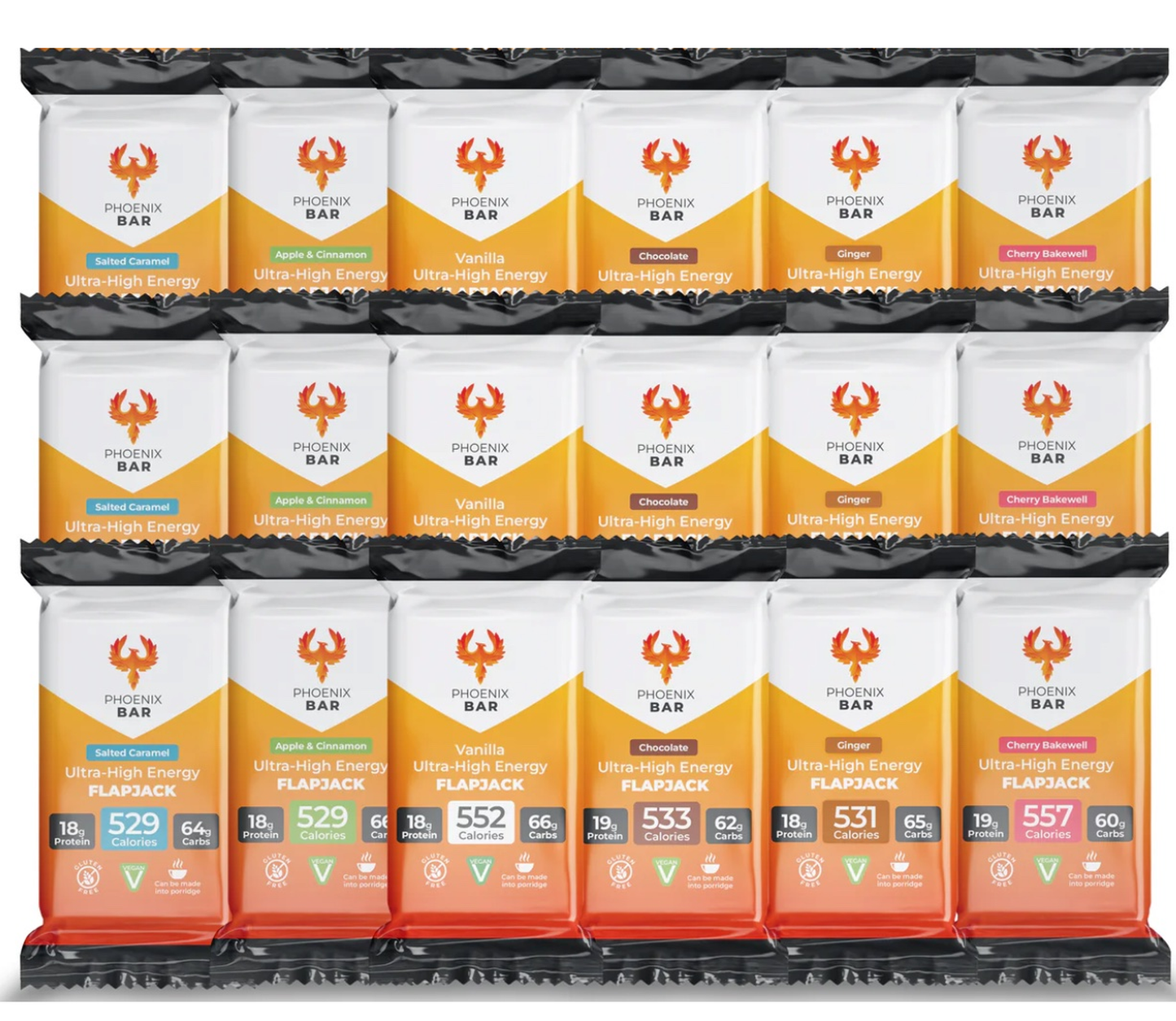
Phoenix Bars: Up to 557 Calories Per Bar
Soft, easy to eat whole or as a warm porridge. Low volume, two-year shelf life.
Why the hunger switches off
The second problem is hormonal, and it is not in your head. Vigorous aerobic exercise reliably suppresses ghrelin, the hormone that makes you feel hungry, and raises the satiety hormones PYY and GLP-1, an effect sometimes called exercise-induced anorexia. Running suppresses appetite more than most other forms of exercise, and the harder you go, the stronger the effect, which is why hunger so often disappears precisely when your energy needs are highest. Heat and altitude flatten appetite further, which is why fuelling high mountains is its own discipline, covered on the high-altitude mountaineering guide. On top of the hormones sits flavour fatigue, the very real moment when the sweet gel or drink you have been living on becomes genuinely repulsive. It is one of the most common reasons a carefully planned fuelling strategy gets abandoned halfway through a race, and it hits hardest in long and hot events, because heat changes how things taste.
The fix for an appetite that has switched off is not to wait for hunger to return, because it will not arrive until you stop, and by then you are in a hole. It is to eat on a schedule rather than on appetite, in small amounts, and to change the input. When sweet has become unbearable, savoury or plain or sharp flavours often go down when nothing else will. This is exactly why I built Phoenix Bars in six flavours rather than one, so you can rotate before fatigue sets in, and why the Ginger flavour earns its place: ginger has a long-standing reputation as a settling flavour, and a ginger-leaning real food is often far more palatable deep into an effort than yet another sweet gel. The broader case for varying your fuel and leaning on real food is on the energy gel alternatives guide.
Breaking the spiral mid-effort
The danger with both problems is the spiral. You stop fuelling, your blood sugar drops, your gut and your mood get worse, you fuel even less, and what should have been a rough patch becomes a death march or a did-not-finish. The way out is a sequence, and it is worth rehearsing it before you ever need it.
First, slow down and cool off. Easing the pace for five to ten minutes sends blood back to your gut and is the single highest-value thing you can do for either problem. A climb you can power-hike is the ideal moment, because there is less jostling and more spare blood for digestion, which is why experienced ultra runners deliberately eat on the ups. Second, take small sips of plain water and stop adding fuel for a short while if your stomach is over-loaded, letting the backlog clear before you restart. Third, restart small and frequent rather than trying to catch up in one go, a mouthful at a time every few minutes. Fourth, change the format. If solids will not go down, switch to liquid calories, since drinkable energy slips past a shut appetite when chewing feels impossible. A Phoenix Bar made into a warm porridgewith hot water, or loosened further toward a drink, is a useful rescue here, and because each 120g bar carries up to 557 calories, even a few sips or small spoonfuls return meaningful energy when that is all your stomach will take. Flat cola, soup, and a real ginger drink are the classic aid-station rescues for the same reason. The principle of getting maximum calories into minimum volume when intake is limited is the same one that runs through the calorie-dense foods guide.
Building a gut and a plan that do not quit
Most of this is preventable, and the prevention is more powerful than any in-race trick. The gut is trainable. Repeatedly practising eating and drinking during training, deliberately challenging your stomach over a few weeks, measurably reduces GI distress on race day, the same way you would train any other system. Use your long runs to rehearse your exact race fuelling rather than saving it for the day, because a gel that sits fine fresh can turn on you under race-day nerves and effort. Build what coaches call a flavour library, around five to seven options you know you tolerate, split across sweet and savoury, so you always have somewhere to turn when one becomes unbearable. Aim for a realistic carbohydrate target, usually 60 to 90 grams an hour, edging higher only if you have trained your gut for it, and start fuelling early, before you feel you need it, because it is far easier to stay ahead than to climb out of a hole. Pace and hydration sit underneath all of it: go out at an effort you can digest at, and drink to a sensible plan in the heat. How this plays out over specific events is covered on the multi-day ultra running guide and the trail running guide, and if you fuel plant-based, the fibre angle in particular is worth reading on the vegan endurance nutrition guide. A simple way to build your own rotation is a mix of flavours from the 12-bar Starter bundle, moving up to the 18-bar Essential or 36-bar Complete box once you know which sit best.
When to stop rather than push on
Most mid-race nausea is unpleasant but harmless and passes once you slow down and rebalance. Some signs are different and mean stopping. Persistent vomiting that will not settle, confusion or disorientation, or feeling worse the more water you drink in a long hot effort can point to heat illness or to low blood sodium from over-drinking, both of which need help rather than another gel. Knowing the difference between a rough patch you can fuel through and a problem you should not run through is part of being a serious endurance athlete, not a failure of one.
Common questions
Why can't I eat during long runs and races? Usually one of two reasons. Hard exercise diverts blood away from your gut, so your stomach struggles to accept food, or it suppresses your hunger hormones so your appetite switches off. Heat, dehydration, going out too fast, and over-concentrated sugary fuel all make both worse.
How do I fuel when I feel too sick to eat? Ease the pace and cool down to send blood back to your gut, sip plain water, then restart with very small amounts often rather than a big catch-up. Switch to bland, savoury, or drinkable options, and eat on the climbs where there is less jostling.
Why has my gel suddenly become disgusting mid-race? That is flavour fatigue, and it is normal, especially in long or hot events. The fix is variety planned in advance: carry several options across sweet and savoury so you can rotate before any one becomes unbearable.
Does real food sit better than gels? For many people, yes, particularly over long efforts, because the constant hit of concentrated sugar from gels is a common trigger for the gut rot that ends races. Low-fibre real food and a mix of carbohydrate sources tend to be gentler, though you should always test it in training first.
Can I train my stomach to handle more food while running? Yes. The gut adapts to repeated practice, so deliberately rehearsing your race fuelling on long runs over several weeks reliably reduces nausea and lets you absorb more on the day.
Why are Phoenix Bars useful when I can't stomach much? They are real, low-fibre, calorie-dense food rather than concentrated sugar, they come in six flavours so you can beat flavour fatigue, and each 120g bar packs up to 557 calories, so a small amount still counts when your stomach can only take a little. Made into a warm porridge or loosened toward a drink, they also work as a liquid-calorie rescue when solids will not go down.
The thing to hold onto is that not being able to eat is rarely the end of a race. It is a signal that your gut or your appetite has hit a limit, and both respond to the same calm sequence: slow down, take the pressure off your stomach, change what you are asking it to do, and start small. Plan your fuel so you always have a savoury or drinkable option in reserve, train your gut the way you train your legs, and the rough patches stop being the thing that defines your day. If you want to go deeper, the energy gel alternatives guide and the ultra-endurance guide build on this, and a mixed-flavour Starter bundle is the simplest way to start building a rotation your stomach trusts.
If you would like a one-page mid-race rescue checklist to keep in your pack, leave your email below and I will send it over.


Flaming Phoenix



Contact Us
Declare withdrawal
Please fill out the following form to declare your withdrawal from the contract.

