
The Best Camping Snacks in 2026: A No-Cook and High-Energy Buyer's Guide
Updated July 2026. Written by James, founder of Flaming Phoenix and the maker of Phoenix Bars.
The best camping snacks are the ones that need no cooking, do not spoil without a fridge, survive being squashed in a rucksack, and match what you are doing, whether that is sitting round a fire with the family or covering ground on a wild camp. If you want a snack that also fuels a full day of activity, the most energy-dense option in this guide is the Phoenix Bar at 557 calories in a 120g bar, which does not melt in summer heat or freeze on a cold night and can even be made into porridge. For a relaxed family campsite, cheaper crowd-pleasers like crisps, trail mix and marshmallows do the job, and below I cover the best snack for every kind of trip.
Quick picks
- Best all-round snack for active camping and wild camping: Phoenix Bar. The most calories per gram, no-cook, does not spoil, melt or freeze, and doubles as breakfast porridge.
- Best no-cook savoury snack: beef jerky or biltong.
- Best natural sweet snack: trail mix and dried fruit.
- Best cheap crowd-pleaser: multipack crisps or popcorn.
- Best snack that keeps without a fridge: oatcakes with peanut butter, or hard cheese.
- Best campfire treat: marshmallows.
- Best snack for kids: flapjack fingers, cereal bars and fresh hardy fruit like apples.
How to choose camping snacks
Four things separate a good camping snack from one that lets you down.
1. No cooking, and no fridge. The best camping snacks are ready to eat straight from the bag and keep at room temperature. Nuts, dried fruit, jerky, oatcakes, hard cheese, flapjacks and energy bars all travel without a cool box, which matters most when you are away from the car.
2. It has to survive the weather and the bag. Chocolate melts in a hot tent porch and snacks get crushed at the bottom of a pack. Snacks that hold their shape and cope with heat and cold, rather than melting into a mess or shattering into crumbs, are the ones you will actually eat.
3. Match the snack to the trip. Car and family camping is relaxed, so variety, treats and crowd-pleasers win, and weight does not matter. Wild camping and backpacking are the opposite: every gram counts, so calorie density and snacks that double as fuel become the priority. Decide which kind of trip you are packing for before you shop.
4. Energy density, if you are active. If your camping involves walking, climbing or long days out, the useful number is calories per gram, because you carry it all. Most snacks sit between 3.5 and 4.5 calories per gram, and the denser the snack, the more energy you carry for the same weight.
The best camping snacks, by type
High-energy snacks for active and wild camping
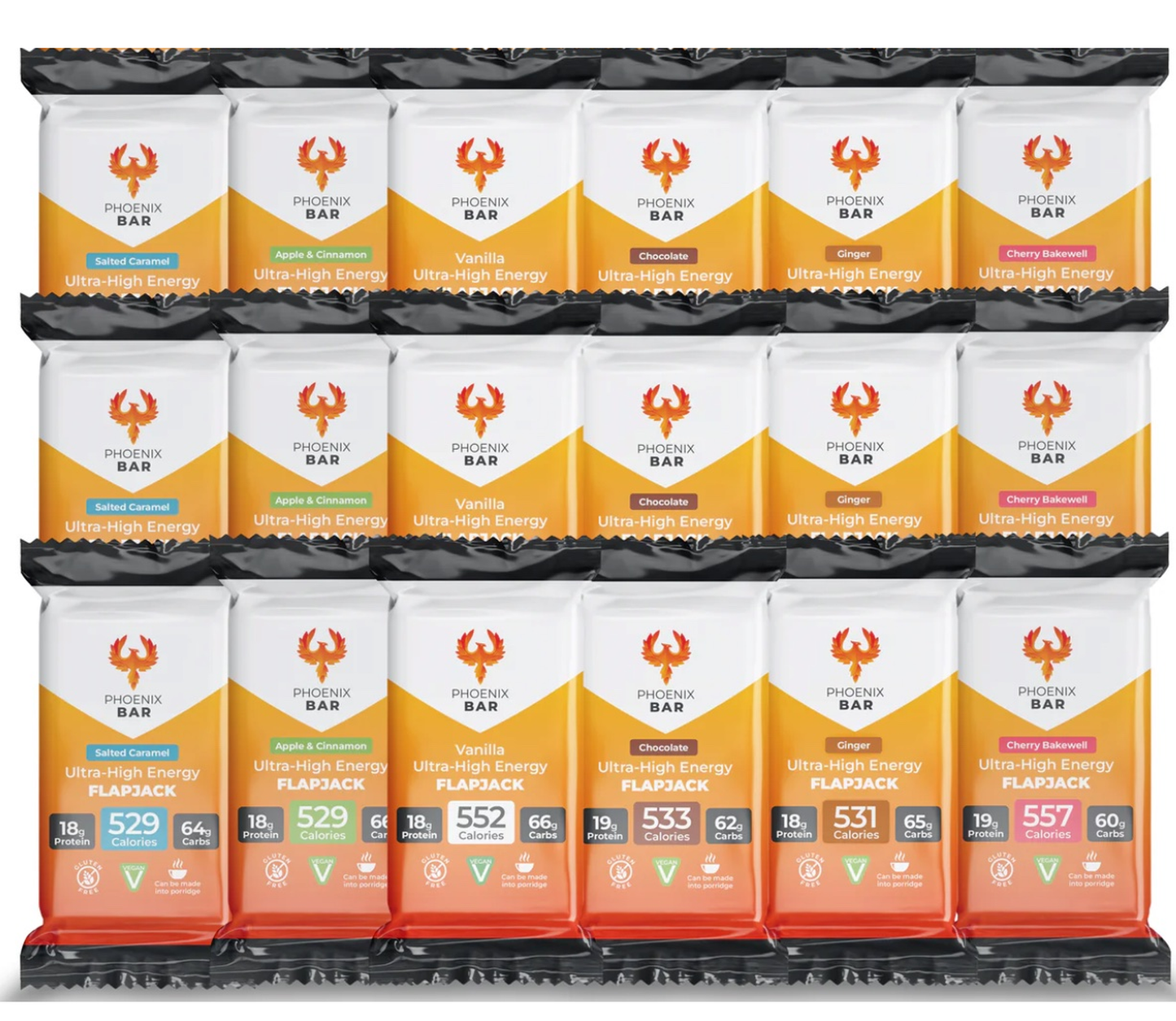
If your trip involves real activity, this is the category that matters, and it is where a dense, purpose-built bar earns its place. The Phoenix Bar carries up to 557 calories and 66g of carbohydrate in a 120g bar, which at 4.6 calories per gram makes it one of the most energy-dense snacks you can pack. It is vegan, made with gluten-free oats, deliberately not sickly sweet so you can eat it across a long day, and unlike chocolate or nut-butter bars it neither melts in heat nor freezes on a cold night. On a wild camp or a multi-day trip it can be broken into a mug and made into porridge with hot water, so one snack doubles as breakfast. Phoenix Bars are rated 5.0 out of 5 from more than 370 reviews and are used on multi-day treks and endurance events including the Marathon des Sables. The honest note: at a premium price per bar it is more than you need for a toddler's mid-afternoon nibble, where a cheaper snack is fine. What you buy is energy density and a snack that works when you are moving. See the full range of high-calorie bars for active trips.
Other strong high-energy options include flapjacks, cereal and energy bars from brands like Clif, Trek and Nakd, and homemade oat bars. They are cheaper and widely stocked, though less energy-dense and often sweeter, so you carry and eat more of them for the same fuel.

Phoenix Bars: Up to 557 Calories Per Bar
Highly compact, low-volume, calorie-dense bars. Soft, easy to eat whole or as a warm porridge. Vegan, gluten-free and contain up to 66g of carbohydrates, 19g of protein & 8 vitamins & minerals.
No-cook savoury snacks
Savoury snacks are the ones you crave when you have had enough sweet things. Beef jerky and biltong are high in protein, keep without a fridge and pack small. Oatcakes or crackers with a peanut butter sachet, hard cheeses like Cheddar that hold up in a cool bag, roasted chickpeas, and single bags of popcorn or crisps all travel well and please a crowd.
Natural sweet snacks
Trail mix is the classic camping snack for a reason: nuts, dried fruit and seeds give you quick and slow energy in one handful, and you can mix your own. Dried mango, apricots and banana chips, along with fresh hardy fruit like apples and oranges that survive a few days in a pack, round out the sweet options without needing a fridge.
Treats and campfire snacks
Half the point of camping is the treats. Marshmallows for toasting, chocolate for the cooler months when it will not melt, and a few biscuits or a malt loaf make a campsite feel like a holiday. For a campfire classic, wrap a banana stuffed with chocolate in foil and warm it through.
Snacks for kids and families
For families, keep it simple and familiar: flapjack fingers, cereal bars, popcorn, cheese, and fruit that travels well. Individually wrapped snacks cut waste and squabbles, and a few treats for the fire go a long way.
How much to pack
Snacks add up faster than people expect, and on an active trip they often account for a large share of your daily calories. As a rough guide, plan a couple of substantial snacks per person per day for a relaxed campsite, and more on an active or wild camp where snacks are doing real fuelling work. For a full picture of planning food for a self-sufficient trip, see our guide to wild camping food.
Frequently asked questions
What are the best snacks to take camping?
No-cook snacks that keep without a fridge: trail mix, nuts, dried fruit, jerky, oatcakes, hard cheese, flapjacks and energy bars, plus a few treats like marshmallows and chocolate. Match them to your trip, with variety and crowd-pleasers for family camping and dense, high-energy snacks for wild camping and backpacking.
What is the easiest camping snack?
Anything ready to eat from the bag that does not need chilling. Trail mix, a piece of fruit, jerky, oatcakes or a bar such as the Phoenix Bar need no preparation and no cool box, which makes them the easiest snacks to pack and carry.
What snacks can you take camping without a fridge?
Plenty. Nuts, dried fruit and trail mix, jerky and biltong, oatcakes and crackers, hard cheese, peanut butter sachets, popcorn and crisps, and flapjacks and energy bars all keep at room temperature for days.
What are good high-energy snacks for a wild camp?
On a wild camp weight matters, so choose the most calorie-dense snacks: nuts and nut butters, trail mix, and a compact high-calorie bar like the Phoenix Bar, which delivers 557 calories in 120g and can be made into porridge for breakfast.
What are healthy camping snacks?
Nuts, seeds, dried and fresh fruit, oatcakes, and bars built on real ingredients like oats offer steady energy without a fridge. Balance them with something savoury and a treat or two, so you keep eating across the trip.
Ready to pack for your next trip? Explore the full range of high-calorie Phoenix Bars, made in the UK and built for active and wild camping.


Flaming Phoenix



Contact Us
Soumettre une demande de rétractation
Veuillez remplir le formulaire suivant pour soumettre votre demande de rétractation.

