
Army Ration Packs: Contents, Calories and Menus
Written by James, founder of Flaming Phoenix and the maker of Phoenix Bars. Updated August 2026.
A British Army 24-hour Operational Ration Pack is one soldier's entire day of food in a single box: three meals, snacks, drinks and the kit to prepare them, built around roughly 4,000 calories and weighing in the region of 1.8 to 2 kilograms. Civilians can buy them, plenty do, and the questions people ask about them are exactly the ones this guide answers properly: what's actually inside, how the menus work, how many calories you really get, how long they keep, where to buy genuine ones, how they compare to American MREs, and the question almost nobody answers honestly, whether a ration pack is actually a good thing to carry on a hike.
What is an army ration pack?
The current British Army field ration is the 24-hour Operational Ration Pack, usually shortened to ORP or just a "rat pack". The concept is complete self-sufficiency: everything one person needs to stay fed, hydrated and functioning for a day in the field, robust enough to be thrown in the back of a vehicle, dense enough to be carried, and edible hot or cold. The packs come in a rotation of numbered menus, around twenty in the current generation, and the range now includes vegetarian, halal and other religious and dietary variants, which is a quiet piece of logistics the Army is rightly proud of. Each box is designed to a calorie target of about 4,000, because a soldier working hard in the field burns at a rate most desk-bound humans would find hard to believe, anywhere from 4,000 to well over 6,000 calories on demanding days.
What's inside a British Army 24-hour ration pack?
Open one up and the layout tells you how the day is meant to go. Breakfast is typically a boil-in-the-bag pouch, something like porridge or beans, designed to be eaten hot before the day starts. Lunch is built for eating on the move: biscuits, pastes or pâté, an oat or fruit bar, and snacks that survive a bergen. The main meal is the centrepiece, a boil-in-the-bag pouch in the casserole and curry family, usually paired with a pudding. Around the meals sits the supporting cast: a substantial snack layer of sweets, chocolate and the famous "biscuits brown", a plain hardtack descendant that has generated more barrack-room folklore than any biscuit in history; drink powders including isotonic and energy mixes; and a brew kit of tea, coffee, hot chocolate, sugar and whitener, because the British Army's actual fuel is tea. The box is finished with the practical items: a spork, water purification tablets, windproof and waterproof matches and tissues. It is a genuinely impressive piece of food engineering, and the thinking behind it, maximum usable energy in a portable, keep-forever format, is precisely the problem we spend our lives on at Phoenix, just at a different scale.
How do the menus work?
The menus are numbered, and the numbers matter more than you'd think. Each numbered menu is a fixed combination of breakfast, main, pudding and snacks, so buying "Menu 8" tells you exactly what dinner you're getting, and the vegetarian and religious-diet options live at their own menu numbers. Menus rotate between production generations as recipes are added and retired, which is why any specific menu list you find online, including this one if you're reading it years from now, should be checked against the date code on the actual box. If you're buying for a trip rather than curiosity, the practical advice is simple: pick a main meal you'd happily eat at home, because field conditions make good food taste incredible and mediocre food taste like penance.
How many calories are in an army ration pack?
The design target is around 4,000 calories per 24-hour pack, with individual menus ranging from roughly 3,300 to a little over 4,000. That number is the whole point of the box, and it's worth pausing on, because it's also where the ration pack's one real weakness lives.
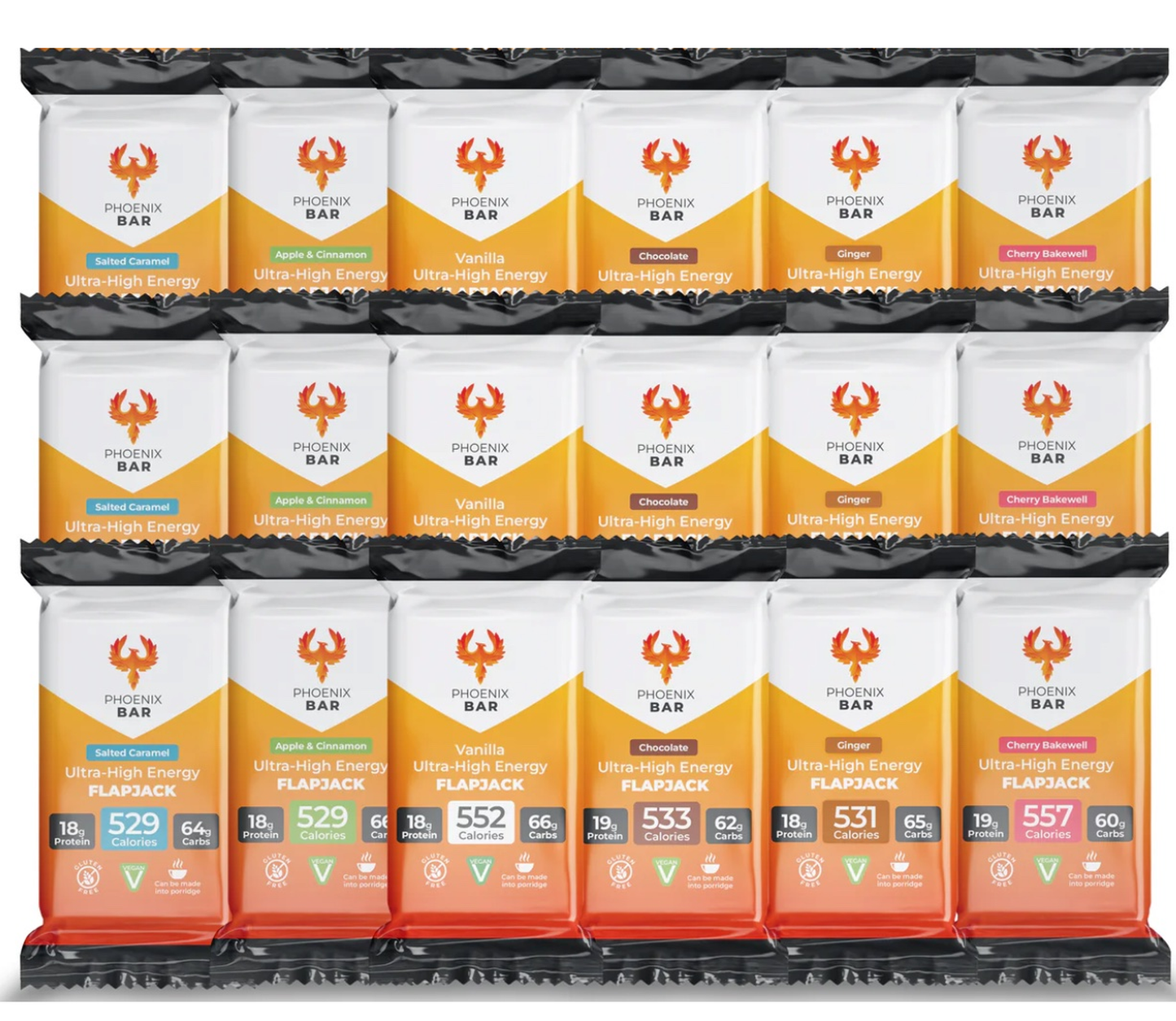
Four thousand calories in roughly 1.9 kilograms works out at a little over 2 calories per gram. That is respectable for wet food, and wet food is deliberate: pouches you can eat cold, straight from the bag, are a genuine tactical feature. But it means a soldier, or a hiker, is carrying an awful lot of water and packaging per calorie. For comparison, dehydrated expedition meals reach higher densities but demand water and a stove at the other end, and the densest class of travel food, purpose-built high calorie bars, reaches 4.5 calories per gram and beyond; our own bar carries 557 calories in 120 grams, which is 4.64 per gram, more than double the ration pack's density. That's not a criticism of the ORP, which is designed for soldiers with vehicles, resupply chains and very different constraints. It's the key fact for anyone deciding what to carry on their own back, and if calorie-per-gram is the number you shop on, we've ranked the highest calorie bars in the UK by exactly that measure.
How long do army ration packs last?
Here the internet needs a small correction, because search engines currently answer this question with "24 hours", which is how long a pack feeds you, not how long it keeps. Ration packs are engineered for long storage: the pouches are retort-sterilised, the contents chosen for stability, and packs are typically produced with years of shelf life. In practice, how long yours lasts depends on the production date printed on the box, which is exactly why the golden rule of buying surplus is to check the date code before you pay. A recent-production pack stored somewhere cool will comfortably outlast your plans for it.
Can civilians buy army ration packs?
Yes, and it's a thriving little market. Genuine packs reach civilians through the surplus trade, sold by military surplus dealers, prepper suppliers and marketplace sellers, typically at £12 to £25 for a full 24-hour box depending on menu and production date. Alongside the genuine article there's a growing category of civilian-made "army style" ration packs built to the same template, which have the advantage of guaranteed fresh production. Three rules keep the buying honest: buy from a seller who states the production or best-before date up front, be suspicious of opened or "made-up" boxes assembled from loose components, and expect menu availability to be whatever the surplus chain coughed up that month rather than a neat catalogue. Bought sensibly, a genuine pack is one of the cheapest ways to feed a person for a full day of hard outdoor work, and honestly, opening one is great fun.
British ration packs vs American MREs
The other thing UK searchers buy in this category is the American MRE, the Meal Ready to Eat, and the two philosophies are instructively different. An MRE is a single meal of roughly 1,250 calories, three to a day, and its party trick is the flameless ration heater, a water-activated chemical pouch that produces a hot meal with no stove at all. The British approach is the 24-hour box and the boil-in-the-bag pouch, which assumes a mess tin of hot water and rewards you with tea from the same boil, a trade the British Army will make every single time. MREs imported to the UK cost more per calorie, partly because half of what you're paying for is novelty: the MRE unboxing is practically its own YouTube genre. If you're buying to actually eat outdoors in Britain, the British pack is better value; if you're buying for the experience, get one of each and have opinions.
A short history of the British ration
The modern box stands on a century of trial and error. The First World War soldier lived on bully beef and army biscuit, a hardtack so notoriously durable that it shaped how a generation thought about food, and its cultural echoes turn up in unexpected places: Tolkien, who served on the Western Front, transformed the army biscuit into the elven waybread at the heart of our guide to lembas bread. The Second World War brought the Composite ration, the famous "compo", boxed to feed a group of soldiers for a day and remembered with the particular dark fondness reserved for tinned treacle pudding. The individual 24-hour ration evolved through the late twentieth century into today's multi-climate generation, with its rotating menus, its multi-faith options and its boil-in-the-bag engineering. Read in one sitting, the history is a hundred-year experiment in a single question: how do you put a day of human energy in a box? The answers keep getting better, and the question never changes.

Phoenix Bars: Up to 557 Calories Per Bar
Highly compact, low-volume, calorie-dense bars. Soft, easy to eat whole or as a warm porridge. Vegan, gluten-free and contain up to 66g of carbohydrates, 19g of protein & 8 vitamins & minerals.
Are ration packs good for hiking, DofE and expeditions?
Here's the honest answer the retailers won't give you: it depends entirely on who's carrying the weight.
The case for: a ration pack is complete, calorie-dense by supermarket standards, nearly indestructible, eatable cold in an emergency, and psychologically brilliant, because a hot main meal and a proper brew at the end of a hard day does more for morale than any gel ever made. For car camping, basecamps, canoe trips, cadet exercises and one-night wild camps where 2 kilograms is neither here nor there, they're superb, and for DofE groups they double as a lesson in logistics.
The case against is that 2 kilograms per person per day compounds brutally. On a self-supported multi-day route, three days of ration packs is 6 kilograms of food before water, and much of that weight is moisture and packaging you'll carry back out. Experienced long-distance walkers solve the same 4,000-calorie problem at nearly half the weight by combining dehydrated evening meals with genuinely dense daytime food, and that daytime layer is where we live: a couple of high-calorie protein bars deliver over 1,100 calories for 240 grams, eaten on the move with no stove, no water and no washing up, and a bar dense enough to work as meal replacement covers the lunches the ration pack solves with pâté and biscuits. Our full breakdown of the best energy bars for hiking does the comparative maths for the whole category, including where our own bars fit and where they don't. The strongest setup we know isn't ration pack or lightweight; it's a hybrid: dense bars and dehydrated meals on the move days, and one glorious full ration pack for the night you've earned it.
Army ration pack FAQ
What is in an army ration pack? A full day of food for one person: a boil-in-the-bag breakfast and main meal with pudding, an on-the-move lunch of biscuits and spreads, a snack layer of bars, sweets and chocolate, drink and brew kit, plus a spork, water purification tablets and windproof matches.
How many calories are in an army ration pack? The 24-hour pack is designed around 4,000 calories, with individual menus running from roughly 3,300 to just over 4,000. Cold-climate variants push higher still.
Can you buy British Army ration packs? Yes. Genuine packs reach the civilian market through surplus dealers and marketplaces, typically at £12 to £25 per 24-hour box, alongside civilian-made equivalents built to the same template. Always check the production or best-before date before buying.
How long does a British Army ration pack last? It feeds one person for 24 hours, but it keeps for years: the pouches are sterilised and the contents chosen for long storage. The date code on the box is the real answer for any individual pack.
What is a 24-hour ORP? The Operational Ration Pack, the British Army's standard individual field ration: one numbered menu box containing a full day of meals, snacks, drinks and accessories for one soldier.
Are army ration packs good for hiking? For basecamps, short trips and group exercises, genuinely yes. For self-supported multi-day routes, their roughly 2 kilograms per day is the problem, and most experienced walkers get the same calories at far lower weight by pairing dehydrated meals with calorie-dense bars.
Flaming Phoenix has no connection to the Ministry of Defence. We're just professionally obsessed with the same problem the ration pack solves: getting a hard day's energy into the smallest, toughest package possible. If you want to see our answer to it, start with Phoenix Bars.


Flaming Phoenix



Contact Us
Soumettre une demande de rétractation
Veuillez remplir le formulaire suivant pour soumettre votre demande de rétractation.

