
Cheap High Calorie Foods: Every Budget Option Ranked by Pence Per Calorie
The cheapest calories in a UK supermarket cost between 2p and 5p per 100 kcal, and they come from vegetable oil, own-brand pasta, porridge oats, white rice and bread. The most expensive ready-made options cost over £1 for the same energy. This guide ranks more than 25 cheap high calorie foods by what 100 calories actually costs at typical own-brand prices, so you can eat more without spending more.
In this guide: How to judge cheap calories properly. The full ranking by pence per 100 kcal. The cheapest ways to add calories to meals you already eat. A 3,500-calorie day for about £3. Budget options for vegan and gluten-free diets. What about bars and ready-made options. Frequently asked questions.
About this guide. Written by James Frost, founder of Flaming Phoenix. Prices are approximate own-brand UK supermarket prices as of July 2026 and vary by store; calorie figures are typical values per 100g. I make a high-calorie bar that is not cheap, and this guide says so plainly in the section where it comes up. Everything else here is the same advice I would give a friend on a tight budget. Last reviewed: July 2026.
How to Judge Cheap Calories Properly
Price per pack tells you almost nothing. A £1 item that carries 300 calories is expensive food; a £1.40 bag of oats carrying nearly 4,000 calories is some of the cheapest energy money can buy. The only fair comparison is cost per calorie, so every food below is ranked by the approximate cost of 100 kcal. To work it out for anything in your own cupboard: divide the price by the total calories in the pack, then multiply by 100. Supermarket shelf labels showing price per kg do half the maths for you.
Two principles hold throughout. Fat is the cheapest and densest energy at 9 kcal per gram, which is why oils and nut butters dominate the top of the ranking. And dry staples beat ready-made versions of the same food by five to ten times, which is why the ranking is mostly ingredients rather than products.
The Full Ranking: Cheap High Calorie Foods by Pence Per 100 kcal
All figures approximate, own-brand where available.
Under 5p per 100 kcal: the cheapest calories in the shop
Vegetable or rapeseed oil: roughly 2.5p per 100 kcal. At around £2.20 a litre and 899 kcal per 100ml, nothing else comes close. One tablespoon stirred into pasta, rice or soup adds about 120 calories for around 3p.
Dry pasta: roughly 2.5p per 100 kcal. Own-brand bags at under £1 per kg carry about 3,500 calories. The single cheapest solid food to build meals around.
Porridge oats: roughly 3.5p per 100 kcal. About £1.40 per kg at 389 kcal per 100g. The backbone of cheap breakfasts, flapjacks and homemade weight gainer shakes.
Own-brand bread: roughly 4p per 100 kcal. An 800g loaf at around 75p carries nearly 2,000 calories, and it exists to carry butter and peanut butter, which multiply it.
White rice: roughly 4.5p per 100 kcal. About £1.50 per kg dry. Easy to eat in volume and takes oil, cheese or egg without complaint.
5p to 10p per 100 kcal: still exceptional value
Peanut butter: roughly 5.5p per 100 kcal. Around £3.20 per kg equivalent at 588 kcal per 100g. The best combination of cheapness, calorie density and protein on this list; two tablespoons add about 190 calories.
Own-brand peanuts: roughly 5.5p per 100 kcal. About £3.20 per kg at over 560 kcal per 100g. The cheapest snack food in the ranking.
Own-brand granola: roughly 5p per 100 kcal. Around £2.20 per kg at 471 kcal per 100g, and it turns milk into a 400-calorie bowl.
Red lentils: roughly 6p per 100 kcal. Around £1.90 per kg dry. Cheap calories that bring protein and fibre with them.
Flour, sugar and margarine: 2p to 6p per 100 kcal. Technically the cheapest calories of all, and the reason home baking (flapjacks especially) is the budget route to snacks. Worth knowing about rather than eating by the spoon.
10p to 15p per 100 kcal: everyday building blocks
Whole milk: roughly 10p per 100 kcal. Four pints at around £1.45 carries about 1,450 calories. Switching every drink and cereal from skimmed to whole adds 150 to 300 daily calories for pennies, one of the highest-leverage swaps on the easy ways to eat more calories list.
Bananas: roughly 10p per 100 kcal. The cheapest fruit calories by a wide margin, and the natural partner for oats and peanut butter.
Baked beans: roughly 12p per 100 kcal. A 40p tin carries around 330 calories and improves toast, potatoes and rice.
Own-brand cheddar: roughly 13p per 100 kcal. Around £5.20 per kg at 403 kcal per 100g. Grated over anything, it adds 80 to 120 calories per handful.
Raisins and sultanas: roughly 15p per 100 kcal. The cheapest dried fruit, easy to eat by the handful or stir through porridge.
15p to 25p per 100 kcal: worth it for what they bring
Eggs: roughly 20p per 100 kcal. Around 15p per egg at 66 calories each. Not the cheapest energy, but the cheapest complete protein, and scrambled in butter with cheese a two-egg plate passes 300 calories.
Frozen oven chips, tinned mackerel, full-fat yoghurt, own-brand ice cream: 15p to 25p per 100 kcal. All legitimate budget calories; frozen and tinned versions routinely undercut fresh by half.
For a full breakdown of which of these foods deliver the most energy per gram rather than per penny, the calorie-dense foods guide ranks over 40 of them.

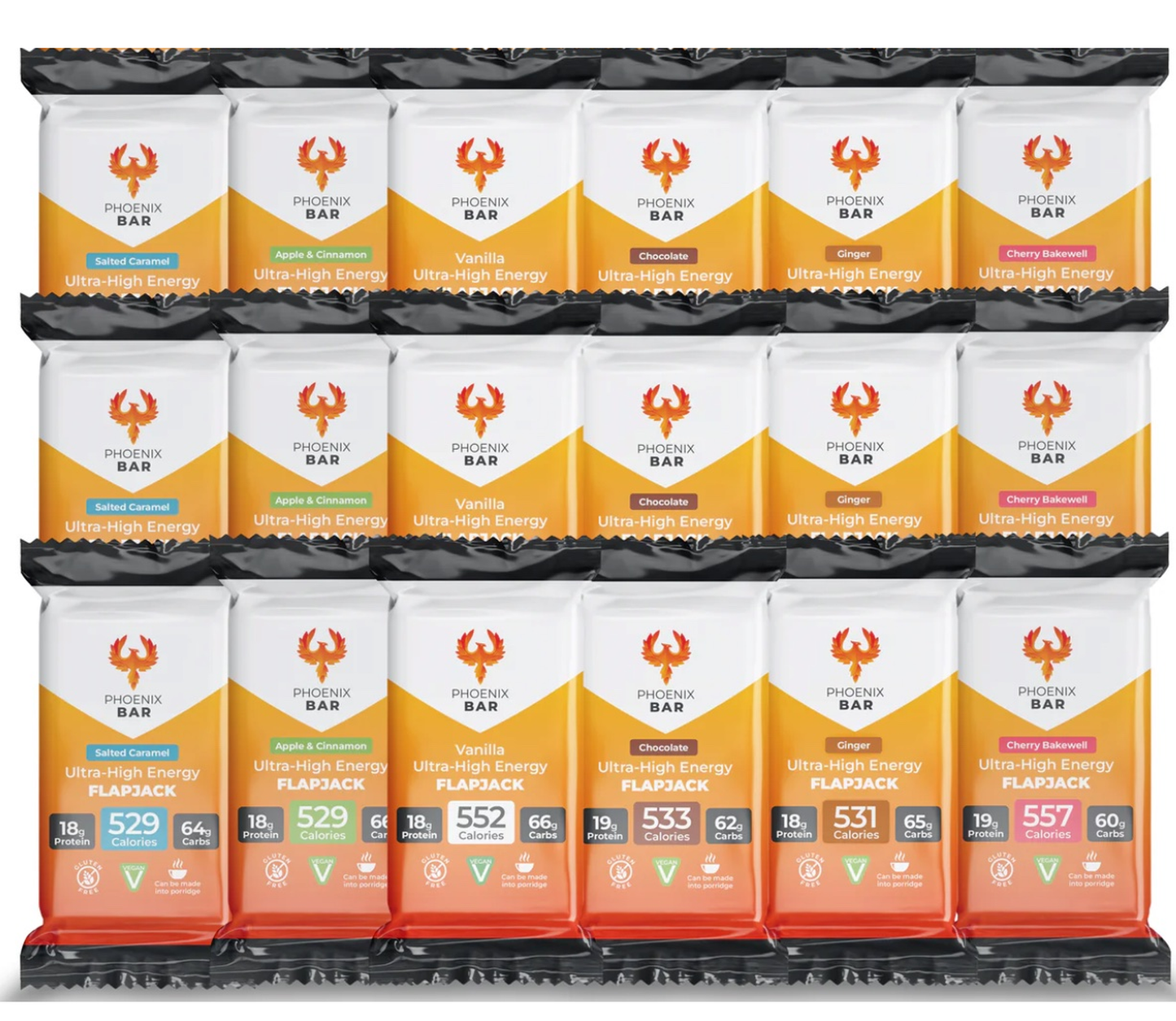
Phoenix Bars: Up to 557 Calories Per Bar
Highly compact, low-volume, calorie-dense bars. Soft, easy to eat whole or as a warm porridge. Vegan, gluten-free and contain up to 66g of carbohydrates, 19g of protein & 8 vitamins & minerals.
The Cheapest Way to Add Calories: Upgrade Food You Already Buy
The lowest-cost surplus is invisible. A tablespoon of oil in pasta: 120 calories, 3p. A knob of butter in mash: 100 calories, 5p. Milk powder whisked into whole milk: 60 calories a glass, a few pence. Grated cheese over beans: 100 calories, 10p. Peanut butter on morning toast: 190 calories, 6p. Do four of those daily and you've added 500 calories for around 25p, no extra meals, no extra cooking. This is the same fortification logic that runs through the high calorie breakfast ideas guide, applied with the cheapest ingredients on the shelf.
A 3,500-Calorie Day for About £3
Proof the numbers work, at approximate own-brand prices. Breakfast: 100g porridge oats with 300ml whole milk, two tablespoons of peanut butter and a banana, roughly 870 kcal for about 65p. Lunch: 150g dry-weight pasta with two tablespoons of oil and 40g grated cheddar, roughly 930 kcal for about 46p. Dinner: 125g dry-weight rice with two fried eggs, a tablespoon of oil and half a tin of beans, roughly 860 kcal for about 83p. Snacks across the day: 60g peanuts, two slices of peanut butter toast, another 300ml of whole milk, roughly 875 kcal for about 63p. Total: approximately 3,535 calories for around £2.57. Even allowing for price differences between stores, a 3,000-plus calorie day comfortably lands under £3.50. For the fully planned version of a day like this, see the 3,000 calorie meal plan.
Cheap High Calorie Foods for Vegan and Gluten-Free Diets
Most of the top of the ranking is already plant-based: oil, oats, peanut butter, peanuts, bread, rice, pasta, lentils, bananas. Swap whole milk for own-brand soya milk (slightly more per 100 kcal, still cheap) and the whole structure works vegan. Gluten-free budgets lean on rice, potatoes, oats labelled gluten-free, lentils, eggs, dairy and peanut butter rather than bread and standard pasta, and frozen chips are quietly one of the cheapest gluten-free calorie sources in the shop.
Who This Matters Most For
Students and anyone bulking on a budget can build a full surplus from this list alone; the best high calorie foods for bulking guide shows how to structure it for training. And if you're supporting an older relative on a fixed income through a spell of smaller appetite, the same fortification tricks (whole milk, butter, cheese, milk powder) do the most work for the least money; there's a fuller, gentler guide in high calorie foods for elderly relatives.
What About Bars and Ready-Made Options?
Honestly: no ready-made product competes with staples on price, including mine. Per 100 calories, oats cost about 4p; a Phoenix Bar costs about 94p. Nothing in a wrapper will ever beat a bag of oats, and this page would be dishonest to suggest otherwise. Where ready-made earns its place is the moments staples can't serve: no kitchen, no time, food that has to live in a bag or a drawer for weeks. If that's the moment you're buying for, compare bars per calorie rather than per bar: a typical 60g supermarket protein bar at around £2.50 works out near £1.05 per 100 kcal, while purpose-built high calorie bars like Phoenix Bars work out at about 94p per 100 kcal, with 557 calories in one 120g bar that can also be made into porridge. Cheaper than most of the category per calorie, still ten times the price of porridge. Buy the oats first; know exactly what you're paying for when convenience matters.
Frequently Asked Questions
What is the cheapest food with the most calories? By cost per calorie, vegetable oil is the cheapest food in a UK supermarket at roughly 2.5p per 100 kcal, followed by dry pasta, porridge oats, bread and white rice, all under 5p per 100 kcal at own-brand prices. Peanut butter is the cheapest food that combines high calorie density with meaningful protein.
How can I eat 3,000 calories a day cheaply? Build every meal on a dry staple (oats, pasta, rice or bread), add a fat to each (oil, butter, peanut butter or cheese), switch all milk to whole milk, and snack on peanuts and peanut butter toast. At own-brand prices, a 3,000 to 3,500 calorie day costs roughly £2.50 to £3.50.
What cheap foods help with weight gain? The most effective cheap foods for gaining weight combine low cost per calorie with ease of eating: peanut butter, whole milk, oats, granola, cheese, eggs, bananas and rice. Making small portions richer with oil, butter and cheese usually works better than trying to eat larger amounts.
Are high calorie foods expensive? No. Calorie-dense foods are on average cheaper per calorie than low-calorie foods, because fats and dry carbohydrates are the cheapest energy sold. High cost per calorie mostly comes from water, packaging and preparation, which is why ready meals, drinks and snack bars cost ten to forty times more per calorie than the staples they're made from.
Related guides: Calorie-Dense Foods Ranked · High-Calorie Snacks · High Calorie Breakfast Ideas · Best High-Calorie Foods for Bulking · 3,000 Calorie Meal Plan


Flaming Phoenix



Contact Us
Soumettre une demande de rétractation
Veuillez remplir le formulaire suivant pour soumettre votre demande de rétractation.

