

Ultra Running Calorie Calculator: Burn + Fuelling Plan
Dans ce guide

Ultra Running Calorie Calculator: What You'll Burn and What to Eat
Quick answer: A typical trail 50k burns around 3,500 to 5,500 calories, a hundred-miler somewhere between 12,000 and 18,000, and here is the number that actually decides your race: you can only absorb about 240 to 440 calories an hour of it, because the gut, not the legs, sets the ceiling. That means every ultra is run in a planned calorie deficit, and fuelling is the art of keeping that deficit survivable. The calculator above gives you both figures in one go, your total burn and your hour-by-hour eating plan in grams, calories, gels and high calorie bars, plus the deficit between them, so you can plan the race you'll actually run rather than the one a generic running calculator imagines.
I built this because the standard tools answer the wrong question. Knowing you'll burn 14,000 calories is trivia; knowing you need 90 grams of carbohydrate an hour for 26 hours, and that as gels alone that's a three-figure number of sachets, is a race plan, and it's the plan our runners from UK trail hundreds to the Marathon des Sables actually build. Strategy, hydration and gut training live in the full ultra running nutrition guide; this page is the arithmetic.
How the maths works
Two calculations, both shown openly. The burn side uses MET values, the standard exercise-science measure where one MET costs roughly one calorie per kilogram of body weight per hour: a runnable fast ultra sits around 9.5 METs, the mixed run-hike of a typical trail ultra about 8, and a mountainous grind heavy with hiking around 6.5, multiplied by your weight and hours. The fuelling side runs the other direction entirely, from your gut's trained capacity: 60 grams of carbohydrate an hour is the reliable starting point, 90 a well-trained gut, and up to around 110 the seriously rehearsed competitive end, converted at four calories per gram. The burn number scales with your body and the course; the fuelling number scales only with training and hours, which is why big engines in untrained guts blow up.
Ultra Running Calorie Calculator
What the race will burn
What to eat during it
The deficit is the design, not the failure
Subtract your fuelling from your burn and the gap looks alarming: a 70kg runner on a 14-hour mixed 100k burns around 7,800 calories, fuels perhaps 4,200 at 75 grams an hour, and runs the day 3,600 calories in the red. That gap is normal in ultra running, and your body bridges it from stored fat and glycogen provided the incoming stream never stops. What the field data consistently shows is where the real danger sits: runners who drift under roughly 200 calories an hour are the ones who disproportionately DNF, so that hourly floor is the number to protect, whatever the size of the overall deficit. Fuel from the first hour, hold your rate through the rough patches in smaller pieces if you must, and let recovery eating repay the balance, for which a proper 2,000 calorie refuel plate the evening after is not indulgence, it's the invoice.
Reading your fuelling number
The calculator gives your total in gels and in bars deliberately, because the comparison teaches the strategy. At 100k distances the pure-gel figure lands in the forties and beyond, and at a hundred miles it passes a hundred sachets, a number no stomach or race vest has ever tolerated, which is why experienced runners fuel in stages instead: fast carbs early while the gut is fresh, real solid food through the long middle, soft, salty and drinkable late when chewing and sweetness both fail. That full staging, food by food, is the best foods for ultra running timeline, with more detail in our guides to energy gel alternatives and ultra high carb solid foods. The bar figure exists for the middle stage: at up to 557 calories and up to 66 grams of carbohydrate per 120 gram bar, one Phoenix Bar covers most of an hour at trained rates in a single soft, pocketable unit, which is why the maths keeps putting them in vests and drop bags.
Train the number before you race it
One rule turns this page from arithmetic into a finish: never race a fuelling rate you haven't rehearsed. The gut trains like a muscle, taking weeks of practising your target intake on long runs to hold it under race stress, so pick your rate in the calculator honestly, based on what you've actually practised, not what the elites absorb. Moving from 60 toward 90 grams an hour takes weeks of long runs at the higher rate; the nutrition guide covers how. Rehearse with the exact products you will race on; our guide to the best energy bars for ultra running compares the main options.
Frequently asked questions
How many calories do you burn in an ultra marathon? Roughly 3,500 to 5,500 for a trail 50k, 6,000 to 9,000 for a 100k, and 12,000 to 18,000 for a hundred miles, driven by body weight, terrain and hours on feet. The calculator above personalises it.
How many calories should I eat per hour in an ultra? Aim for 60 to 90 grams of carbohydrate an hour, about 240 to 360 calories, trained upward toward 110 grams if you're competitive. Falling under roughly 200 calories an hour is the pattern most associated with DNFs.
Can you eat back what you burn during an ultra? No, and you're not supposed to. Absorption caps around a third to a half of what long races burn, so ultras are run in a planned deficit that steady fuelling manages and post-race eating repays.
How many gels do you need for a 100k? At 75 grams an hour for 14 hours you'd need around 42 standard gels, which is why nobody fuels a 100k on gels alone: the working answer is gels early, solids through the middle, soft and liquid late.
Does hiking the climbs burn fewer calories than running them? Per minute yes, per race barely, because you're out there longer. The effort setting in the calculator handles the mix; the fuelling requirement stays relentless either way.
Written by James Frost, founder of Flaming Phoenix. We fuel ultra runners from UK trails to the Marathon des Sables, and this calculator exists to answer "how many gels is that?" Last updated July 2026.
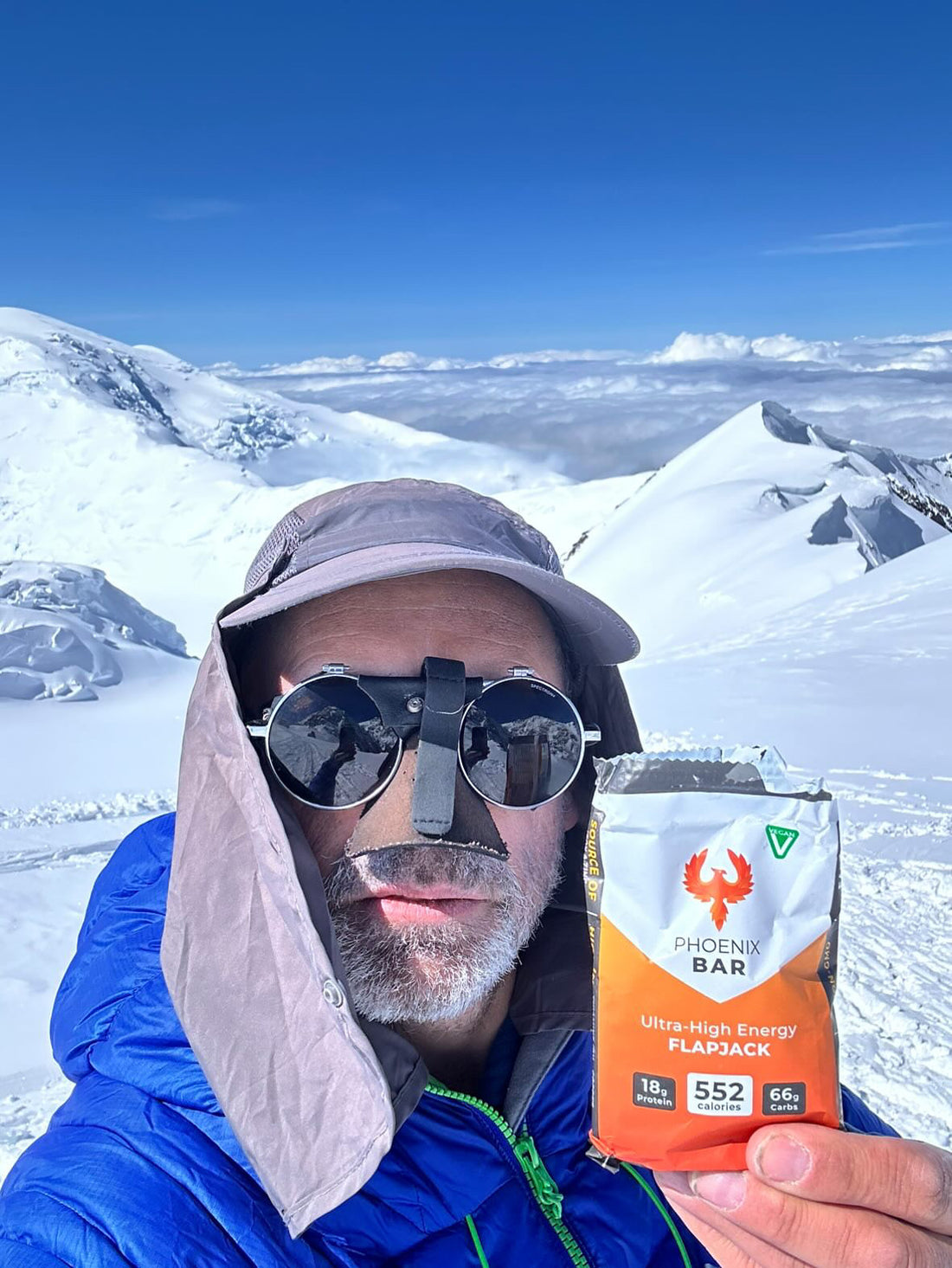
Plein de calories. Petit format.
Jusqu’à 557 calories dans une barre compacte et légère de seulement 120 g, avec jusqu’à 66 g de glucides et 19 g de protéines. Mangez-la entière, en morceaux sur quelques heures, ou mélangez-la à de l’eau chaude ou du lait chaud pour en faire un porridge.
Facile à manger, facile à digérer et pas trop sucrée. Des clients les ont mangées à -45 °C et dans la chaleur du Marathon des Sables, et elles se conservent jusqu’à deux ans : elles conviennent en montagne, pendant un travail de nuit ou à la maison, les jours où manger suffisamment est difficile.
- 557 calories dans seulement 120 g (529 à 557 selon la saveur)
- 4,6 calories par gramme
- 66g glucides par barre (jusqu’à)
- 19g protéines par barre (jusqu’à)
Soumettre une demande de rétractation
Veuillez remplir le formulaire suivant pour soumettre votre demande de rétractation.

