
Homemade weight gainer shake: 6 recipes, no powder needed
Dans ce guide

 Written by James Frost, founder of Flaming Phoenix and the maker of Phoenix Bars. Updated November 2026.
Quick answer: A homemade weight gainer shake is milk, oats, nut butter and fruit blended into 500 to 1,000 calories, with no protein powder needed. The classic version, 300ml whole milk, 50g oats, a banana and a tablespoon each of peanut butter and honey, comes to about 640 calories and 21g of protein.
You do not need a shop-bought mass gainer. Every recipe below is in grams and millilitres with the calories added up, including a vegan version and one that needs no blender.
The four parts of every shake
- A liquid base. Whole milk has about 66 calories per 100ml. Fortified soya milk has about 42.
- A carbohydrate. 50g of rolled oats is about 187 calories and blends smooth. A banana adds about 100.
- A fat. A tablespoon of peanut butter is about 92 calories. A tablespoon of mild oil is about 120.
- A sweetener or thickener. A tablespoon of honey is about 64, a Medjool date about 66, and 150g of full-fat Greek yoghurt about 145.
The six recipes
1. The classic, about 640 kcal. 300ml whole milk, 50g oats, 1 banana, 1 tablespoon peanut butter, 1 tablespoon honey.
2. Chocolate peanut butter, about 820 kcal. 400ml whole milk, 50g oats, 2 tablespoons peanut butter, 1 banana, 1 tablespoon cocoa, 1 tablespoon honey.
3. The big one, about 1,000 kcal. 400ml whole milk, 50g oats, 2 tablespoons peanut butter, 1 banana, 150g full-fat Greek yoghurt, 1 scoop of ice cream. Split it in two if it is too much at once.
4. Vegan, about 730 kcal. 300ml fortified soya milk, 50g oats, 2 tablespoons peanut butter, 1 banana, 2 Medjool dates.
5. Vegan and bigger, about 910 kcal. 400ml fortified soya milk, 50g oats, 2 tablespoons peanut butter, 1 banana, 2 Medjool dates, 1 tablespoon rapeseed oil, 1 tablespoon cocoa.
6. No blender, about 500 kcal. Whisk 2 tablespoons of dried skimmed milk powder into 300ml whole milk, then stir in 2 tablespoons of double cream and 1 tablespoon of honey. Add a milkshake powder if you want flavour.
Blend recipes 1 to 5 until smooth and add a splash of milk if too thick. Calories use standard UK food values, so your brands may differ slightly.
Here are the six side by side.
| Recipe | Calories | Protein | Vegan | Needs a blender |
|---|---|---|---|---|
| 1. The classic | about 640 | about 21g | No | Yes |
| 2. Chocolate peanut butter | about 820 | about 30g | No | Yes |
| 3. The big one | about 1,000 | about 44g | No | Yes |
| 4. Vegan | about 730 | about 25g | Yes | Yes |
| 5. Vegan and bigger | about 910 | about 29g | Yes | Yes |
| 6. No blender | about 500 | about 20g | No | No |
Protein figures are approximate and worked out from the same typical UK values as the calories. Recipe 3 carries the most protein because of the Greek yoghurt, and the two vegan recipes hold their own thanks to soya milk and peanut butter.
The fortified milk trick
Recipe 6 borrows a method NHS dietitians have used for years. One trust’s recipe whisks five tablespoons of dried skimmed milk powder into a pint of whole milk, which takes it from 386 to 595 calories and from 19g to 41g of protein. Use that fortified milk as the base of any shake above and you add about 110 calories per 300ml without changing the taste much.
How to use them
- Treat a shake as extra, not as a meal swap. Have it between meals.
- Sip, do not gulp. Half now and half in an hour works well for the 1,000 calorie version.
- Make it ahead if that helps. Keep it in the fridge and use it the same day.
- Start with the classic and build up.
Gaining weight comes from eating more than you use over time. A shake is one easy way to add to the total. The mechanism is explained in how to eat in a calorie surplus, and there are more drinks in high calorie drinks and smoothies.
How many calories should a weight gainer shake have?
For most people, 500 to 650 calories is the useful range. The NHS suggests adults who need to gain weight add around 300 to 500 calories a day, so one shake of that size between meals covers the whole daily surplus on its own. Go bigger, like the 1,000 calorie recipe, only if you train hard or your target is well above average, and split it into two halves if it sits heavily.
Homemade or shop-bought?
Homemade wins on cost and on ingredients you recognise. A tub wins on speed, though weight gain bars are quicker still, with no shaker to wash. If you would still prefer a powder, I have compared the options by cost per calorie in best vegan mass gainer. If you are bulking, the best high calorie foods for bulking covers the food side.
When you have no blender and no time
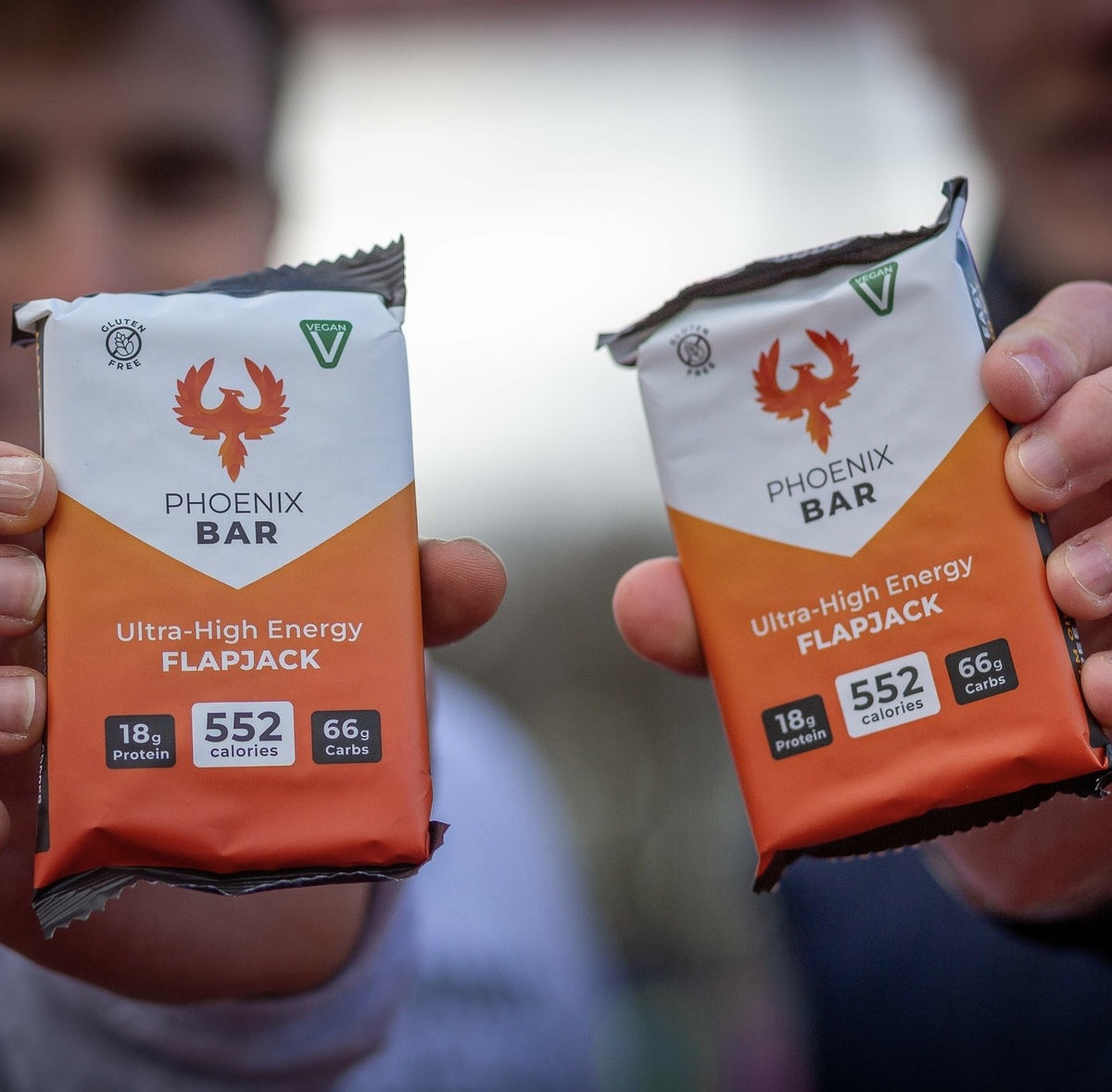
Homemade needs five minutes and some washing up, and some days have neither. I make Phoenix Bars for days like that. Each of these high calorie bars has up to 557 calories in a compact, 120g bar made mainly from gluten-free oats, and needs no preparation. It can also be broken up and mixed with water or milk to make porridge. “I made it into a porridge, easy to crumble, very tasty and filling,” wrote Eric in August 2025. “A really convenient way to consume a lot of calories when I don’t have time to have a meal,” wrote another customer the same month. The method is in how to use Phoenix Bars. Other brands are compared in the best energy bars for weight gain.
Common questions
What can I use instead of mass gainer?
Milk, oats, nut butter and a banana. Blended together, as in the classic recipe above, they give about 640 calories, more than a serving of many shop-bought gainers.
How do I make a 1,000 calorie shake?
Blend 400ml whole milk, 50g oats, 2 tablespoons of peanut butter, a banana, 150g full-fat Greek yoghurt and a scoop of ice cream (recipe 3). Alternatively, make the chocolate peanut butter recipe with fortified milk and an extra tablespoon of peanut butter.
Do homemade shakes work without protein powder?
Yes. The recipes above get their protein from milk, yoghurt, oats and peanut butter, roughly 20 to 45g a shake.
Can I make a weight gainer shake without milk?
Yes. Fortified soya milk works well, as in the two vegan recipes, and oat milk works too, though it carries less protein. Water is the last resort: 300ml of whole milk adds about 200 calories that water does not, so add an extra spoon or two of nut butter to make up the difference.
When should I drink a weight gainer shake?
Between meals, so it adds to your food rather than replacing it. The exact time makes little difference as long as it comes on top of your usual meals.
For the wider picture, see how to gain weight and easy ways to eat more calories.
Sources: University Hospitals Sussex NHS, fortified milk. Sherwood Forest Hospitals NHS, nourishing drinks.

Plein de calories. Petit format.
Jusqu’à 557 calories dans une barre compacte et légère de seulement 120 g, avec jusqu’à 66 g de glucides et 19 g de protéines. Mangez-la entière, en morceaux sur quelques heures, ou mélangez-la à de l’eau ou du lait pour en faire un porridge.
Facile à manger, facile à digérer et pas trop sucrée. Des clients les ont mangées à -45 °C et dans la chaleur du Marathon des Sables, et elles se conservent jusqu’à deux ans : elles conviennent en montagne, pendant un travail de nuit ou à la maison, les jours où manger suffisamment est difficile.
- 557 calories dans seulement 120 g (529 à 557 selon la saveur)
- 4,6 calories par gramme
- 66g glucides par barre (jusqu’à)
- 19g protéines par barre (jusqu’à)
