

How to store bottled water (UK): where to keep it and how long it lasts
Dans ce guide

 Written by James Frost, founder of Flaming Phoenix and the maker of Phoenix Bars. Updated November 2026.
Quick answer: Store bottled water sealed, in its original pack, somewhere cool, dark and dry inside the house, such as under the stairs, at the bottom of a wardrobe or under a bed. Keep it out of sunlight, away from heat and away from cleaning products, paint and fuel, whose smells can pass through plastic over time. Sealed bottled water keeps until its best before date, which is about quality rather than safety, so use the oldest packs in everyday life before the date and replace them. For a UK emergency, the government's Be Ready advice is at least 3 litres of drinking water per person per day for 3 days, so 9 litres each.
Bottled water is the easiest emergency water there is: it comes sealed, dated and ready to drink. Since the Be Ready campaign launched on 22 October 2026 it has also been the first thing people reach for, with bottled water sales up by about two thirds in the first ten days, according to Worldpanel. Buying it is the easy part. Storing it so it's still fresh and easy to find when the taps stop is what this guide covers. If you'd rather fill your own containers from the tap, see our guide to emergency water storage.
Why I wrote this guide. My work is food and drink for people far from a kitchen, from desert ultramarathons to polar expeditions, where water decides everything else you can do. At home it's the same problem on a smaller scale. The advice below draws on the British Bottled Water Producers, the Drinking Water Inspectorate, the NHS and the government's Be Ready checklist.
Where to store bottled water at home
The best place is the coolest, darkest spot inside your home that you can still reach easily:
- Under the stairs. Cool, dark, indoors and out of the way.
- At the bottom of a wardrobe or under a bed. Dark, with a steady temperature, and it spreads the weight around the house.
- A kitchen or hallway cupboard, as long as it's away from the oven, the boiler and the cleaning products.
Keep it away from direct sun, radiators, hot water cylinders and boilers, and anything with a strong smell, from bleach and white spirit to petrol and garden chemicals.
Can you store bottled water in the garage, loft, shed or car?
Mostly no. The problem with all four is the same: big swings in temperature, and in garages and sheds, fumes from the fuel, paint and chemicals kept beside the water.
| Place | Good for bottled water? | Why |
|---|---|---|
| Under the stairs | Yes, the best spot | Cool, dark, indoors and easy to reach |
| Wardrobe floor or under a bed | Yes | Dark, steady temperature, spreads the weight |
| Kitchen cupboard | Yes, away from the oven and cleaning products | Easy to rotate into everyday use |
| Garage | Only if cool, dark and away from fuel and chemicals | Fumes can pass into water through plastic |
| Loft | No | Very hot in summer, can freeze in winter, heavy to lift down |
| Shed or summer house | No | Big temperature swings and often garden chemicals |
| Car | Short term only | Hot in summer sun, can freeze in winter |
| Conservatory or windowsill | No | Sun and heat age the plastic and spoil the taste |
Based on storage advice from the British Bottled Water Producers and UK water companies, checked November 2026.
Why heat matters
Most bottled water in the UK comes in PET plastic, marked with recycling code 1. Studies on PET bottles have found that the tiny amount of antimony, a substance used in making the plastic, that moves into the water stays well within drinking water limits at room temperature, and only climbs towards the limit when bottles are kept very hot, at around 65°C and above, for long periods. That's why sunny windowsills, the space beside the boiler and a car parked in summer sun are the wrong places for a long-term store.
Bottled water in the car
A few bottles in the car are a good idea, but swap them every few months rather than leaving them for years. In a hard frost, water can freeze solid and a full bottle can split, so in winter keep the bottles in the cabin on very cold nights. Our winter car kit guide covers the rest of what to keep in the boot.
How long does bottled water last?
Sealed bottled water keeps until the best before date on the bottle, which for still water is often around one to two years from bottling. The British Bottled Water Producers explain that the date is about quality, not safety: water stored well doesn't go off the way food does. Bottlers date it because plastic is very slightly permeable, so over a long time the water can slowly lose a little volume and pick up tastes and smells from around it. That's also why where you keep it matters as much as how long.
| Bottled water | How long it keeps | Good to know |
|---|---|---|
| Sealed, stored cool and dark | Until its best before date | Check the date when you buy and pick the longest |
| Opened, kept in the fridge | A day or two | Keep the cap on |
| Drunk from the bottle | The same day | Once your mouth has touched it, bacteria get in |
| Sealed but past its date | Use it for washing or cooking | Replace it for drinking |
From guidance by the British Bottled Water Producers and UK water companies, checked November 2026.
How much bottled water to buy
The government's Be Ready advice is at least 3 litres of drinking water per person per day for 3 days, so 9 litres each. Here's what that looks like in the two most common bottle sizes:
| Household | Litres | 2-litre bottles | 5-litre bottles |
|---|---|---|---|
| One adult | 9 | 5 | 2 |
| Two adults | 18 | 9 | 4 |
| A family of four | 36 | 18 | 8 |
| A family of four for a week | 84 | 42 | 17 |
Bottle counts are rounded up. Allow more in hot weather, for anyone who is unwell and for babies who need formula made up.
That's drinking water only. If you also want water for basic cooking and washing, the Sphere humanitarian standard used by aid agencies is 15 litres per person per day. Our emergency water calculator works out your household's numbers, pets included, and turns them into bottles and jerry cans.
Which bottled water is best for emergencies?
- Still, not sparkling. Still water works for drinking, cooking, brushing teeth and making up drinks, and it doesn't go flat once the bottle is open.
- A mix of sizes. 2-litre multipacks are easy to rotate through everyday life, 5-litre bottles with a handle fit more water into the same shelf space, and 500ml bottles suit the grab bag and the car.
- Any type is fine to drink. Natural mineral water and spring water come from an underground source and are bottled at source. Bottled drinking water, often sold as table water, can come from any source, including the mains, and is treated to drinking water standards. Supermarket own brands store just as well as big names.
- The longest date on the shelf. Fresher stock is often at the back.
Bottled water for babies
The NHS doesn't recommend bottled water for making up formula because it isn't sterile and some brands contain too much sodium or sulphate. If you have to use it, check the label for sodium (Na) below 200mg per litre and sulphate (SO4) no higher than 250mg per litre, and boil and cool it as you would tap water. For an emergency, the Be Ready advice is to keep ready-to-feed formula, because you may not be able to boil water safely.
How to rotate bottled water so it never goes out of date
- Write the date you bought it on each pack with a marker pen.
- New packs go to the back, and you take from the front, so the oldest gets used first.
- Check the dates twice a year. When the clocks change is an easy reminder, and it's a good moment to check the rest of your home emergency kit.
- Drink the oldest pack in everyday life a couple of months before its date, and buy a fresh one to replace it.
- Keep the shrink-wrap on. It keeps the bottles clean and the packs stable.
- Don't stack too high. A six-pack of 2-litre bottles weighs about 12kg, so stack two or three packs at most and keep the heaviest at the bottom.
Bottled water or tap water you store yourself?
Most households do best with both. Bottled water is sealed and dated and needs no thought, but it costs more and takes up more room per litre. Tap water stored in clean, food-grade containers costs almost nothing, though it needs replacing every six months. A sensible split is bottled water for drinking and the grab bag, plus a couple of large containers of tap water for cooking, washing and flushing. Our guide to water storage containers compares jerry cans, water carriers, tanks and water butts.
Food that saves your water
The food you store decides how far your water goes. Pasta, rice and freeze-dried meals all need water to cook, while tins and ready-to-eat food need none. Phoenix Bars are high calorie bars that need no water or cooking at all, so every bottle you store goes on drinking. Our emergency food kits give one adult 3, 9 or 16 days of food, and our guide to long life meals compares the ready-to-eat options. To plan both together, use the emergency food calculator alongside the water calculator, and for what else to keep in when the power goes, see our power cut essentials.
If you're stocking up because of the headlines, our explainer on government stock-up and blackout warnings sets out what has really been said.
Common questions about storing bottled water
How long can you store bottled water?
Sealed bottled water keeps until the best before date on the bottle, often around one to two years from bottling for still water. Store it cool, dark and away from strong smells, and drink the oldest packs in everyday life before the date.
Can you store bottled water in the garage?
Only if the spot stays cool and dark and is well away from petrol, paint and chemicals, whose fumes can pass into water through plastic over time. A cupboard inside the house, under the stairs or under a bed is better.
Is it safe to drink bottled water past its best before date?
The date is about taste and quality rather than safety. Sealed water that has been stored well a little past its date can be used for cooking or washing, but for drinking it's best to rotate it before the date and replace it.
Can bottled water freeze in the car?
Yes. In a hard frost, water left in a car overnight can freeze solid and a full bottle can split. In winter, keep the bottles in the cabin on very cold nights and swap them every few months.
Should bottled water be kept in the fridge?
Sealed bottles don't need a fridge. Once a bottle is open, keep it in the fridge with the cap on and drink it within a day or two, or the same day if you've drunk from the bottle.
How much bottled water should I store for an emergency?
At least 9 litres per person, which is the Be Ready advice of 3 litres each per day for 3 days. A family of four needs 36 litres, or eighteen 2-litre bottles. Store more for babies, anyone who is unwell and hot weather.
Does bottled water go off once opened?
Opened water starts to pick up bacteria from the air and from your mouth. Keep an opened bottle in the fridge and drink it within a day or two, or the same day if you've drunk straight from it.
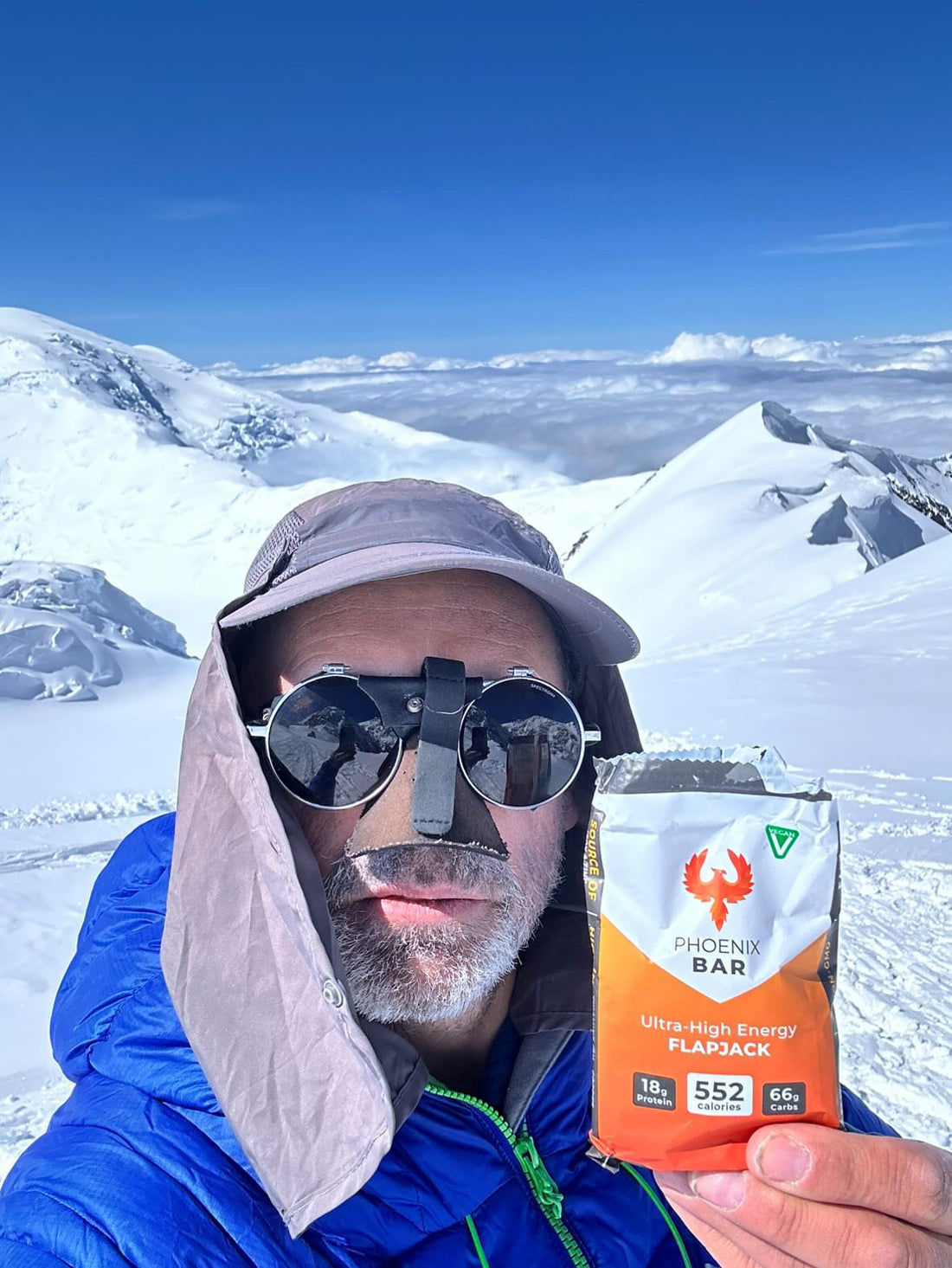
Plein de calories. Petit format.
Jusqu’à 557 calories dans une barre compacte et légère de seulement 120 g, avec jusqu’à 66 g de glucides et 19 g de protéines. Mangez-la entière, en morceaux sur quelques heures, ou mélangez-la à de l’eau ou du lait pour en faire un porridge.
Facile à manger, facile à digérer et pas trop sucrée. Des clients les ont mangées à -45 °C et dans la chaleur du Marathon des Sables, et elles se conservent jusqu’à deux ans : elles conviennent en montagne, pendant un travail de nuit ou à la maison, les jours où manger suffisamment est difficile.
- 557 calories dans seulement 120 g (529 à 557 selon la saveur)
- 4,6 calories par gramme
- 66g glucides par barre (jusqu’à)
- 19g protéines par barre (jusqu’à)
