Mountain Biking Nutrition: A Practical Fueling Guide for Every Ride Length
Written by James Frost, Founder of Flaming Phoenix. Last reviewed 8 May 2026.
Mountain biking burns more calories per hour than most riders realise, and the practical mechanics of fuelling a mountain bike are harder than fuelling a road bike, an ultra run, or any other endurance discipline outside ocean racing. A casual trail ride burns 400 to 600 calories per hour. A hard XC race or marathon MTB hits 700 to 1,000. An enduro race day with seven stages and 1,500 metres of climbing comes in around 4,500 to 6,000 calories. A multi-day bikepacking event like the Highland Trail 550 or Tour Divide pushes daily expenditure to 5,000 to 8,000 calories with the added complications of carrying everything you eat. This guide is structured around ride length because that is how riders actually decide what to take. The principles for a 90-minute ride are different from those for a 4-hour XC race, which are different from those for a Tour Divide-scale bikepacking trip. Pick the section that matches your ride and read from there. The full daily and weekly nutrition picture is covered in our 3,000 calorie meal plan for everyday eating and the ultra-endurance and expedition nutrition guide for serious racing volume.
Why mountain biking nutrition is harder than road cycling nutrition
Mountain biking imposes four constraints that road cycling does not, and all four push you toward more compact, more robust, and more calorie-dense food choices.
The terrain destroys soft food. The constant shaking, drops, and impacts of off-road riding turn most energy bars into crumbs by the time you reach for them. Bars with poor wrappers, homemade flapjacks, sandwiches, and anything in foil packaging that can puncture all fail at this test. Anything you carry has to survive 4 hours of vibration in a hip pack or jersey pocket and still be edible at the end.
The riding position makes eating difficult. On smooth tarmac you can sit up, take a hand off the bars, and eat a bar at a steady pace. On singletrack, technical climbs, or rough descents you cannot. The realistic eating windows on a mountain bike are fire roads, gravel doubletrack, and short pauses at the top of climbs. Everything else is too rough or too dangerous to eat through. This concentrates your fuelling into specific moments and rewards food that goes down in two or three bites.
Bottle access is unreliable. Reaching for a downtube bottle on a rooty descent is genuinely dangerous, and on full-suspension bikes the bottle cage location is sometimes awkward at the best of times. Hydration packs solve this with a constantly available bite valve and are the default for any MTB ride over 90 minutes for a reason. The trade-off is added weight and back heat, but the alternative is a session where you under-drink because reaching for the bottle is too much hassle.
Energy demand per hour runs high. Research from Impellizzeri and Marcora (Sports Medicine) shows elite XC racing happens at roughly 84 percent of VO2max, with most of the race spent above lactate threshold. The constant short anaerobic pulses on technical terrain, the climbing, and the upper-body work involved in handling the bike all push energy demand to the upper end of endurance-sport ranges. Your fuel needs are not lower because you are off-road. If anything they are higher.
The same kind of mechanical food selection problem applies to other rough-terrain endurance disciplines. We cover related principles in adventure racing nutrition and ultra running nutrition, and the calorie density principle generally is covered in calorie-dense foods.
How many calories does mountain biking burn?
Calorie burn varies with intensity, terrain, and rider weight, but the published ranges are consistent across sources. Casual trail riding at moderate effort burns roughly 400 to 600 calories per hour. XC training rides at threshold pace come in at 600 to 800. Hard XC racing and marathon MTB hit 800 to 1,000 or higher for shorter, all-out efforts. Enduro stage racing averages 600 to 900 across the day depending on transitions, but the total day load including climbing back up to stage starts puts most riders at 4,500 to 6,000 calories burned across a race day. Multi-day bikepacking with loaded bikes and elevation pushes daily burn to 5,000 to 8,000 calories, though daily intake almost never reaches that figure because pack weight is the binding constraint.
For practical planning, assume a ride at steady aerobic pace burns roughly 600 calories per hour, a hard race effort burns 800 to 1,000, and a long bikepacking day burns 5,000 plus across the day. Match your fuelling target to the bottom of this range, not the top, because most riders cannot absorb more than 60 to 90 grams of carbohydrate per hour even with gut training, and chasing perfect calorie balance during a ride is rarely possible.

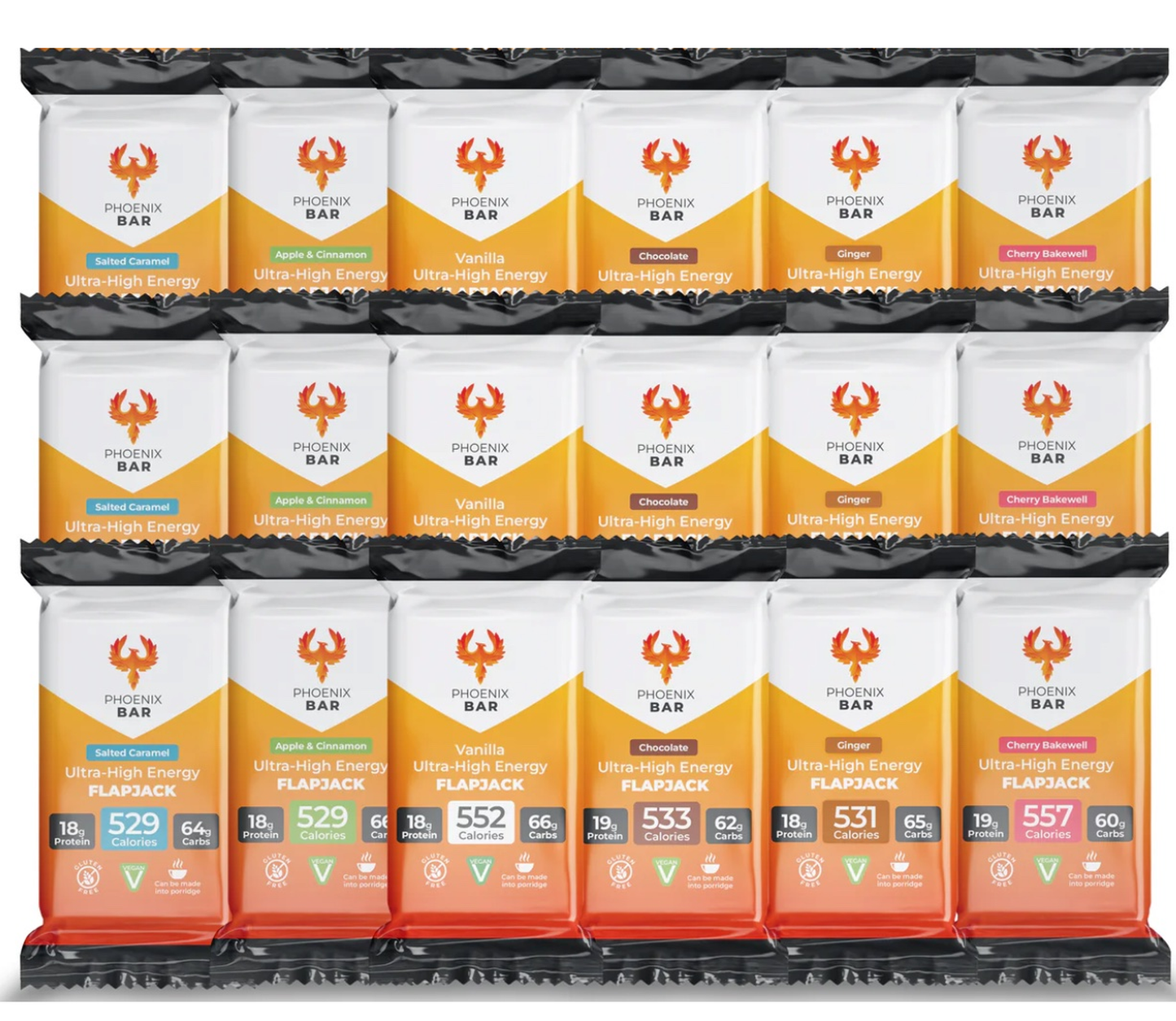
Phoenix Bars: Up to 557 Calories Per Bar
Highly compact, low-volume, calorie-dense bars. Soft, easy to eat whole or as a warm porridge. Vegan, gluten-free and contain up to 66g of carbohydrates, 19g of protein & 8 vitamins & minerals.
Fuelling rides under 90 minutes
For rides under 90 minutes at moderate intensity, you do not need to eat. A normal pre-ride meal 2 to 3 hours before launch tops up liver glycogen, your muscles have plenty of stored carbohydrate for an hour-and-a-half effort, and adding food for short rides is more about habit than physiology. A bottle of water, or water with electrolytes if it is hot, is enough.
For shorter rides at race pace, including 60 to 90 minute XC races and hard interval sessions, the picture changes. A 25 to 40 gram carbohydrate top-up 30 minutes before the start measurably improves performance. Caffeine in the 1 to 3 mg per kg range, taken 30 to 60 minutes before launch, gives a further measurable bump for most people. During the race, 30 to 60 grams of carbohydrate per hour from gels or carb drinks is the right target if your gut is trained for it.
The pre-ride meal that works best for most riders is carbohydrate-forward and low-fibre. Porridge with banana and honey, white toast with peanut butter, a bagel with jam, or a bowl of rice with eggs all work. The full picture on pre-ride breakfast is covered in our high-calorie breakfast guide. For early starts where a full meal is unrealistic, a Phoenix Bar mixed into porridge gives you 557 calories with 66 grams of carbohydrate in two minutes. There is more on this approach in our high-calorie porridge guide.
Fuelling rides of 90 minutes to 4 hours
This is the range most weekend mountain bikers spend most of their time in, and it covers XC marathon races, weekend big rides, and most local enduro events. The core target is 60 to 90 grams of carbohydrate per hour during the ride, taken in small amounts every 15 to 20 minutes rather than in big chunks every hour. Spread fuelling out and you stabilise blood glucose and reduce gut distress. Pile it up and you risk both bonking between feeds and stomach issues from large doses.
The mechanical pattern that works best on a mountain bike is to eat on climbs and fire roads, never on descents or technical sections. This is partly safety (eating one-handed on a rooty descent is how teeth meet stems) and partly physiology (elevated heart rate and bike-handling effort divert blood away from your gut, which kills absorption). Pre-open everything you carry. Gels with the corner already torn, bars unwrapped halfway, chews in a soft pack that opens with one hand. The difference between fuelling that works and fuelling that gets skipped is whether you can deploy it without taking both hands off the bars.
For 2 to 3 hour rides, a typical fuelling load looks like two gels, two energy chew packs, one Phoenix Bar or similar, and 1.5 to 2 litres of fluid with electrolytes. That covers roughly 800 to 1,000 calories of intake against a likely 1,500 to 2,400 calorie burn, which is the right ratio for the duration. The deficit is acceptable because you have stored glycogen to draw on. Trying to match expenditure 1-for-1 will give you stomach problems before it gives you better performance.
For XC marathon races (3 to 4 hours), increase to 90 to 120 grams of carbohydrate per hour if your gut tolerates it. Mix gels with chews to reduce palate fatigue. Real food becomes useful in the back half of the race because gels alone become unappealing after two hours. Phoenix Bars work well at this point because they are soft enough to eat at race pace, six flavours including Apple & Cinnamon, Cherry Bakewell, Chocolate, Vanilla, Salted Caramel, and Gingerprevent palate fatigue, and the wrapper survives 4 hours of jersey-pocket compression on rough terrain.
Fuelling rides of 4 to 12 hours
This is the range that covers ultra-marathon MTB races, enduro race days with 7 to 10 stages, 100-mile MTB events, 24-hour solo races, and the long bikepacking day. The fuelling rules change in three ways.
First, real food becomes mandatory. Gels alone do not work past 4 hours for most riders because palate fatigue, sugar fatigue, and the psychological need to eat something familiar all build up. Research on 24-hour MTB racers shows the most consumed foods on course are bananas, energy bars, apples, and cheese, in that order, with isotonic drinks providing most of the fluid and carbohydrate. Bread, rice, and chicken dominate post-race intake. Plan for variety: sweet, savoury, soft, chewy, hot if you can manage it.
Second, the 60 to 90 grams of carbohydrate per hour target stays roughly the same, but you cannot maintain that absorption rate for 8 to 12 hours without gut training. Long-event fuelling looks like 50 to 70 grams per hour sustained, with periodic top-ups at aid stations or transitions where you can eat more. For 24-hour solo events, the realistic intake ceiling is around 12,000 to 15,000 calories across the day, well below the 18,000 to 24,000 you might burn, and the goal is to minimise the deficit rather than match it. Our ultra running nutrition guide covers the same minimise-the-deficit principle for foot-based ultras.
Third, hot food becomes a structural advantage on long rides in cold conditions. The psychological lift from a hot meal at hour 8 of an ultra is significant, and the calorie density is welcome. Phoenix Bars made into porridge with hot water from a flask or stove give you a 557 calorie hot meal in two minutes without carrying separate breakfast supplies, which is one reason they work well for events like Strathpuffer (the Scottish 24-hour) and Mountain Mayhem. For UK-specific event nutrition guidance, our UK ultra race nutrition guide is the right starting point.
For enduro race days specifically, the strategy is different again. You have a full day on the hill but most of it is split between short hard race stages and long, low-intensity transitions. Eat heavily on transitions (sandwiches, bars, hot food at the lift station if there is one), top up with carbohydrate drinks throughout, and avoid heavy intake in the 30 minutes before each stage start because race-pace gut absorption is poor. Treat the day like a 7-stage interval session with calorie-dense gaps between efforts.
Fuelling multi-day MTB events and bikepacking
Multi-day bikepacking and stage racing put you in a different category of nutrition problem. Tour Divide riders cover 4,300 km from Banff to the Mexican border in 14 to 18 days, riding 180 to 250 km per day with daily energy expenditures of 5,000 to 8,000 calories. Highland Trail 550 riders ride 880 km of Scottish highland singletrack in 5 to 8 days. The Cape Epic and BC Bike Race put you on the bike for 4 to 8 hours every day for a week or longer. The constraints are different in every case, but the underlying problem is the same: how do you eat enough, every day, when carrying capacity, time, and appetite all work against you.
Three rules apply across all multi-day MTB contexts. First, calorie density is structural. Every gram you carry has to earn its weight by delivering calories. Foods below 4 calories per gram are usually inefficient on a bikepacking trip, with the exception of fresh produce that you eat at resupply points. The same density principle that makes Phoenix Bars work on Atlantic ocean rows and South Pole expeditions makes them work on Tour Divide: 4.6 calories per gram in a 120 gram bar means a single bar gives you 557 calories without using a meaningful chunk of your carry weight. Our lightest high-calorie food for backpacking guide covers the density question for self-supported expedition contexts in detail.
Second, recovery between days matters more than performance during any single day. The Breck Epic promoter calls stage racing "a recovery contest," which is the right framing. Your strongest stage in a 7-day race is rarely the one where you ate most on the bike. It is the one where you slept best, ate enough at dinner the night before, and rehydrated properly from the previous day. Plan for 4 to 4.5 grams of carbohydrate per kilogram of body weight in the 4 hours after each stage, plus a normal high-calorie dinner, plus enough fluid to get your urine pale by bedtime.
Third, food fatigue beats most riders before tiredness does. Eating the same gels, bars, and pasta for 7 to 14 days is genuinely hard, and many bikepackers report appetite collapse by day 4 or 5. The countermeasures are variety, real food whenever you can resupply, and accepting that some days you will under-eat. Comfort foods carried from home become disproportionately valuable on day 6 of a stage race. Six-flavour rotations on bars matter when you have eaten 30 of them in the last week. The detailed bikepacking framework, including resupply strategy and sleep nutrition, is covered in our cycling and bikepacking nutrition guide. Practical food storage and packing considerations carry over from our wild camping food guide.
How to carry food and fuel on a mountain bike
There are four standard carrying systems and you will probably need a combination depending on ride length.
Jersey pockets work for short rides and races. Capacity is limited to 3 or 4 small items, the food gets crushed and shaken, and pulling things out one-handed on rough terrain is hit-and-miss. Best for gels, chews, and small bars on rides under 3 hours where you are returning to the car.
Hip packs add 1.5 to 3 litres of capacity and reposition the load below your back, which is more comfortable on rough trails than a full pack. They work well for rides of 2 to 6 hours, fit a hydration bladder plus food and tools, and let you reach food more easily than a jersey. Most enduro racers and trail riders default to hip packs for any ride over 2 hours.
Hydration packs (12 to 18 litres) are the default for ultra-marathon MTB, ultra-distance events, and long bikepacking shakedown rides. They carry 2 to 3 litres of fluid plus food, tools, layers, and emergency kit. The trade-offs are weight, back heat, and the gradual posture issue of riding with a loaded pack for 8 plus hours, but for ultra-distance events they are the only realistic option.
Frame bags, top tube bags, and feed bags solve the bikepacking carry problem and add specific MTB-friendly food access. A top tube bag with a magnetic closure can hold 6 to 8 bars for one-handed access on the move. A feed bag (small handlebar bag for snacks) puts a banana, gel, or bar within arm's reach without slowing down. Frame bags carry the bulk: tools, dry food, layers. Most Tour Divide riders run all four systems together for maximum capacity and access flexibility.
The food selection rule is the same across all systems: only pack what survives shaking. Phoenix Bars in their water-resistant packaging hold up to 4 to 8 hours of jersey or hip-pack compression without breaking. Standard supermarket flapjacks do not. Soft chocolate, sandwiches, and crackers fail this test in summer especially. Test everything in training, not on race day.
Hydration and electrolytes on the trail
The hydration target for MTB rides is the same as any endurance discipline: 400 to 800 ml of fluid per hour, biased toward the upper end in heat or at high effort. Beyond 90 minutes, you also need 300 to 600 mg of sodium per hour, with the upper end appropriate for hot conditions or heavy sweaters. Plain water for short rides, electrolyte drinks for anything over 90 minutes.
Two MTB-specific failure modes are worth flagging. The first is under-drinking on technical rides because reaching for the bottle is awkward. The fix is a hydration pack with a bite valve that you can drink from without taking a hand off the bars. The second is over-drinking plain water on hot, long rides without replacing sodium. This dilutes blood sodium and can cause cramps, nausea, and in rare cases hyponatremia. The fix is electrolyte tabs in the bottle or pack, salty snacks at aid stations, or both.
Our high-calorie drinks guide covers liquid calorie strategies for high-output days, which becomes particularly relevant when solid food is hard to manage in the back half of long rides.
The five most common mountain bike nutrition mistakes
The first is starting too light. Most riders pack for the ride they expect rather than the ride they get, and a 4-hour ride that becomes 6 because of a missed turn or mechanical leaves you under-fuelled. The rule is over-pack by one or two extra hours of food.
The second is eating too late. Hunger is a lagging indicator, particularly on a mountain bike where adrenaline and effort suppress appetite. By the time you feel hungry, your blood glucose is already dropping and you are 30 to 60 minutes from recovery. Eat to schedule, not to hunger, on rides over 90 minutes.
The third is trying new food on race day. Every experienced mountain biker has a story about a new gel or bar that gave them stomach issues at the worst possible moment. Train your gut on the food you intend to race with, in the doses you intend to use, in the conditions you expect to face. Phoenix Bars are formulated with gut-friendly ingredients including pea protein, oats, and coconut oil, but the same training rule still applies. Use them in training first.
The fourth is under-drinking on cold rides. Cold suppresses thirst, reduces conscious fluid intake, and masks the dehydration that builds up across a 3-hour ride in winter. Drink to schedule in cold conditions, not to thirst.
The fifth is eating too much in the 30 minutes before launch. A big breakfast 30 minutes before a hard ride is a recipe for stomach issues because your body has neither finished digesting nor cleared blood from the gut to the muscles. Eat your main pre-ride meal 2 to 3 hours out, then take a 25 to 40 gram carbohydrate top-up 15 to 30 minutes before launch. Anything heavier in that window is more likely to hurt than help.
Recovery between rides
The 30 to 60 minutes after finishing a hard ride is the single most efficient window for refuelling. Aim for 20 to 35 grams of protein and 1 to 1.2 grams of carbohydrate per kilogram of body weight in this window. Practical options include a protein shake with banana, Greek yogurt with honey and oats, a chicken and rice bowl, or a recovery drink mix designed for the purpose.
For rides over 4 hours, recovery is not a 60-minute window. It is a 24 to 48 hour rebuild that runs through dinner, breakfast the next morning, and the next several meals. Eat to appetite during this window and bias your daily intake toward calorie-dense foods, particularly if you are riding again the next day. The framework for high-output daily eating is covered in our 3,000 calorie meal plan, and for riders genuinely training at 5,000 calories per day in heavy training blocks, the 5,000 calorie meal plan is the right starting point.
Frequently asked questions
How many calories should I eat on a long mountain bike ride? For rides over 90 minutes, target 60 to 90 grams of carbohydrate per hour, which is roughly 240 to 360 calories per hour from gels, chews, bars, and carbohydrate drinks. For rides over 4 hours, sustain 50 to 70 grams of carbohydrate per hour and add real food at aid stations or stops.
What should I eat before a mountain bike race? A carbohydrate-forward, low-fibre meal 2 to 3 hours before the start. Porridge with banana and honey, a bagel with peanut butter, or rice with eggs all work. Add a 25 to 40 gram carbohydrate top-up 30 minutes before launch.
How do I carry food on a mountain bike? Jersey pockets for short rides, hip packs for 2 to 6 hour rides, hydration packs for ultra-distance, and bikepacking bags (top tube, frame, feed bag) for multi-day events. Pre-open everything you carry so you can reach for it one-handed on rough terrain.
What food works best for bikepacking? Calorie-dense, robust, and weight-efficient. Compact bars, nut butters, dehydrated meals, hard cheese, dried fruit, and trail mix all work well. Anything below 4 calories per gram is usually inefficient. Phoenix Bars at 4.6 calories per gram and a 2-year shelf life are designed for this kind of use.
Should I use gels or real food on a mountain bike? Both. Gels work for short hard efforts and the first 2 hours of long rides. Real food becomes essential past hour 3 because palate fatigue and sugar fatigue make gels alone unsustainable. Mix the two for any ride over 3 hours.
How much should I drink on a mountain bike ride? 400 to 800 ml of fluid per hour, with electrolytes added for any ride over 90 minutes or in hot conditions. Use a hydration pack with a bite valve for any ride over 2 hours.
Can I eat too much on a mountain bike ride? Yes. Carbohydrate intake above 90 grams per hour without gut training causes nausea, bloating, and stomach cramps for most riders. Stay below this ceiling unless you have specifically trained for higher intake.


Flaming Phoenix