
Vegan Endurance Nutrition: The One Problem That Actually Trips People Up
By James Frost, founder of Flaming Phoenix. I designed Phoenix Bars to be vegan from the start, built for athletes and expedition teams who need the most calories in the least volume, which turns out to be the exact problem plant-based endurance athletes run into. I am not a dietitian, and personalised or medical questions belong with one, but this is what I have learned building fuel for this audience and working with the people who use it. Last reviewed June 2026.
A well-planned plant-based diet does not hold endurance athletes back. The research is fairly settled on that point: across systematic reviews, plant-based eaters match or slightly outperform omnivores on aerobic measures, and the carbohydrate-rich nature of the diet suits long efforts well. The single real challenge is not the one most people fixate on. It is not protein. It is calories. Plant foods are bulky, filling, and high in fibre, which makes it genuinely hard to eat enough energy when your training load is high. Solve the calorie-density problem and almost everything else falls into place. This guide is about how, and the short version is to stop worrying so much about protein and start paying attention to whether you are eating enough at all.
Why plant-based suits endurance more than most diets
It helps to start with the upside, because it is real and it is often undersold. A plant-based diet is naturally carbohydrate-rich, and carbohydrate is the fuel that actually limits endurance performance once you are working above an easy pace. Your finite glycogen stores, not your essentially infinite fat stores, are what run dry and cause the wall, so a diet built around grains, legumes, fruit, and starchy vegetables is working with your physiology rather than against it. There is a fuller explanation of why carbohydrate availability matters so much on the ultra-endurance and expedition nutrition guide.
The performance data backs this up. Reviews comparing plant-based and omnivorous athletes find aerobic capacity is maintained or improved and strength is not compromised, with one study reporting higher estimated VO2 max and longer time to exhaustion in vegan participants. Plant-based diets also tend to be lower in saturated fat and higher in fibre, antioxidants, and phytochemicals, which supports cardiovascular health and may help with the recovery and inflammation side of heavy training. None of this means going plant-based makes you faster on its own. It means you can train and race at a high level on this diet without giving anything up, provided you get the fuelling right. And the fuelling almost always comes down to one thing.
The problem nobody warns you about: calorie density
Here is the issue that sports dietitians see again and again, and that new plant-based athletes rarely see coming. Plant foods carry fewer calories for a given volume of food, and their high fibre content fills you up early. That combination, low energy density plus early satiety, makes it difficult to eat enough when your needs are high. Dietitians commonly report unintentional weight loss in athletes who switch to a vegan diet, not because the diet is flawed, but because the athlete simply cannot physically get enough food in around a heavy training schedule.
This matters more than it sounds. Falling short of your energy needs for a sustained period, sometimes called low energy availability, raises your risk of injury, illness, and lost training adaptation, and it tends to take muscle as well as fat when weight comes off. The athletes most exposed are the larger ones and those doing high volume, which describes most ultra runners and expedition athletes precisely. The standard advice from sports nutrition bodies is to eat frequently, around five to eight meals and snacks a day, to lean on energy-dense foods, to limit very high-fibre choices when you are chasing a calorie target, and to keep dense food within easy reach so eating does not depend on cooking. There is more on the principle of packing energy into less volume on the calorie-dense foods guide, and on reversing an unwanted drop in weight on the how to gain weight guide.
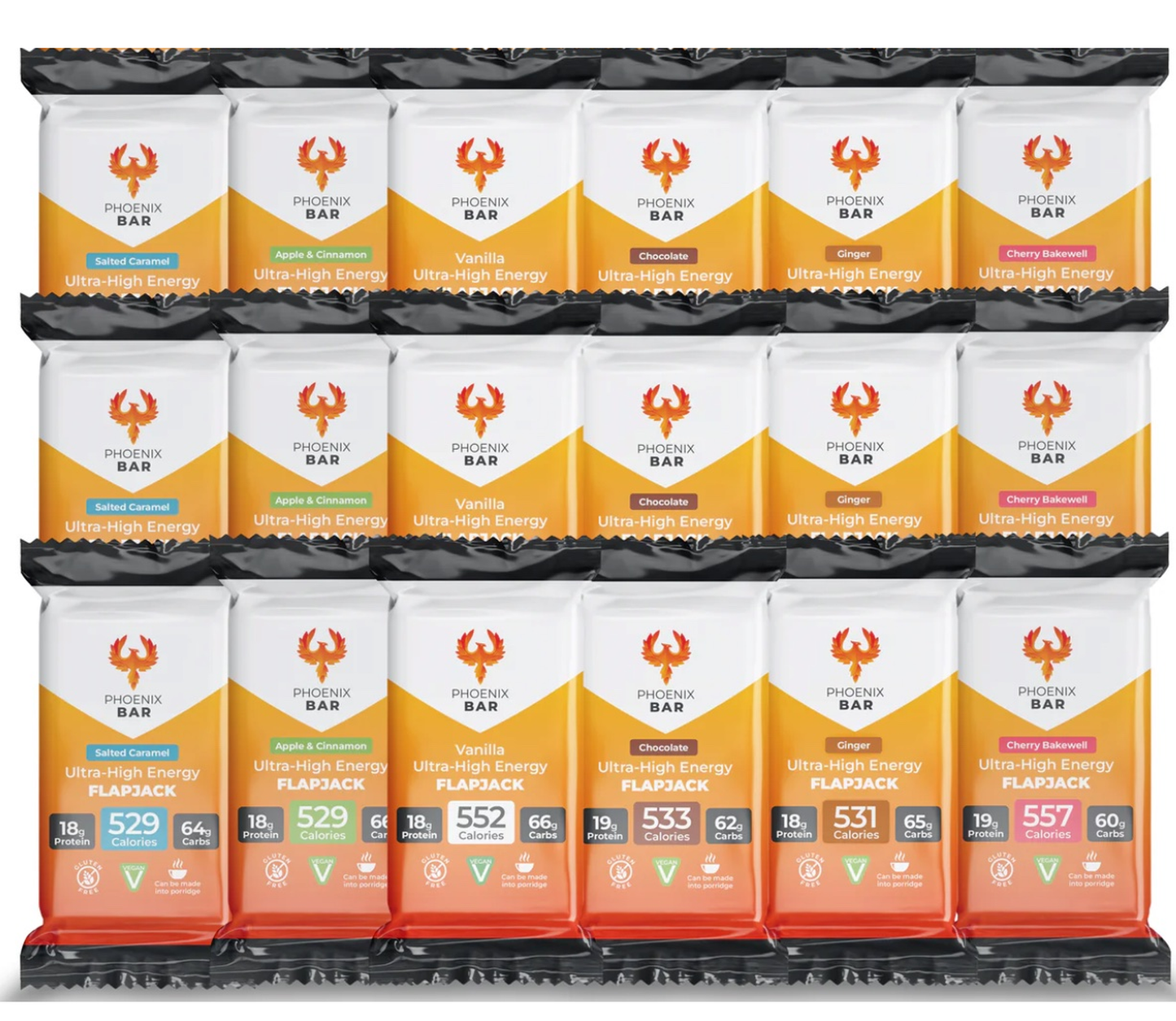
This is the exact gap I built Phoenix Bars to fill. Each one is 120g and carries up to 557 calories, around 4.6 calories per gram, which is close to the opposite of a bowl of vegetables or a salad that fills your stomach without paying its way. They are vegan by design, and gluten-free too, which matters if you are managing both at once. They take no preparation and travel in a pocket or drop bag, which is precisely the "keep dense food within reach" advice in physical form. They are not a replacement for a varied wholefood diet, and I would never pretend otherwise, but they are a reliable way to close the calorie gap that the wholefood diet leaves on your biggest days.
Fuelling during the effort itself
There is a second, sharper version of the calorie-density problem, and it shows up during exercise. The high-fibre wholefoods that make a plant-based daily diet so healthy are the wrong tools mid-effort. Fibre slows digestion and can trigger gastrointestinal distress when blood is diverted away from your gut, which is the last thing you want deep into a long run. The evidence-based recommendation is to switch to low-fibre, easily digested, calorie-dense carbohydrate during and immediately around hard efforts, the food equivalent of choosing white rice over a bowl of beans when the clock is running.
A dense bar fits this brief well, because it delivers a large amount of low-bulk carbohydrate without the fibre load of whole grains or pulses. Eaten cold and broken up, it goes down on the move, and made into a warm porridge with hot water it becomes soft and easy when you are tired and your appetite has flattened. If you have been relying on gels and your stomach has had enough of them, the case for real solid food is covered on the energy gel alternatives guide and the ultra-high-carb solid foods guide. For how this plays out over the specific demands of long races and expeditions, see the multi-day ultra running guide, the trail running guide, and the high-altitude mountaineering guide, where appetite suppression makes calorie density matter even more.

Phoenix Bars: Up to 557 Calories Per Bar
Soft, easy to eat whole or as a warm porridge. Low volume, two-year shelf life.
The nutrients worth actually keeping an eye on
Once calories are handled, the rest of plant-based fuelling is a manageable watch-list rather than a minefield. Protein, the thing most people worry about first, is the least of it. Endurance athletes on plant-based diets do not need more protein than omnivores, and when total protein is matched, training adaptations are the same. You simply want to hit the upper end of the athlete range, spread it across the day, and draw on a variety of sources such as soy, legumes paired with grains, nuts, and seeds so the amino acid profile and leucine content stack up over the day. That is a planning task, not a barrier.
The nutrients that genuinely need attention are the micronutrients. Vitamin B12 is non-negotiable: it is not reliably available from plants, so a supplement is essential, full stop. Iron from plants is less readily absorbed than from meat, so lean on legumes, wholegrains, nuts, seeds, dried fruit, and fortified foods, and pair them with a source of vitamin C to improve uptake. Omega-3 fats need a deliberate source such as flax, chia, and walnuts, with an algae-based supplement worth considering for the longer-chain forms. Iodine, calcium, zinc, and vitamin D are the others to be conscious of. None of these are difficult once you know they are on the list, but they are easy to miss if you do not, which is the single best reason to have a sports dietitian look over your diet at least once, especially if you are losing weight you did not mean to lose.
Building a day that adds up
In practice it comes together like this. Build your day around carbohydrate-forward wholefoods across five to eight eating occasions rather than two or three big meals that you cannot finish. Make each one denser than it looks with additions that carry a lot of energy in little volume: nut butters, olive or rapeseed oil, avocado, dried fruit, seeds, and tahini. Reserve the low-fibre, fast options for around training and racing. And keep a dense, portable option on hand for the calorie gap that the wholefood diet leaves at the end of a hard day, for fuel mid-effort, and for the recovery window when you may not feel like a full meal.
If you want a simple way to start, a mix of flavours from the 12-bar Starter bundle lets you find which sits best in training. For regular weekly use or for stocking a season of long runs and trips, the 18-bar Essential or 36-bar Complete box keeps a steady supply ready, and you can see the full range on the bundles page. All six flavours, Apple and Cinnamon, Cherry Bakewell, Chocolate, Vanilla, Salted Caramel, and Ginger, are vegan and gluten-free, and there is a short guide to eating them cold or as porridge on how to use Phoenix Bars.
Common questions
Is a plant-based diet bad for endurance performance? No. The weight of the evidence shows plant-based athletes maintain or improve aerobic capacity compared with omnivores and do not lose strength or power, as long as the diet is well planned. The carbohydrate-rich nature of the diet actually suits long-duration efforts.
Do vegan endurance athletes struggle to get enough protein? Less than people assume. Plant-based athletes do not need more protein than meat eaters, and matched protein produces matched results. Aim for the upper athlete range, spread it through the day, and vary your sources so the quality adds up.
Why do some people lose weight when they go plant-based, and how do I stop it? Because plant foods are filling and lower in calories for their volume, so you fill up before you have eaten enough. The fix is to eat more often, make portions denser with high-energy additions, ease back on very high-fibre choices when chasing calories, and keep a calorie-dense option like a 557-calorie bar within easy reach.
What should I eat during a long run or race on a plant-based diet? Low-fibre, easily digested, calorie-dense carbohydrate rather than the high-fibre wholefoods that are great the rest of the time. A dense bar, eaten cold or as a warm porridge, delivers a lot of low-bulk carbohydrate without the fibre that can upset your stomach mid-effort.
Do I need supplements on a plant-based diet? Vitamin B12 is essential and should always be supplemented. Depending on your diet, omega-3, vitamin D, iodine, iron, and zinc may also be worth attention. A one-off review with a sports dietitian is the best way to know what applies to you.
Are Phoenix Bars suitable, and what makes them useful here? Yes, every flavour is vegan and gluten-free. Each 120g bar carries up to 557 calories in a small, low-fibre, no-preparation form, which makes it a practical answer to the calorie-density problem both day to day and during efforts. It is one tool alongside a varied wholefood diet, not a replacement for it.
If you take one thing from this, let it be the reframe: spend less energy worrying about protein and more making sure you are eating enough at all. Plant-based endurance works, and works well, but it asks you to be deliberate about calories in a way an omnivorous diet does not. Get that right and the diet becomes the quiet advantage it should be. If you want to go further, the calorie-dense foods guide and the ultra-endurance guide build on this, and the simplest first step is a small mix of flavours from the Starter bundle to see how dense vegan fuel feels in training.


Flaming Phoenix



Contact Us
Declare withdrawal
Please fill out the following form to declare your withdrawal from the contract.

