
Camino de Santiago Food: How to Eat Well as a Pilgrim
The short version: food is rarely scarce on the Camino de Santiago, so the real question is not where to find a meal, it is how to cover the gaps the walking day creates. Most pilgrims set off before dawn, often before any café is open, on a coffee and a single piece of toast that is nowhere near enough for a 25km day. Some stretches, the Meseta above all, run for hours with no village and nothing open. And if you walk it vegan or gluten-free, the meat-and-bread pilgrim menu will let you down more often than you would like. The fix is simple: carry a small amount of reliable, calorie-dense food that needs no preparation, so an early start, an empty stretch or a limited menu never leaves you walking on fumes. This guide covers the rhythm of a pilgrim's day and exactly how to eat well across it.
About this guide
I am James Frost, founder of Flaming Phoenix. We make Phoenix Bars, a 120g vegan, gluten-free bar built to pack a lot of easily digested energy into a small, light package, which is the one thing the Camino's café culture cannot always give you when you need it. I am not a guide or a dietitian, so where this gets practical I draw on what pilgrims actually experience day to day and on the realities of fuelling long-distance walking. This page is one part of our wider ultra-endurance and expedition nutrition guide. Last reviewed June 2026.
Key points
Food is not the problem on the Camino, timing is. Most days you can buy a good meal, but the early starts and the gaps between villages are where pilgrims under-eat.
Walking 25 to 30km a day with a pack burns well over 2,000 calories beyond your baseline, and across weeks that adds up to real cumulative fatigue.
Breakfast is the weak point. A pre-dawn start often means leaving before any café opens, and a coffee and a slice of toast is not enough fuel for the morning.
Some stretches have no services for hours, the Meseta most of all, so carrying a couple of dense snacks is genuinely worth it.
Walking the Camino vegan or gluten-free is doable but harder, and carrying a few reliable safe snacks takes the stress out of small-village days.
The café, the bocadillo and the pilgrim menu are part of the experience. Carried food is there for the gaps, not to replace them.
Contents
The Camino's real food question. How much the walking takes out of you. A pilgrim's day, and where food gets tricky. The harder stretches: the Pyrenees, the Meseta and Galicia. Walking the Camino vegan or gluten-free. What to carry, and keeping your pack light. Where Phoenix Bars fit. Frequently asked questions.
The Camino's real food question
On most of the Camino de Santiago, finding food is easy. Cafés, bars, village shops and restaurants line the popular routes, and a coffee or a glass of wine in the next village is part of what pulls you down the trail. The Camino Francés, the most walked route, is especially well served. So the honest starting point is that this is not an expedition where you carry days of supplies.
The real question is how you cover the moments when the café culture is not there for you. There are three of them, and they recur every single day: the early start before anything is open, the long stretch with no village, and the meal that does not suit your diet.
Get those three covered and you walk strong. Ignore them and you spend half the Camino slightly under-fuelled, which is exactly when the legs feel heavy and the last few kilometres into town drag. The whole of this guide is really about solving those three gaps without losing the pleasure of eating your way across northern Spain.
How much the walking takes out of you
The Camino is not a race, but the cumulative load is real. A typical day covers 25 to 30km on foot, four to six hours of walking with a pack, and that alone burns well over 2,000 calories beyond what your body needs at rest, more in summer heat or on the climbs.
Do that for a few days and your appetite usually catches up. Do it for the thirty-odd days of a full Camino Francés, and many pilgrims build a quiet energy deficit that shows up as deepening tiredness in the second and third weeks. The scale of the thing is easy to underestimate: in 2025 a record of more than 530,000 pilgrims collected their Compostela, around 93% of them on foot, across ages and fitness levels that range far wider than any sports event.
That breadth matters for fuelling, because most pilgrims are not trained endurance athletes. They are ordinary people asking their bodies to do something genuinely demanding, day after day, often for the first time. Eating enough, steadily, is what keeps the experience joyful rather than a grind. For the underlying principles of fuelling long days on foot, our hiking and trekking guide and long-distance walking guide cover the wider picture.

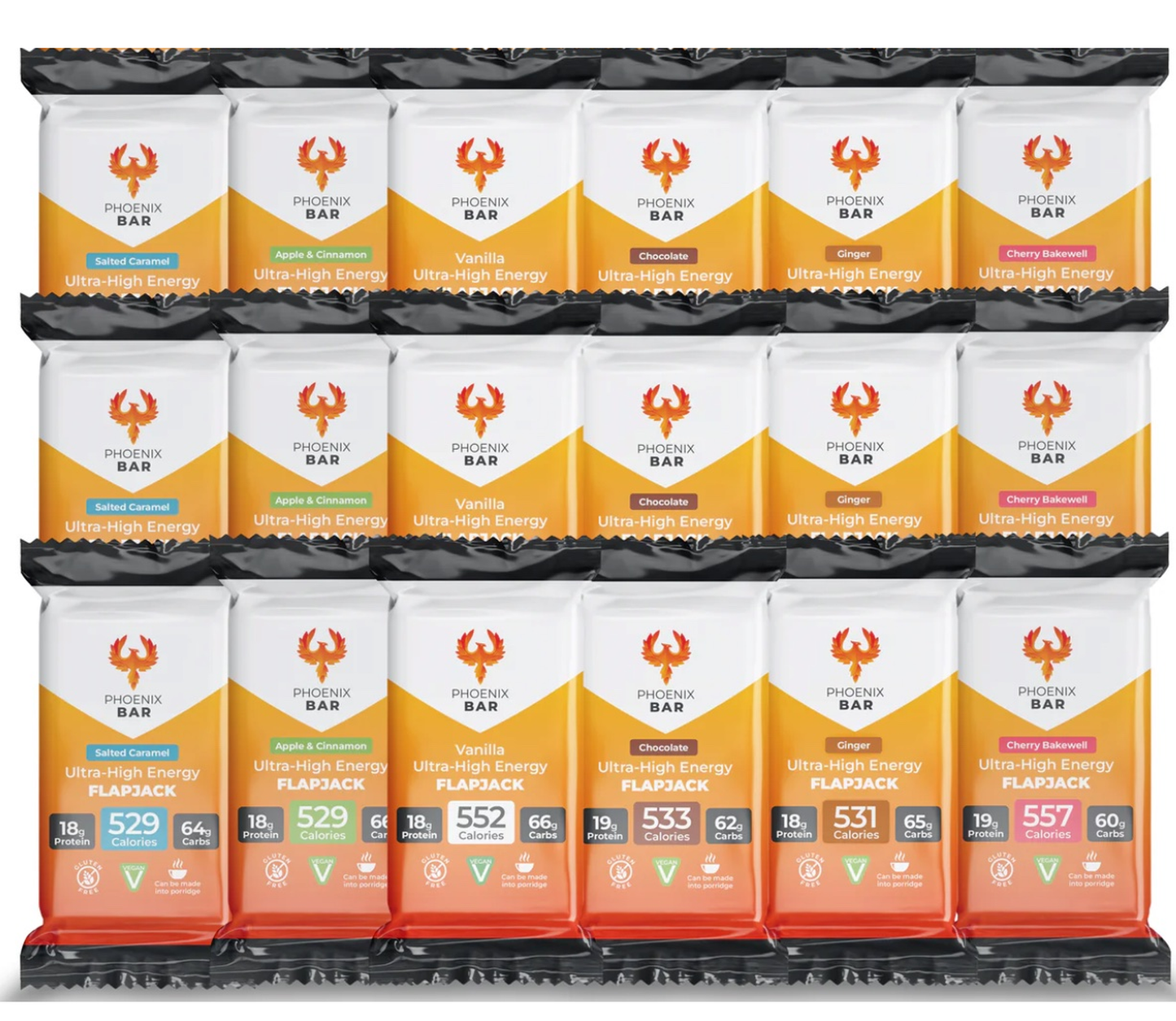
Phoenix Bars: Up to 557 Calories Per Bar
Soft, easy to eat whole or as a warm porridge. Low volume, two-year shelf life.
A pilgrim's day, and where food gets tricky
The shape of a pilgrim's day is remarkably consistent, and so are the points where eating goes wrong. Walk through it and you can plan around every one.
The start. Many pilgrims leave between 5am and 6am to beat the heat or to secure a bed in the next town, which is usually before any café is open. Albergues rarely serve breakfast, so unless you have something with you, you set off on nothing. This is the single most common fuelling mistake on the Camino, and the easiest to fix: have a real breakfast in your bag for the dark first hour, then enjoy a proper coffee when the first bar opens.
The first café stop. An hour or two in, the village bar opens and you get your café con leche and a tostada or a slice of tortilla. This is a genuine pleasure and worth building your morning around, but a coffee and toast is a light breakfast for a hard day, so treat it as a top-up, not the whole tank.
The mid-morning gap. Between cafés, especially on quieter sections, you can walk a couple of hours with nothing open. A handful of nuts, some dried fruit, or a dense bar in your hip pocket keeps your energy level rather than letting it sag before the next stop.
The evening. Most pilgrims finish, shower, then eat the menú del peregrino, the three-course pilgrim menu most villages offer for around 10 to 15 euros. It is good value and a social high point, though it can get repetitive over weeks, and it is heavy on meat, bread and simple carbohydrate. It refuels you well for the next day, which is exactly its job.
The lesson across the day is that the fixed meals take care of themselves. It is the early start and the gaps between that you plan for, with a little food carried in the pack.
The harder stretches: the Pyrenees, the Meseta and Galicia
A few sections of the Camino Francés are harder than the rest, and each changes how you should eat.
The Pyrenees. The first day from Saint-Jean-Pied-de-Port over the mountains to Roncesvalles is one of the toughest of the whole route, a long sustained climb with little or nothing open along the high section. Carry enough food and water for the full crossing, because you cannot rely on buying anything up there.
The Meseta. The high plateau between Burgos and León is the stretch pilgrims most often under-fuel on. It is flat, exposed, hot in summer, and can run for long distances between villages with shade and services scarce. This is the one part of the Camino where carrying calorie-dense food and plenty of water genuinely matters, much as it would on any remote trail.
Galicia. The final stretch through the green hills of Galicia, including the climb to O Cebreiro, brings the climbs back and often the rain. Services return as you near Santiago, so the issue here is less scarcity and more keeping steady energy on tired legs in the last week, when cumulative fatigue is at its peak.
The principles for these harder, more remote sections are the same ones covered in our backpacking nutrition guide, and they echo the named long-route guides like the Lands End to John O'Groats and Cape Wrath Trail walks, where carrying your own fuel for empty stretches is simply part of the plan.
Walking the Camino vegan or gluten-free
This is where many pilgrims quietly struggle, and where a little planning makes the biggest difference. Spanish cooking on the Camino is built around meat, fish, bread and egg, and the standard pilgrim menu offers limited options if you are vegan, and fewer still if you avoid gluten.
The gluten-free reality is trickier than people expect. Small-village shops and kitchens may have little safe choice, cross-contamination is common in traditional kitchens, and even the famous almond Tarta de Santiago is not reliably gluten-free, since many recipes add wheat flour. Awareness is growing, and bigger towns increasingly offer alternatives, but rural days can be thin. It helps to learn the phrases sin gluten and soy celíaco, and to read labels where you can.
For vegans, larger towns are fine, but small villages can leave you assembling a meal from salad, bread and whatever the shop has. Many vegan and gluten-free pilgrims solve this the same way: they carry a few reliable safe snacks so that a limited menu or a closed shop never means going hungry.
This is the clearest fit for a product like ours. A Phoenix Bar is both vegan and gluten-free, so it is one thing you can carry that always works, on any route, in any village, regardless of what the local menu offers. It is not the whole answer to eating with dietary restrictions on the Camino, but it removes the worst of the uncertainty.
What to carry, and keeping your pack light
Pilgrims obsess over pack weight for good reason, with the usual advice being to keep your loaded pack near 10% of your body weight. That makes food a real trade-off: you want energy for the gaps, but not bulky snacks weighing you down for weeks.
The answer is to carry little but choose dense. Nuts, dried fruit and a compact bar give a lot of calories for very little weight and volume, which is why they are the classic carried foods on long trails. Chocolate works too but melts in the Spanish heat, so it is less reliable in summer.
You do not need to carry much, because you restock as you go. A sensible default is one real breakfast option for the early start and one or two snacks for the gaps, replenished from village shops every day or two. That keeps your pack light while making sure you are never caught out. Our calorie-dense foods guide and high calorie snacks guide go deeper on getting the most energy from the least weight.
Where Phoenix Bars fit
Let me be straight about where our bars help on the Camino, because the honest case is a narrow one and it is stronger for it. You will not, and should not, replace the café stops and the pilgrim menu with bars. That food is part of the journey. What a bar does is cover the three gaps this guide keeps coming back to.
First, the early start. A Phoenix Bar is a real breakfast you can eat in the dark before any café opens, up to 557 calories in a compact package of only 120g the size of a phone, so you set off properly fuelled instead of on an empty stomach. Where an albergue kitchen has hot water, it can also be made into a quick porridge, which our how to use Phoenix Bars guide explains.
Second, the gaps. On the Meseta or any quiet stretch, one or two bars in your hip pocket keep your energy level between villages without adding bulk to your pack. Third, dietary restrictions. Being vegan and gluten-free, a bar is the one carried food that always works, whatever the local menu offers.
The honest limits: the Camino is well supplied, so you are carrying a few bars as insurance and as breakfast, not stocking up for a wilderness. And they are a premium product at 5.25 pounds a bar, so they are not the cheapest snack in the village shop. What you are paying for is the calorie density, the no-prep convenience, and the certainty that you always have something that fits your diet. They come in six flavours, Apple and Cinnamon, Cherry Bakewell, Chocolate, Vanilla, Salted Caramel and Ginger, which helps over a long trip when sameness sets in.
A practical way to take them is the starter bundle of 12 bars for a shorter Camino like the last 100km from Sarria, or the essential and complete bundles for a full Camino Francés. You can see the full range in the Phoenix Bars collection and the bundles collection.
Frequently asked questions
What food should I eat on the Camino de Santiago? Eat well at the fixed meals, a proper café breakfast and the evening pilgrim menu, and carry calorie-dense snacks for the gaps in between. Nuts, dried fruit, bocadillos, fruit and high-calorie bars all work, with the key being to have something for the early start before cafés open and for stretches with no services.
How many calories do you burn walking the Camino? Walking 25 to 30km a day with a pack burns well over 2,000 calories beyond your resting needs, more in heat or on the climbs. Over the weeks of a full Camino Francés this adds up, which is why many pilgrims feel growing fatigue in the second and third weeks if they under-eat.
What should I eat for breakfast on the Camino? Because many pilgrims leave before dawn and before cafés open, the most reliable approach is to carry a real breakfast for the first hour, then enjoy a coffee and tostada when the first bar opens. A coffee and a single slice of toast is too little fuel on its own for a long walking day.
Is it hard to walk the Camino vegan or gluten-free? It is doable but harder than for omnivores, because the pilgrim menu is built around meat, fish and bread, and small villages offer fewer alternatives. Learn the phrases sin gluten and soy celíaco, lean on bigger towns, and carry a few reliable vegan or gluten-free snacks so rural days are never a problem.
Do I need to carry food on the Camino? You do not need to carry much, because you restock daily from village shops, but you should always have a breakfast option for the early start and a snack or two for the gaps. The Meseta and the first Pyrenees crossing are the stretches where carrying enough food and water matters most.
What are the best snacks to carry on the Camino? Choose dense, light, no-prep food that survives a pack: nuts, dried fruit and compact bars give the most energy for the least weight and volume. Chocolate works but melts in summer heat, so it is less reliable on hot stretches.
Related guides
Closest companions: our hiking and trekking guide and long-distance walking guide for the fundamentals, our backpacking nutrition guide for the more remote stretches, and the named long-route guides for the Lands End to John O'Groats walk, the Cape Wrath Trail and the GR20. For getting the most energy from the least weight, see our calorie-dense foods and high calorie snacks guides. This page sits within our wider ultra-endurance and expedition nutrition guide.
Carry one for the dark early start and the empty stretches. Try the starter bundle of 12 bars for the last 100km, or the essential and complete bundles for a full Camino. Up to 557 calories per bar, vegan and gluten-free, no prep, eat it anywhere.
Get the free Camino fuelling checklist. Enter your email and we will send a one-page guide to eating across a pilgrim's day, including the early-start and dietary-restriction tips, plus our porridge method for albergue kitchens.
Planning a Camino, or walking it as a group? Email me directly at jfrost@flaming-phoenix.co.uk. Buen Camino. James Frost, founder, Flaming Phoenix.


Flaming Phoenix



Contact Us
Declare withdrawal
Please fill out the following form to declare your withdrawal from the contract.

