

Why do I get full so fast? What to eat when you feel full after a few bites
In this guide

 Written by James Frost, founder of Flaming Phoenix. Updated October 2026.
Quick answer: Getting full fast often has an everyday cause: drinks with meals, high-fibre food eaten first, rich food, eating in a rush, or an appetite that has shrunk after illness, with age or with some medicines. Small, rich sittings with drinks kept apart help. See a GP if it is new, or comes with weight loss, sickness or pain.
There is a particular frustration in wanting to eat, starting a meal and feeling completely full after three or four mouthfuls. The hunger was there a minute ago. The plate is still mostly full. The medical name for this is early satiety, and it is different from having no appetite at all. If the hunger itself has gone, my guide on how to increase your appetite is the better place to start, and if you need food ideas for a hard day, see what to eat when your appetite is low.
This page explains why a few bites can fill you up and how to arrange eating around a stomach that fills early. None of it involves forcing food down. Telling someone in this position to "just eat more" does not help, because the full feeling arrives whatever their willpower.
Why do I get full so fast?
Usually because something on or around the plate is taking up room, or because your appetite has got smaller for an ordinary reason. Dietitians at Milton Keynes University Hospital, in their leaflet Are you feeling full?, point to drinks (especially fizzy ones), high-fibre foods such as salads and raw vegetables, and fatty or rich foods, which can leave you feeling full for longer.
The table sets out the common everyday causes, what tends to help with each, and where that advice comes from (the sources are linked at the end of the page).
| Everyday cause | What tends to help | Where the advice comes from |
|---|---|---|
| Drinking with meals, especially fizzy drinks | Have drinks about 30 minutes before or after eating | Milton Keynes University Hospital dietitians |
| Starting with salad, raw vegetables or wholegrain cereal | Choose lower-fibre options at meals and eat the richer part of the plate first | Milton Keynes University Hospital dietitians |
| Very rich or greasy food | Keep rich portions small and add fat a little at a time | Milton Keynes University Hospital dietitians |
| Eating quickly, or at a tense table | Eat slowly, chew well and eat somewhere calm | Milton Keynes University Hospital dietitians |
| An appetite that has shrunk, after illness or with age | Small amounts at set times, every 2 to 3 hours | NHS; British Nutrition Foundation |
| Some medicines | Ask a pharmacist or GP whether a review would help | Pilgrim and colleagues, Nursing Older People (2015) |
When is getting full quickly a reason to see a GP?
See a GP if feeling full quickly is new and has not settled, or if you are losing weight without meaning to, keep being sick, have severe pain or find swallowing difficult. The NHS indigestion page lists feeling full and bloated as a common symptom and gives those as reasons to book an appointment. The NHS also treats losing weight without trying over 3 to 6 months as one of the main signs that someone is not eating enough (NHS guidance on unintentional weight loss). A GP can check whether anything needs treating, and can refer you to a dietitian who will plan meals around it with you.
How do you eat more when you feel full quickly?
Eat smaller amounts more often, keep drinks away from meals, start with the richest part of the plate, and make each mouthful carry more. Here is how each of those works in an ordinary UK kitchen.
Keep drinks away from meals
Have drinks about 30 minutes before or after you eat, not with the meal. That is the Milton Keynes advice, and NHS Cornwall and Isles of Scilly says much the same: drinks just before a meal can make you feel full, so have them after the meal or between meals. Tea, coffee, water and squash are the ones to move first, because they take up room and carry almost nothing. Milky drinks and smoothies are different. Have them as a snack in their own right, between meals, so they add to the day instead of crowding out a plate. My guide to high calorie drinks, smoothies and milkshakes has recipes.
Start with the richest part of the plate
If dinner is chicken, mashed potato made with butter and a few green beans, eat the mash and the chicken first and the beans last. If you only manage half, the half you managed carried most of the meal. Most of us eat in habit order or mix everything together, so this takes a little thought, but it costs nothing. Salad and raw vegetables are good food; save them for a time of day when you have more room.
Eat little and often, by the clock
Aim for something small every 2 to 3 hours, whether or not you feel hungry. The NHS advice on supporting someone with eating suggests small meals and snacks every 2 to 3 hours, and NHS Cornwall suggests 3 small meals and 2 to 3 snacks a day. Waiting to feel hungry can mean waiting a long time, so a phone reminder often works better. Each sitting can be tiny: a pot of yoghurt, a slice of buttered toast, a few squares of cheese.
Make each mouthful carry more
If eight mouthfuls is all you can manage, the most useful change is what those eight mouthfuls contain. The table shows the working for a small bowl of rice, using values from McCance and Widdowson's composition of foods data (CoFID 2021).
| In the bowl | Amount | Calories |
|---|---|---|
| Boiled white rice (about eight mouthfuls) | 120g | 157 |
| Butter, stirred through | 10g | 74 |
| Grated Cheddar | 20g | 83 |
| Olive oil, drizzled over | 1 tablespoon (about 14g) | 126 |
| Total | 164g | 440 |
The bowl gets 44g heavier, most of it fat that soaks into the rice, and carries about 2.8 times the calories of plain rice (440 against 157). One caution from the Milton Keynes dietitians: fatty or rich food can leave you feeling full for longer, so add fat in small steps and see how it settles. If rich food sits badly with you, my guide to easy to digest high calorie foods builds meals from gentler carbohydrates instead. For foods ranked by how little room they take, see high calorie low volume foods; for everyday additions, easy ways to eat more calories; and for the full list, my calorie-dense foods guide.
Go cold when cooking smells put you off
Cold food is often easier. The Milton Keynes leaflet suggests yoghurts, ice cream and iced drinks, and a leaflet on common eating and drinking problems from Rotherham, Doncaster and South Humber NHS Foundation Trust says cold food such as ice cream, sorbet and yoghurt can be more manageable when tastes change. A sandwich, a pot of rice pudding or cheese and crackers can be eaten without the smell of cooking and without the ceremony of a hot meal at the table. My guide to soft high calorie foods has more cold options that take little chewing.
Keep something within reach
Fullness comes and goes through the day, so keep a few things you like where you can reach them: by your chair, in a bag, on the desk. The Milton Keynes leaflet suggests keeping stocks of foods you enjoy so they are there whenever you fancy them, and notes that individually wrapped items can help. When a good half hour arrives, you can eat straight away instead of spending it in the kitchen.
What does a little-and-often day look like?
Here is one example of six small sittings, none bigger than a small bowl, with calories worked out from CoFID values for the portions shown. Swap any of it for food you like better.
| Time | What to have | Calories (approx.) |
|---|---|---|
| 8am | One slice of white bread (36g), toasted, with 7g butter and a tablespoon (16g) of smooth peanut butter | 230 |
| 10.30am | A milky coffee made with 200ml whole milk | 125 |
| 1pm | Half a 400g tin of cream of tomato soup with 20g grated Cheddar stirred in | 185 |
| 3.30pm | A 150g pot of rice pudding | 130 |
| 6pm | The enriched rice bowl above | 440 |
| 8.30pm | 150g full-fat Greek yoghurt with a teaspoon of honey | 220 |
| Day | Six small sittings | 1,330 |
That comes to about 1,330 calories without any one sitting asking much of your stomach. It is an example to adapt, and how much you need depends on your size, age and how active you are. If you are losing weight without meaning to, a GP or dietitian can help you work out what is right for you.
If you want one thing in the cupboard that needs no preparation, Phoenix Bars, from my company, are one option: up to 557 calories in a compact, lightweight 120g bar, with up to 66g of carbohydrate and up to 19g of protein, soft enough to break into small pieces and eat over an hour or two. Loretta, a customer who wrote about feeling full quickly when she eats, said "they were easy to eat without making me feel too full and the taste and texture is nice". They sit alongside the everyday foods on this page and other high calorie bars; they do not replace meals.
If you fill up fast mid-race, not at the kitchen table, that is a different situation with its own fixes, covered in can't eat mid-race.
Frequently asked questions
Why do I get full so fast and then feel hungry again soon after?
If a few mouthfuls is all you can manage, it is normal for hunger to come back within a couple of hours, because you have not eaten much. Treat it as the cue for the next small sitting. Plan something easy for 2 to 3 hours after each meal and keep it within reach, so you can eat when the hunger arrives instead of waiting for the next proper meal.
Why do I feel full and bloated after eating a small amount?
If you feel bloated as well as full, the Milton Keynes dietitians suggest cutting down on fizzy drinks, cabbage, onion, Brussels sprouts and beans, and avoiding tight clothes at mealtimes. The NHS lists feeling full and bloated as a common symptom of indigestion. If it keeps happening, or comes with weight loss, sickness or pain, see a GP.
Does drinking water with meals make you full faster?
It can. Water takes up room in your stomach and carries no calories, so a glass with a meal leaves less space for food. NHS dietitians in Milton Keynes and Cornwall both suggest moving drinks away from mealtimes; Milton Keynes suggests about 30 minutes before or after eating. Keep sipping through the rest of the day so you still drink enough.
Is it better to eat three meals or lots of small ones if I fill up fast?
Lots of small ones, for most people. NHS Cornwall and Isles of Scilly suggests 3 small meals and 2 to 3 snacks a day for anyone with a small appetite, and Age UK's Eat, Drink, Live Well booklet for Greater Manchester says six small meals are as good as three big ones. Small sittings ask less of your stomach each time and still add up across the day.
What can I eat that won't fill me up so fast?
Smooth, dense foods with little water or fibre: nut butter, full-fat Greek yoghurt, cheese, custard, rice pudding and milky drinks. A tablespoon (16g) of smooth peanut butter carries about 97 calories and barely registers as a mouthful. My guide to high calorie low volume foods ranks the options by how little room they take.
Sources: Milton Keynes University Hospital NHS Foundation Trust, Are you feeling full?; NHS Cornwall and Isles of Scilly, food first advice for adults with a small appetite; NHS, indigestion; NHS, signs of not eating enough; NHS, how to support someone you care for with eating; Rotherham, Doncaster and South Humber NHS Foundation Trust, common issues with eating and drinking; Age UK, Eat, Drink, Live Well; British Nutrition Foundation, older people; Pilgrim and colleagues, An overview of appetite decline in older people, Nursing Older People (2015); McCance and Widdowson, CoFID 2021.
Big calories. Small bar.
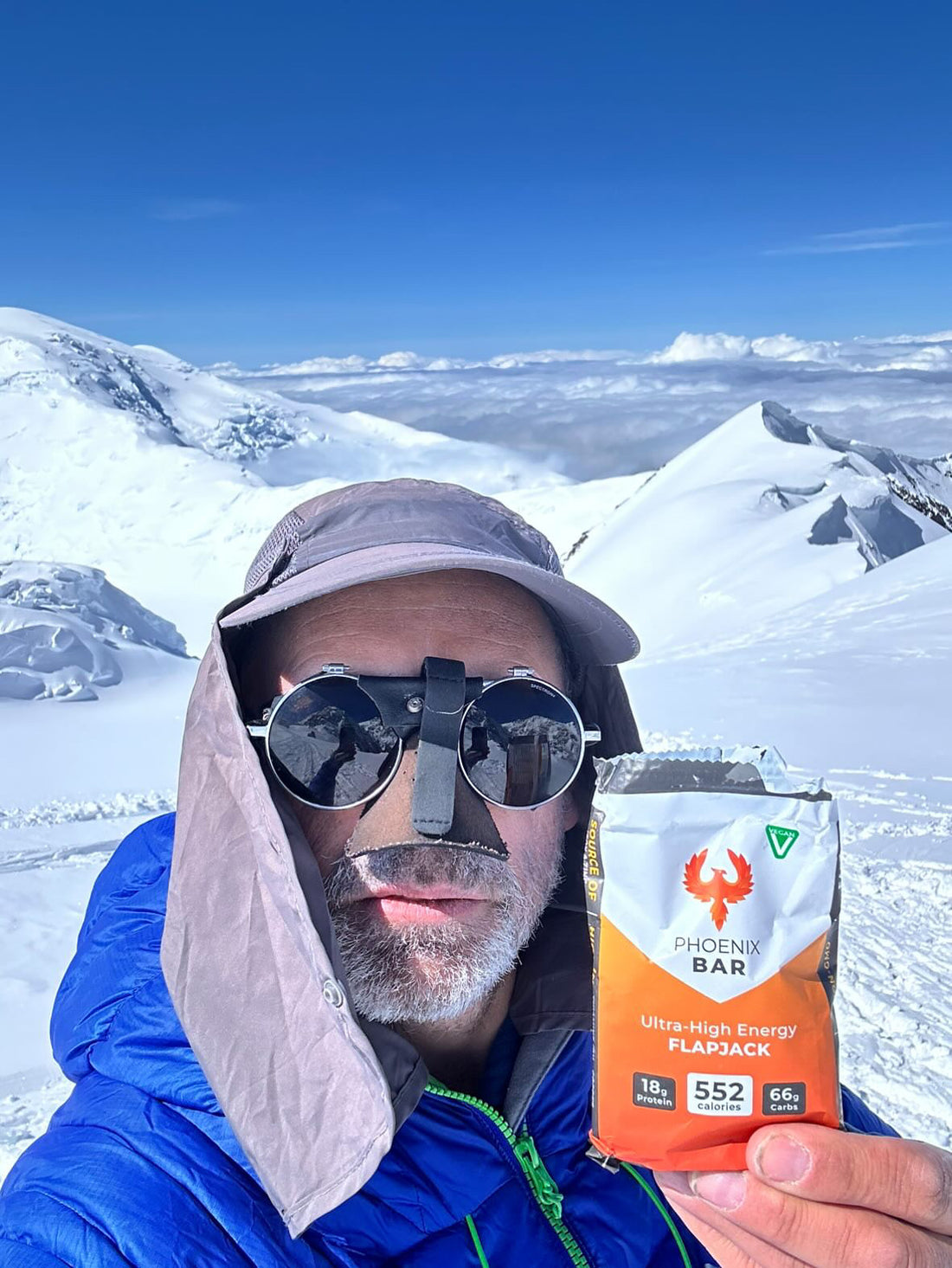
Up to 557 calories in a compact, lightweight bar of only 120g, with up to 66g of carbs and 19g of protein. Eat it whole, break it into pieces over a few hours, or stir it into hot water or warm milk for porridge.
Easy to eat, easy to digest and not sickly sweet. Customers have eaten them at -45°C and through the heat of the Marathon des Sables, and they keep for up to 2 years, so they work on a mountain, on a night shift, or at home on days when eating enough feels hard.
- 557 calories in only 120g (529 to 557 by flavour)
- 4.6 calories per gram
- 66g carbs per bar (up to)
- 19g protein per bar (up to)
