
High Calorie Pureed Foods: How to Add Calories Without Adding Volume
High calorie pureed foods are smooth, spoonable meals that have been deliberately enriched with fats, creams, syrups and blended-in protein, so that a small serving still delivers a proper amount of energy. They matter because pureeing quietly works against you: every splash of water, stock or juice added to make food blendable adds volume without adding calories, which is how a nourishing plate of food so often turns into a bowl that's half as nourishing as it looks.
I'm James, founder of Flaming Phoenix. I'm not a clinician, and this page won't pretend to be clinical advice. What I do professionally is obsess over calorie density: I develop and hand-pack 557-calorie Phoenix Bars used by ultra runners, expedition teams and people going through periods when eating is hard, and the product came out of 150 conversations with exactly those people and the people who cook for them. The thinking that goes into packing energy into a 120g bar transfers directly to the pureed food problem, and this guide is that thinking applied to a blender.
One thing before the ideas. If food textures are being professionally guided for you or the person you're cooking for, perhaps as a level from the IDDSI framework, treat that guidance as the rulebook and this page as ideas to run within it. The right consistency is an individual thing, and your care team's word beats anything on the internet, including this.
Why pureed food ends up low in calories
The maths is simple and a little unfair. To make most foods blend smoothly, you add liquid. If that liquid is water, stock or juice, you've increased the volume of the meal while adding almost nothing to its energy, so the calories in every spoonful fall. Blend 100g of cooked chicken with a splash of stock and you've turned roughly 165 calories of food into 150g of puree; same calories, more bowl, and the person eating it fills up sooner on less. Do that across three meals a day and it quietly becomes very difficult to get enough energy in, especially when appetite is small to begin with.
The fix is a single principle worth remembering: never loosen with anything that doesn't carry calories. Blend with fortified milk, cream, gravy, cheese sauce or oil-enriched cooking liquid instead of water, and the texture improves while the energy goes up rather than down. It's the same principle behind all calorie-dense foods: more energy per bite, so smaller amounts do more work.
How do you add calories to pureed food?
Build every bowl in four layers. Start with the base, whatever the meal actually is. Loosen it with a liquid that carries calories rather than water. Then add fat, because fat is the densest energy there is at 9 calories per gram against 4 for carbohydrate and protein, and it blends invisibly. Finally, blend in a smooth protein source and season generously, because pureeing mutes flavour and flavour is what keeps someone coming back for the next spoonful.
Here's roughly what each common fortifier adds, per tablespoon unless stated, so you can see how quickly it stacks up:
- Olive or rapeseed oil: around 120 calories, flavourless in savoury dishes and completely smooth.
- Butter or a plant-based spread: around 100 calories, the classic for mash, porridge and vegetables.
- Smooth peanut butter or tahini: 90 to 100 calories plus protein; blend thoroughly so no texture remains.
- Double cream, or a plant-based double cream alternative: around 50 to 65 calories, brilliant in soups, porridge and puddings.
- Golden syrup, honey or condensed milk: around 60 calories, for sweet dishes and breakfast bowls.
- Skimmed milk powder: around 30 calories plus useful protein; whisk 2 to 4 tablespoons into a pint of whole milk and you've made fortified milk, which then upgrades everything you cook with it.
- Grated hard cheese, 30g blended into a hot dish: around 120 calories and big flavour.
Two or three of those in one bowl adds 200 to 300 calories without the serving getting any bigger. That's the whole trick: the bowl stays small and manageable, and the energy goes up. This NHS guide to the pureed diet and food fortification takes the same approach and is a good companion to keep bookmarked.

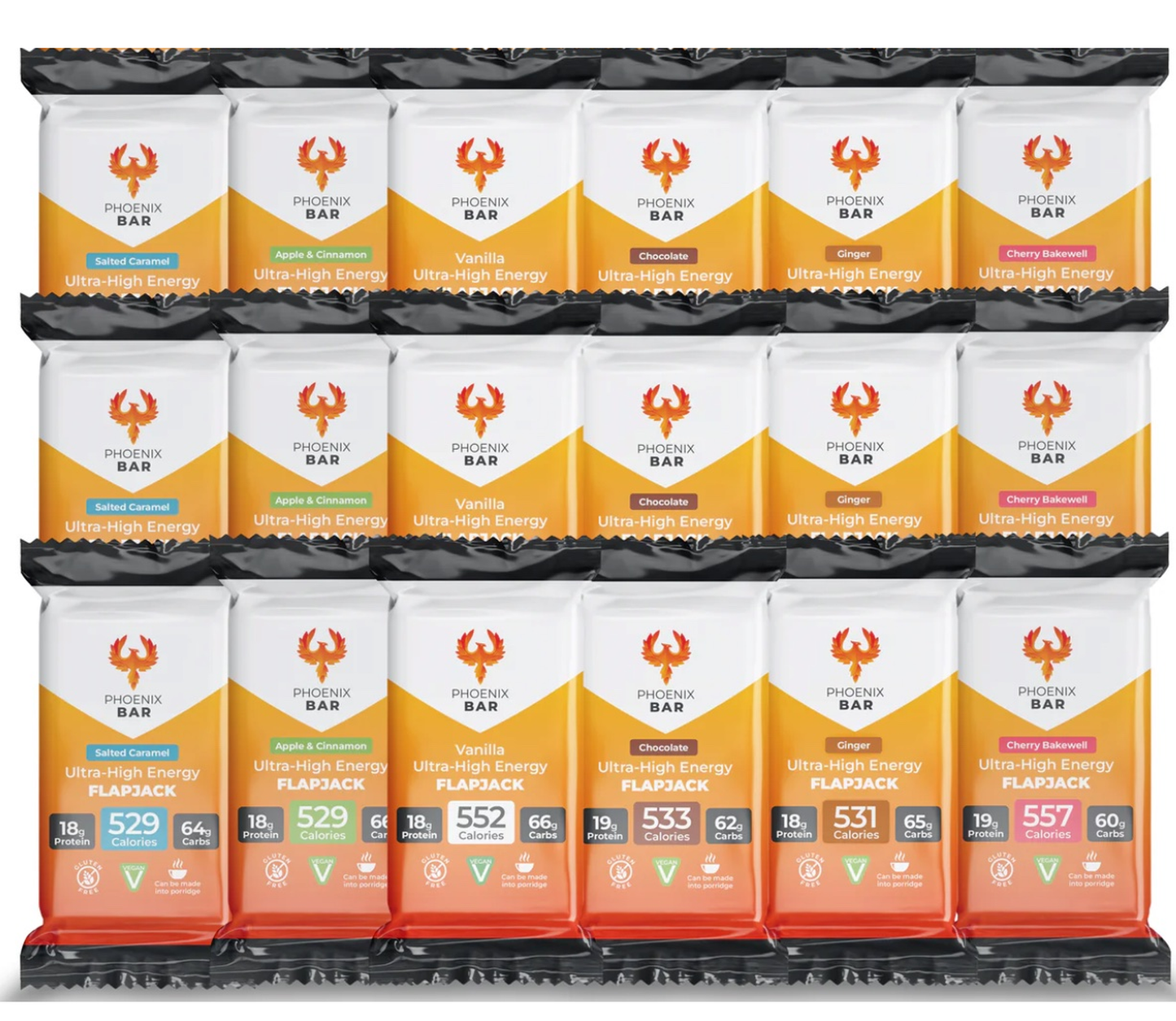
Phoenix Bars: Up to 557 Calories Per Bar
Highly compact, low-volume, calorie-dense bars. Soft, easy to eat whole or as a warm porridge. Vegan, gluten-free and contain up to 66g of carbohydrates, 19g of protein & 8 vitamins & minerals.
High calorie pureed food ideas
Everything below can be blended fully smooth, and everything has a vegan route. Blend longer than feels necessary, and if bits survive (fruit pips, skins, oat husks), pass it through a sieve; it takes thirty seconds and transforms the result.
For breakfast: porridge made entirely with fortified milk and blended smooth with golden syrup and a spoonful of smooth nut butter is one of the highest-calorie starts available, and if porridge is a favourite in your house my guide to high calorie porridge has more ways to build it up. Thick full-fat yoghurt or soya yoghurt blended with ripe banana and honey works when something cold is easier, and smooth custard is breakfast-legal in my book when eating is hard.
For mains: potato or root vegetable mash enriched with butter or olive oil and blended cheese, loosened with warm fortified milk or proper gravy rather than water. Creamy blended soups with a swirl of cream or coconut cream, with red lentils cooked in for body and protein. Blended dhal with coconut cream. Soft polenta with cheese and oil. Macaroni cheese or a well-sauced pasta dish blended smooth. Smooth houmous let down with extra olive oil. The pattern is always the same: the sauce or the fat is doing the calorie work, and the blender is just changing the format.
For puddings, which are the easiest wins of all: rice pudding blended smooth with sieved jam, chocolate pots, crème caramel, smooth cheesecake filling without the base, premium ice cream, and thick high calorie milkshakes and smoothies built on fortified milk or full-fat plant milk. If drinks are being texture-adjusted for someone, run those past the same professional guidance too.
Practical tips that make it sustainable
Batch and freeze in small portions, ice cube trays or small tubs, so a proper enriched meal is always minutes away rather than a cooking project; this matters most on the days when nobody has the energy to cook. Serve small amounts often rather than three big bowls, because a small serving finished feels better than a large one abandoned, and there's never any need to turn mealtimes into a battle. Season harder than you think, rotate flavours to avoid fatigue, and pay a little attention to presentation: a warm bowl, a nice spoon, a shaped or neatly piped serving. It sounds cosmetic, but appetite responds to appeal, and when appetite is small every bit of appeal helps. There are more low-effort approaches in my guides to what to eat when your appetite is low and easy ways to add more calories, and if you're cooking for an older relative, the ideas in high calorie foods for older adults sit alongside this page well.
Where Phoenix Bars fit, and where they honestly don't
I make high calorie bars built for weight gain and low-appetite days, and I want to be straight about where they belong here. A Phoenix Bar is a soft bar, and stirred into hot milk it becomes a spoonable porridge, but it is not a pureed food, and it hasn't been texture-tested against prescribed consistency levels. If textures are being professionally guided, don't use it for that, full stop.
Where the bars genuinely earn a place is around the edges of pureed cooking. For the person doing the caring, who blends three careful meals a day and then skips their own lunch: one bar is a meal's worth of energy eaten one-handed between jobs. For anyone in the household eating normally. And for the person themselves if and when their care team says soft-but-not-smooth textures are fine, at which point the whole soft high calorie foods category opens up as the natural next step, alongside other easy to digest high calorie foods.
High calorie pureed food FAQs
How do you add calories to pureed food without making it bigger?
Loosen with calorie-carrying liquids (fortified milk, cream, gravy) instead of water, then blend in fats: oil, butter or plant spread, smooth nut butter, cheese. Fat carries 9 calories per gram and disappears into a smooth blend, so the serving size barely changes while the energy roughly doubles.
What are the highest calorie pureed foods?
Enriched puddings and breakfasts usually top the list: smooth porridge on fortified milk with syrup and nut butter, rice pudding with cream, custard, chocolate pots and premium ice cream. On the savoury side, buttery blended mash with cheese and creamy blended soups lead, because dairy fat and oil blend in invisibly.
How do you make pureed food taste better?
Season more generously than usual, because blending mutes flavour. Rotate flavours across the week to avoid fatigue, serve at proper temperatures, and put thirty seconds into presentation. Sieving after blending also improves texture dramatically, and texture is a big part of taste.
Can you puree normal family meals?
Usually, yes, and it's often the best route because the food is familiar and already seasoned. Blend the meal with its own sauce or gravy rather than water, pass it through a sieve if any bits remain, and freeze spare portions in small tubs for low-energy days.
Is soup enough on its own?
Thin soups are mostly water, so a bowl can be surprisingly low in energy even when it feels like a meal. Creamy blended soups enriched with oil, cream or blended cheese and lentils work much harder. If in doubt, treat soup as a vehicle for fortification rather than a finished meal.
Can you blend a nutrition bar into a puree?
Not for professionally guided smooth textures; bars, including mine, aren't texture-tested for that, so stick to the guidance you've been given. Where soft textures are fine, a soft bar stirred into hot milk as a spoonable porridge can be a genuinely easy option.
Written by James Frost, founder of Flaming Phoenix. I develop, test and hand-pack Phoenix Bars, 557-calorie nutrition bars used by ultra runners, expedition teams and people who struggle to eat enough, with over 20,000 bars shipped to 19 countries. This page is general food information, not medical or dietetic advice. Last updated: July 2026.


Flaming Phoenix



Contact Us
Declare withdrawal
Please fill out the following form to declare your withdrawal from the contract.

