

The Best Homemade Trail Mix: Recipes and How to Maximise Calories Per Gram
In this guide

Homemade trail mix is one of the best trail foods there is: cheap, no cooking, easy to eat on the move, and, if you build it right, one of the most calorie-dense things you can carry. That last point is what most trail mix guides miss. For a hiker or endurance athlete, taste counts, but so does how many calories a mix delivers per gram, because every gram sits on your back. This guide gives you proper recipes with real calorie figures, and shows you how to build a mix that packs the most calories for its weight. It builds on the principle behind our calorie-dense foods guide and sits alongside our wider hiking and trekking nutrition advice.
 I am James Frost, founder of Flaming Phoenix. I built Phoenix Bars, a compact high-calorie trail food, after around 150 conversations with endurance athletes and expedition leaders, many of whom carry homemade trail mix as their staple snack. The calorie-per-gram thinking below is exactly how they approach it.
Why trail mix is such good trail fuel
Trail mix works for three reasons. It needs no cooking or preparation, so it is ready to eat the moment you stop or even while you keep moving. It keeps and travels well, lasting weeks in a sealed bag without refrigeration, so a whole multi-day trip's supply can be bagged before you leave. And it is calorie-dense, because its core ingredients, nuts, seeds and dried fruit, are among the most energy-rich foods you can carry, and much of that energy comes from fat, which delivers around nine calories per gram against four for carbohydrate or protein. That fat is why a small bag of trail mix carries more calories than a much larger volume of most other foods: 100g of a nut-heavy mix is around 550 to 600 calories.
How to build your own trail mix (the ratio that works)
The reliable formula is roughly 40% nuts, 25% seeds, 25% dried fruit and 10% extras, by volume, adjusted to taste. Each part does a job.
Nuts are the foundation, around 40% of the mix, and the main calorie source. Peanuts, cashews, almonds, walnuts, pecans, hazelnuts and macadamias are all good, and macadamias and pecans are the most calorie-dense of the common nuts if pure energy is the priority. Seeds, around 25%, add calories, protein and useful minerals for less bulk. Pumpkin, sunflower, hemp, chia and sesame all work. Dried fruit, around 25%, provides fast-releasing carbohydrate for energy on the move, along with sweetness and variety. Raisins, dried cranberries, chopped dates, apricots, mango and banana chips are all reliable, and dates and banana chips are among the more calorie-dense choices. Extras, around 10%, are where you add interest and, in some cases, more calories: dark chocolate chips, coconut flakes, a handful of granola, or savoury additions like pretzels or seasoning. Keep these to around a tenth of the mix so the bag stays energy-dense rather than becoming mostly sugar.
For UK shoppers, all of these are easy to buy: most supermarkets sell bags of mixed nuts, mixed seeds and dried fruit, and buying the larger bags rather than small snack packs keeps the cost down considerably.
Maximising calories per gram (the part most guides skip)
If your goal is the highest energy for the least pack weight, the mix leans harder on fat. To push the calorie density up, increase the proportion of nuts and seeds (the fat and therefore the calories), favour the most calorie-dense nuts (macadamias, pecans, Brazil nuts) over lighter ones, add coconut flakes and dark chocolate, which are both very calorie-dense, and keep dried fruit as the smaller share, since it is lighter in calories per gram than nuts because it still contains sugar and some residual water rather than fat. As a rough guide, a nut-and-seed-heavy mix lands around 550 to 600 calories per 100g, while a fruit-heavy mix sits nearer 400 to 450 calories per 100g. On a multi-day trip that difference compounds into real weight saved for the same energy carried, which is the whole point of thinking in calories per gram. The same logic underpins our guide to the lightest high-calorie food for backpacking.
Four trail mix recipes with calorie figures
Each of these makes a batch you can split into daily bags. The calorie figures are approximate and depend on your exact ingredients, but they give you a realistic sense of what each mix delivers.
The Classic (GORP). Peanuts, almonds, sunflower seeds, raisins and a handful of dark chocolate chips. The traditional "good old raisins and peanuts," balanced between salty and sweet, and an all-rounder at roughly 500 calories per 100g. A good default if you are not sure where to start.
The High-Calorie Mix. Macadamias, pecans, pumpkin seeds, coconut flakes, chopped dates and dark chocolate. Built for maximum energy per gram, this leans on the most calorie-dense nuts and adds coconut and chocolate, landing around 580 to 600 calories per 100g. This is the one for long or self-supported days: a 200g daily bag is roughly 1,200 calories.
The Tropical. Cashews, banana chips, coconut flakes, dried mango and a few dark chocolate chips. Sweeter and lighter in character, around 480 calories per 100g, and an easy one to keep eating when palate fatigue sets in on longer trips, since the flavour is a change from the usual salty mixes.
The Savoury. Peanuts, walnuts, pumpkin seeds, sesame sticks and a little chilli, cumin and salt. For anyone who tires of sweet food on the trail, a savoury mix around 520 calories per 100g that resets the palate, which helps on multi-day efforts when everything sweet starts to taste the same.
To make any of them: combine the ingredients in a bag or jar, shake to mix, and split into daily portions. Sealed and kept cool, most mixes last around a month.
Practical tips from the trail
A few things worth knowing. Watch perishability, because some ingredients spoil faster than others, and a single item going off can taint the whole bag; on long trips, favour robust ingredients like nuts, seeds and well-dried fruit over anything that might soften or turn. Portion into daily bags rather than carrying one large bag, so you can track how much you are eating and avoid grazing through your whole supply on day one. Mind the salt, because salted nuts and some dried fruits carry a fair amount of sodium, which is often fine or even useful when you are sweating hard, but worth being aware of. And match the mix to the effort: a nut-heavy mix suits a long, hard day, while you can afford a lighter, fruitier one on an easy outing. For how trail mix fits into a full day's eating on longer efforts, see our ultra-endurance and expedition nutrition guide, and for load-carrying specifically, our rucking nutrition page.
When you would rather not make your own
Homemade trail mix is hard to beat for grazing, but it has limits on a serious trip: it takes time to weigh and bag before every outing, and a handful of loose nuts won't stand in for a meal. When you want a meal-sized hit in one soft bar, or simply do not want to assemble and portion mixes before every trip, a purpose-built bar is the alternative. Phoenix Bars carry up to 557 calories in only 120g, around 4.6 calories per gram, close to a classic homemade mix, in a soft, ready-to-eat format that also works stirred into water as a high-calorie porridge at camp. Many people carry both: trail mix for grazing on the move, and bars for a bigger hit of compact calories when they need it; our guide to the best energy bars for hiking compares the options. The bars are vegan and gluten-free, and you can see all six flavours on our high calorie bars page.
Frequently asked questions
What is the best homemade trail mix for hiking? A mix built roughly on 40% nuts, 25% seeds, 25% dried fruit and 10% extras, adjusted to taste. For long or self-supported trips where pack weight matters, lean on calorie-dense nuts like macadamias and pecans plus coconut and dark chocolate to push the energy per gram higher. The best mix is the one you still want to eat when you are tired.
How many calories are in homemade trail mix? It depends on the ingredients, but most homemade mixes land between 400 and 600 calories per 100g. Nut-and-seed-heavy mixes sit at the higher end because fat is calorie-dense, while fruit-heavy mixes are lower. For maximum energy per gram, favour nuts, seeds, coconut and chocolate over a high proportion of dried fruit.
Is homemade trail mix better than shop-bought? For most hikers, yes. Making your own lets you control the ingredients, avoid the added sugar and cheap oils common in supermarket mixes, choose the most calorie-dense ingredients for pack efficiency, and keep the cost down by buying larger bags. Shop-bought is fine as a convenient backup.
How long does homemade trail mix last? Sealed in an airtight bag or jar and kept cool, most mixes last around a month, and often longer if you avoid ingredients that soften or spoil quickly. On long trips, robust ingredients like nuts, seeds and well-dried fruit keep best. You can also freeze trail mix to extend its life.
What is the most calorie-dense trail mix ingredient? Among common ingredients, macadamia nuts, pecans and Brazil nuts are the most calorie-dense, followed by other nuts, seeds and coconut, all of which are high in fat. Dark chocolate is also very calorie-dense. Dried fruit is lighter in calories per gram, so a mix aiming for maximum energy keeps fruit as the smaller share.
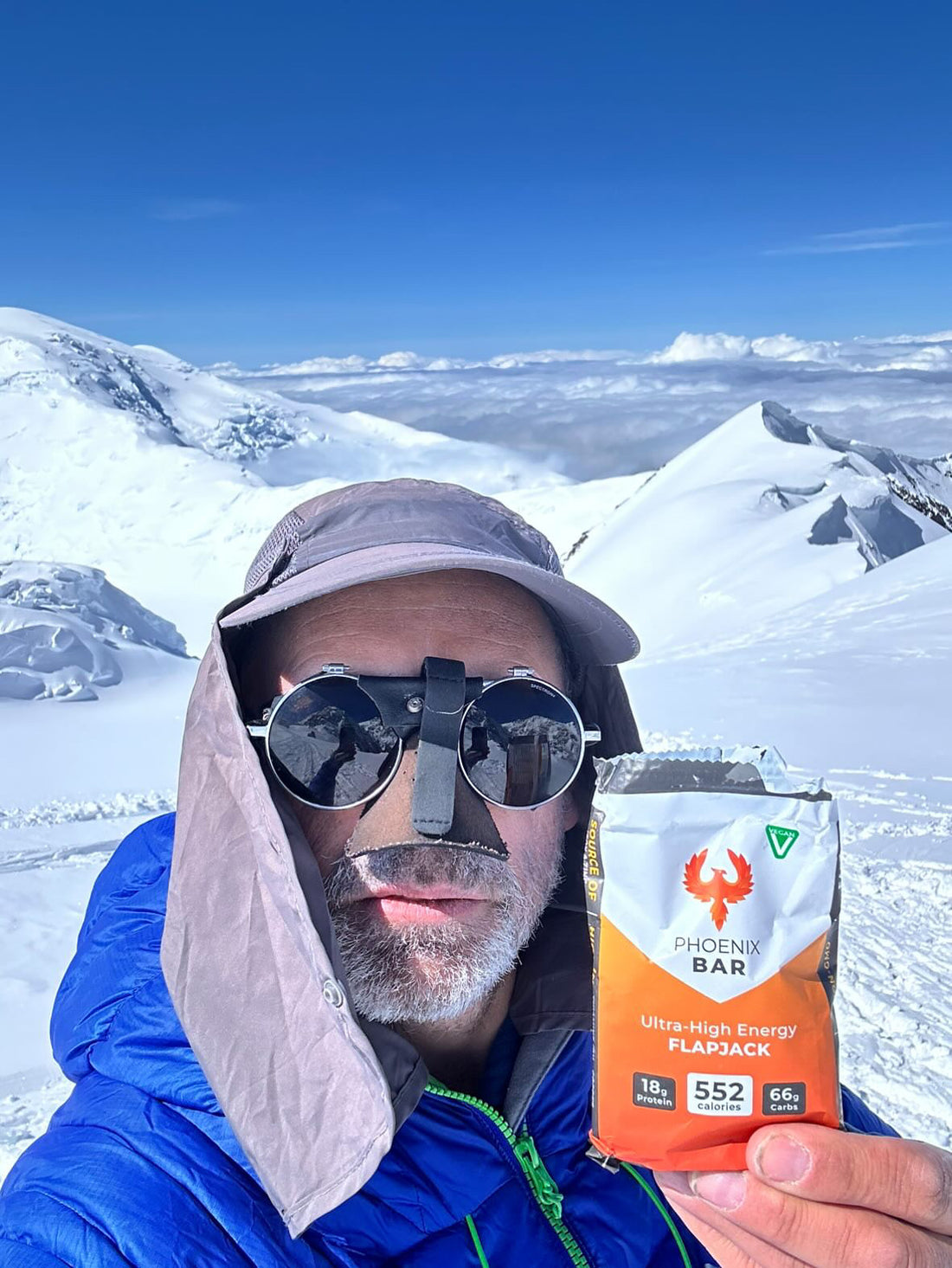
Big calories. Small bar.
Up to 557 calories in a compact, lightweight bar of only 120g, with up to 66g of carbs and 19g of protein. Eat it whole, break it into pieces over a few hours, or mix it with water or milk for porridge.
Easy to eat, easy to digest and not sickly sweet. Customers have eaten them at -45°C and through the heat of the Marathon des Sables, and they keep for up to 2 years, so they work on a mountain, on a night shift, or at home on days when eating enough feels hard.
- 557 calories in only 120g (529 to 557 by flavour)
- 4.6 calories per gram
- 66g carbs per bar (up to)
- 19g protein per bar (up to)
Declare withdrawal
Please fill out the following form to declare your withdrawal from the contract.

