

Wild Camping Kit List: What to Pack for a Night on the Hill
In this guide

Quick answer: A wild camp needs the same core kit as any night outdoors, a small low-profile shelter, a three-season sleep system, warm layers, water treatment, food that's easy to manage, a headtorch, and the safety basics, packed into a 35 to 50 litre bag at around 10 to 14kg all-in. What makes it wild camping rather than camping is everything around the kit: knowing where you can legally pitch, arriving late and leaving early, and walking away from a spot that shows no sign you were ever there. This page covers the full list, the law in plain English, and the one simplification that transforms a first wild camp: you don't actually need a stove.
I sell food to people who sleep on hills for a living and for fun, from West Highland Way walkers to expedition teams, and the kit conversations always circle the same discoveries: you need less than you think, the heavy mistakes hide in the food bag and the just-in-case pile, and the first night out is ninety percent nerves about things that turn out to be simple. So this list comes with the nerves addressed.
Where you can actually wild camp in the UK
In Scotland, you have a legal right to wild camp on most unenclosed land under the Land Reform (Scotland) Act 2003, provided you follow the Scottish Outdoor Access Code: small numbers, short stays, away from buildings and roads, no fires, no trace. The main exception is parts of Loch Lomond and the Trossachs, where seasonal byelaws mean you need a permit or a campsite between March and September. On Dartmoor, the Supreme Court settled the long legal fight in 2025 and backpack camping is lawful on the commons, following the park's code. Everywhere else in England, Wales and Northern Ireland, wild camping technically needs the landowner's permission; in practice, a discreet, high, single-night camp pitched at dusk and gone by breakfast has a long tolerated tradition in some upland areas, but treat that as custom rather than entitlement, and if you're ever asked to move on, be pleasant and move. The golden rules do most of the legal work for you: pitch late, leave early, stay small and quiet, light nothing, take everything home.
The pack
35 to 50 litres is plenty for one night, noticeably smaller than the 45 to 60 the full multi-day kit list works from, and a smaller bag is its own discipline. Line it with a dry bag or rubble sack; UK rain finds rain covers eventually.
Shelter: small, low, and the colour of the hill
A one-to-two person tent under 2kg in green or earth tones is the standard answer, pitched low-profile out of sight of paths, roads and houses. The romantic answer is a bivvy bag, just you, a waterproof sack and the sky, which is the lightest, stealthiest and most memorable way to do a clear night, with a tarp as the halfway house. First-timers: the tent. You'll sleep, and you'll go again, which is the point.
The sleep system
Same trio as any night out: three-season bag, insulated inflatable mat, and a pillow solved by stuffing your down jacket into a dry bag. UK hill nights get cold in August, and cold sleepers quit wild camping after one trip; if you invest anywhere, invest here. Full detail on choosing the trio sits in the multi-day list.
Clothing
Whatever you walked up in, plus a warm camp layer that goes on the moment you stop, a dry set for sleeping including the sacred dry socks, hat and gloves even in summer, and waterproofs regardless of the forecast. That's the lot. The second outfit stays home.
Water
Camp within reach of running water but pitch well back from it, and treat everything you drink with a filter or tablets however clean the stream looks. Carry a litre up for the evening and refill on the way out; water is the one weight you can largely outsource to the landscape.
The kitchen, and the case for not bringing one
A small gas stove, canister, pot and spork make the classic setup, and a hot evening meal on a hill is one of life's better dinners. But here's the option nobody offers first-timers: skip the stove entirely. A no-cook camp removes the faff, the washing up, the fire risk in dry spells and the biggest flame-and-light giveaway of a discreet pitch, and it costs you almost nothing: a filled flask from home covers the evening brew, dinner is a cold spread or a couple of high calorie bars, and breakfast is eaten while you walk out. It's how a lot of experienced campers do fast overnighters, and it's the simplest way to run a nervous first camp. Plenty of our customers' Phoenix Bars get eaten exactly this way: a bar with up to 557 calories needs no stove, no bowl, no cleanup and no flame, which makes it dinner insurance and breakfast in one pocket.
Food for one night
One night is forgiving: dinner, breakfast, and more daytime snacks than seems sensible, because hill appetite is real and an underfed camp is a cold one. Our guide to the best camping snacks picks the ones that keep without a fridge. Weight barely matters at this duration, so optimise for ease and morale over grams; the density arithmetic only starts to bite on multi-day carries. For those, our table of the lightest high calorie food for backpacking ranks common foods by calories per gram.
Favour things that survive a rucksack and need nothing done to them, our calorie-dense foods and high calorie snacks guides are full of candidates, and always pack one spare feed beyond the plan, the habit our emergency food guide is built on. The full eating strategy for longer routes lives in the hiking nutrition guide.
Safety and the small essentials
Headtorch with a red mode, which preserves night vision and keeps your pitch invisible, plus spare charge. Offline map on the phone and a paper map and compass you can actually use. Power bank, whistle, small first aid kit built around blisters and painkillers, and an emergency bivvy or foil shelter. Tell someone where you're headed and when you'll be back in signal. Then the kit that separates campers from litterers: a lightweight trowel and bags, everything carried out including toilet paper, plus midge repellent and a head net from late spring to autumn if you're anywhere Scotland-shaped.
First camp nerves, answered plainly
The toilet: walk at least 30 metres from any water, dig 15cm with the trowel, fill it in, and bag out your paper. It stops being a big deal the first time. Being found: it almost never happens with a late, high, discreet pitch, and if it does, a friendly apology and a moved tent ends it. Sleeping alone: the noises are sheep, wind and your own tent, the actual risks out there are weather and navigation, not people, and both are managed by the forecast, the map and telling someone your plan. The best first camp is a hill you already know, one night, good forecast, an escape route home in under an hour. Confidence compounds from there.
What to leave behind
Fires and disposable barbecues, always and everywhere: they scar ground, start moor fires and announce you to the whole glen. Speakers. Glass. The camp chair, the second pan, the big towel, and the just-in-case bag. If it doesn't keep you warm, dry, fed, found or legal, it stays home.
The condensed wild camping kit list
Pack: 35 to 50L bag, dry bag liner. Shelter: sub-2kg muted tent, or bivvy and tarp. Sleep: three-season bag, insulated mat, jacket-in-dry-bag pillow. Clothing: walked-in layers, camp insulation, dry sleep set and socks, hat, gloves, waterproofs. Water: filter or tablets, one litre carried. Food: dinner, breakfast, generous snacks, one spare feed, flask if going stoveless, stove kit if not. Safety and small stuff: headtorch with red mode, offline map plus paper map and compass, power bank, first aid, whistle, emergency bivvy, trowel and bags, midge kit in season, rubbish bag. Before leaving: forecast checked, someone told.
Frequently asked questions
Is wild camping legal in the UK? Legal on most unenclosed land in Scotland under the access code, with seasonal permit zones in parts of Loch Lomond and the Trossachs, and lawful on Dartmoor's commons. Elsewhere it needs landowner permission in principle, with a tolerated tradition of discreet one-night camps in some upland areas.
Do I need a stove for wild camping? No. A flask from home, a cold dinner and walk-out breakfast make a lighter, simpler, stealthier camp with zero fire risk, and it's the easiest version of a first night out.
What size pack do I need for one night? 35 to 50 litres covers a one-night camp comfortably. If it doesn't fit, the problem is the pile, not the pack.
Is it safe to wild camp alone? With a checked forecast, a route you can navigate, a sensible pitch and someone who knows your plan, yes, and solo is how most people fall in love with it. The real hazards are weather and terrain, and both are planning problems.
Where should I pitch? High and discreet beats low and convenient: out of sight of paths and buildings, off farmland, back from water, on ground that drains, arriving at dusk and gone early. The view is the reward for the extra climb.
Written by James Frost, founder of Flaming Phoenix. We feed wild campers, multi-day hikers and expedition teams in 21 countries, and this list is distilled from their packs. Last updated July 2026.
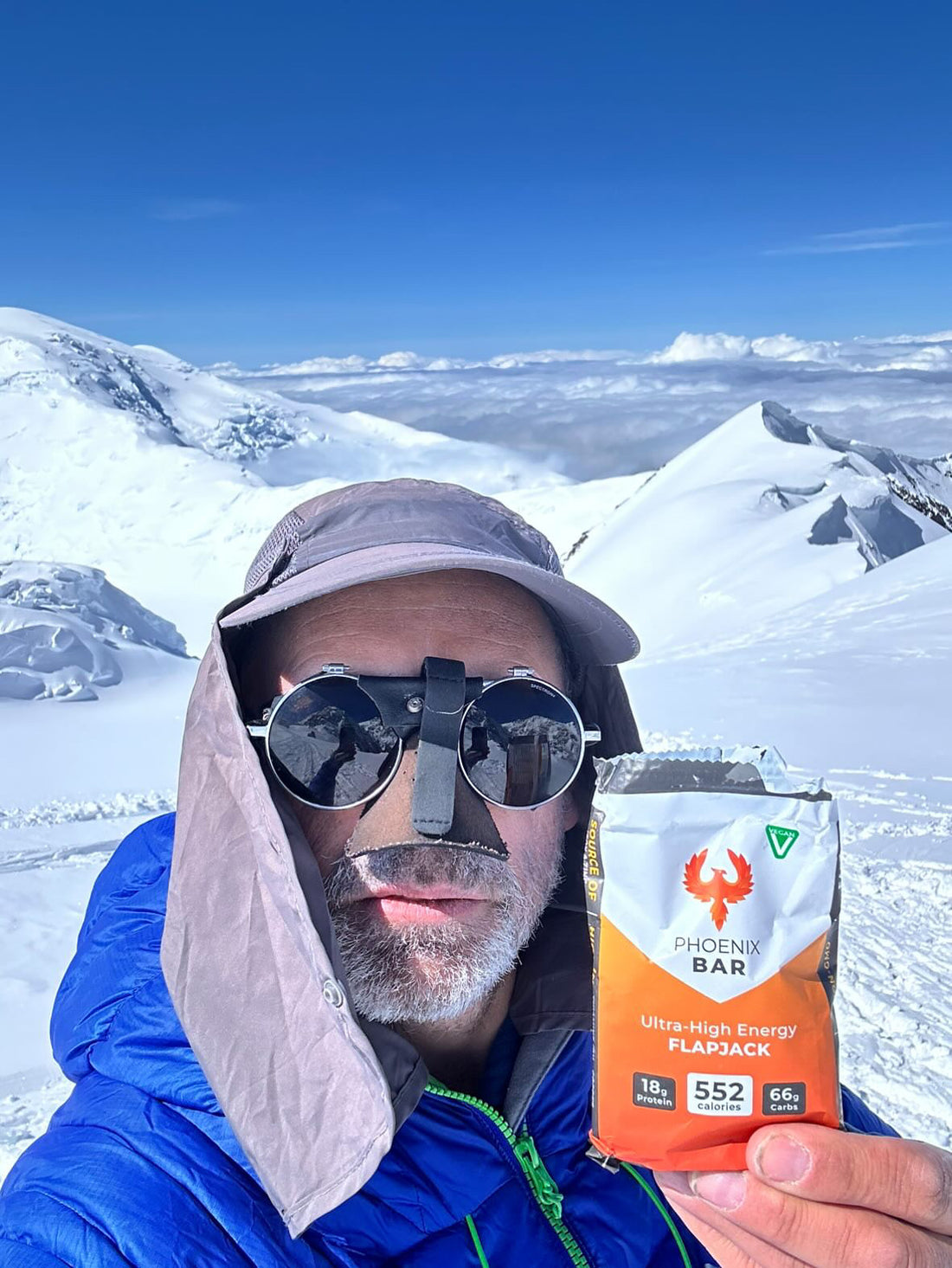
Big calories. Small bar.
Up to 557 calories in a compact, lightweight bar of only 120g, with up to 66g of carbs and 19g of protein. Eat it whole, break it into pieces over a few hours, or stir it into hot water or warm milk for porridge.
Easy to eat, easy to digest and not sickly sweet. Customers have eaten them at -45°C and through the heat of the Marathon des Sables, and they keep for up to 2 years, so they work on a mountain, on a night shift, or at home on days when eating enough feels hard.
- 557 calories in only 120g (529 to 557 by flavour)
- 4.6 calories per gram
- 66g carbs per bar (up to)
- 19g protein per bar (up to)
Declare withdrawal
Please fill out the following form to declare your withdrawal from the contract.

