
Jungle Expedition Food: What to Pack and Eat in Hot, Humid Rainforest
Written by James, founder of Flaming Phoenix. Last updated June 2026.
The best food for a jungle expedition is calorie-dense, sealed, and spoilage-resistant, because heat and humidity ruin most food within days and draw in insects and animals. You also burn a lot of energy, often well over 4,000 calories a day once you add a heavy pack and rough terrain to the heat, and you need food you can eat without cooking, since soaked wood and constant rain make fires unreliable. In the jungle, the food that survives is the food that fuels you.
Most jungle advice online is about what to wear and how to keep the mosquitoes off, and almost none of it takes food seriously. That is fine for a guided lodge trip where meals are provided, but it is useless if you are doing anything genuinely self-supported: a remote Amazon traverse, the Darién Gap, deep travel in Borneo, Sumatra or the Congo, or a jungle survival or military-style course. For those, what you carry and how it holds up is the difference between a strong expedition and a miserable one. This guide is written for that traveller, from years of helping people fuel exactly these kinds of hostile environments.
Why is the jungle so hard on food?
The jungle attacks food in three ways at once. It is hot, with rainforest temperatures typically sitting between about 25 and 31 degrees Celsius and humid year-round. It is wet, with frequent rain, especially in the wetter months, so nothing stays dry for long. And that combination of heat and damp is exactly what mould, bacteria and insects love. Adventure LifeAdventure Life
The result is that most ordinary food spoils within days. Fresh and perishable items rot, anything with moisture grows mould, and open or smelly food attracts ants, other insects, and animals. Even clothing takes days to dry in that air, so food left unsealed has no chance. This is why the first rule of jungle food is not flavour or even calories, it is survival of the food itself: sealed, shelf-stable, and dry.
How many calories do you need on a jungle expedition?
A lot, and more than people expect. Hard tropical travel stacks several heavy demands together: cutting and pushing through dense vegetation, carrying a full pack, slow energy-sapping progress over mud and roots, river crossings, and the constant load of regulating your body temperature in the heat. For serious self-supported jungle days, energy needs often run well beyond 4,000 calories and can climb higher on the hardest sections.
The cruel twist is that heat suppresses appetite at the same time. Just when you need the most energy, you feel least like eating, and you are also losing large amounts of water and salts through sweat. That makes two things essential: calorie-dense food you can actually face when you are hot and tired, and a deliberate electrolyte plan alongside your water. Our ultra-endurance and expedition nutrition guide covers the wider principles of fuelling hard days in extreme places.
The five rules for choosing jungle food
It must resist spoilage. Sealed, dry, and shelf-stable beats everything. If it can mould, rot, or leak, the jungle will find it.
It must be calorie-dense. Every gram you carry is a gram you have to haul through mud and heat, so you want maximum calories from minimum weight and volume. Our lightest high-calorie food for backpacking guide goes deeper into this trade-off.
It should need no cooking. Reliable fires are hard in a wet jungle, and stove fuel is heavy and finite. Food you can eat straight from the pack, or rehydrate cold, removes a major point of failure.
It must be easy to eat when you feel rough. Heat and exhaustion kill appetite, so food that goes down easily, even when you do not fancy it, is worth far more than food you keep putting off.
It needs enough variety for morale. On a long expedition, eating the same thing every day becomes its own kind of suffering, and bored people stop eating. Variety keeps the calories going in.
What food actually survives and works in the jungle
The winners are dry, sealed, and calorie-dense: dehydrated and freeze-dried meals, hard dried goods, oils and fats decanted into sealed containers, and sealed bars and snacks. The losers are anything fresh, moist, or poorly wrapped, which rots, attracts pests, or turns to a mess in your pack.
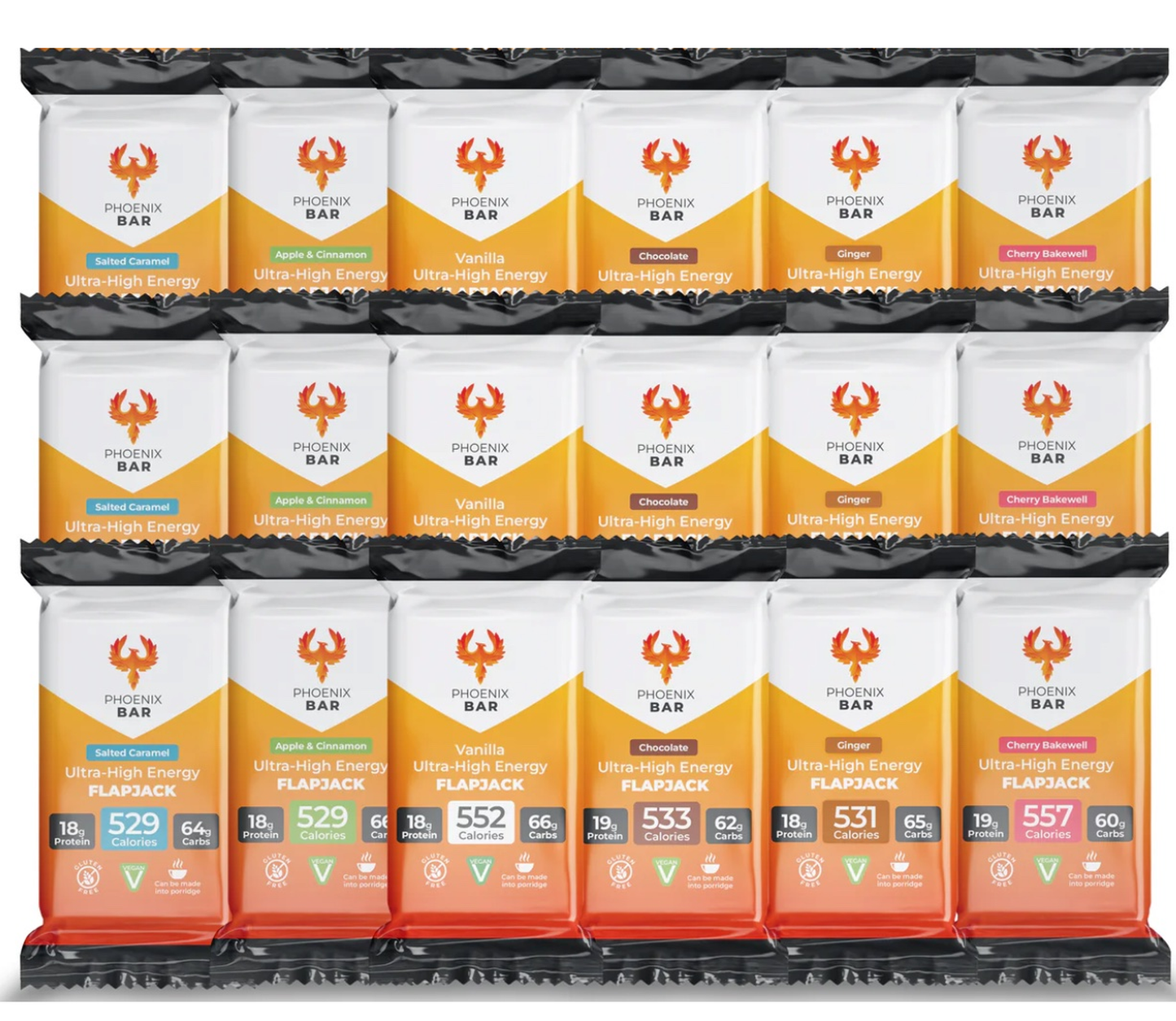
This is the environment our Phoenix Bars suit well. Each 120g bar is sealed, calorie-dense real food that does not need cooking and is far more resistant to spoilage than fresh food, so it keeps doing its job deep into a humid expedition where other snacks have given up. They are vegan and gluten-free, which simplifies things across mixed teams, and they come in six flavours, Apple and Cinnamon, Cherry Bakewell, Chocolate, Vanilla, Salted Caramel and Ginger, which is exactly the variety that keeps people eating on a long trip. On a multi-day push, a bar can also be broken up and soaked in water into a soft porridge without any fire at all. You can see how people use them across hard expeditions on our how to use Phoenix Bars page, and read hundreds of verified reviews from people who take them into demanding places.
One honest note: in serious jungle heat any bar with chocolate can soften, so the texture changes, but unlike fresh food it stays sealed and edible rather than spoiling. As with all expedition food, test what you plan to carry before you commit to it.

Phoenix Bars: Up to 557 Calories Per Bar
Soft, easy to eat whole or as a warm porridge. Low volume, two-year shelf life.
Cooking, water and fuel in the jungle
Plan around the assumption that cooking will be difficult. Wet wood, near-constant rain, and the weight of carrying enough stove fuel all make hot meals less reliable than you would like, so the more of your food that needs no cooking, the more robust your plan becomes. Cold-soaking is your friend here: oats, and a Phoenix Bar broken into water, both rehydrate into something soft and filling with no flame needed. See our high-calorie porridge guide for the cold-soak approach.
Water is usually the opposite problem to food. The jungle is full of it, but it all needs purifying, so your limiting carried resource is almost always food, not drink. That reinforces the case for packing the most calories you can into the least weight. The thinking in our wild camping food guide carries straight over.
Keeping pests and damp out of your food
In the jungle, food storage is as important as food choice. Keep everything sealed in waterproof bags or dry bags, double-bag anything aromatic, and never leave open food out, because ants and animals arrive fast. At camp, store and where sensible hang your food away from where you sleep. The simplest rule is that the jungle is always trying to get into your food, so your packaging is doing as much work as the food itself.
Fuelling specific jungle expeditions
The harder and more remote the route, the more this matters. On a self-supported Amazon traverse or the Darién Gap, resupply is rare to nonexistent, so you carry everything and your calories-per-gram decides how far you can go. On a jungle survival or military-style course, the same logic applies to whatever you are permitted to carry, and the discipline of eating enough in the heat is part of the test. The principles overlap closely with our military field nutrition and rucking nutrition guides, since both deal with carrying heavy loads and fuelling on the move.
For longer expeditions where shelf life is everything, the same qualities that make food work for emergencies apply, which our emergency food preparedness guide covers in detail.
A simple jungle expedition food approach
Start the day with a high-calorie, no-cook breakfast before the heat builds and your appetite fades. Through the day, eat little and often rather than waiting for big stops, because small, frequent calories are easier to manage in the heat and keep you from falling into a deficit you cannot claw back. Make sure a good share of your daytime food is calorie-dense and ready to eat one-handed, since you will not always want to stop. In the evening, when it is cooler and your appetite returns, eat as much as you comfortably can to recover the day's deficit. Run electrolytes alongside your purified water throughout, and keep everything sealed between meals.
Frequently asked questions
What food should I take on a jungle expedition?
Take sealed, dry, calorie-dense food that resists spoilage and needs no cooking: dehydrated meals, dried goods, sealed fats, and sealed bars such as a Phoenix Bar. Avoid anything fresh or moist, which spoils fast and attracts pests in the heat and humidity.
How do you stop food spoiling in the jungle?
Keep everything sealed and dry. Heat and humidity cause rapid spoilage and mould, so favour shelf-stable food, store it in waterproof or dry bags, double-bag anything aromatic, and never leave open food out.
How many calories do you need trekking in the jungle?
More than on most terrain. Heavy packs, dense vegetation, mud, and the heat itself push energy needs often well beyond 4,000 calories a day, while the heat suppresses your appetite, which is why calorie-dense, easy-to-eat food matters so much.
Do you need to cook food in the jungle?
You should plan not to rely on it. Wet wood, rain, and the weight of stove fuel all make cooking unreliable, so no-cook and cold-soak food makes your plan far more robust.
What is the best no-cook food for the Amazon or rainforest trekking?
Sealed, calorie-dense, ready-to-eat food that holds up in humidity. Phoenix Bars work well here because they need no cooking, resist spoilage better than fresh food, and can be cold-soaked into a soft porridge when you want a change.
Related guides
Ultra-Endurance and Expedition Nutrition Guide · Hiking and Trekking Nutrition · Wild Camping Food · Lightest High-Calorie Food for Backpacking · Military Field Nutrition · Emergency Food Preparedness
Provisioning for your next expedition? Explore Phoenix Bars on the homepage.


Flaming Phoenix



Contact Us
Declare withdrawal
Please fill out the following form to declare your withdrawal from the contract.

