

Arctic Circle Trail Nutrition Guide: How to Fuel Greenland's 165km Wilderness Crossing
In this guide

The Arctic Circle Trail runs 165 kilometres from Kangerlussuaq on the edge of the Greenland ice sheet to the coastal town of Sisimiut on the Davis Strait. There are no resupply points, no shops, no road access, no cell reception, and nine very basic backcountry huts that fill on a first-come first-served basis. Hikers must carry every calorie they will eat for the entire trek plus at least one extra day's worth as a weather buffer. Most thru-hikers complete the route in 7 to 10 days. Daily calorie demand sits between 3,500 and 5,000 depending on pace, pack weight and weather. The entire fuelling problem is determined by one fact: you carry it all from day one. This guide explains how to plan that carry without breaking your back or running out of food on day eight.
 Written by James Frost, founder of Flaming Phoenix and the maker of Phoenix Bars, with up to 557 calories in a small, soft 120g bar, built for exactly this kind of pure carry problem. Last reviewed May 2026.
The trail in numbers
The Arctic Circle Trail was established in 1998 and runs entirely north of the Arctic Circle through one of the largest ice-free wilderness areas in west Greenland. Maximum elevation is 450 metres at the high cairn cross-passes, so this is not a technical mountain trail in the GR20 or HRP sense. What makes it hard is the isolation and the conditions. The trail traces the path of traditional Inuit hunting grounds, now a UNESCO World Heritage Site. There are nine huts spaced roughly 11 to 22 kilometres apart, each sleeping a maximum of six. There is one optional 35-kilometre extension west to Point 660 on the edge of the ice cap. The hiking season runs from mid-June to mid-September. The fastest known time is just under two days. Most hikers walk it east to west from Kangerlussuaq, finishing in Sisimiut with the option to take a ferry north to Ilulissat for the Disko Bay icebergs.
The ACT sits at the opposite end of the European thru-hike spectrum from the GR20 and the HRP. The GR20 is short and technically intense. The HRP is long and partially resupplied. The ACT is short by HRP standards but completely self-supported. That makes its fuelling problem the cleanest carry-density calculation in European thru-hiking.
The five constraints that define Arctic Circle Trail fuelling
Every ACT planning decision flows from five constraints. The order below reflects how much each one shapes the carry. Solve them in this order.
Constraint one: zero resupply means the bag is the trek
There are no shops between Kangerlussuaq and Sisimiut. None. Cicerone's guidebook and the official Arctic Circle Trail website both state this in unambiguous terms. The Hiking Life's resupply notes are blunt: bring everything except stove fuel, which can be bought at the Kangerlussuaq supermarket across from the airport.
This single fact has three consequences. First, your starting pack weight is the heaviest it will ever be on the trip, which is the opposite of a typical European thru-hike where you eat down between resupply points and your pack lightens daily. Second, you cannot recover from poor food planning by buying more on the trail. If you run out on day six, you walk hungry for two days. Third, your carry needs to include a one-day emergency buffer, which Cicerone and most experienced trip reports specify as non-negotiable. Greenland weather can pin you down at a hut or in a tent for 24 hours at any point in the trek.
With no shops for 165km, calories per gram decide your food plan. Phoenix Bars are high calorie bars at up to 4.6 calories per gram, comfortably above the 4.0 cal/g threshold that separates viable thru-hike food from filler. Three bars a day across a 10-day trek gives you up to 16,710 calories for 3.6kg of pack weight. The same calorie load in bread, cheese and tuna would weigh more than double. The fuller logic on this density question is laid out in our calorie-dense foods guide, which is the right primer before you finalise the carry.
Constraint two: cold and unpredictable Arctic conditions
The ACT can feel like 30 degrees Celsius in mid-summer sun, or it can snow in late August. The Detour Effect's solo hiker logged snow in Sisimiut two days after finishing in late August 2024. The temperature range across a single 10-day window can be 40 degrees. Average late-summer daytime temperatures sit at 5 to 10 degrees Celsius with nights dropping to minus 5.
Cold affects fuelling in three measurable ways. First, your body burns 10 to 20 percent more calories per day on thermoregulation in temperatures below 10 degrees, which means the high end of your daily target moves up rather than down even though the terrain is gentler than alpine trails. Second, energy bars harden significantly below freezing, which is why cold performance is one of the measures in our ranking of the best energy bars for expeditions. Phoenix Bars have a soft texture, and Shaun Weston found them "Easy to eat, even at -45c" on a South Pole expedition. If you want yours warmer on a cold morning, keep a bar in a jacket pocket for a while before eating. You can also mix it with water as a high calorie porridge using the technique laid out in our how to use Phoenix Bars guide. Third, gas canister performance drops sharply in cold. Liquid fuel stoves are more reliable below freezing, but most ACT hikers use gas because it is widely available in Kangerlussuaq.
The wider cold-weather fuelling logic is covered in detail in our polar expedition nutrition guide. The principles scale down well to a 10-day Arctic trail.
Constraint three: pack weight ceiling
Realistic ACT pack weights for thru-hikers are 12 to 18 kilograms, including food, water, fuel and a 3-season tent rated to minus 5. The Detour Effect packed 15kg as a 5-foot-5 solo hiker. Stars and Wildflowers carried 19 to 23kg for an unguided couple. Guided trips quote 19 to 23kg as standard starting weight.
The maths is unforgiving. With a base gear weight of around 8 to 9kg (tent, sleeping bag, mat, stove, clothes, electronics) plus 0.5 to 1.5kg of water on most days, you have 4 to 8kg of weight available for food. At 6 calories per gram of carried food, 8kg delivers 48,000 calories, which is 4,800 per day across 10 days. That is exactly where you want to be. At 4 calories per gram (a more typical mix of bread, cheese, tinned tuna, biscuits), the same 8kg delivers only 32,000 calories, which is 3,200 per day, and you finish the trail in deficit.
With no resupply, the bag is the trek, and the density of what is in it decides whether you finish strong or finish hungry. The Complete Bundle of 36 Phoenix Bars covers a 10-day trek at three bars per day, which is the most common bar-density baseline experienced thru-hikers use, with six bars to spare. Hikers planning the trek in 7 to 8 days can size down to the Essential Bundle of 18.
For the broader thru-hike carry planning logic, the ultra-endurance and expedition nutrition guide is the canonical pillar reference.
Constraint four: hut bunks are not guaranteed
The nine huts on the ACT each sleep a maximum of six, and they fill on a first-come first-served basis with no booking system. The Arctic Circle Trail official site, Cicerone and every experienced trip report all say the same thing: bring a tent even if you plan to hut.
The fuelling implication is significant. Hut nights mean you can cook on a shared gas burner in a small enclosed space, conserve fuel by using boiled-water from another hiker's stove, and eat in relative comfort. Tent nights mean cooking outside in wind that may extinguish your gas burner, eating cold food if conditions are bad, and burning more fuel per meal because of cold and exposure.
The defence is a hybrid fuelling plan that works in either scenario. Hot dinners for hut nights, cold-soaked or no-cook backup meals for tent nights when conditions make stove use unpleasant, and bar-and-snack lunches every day regardless. Phoenix Bars eaten cold are the same calories as Phoenix Bars eaten as porridge, which removes one degree of weather-dependence from the food plan. The ultra high carb solid foods guide covers the wider logic of why solid carb-dense foods outperform liquid or freeze-dried options when conditions are uncertain.
Constraint five: weather pin-downs and the +1 day rule
Greenland weather can change in an hour. The official ACT site recommends carrying an emergency flare and remote-rescue insurance because the trail is far enough from rescue services that self-evacuation is the assumption rather than the exception. The practical fuelling implication is the +1 day rule: carry one extra day of food beyond your planned trek length to cover a single weather pin-down or pace mistake.
For a planned 8-day trek, carry 9 days of food. For a 10-day trek, carry 11. The buffer is non-negotiable because there is no shop to recover from, and walking hungry across the boggy late-trek sections from Iluliumanersuup Portornga to Sisimiut is dangerous given the cold-weather calorie load on thermoregulation.
Building the carry: a worked food bag for a 10-day Arctic Circle Trail traverse
Here is a working food bag for a typical 10-day east-to-west traverse. The target is 4,500 calories per day at a carry density of 6 calories per gram, which puts the food bag at roughly 7.5kg before water and fuel.
Bars: 30 Phoenix Bars across the trek (3 per day). Up to 1,671 calories per day from bars alone. 3,600g total. Six flavour rotation (Apple and Cinnamon, Cherry Bakewell, Chocolate, Vanilla, Salted Caramel, Ginger) keeps palate fatigue down across 10 consecutive days. Eat one with breakfast as porridge, one at the morning col, one at lunch.
Breakfasts: 10 servings of oats with milk powder and seeds. 80g per serving at around 380 calories, plus a quarter bar broken in for sweetness and density. 800g total carry weight. Use the hot-water-soak method covered in the high calorie breakfast guide.
Dinners: 10 dehydrated meals. Real Turmat or equivalent quality at 600 to 800 calories per pouch. 800 to 1,200g total carry weight depending on brand. Add olive oil sachets to bump density.
Snacks: hard cheese (300g), salami or vegan equivalent (300g), mixed nuts (500g), dark chocolate (300g), dried fruit (300g). Roughly 1,700g delivering around 8,500 calories across the trek for snacking and afternoon top-ups.
Emergency buffer: 2 extra bars, 1 extra dehydrated meal, 50g of nuts. Adds 240g and roughly 1,800 calories for the +1 day rule.
Total carry: approximately 7.4kg of food delivering 45,000 calories across 10 days. That averages to 4,500 calories per day, which sits at the upper end of the realistic intake band for ACT thru-hikers and accommodates the cold-weather thermoregulation load.
For comparison, our high calorie snacks guide benchmarks bars, nuts and dehydrated options against each other on the calorie-per-gram metric that matters here.
Hot meal versus cold food strategy
On the ACT you will make the hot-versus-cold call every day. Most experienced thru-hikers settle on roughly the following pattern.
Mornings: hot porridge in a hut, cold pre-soaked oats in a tent. Both work. The porridge approach lets you break a Phoenix Bar in for density. The cold-soak approach saves stove fuel and is faster for cold-weather pack-up.
Lunches: cold every day regardless of weather. Phoenix Bars, cheese, salami, dried fruit, chocolate. Lunch is on the trail and stopping to fire up a stove in cold wind is rarely worth it.
Afternoon snacks: cold bars and nuts at any natural break point.
Dinners: hot in huts (dehydrated meal plus oil), hot in tents if conditions allow (dehydrated meal with sheltered burner), cold-soaked or bar-heavy if a storm makes stove use miserable.
This pattern lets you plan stove fuel for two hot meals a day across 10 days, which is approximately one 230g gas canister for solo use or 1.5 canisters for a duo. Most ACT hikers buy their gas at the Spar supermarket in Kangerlussuaq immediately after landing because gas is significantly cheaper there than in Sisimiut, and the supermarket is across the street from the airport.
Water and stove fuel: the things the ACT actually does well
For all the carry-density pressure, the ACT is generous on water. The trail passes hundreds of lakes, streams and tarns. Most ACT hikers do not treat their water and report no issues, although the Hiking Life and a few other experienced sources still carry purification tablets as a backup. You should never need to carry more than 1.5 litres at a time, which keeps water weight low compared to a hot-weather Mediterranean trail.
That helps with the carry. Every kilogram of water you do not carry is a kilogram available for food. Combined with the gas canister being purchasable immediately on arrival in Kangerlussuaq, the only weight you actually fly into Greenland with is your gear, your bars, and your dehydrated meals.
A typical day on the Arctic Circle Trail
0600 to 0700, wake at hut or tent. Hot oats with a quarter Phoenix Bar broken in, plus a hot drink. Roughly 600 to 800 calories.
0800, walk out. Average daily distance is 16 to 22 kilometres. The terrain is rolling tundra, low ridges, lakes, and some bog sections. Day-six involves the bridge detour around the Itinneq River, which adds 5 to 8 kilometres of bog navigation depending on the line you take.
1000, mid-morning bar at the first natural rest point. Up to 557 calories. Half a litre of water from a stream.
1300, lunch on a rock by a lake or stream. One bar, hard cheese, a handful of nuts, some chocolate. Roughly 1,000 calories.
1530, afternoon bar at another natural break. Up to 557 calories. The afternoon is the right time to snack heavily because energy demand from cold and continued walking is highest.
1700 to 1900, arrive at hut or pitch tent. Within 30 minutes of stopping, eat 200 to 300 calories of dried fruit or a partial bar to start glycogen refill. The 30-minute post-exercise window applies on the ACT just as it does on any thru-hike.
2000, hot dinner. Dehydrated meal plus olive oil plus a final bar if you are still hungry. Roughly 1,200 to 1,500 calories.
Total daily intake on this template is 4,000 to 4,700 calories, which sits right in the band for a typical ACT thru-hiker.
The structure is similar to the daily template I built for the GR20 and the HRP, but the ACT version is more bar-and-cold-snack heavy because there is no village lunch option ever, and dinner is the only reliably hot meal of the day rather than the centrepiece of a hut social.
What to do if you are delayed
The +1 day buffer covers a single 24-hour weather pin-down. If you are delayed beyond that, the standard advice from Cicerone and the official ACT site is to ration carefully, stay in the next hut you reach, and use your emergency flare or satellite communicator if conditions are deteriorating.
Practical rationing if you are stretching food into an unexpected 11th or 12th day: drop daily intake to 3,000 to 3,500 calories, prioritise the bars and high-density snacks over the heavier dehydrated meals, and skip the morning porridge in favour of cold bars to save stove fuel. At up to 557 calories each, Phoenix Bars make a good last-resort reserve because they are calorie-dense, shelf-stable, and palatable when cold and tired.
For the broader emergency-food principles that underlie this kind of planning, see our guide to emergency food preparedness.
Frequently asked questions
How many calories do you burn per day on the Arctic Circle Trail? Most ACT hikers burn 3,500 to 5,000 calories per day, with cold weather pushing the upper end higher because of thermoregulation costs. Daily output is moderate compared to alpine trails but cumulative across 10 days it is significant.
Can you buy food anywhere on the Arctic Circle Trail? No. There are no shops, no resupply points, and no road access between Kangerlussuaq and Sisimiut. Cicerone's guidebook and the official ACT site both confirm that hikers must carry the entire trek's food plus one extra day for weather buffer.
How heavy should my pack be on the Arctic Circle Trail? Realistic starting pack weights are 12 to 18 kilograms including food, water, fuel and 3-season camping kit. Lower is better if your gear allows. With no resupply, calories per gram of food largely decide how heavy your pack is at the start.
Is the Arctic Circle Trail suitable for vegan or gluten-free hikers? Yes, more so than most European thru-hikes because you carry everything yourself and never depend on village food. Plan and pack to your own dietary requirements. Phoenix Bars are vegan and gluten-free, with up to 557 calories in each compact 120g bar.
When is the best time to walk the Arctic Circle Trail? Late June to early September is the safe window. July has the longest daylight but the worst mosquitoes and midges. Late August offers cooler temperatures, fewer bugs, and the chance to see the Aurora Borealis as the nights lengthen. Early September is the latest realistic window before snow makes the trail more dangerous.
Do you need a tent if huts are available? Yes. The Arctic Circle Trail official site, Cicerone and every experienced trip report all specify a tent as mandatory. The nine huts sleep a maximum of six each on a first-come first-served basis, and there is no booking system, so you cannot guarantee a bunk at the end of any given day.
How much water should you carry on the Arctic Circle Trail? 1 to 1.5 litres at a time is sufficient. The trail passes hundreds of lakes and streams and water is generally drinkable without treatment, although a few experienced sources still carry purification tablets as backup.
What is the fastest time anyone has walked the Arctic Circle Trail? Under two days for the unsupported FKT. Most thru-hikers complete the trail in 7 to 10 days. Fastpackers and trail runners attempting to compress the route below five days should read our fastpacking nutrition guide for the carb-tolerance protocol that makes high daily mileages sustainable.
Related guides
The Arctic Circle Trail sits within a broader category of self-supported, low-altitude wilderness thru-hikes where the carry density problem dominates everything else. Plan adjacent to it using these guides: the Cape Wrath Trail nutrition guide for the closest British equivalent in self-supported demand and remote terrain; the HRP nutrition guide for the European long-distance carry-density logic at a much larger scale; the GR20 nutrition guide for the Mediterranean opposite end of the spectrum (short, intense, partially supported); the wild camping nutrition guide for the broader principles of self-cooked thru-hike eating; the backpacking nutrition guide for the foundational pack-density logic that applies to every multi-day route; and the polar expedition nutrition guide for the cold-weather fuelling principles that scale down to Arctic summer trekking.
For hikers planning the ACT as part of a wider Greenland or Arctic objective, our notes on weight maintenance in the how to gain weight guide cover the multi-week energy deficit problem that affects most thru-hikers by week two of any sustained Arctic expedition.
The canonical reference that connects every page in this cluster is the Ultra-Endurance and Expedition Nutrition Guide.
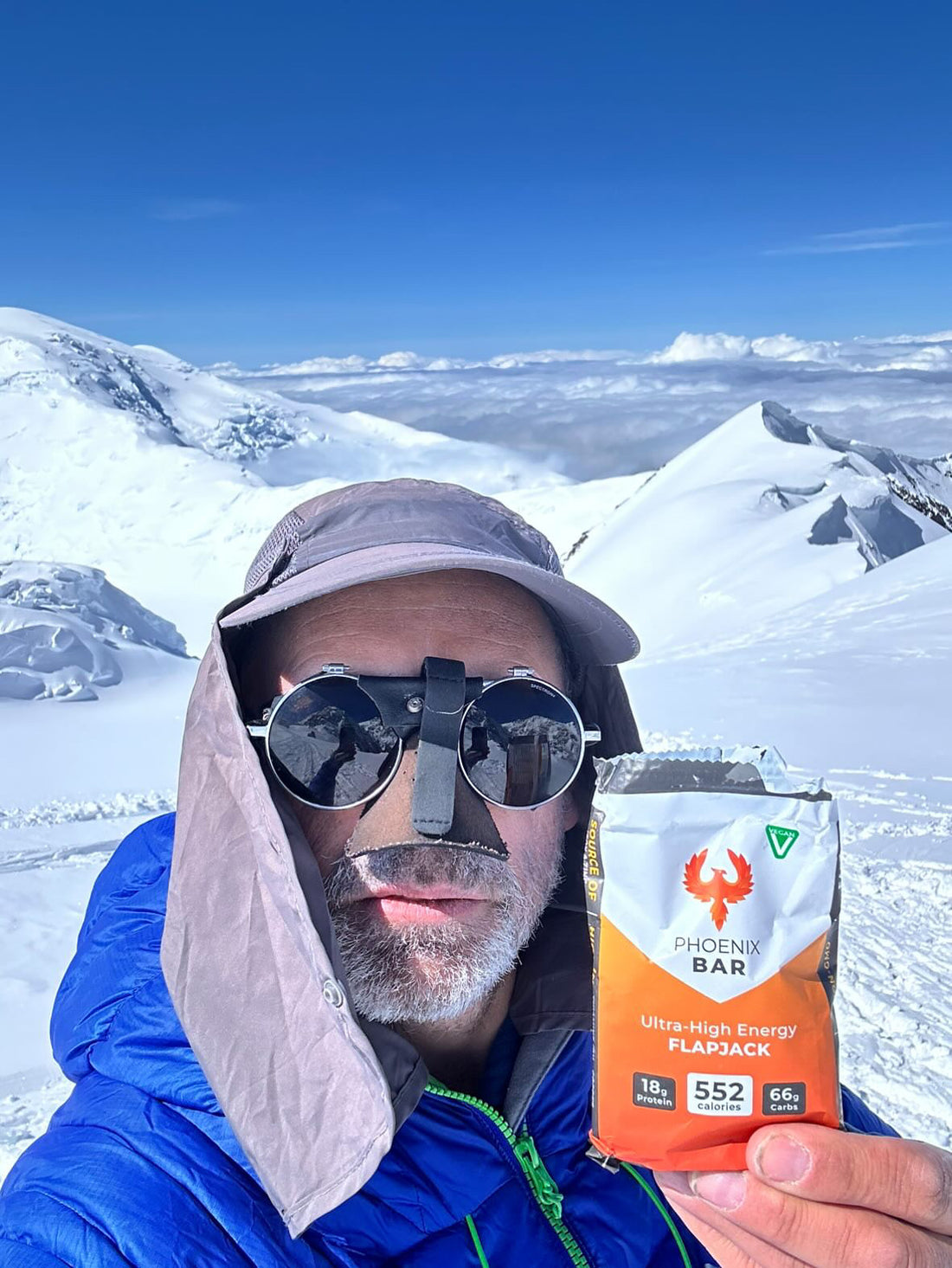
Big calories. Small bar.
Up to 557 calories in a compact, lightweight bar of only 120g, with up to 66g of carbs and 19g of protein. Eat it whole, break it into pieces over a few hours, or mix it with water or milk for porridge.
Easy to eat, easy to digest and not sickly sweet. Customers have eaten them at -45°C and through the heat of the Marathon des Sables, and they keep for up to 2 years, so they work on a mountain, on a night shift, or at home on days when eating enough feels hard.
- 557 calories in only 120g (529 to 557 by flavour)
- 4.6 calories per gram
- 66g carbs per bar (up to)
- 19g protein per bar (up to)
