

Rucking Nutrition: How to Fuel Long Rucks, Loaded Carries, and Selection Prep
In this guide

Rucking burns two to three times the calories of walking. For short fitness rucks, you can ignore that. Once a ruck passes the two-hour mark, the calorie cost stops being something you can coast through. The longer the ruck, the heavier the pack, the worse the weather, and the more serious the training goal, the closer rucking nutrition gets to endurance or expedition nutrition.
This guide covers how to fuel rucks properly, from short conditioning sessions to multi-hour training rucks, selection prep tabbing, and all-day loaded carries. It addresses what most generic rucking food advice gets wrong: the calorie maths, the sweets fatigue problem, and why, past two hours, dense food such as nuts and high calorie bars does more for you than a pre-ruck banana.
In this guide
- Why rucking nutrition is different from walking and running
- The calorie maths of rucking at common pack weights
- The 2-hour line: when rucking nutrition changes entirely
- What most rucking nutrition advice gets wrong
- Why calorie density beats sugar content on long rucks
- Practical fuelling by ruck duration
- Selection prep and multi-day rucking nutrition
- How Phoenix Bars fit into a rucking fuel plan
- Common rucking nutrition mistakes
About this guide
 Written by James Frost, Founder of Flaming Phoenix. Phoenix Bars are used by UK military selection candidates, ruckers training for Special Forces selection, ultra-endurance athletes, and expedition teams across some of the most demanding loaded-carry environments on earth, from Antarctica to the Sahara.
For broader guidance on loaded endurance nutrition, see the Ultra-Endurance and Expedition Nutrition Guide. For practical guidance on using Phoenix Bars in the field, see How to Use Phoenix Bars.
Last updated: April 2026.
Why Rucking Nutrition Is Different
Rucking looks like walking. Nutritionally it behaves more like hiking under load or a slow trail run. The added weight, typically 15 to 45 pounds for fitness rucking and 45 to 80 pounds for military training, roughly doubles the calorie cost of covering the same distance. A 180 pound person walking at 4 mph burns around 240 to 280 calories per hour. The same person rucking with 35 pounds burns 450 to 600 calories per hour. With 50 pounds, 600 to 750. With 60 pounds on rough terrain, 800 to 900+.
That calorie burn is substantial, but it's not the only thing that makes rucking nutritionally distinct. Three factors separate rucking from other endurance activities:
Load compresses your stomach. A loaded pack changes your biomechanics and puts mechanical pressure on your gut. Many ruckers find that eating more than small amounts while moving causes nausea, cramping, or reflux. Drinking more will not fix it; the cause is the load pressing on your gut.
Blood is shunted to working muscles. Under load, digestion slows. Food sits heavier. Large meals before or during a ruck often don't get absorbed well and sit like a brick in your pack belt.
Pace is steady, so hunger signals stay quiet. Rucking doesn't feel intense enough to trigger the urgent fuelling instincts you'd get during a run. Many ruckers drift into significant calorie deficit without realising until the last mile, when their pace collapses and their mood tanks.
Under 60 minutes, you can ignore all three. Past two hours, they decide how the last mile goes.
The Calorie Maths of Rucking
Research from the US Army and applied sports science consistently puts rucking calorie burn in the following ranges, based on Pandolf equation modelling and real-world studies.
For a 180 lb person on level ground at 4 mph:
- 20 lb pack: 350 to 450 kcal per hour
- 35 lb pack: 450 to 600 kcal per hour
- 50 lb pack: 600 to 750 kcal per hour
- 65 lb pack: 750 to 900 kcal per hour
Add roughly 15 to 50 percent for uneven terrain, soft ground (mud, sand, snow), or significant elevation gain.
Plug those numbers into a 4-hour ruck with a 45 lb pack at moderate pace, on mixed UK terrain, and you're looking at 2,400 to 3,000 calories burned. An all-day 8-hour tab under the same load can exceed 5,000 calories. A multi-day selection-prep weekend doing back-to-back long rucks can total 10,000 to 15,000 calories across 48 hours.
Most humans can absorb 200 to 400 calories per hour while moving under load, which is below even light rucking burn rates. A calorie deficit during rucking is therefore structural, not optional. The question is how large that deficit gets, and whether it becomes large enough to compromise the ruck, the recovery, or both.
The 2-Hour Line
Rucking nutrition advice falls into two halves divided by the 2-hour mark.
Under 2 hours: hydrate properly, eat a normal meal 2 to 3 hours beforehand, maybe a banana or a gel midway if you're going hard. That's about all that matters. Your glycogen stores carry you through.
Over 2 hours: glycogen starts to run down. The calorie deficit starts to build. Blood sugar drops if you haven't been eating proactively. Pace slows, mental focus degrades, motivation drops. This is where fuelling strategy becomes performance strategy.
Most online rucking nutrition content treats rucking as a 60 to 90 minute activity. That's fine for fitness rucking. It's inadequate for selection prep, military-grade training, competitive rucking events, or anyone rucking to build endurance. If your rucks are getting longer, your fuelling needs to change, not scale.
What Most Rucking Nutrition Advice Gets Wrong
Having reviewed the dominant rucking nutrition content online, four patterns stand out.
Over-reliance on sweet carbs. Gummy bears, sports gels, gummy sweets, Swedish fish, Honey Stinger waffles. These work for 60 to 120 minutes. Past that, palate fatigue sets in and sweet foods become actively unpalatable. A nutrition plan built entirely on sugar will fail you on a 4-hour plus ruck.
Generic "pack a protein bar" advice. Most commercial protein bars are 180 to 250 calories in 50 to 60 grams. They're fine for a quick snack but deliver poor calorie density for what you're actually burning. A 220 kcal bar every 90 minutes across a 6-hour ruck provides roughly 900 calories while you've burned 3,500+. Our guide to the best energy bars for hiking compares the denser options.
Treating rucking like running. Runners absorb carbs at 60 to 90 g per hour via gels and liquid. Ruckers under load cannot process that much, and most ruckers don't want liquid carbs anyway. The running blueprint doesn't transfer cleanly.
Ignoring cold and wet conditions. In the UK you're rucking in 4 to 12 degrees Celsius, in rain, for most of the year. Cold increases calorie burn, suppresses appetite, and makes handling food with gloved hands a real problem. Most US-origin rucking content skips this entirely.
Calorie Density: The Metric That Actually Matters
For rucks over 2 hours, the defining question isn't "what tastes good" but "how many usable calories can I carry for how much weight." You're already carrying a heavy pack. Every additional gram of food competes with water, kit, and layers.
Calorie density across common rucking food:
- Gels: 2.5 to 3.0 kcal per gram (mostly water)
- Gummy sweets: 3.5 kcal per gram
- Standard protein and energy bars: 3.5 to 4.5 kcal per gram
- Jerky: 4.0 to 4.5 kcal per gram
- Dried fruit: 2.5 to 3.0 kcal per gram
- Nuts and nut butters: 5.5 to 6.5 kcal per gram
- Phoenix Bars: up to 4.6 kcal per gram (up to 557 kcal in a compact, lightweight 120g bar)
Here is what that means in your pack. To carry 3,000 supplementary calories on a long ruck using gels alone requires around 1,200g of gel in your pack. Using Phoenix Bars, the same 3,000 calories weighs 650g. On a loaded ruck, 550g saved is over half a litre of water, a dry mid-layer, or a pair of dry socks. For the same sums on other trail foods, see our guide to the lightest high calorie food for backpacking.
This is why most experienced long-distance ruckers end up at a mix of nuts, dense bars, and occasional sweets rather than the sugar-led plan most rucking content recommends.
Practical Fuelling by Ruck Duration
Short rucks (under 90 minutes): eat a normal meal 2 hours beforehand, water only during, no fuelling required.
Medium rucks (90 minutes to 2 hours): eat 200 to 300 calories about 60 minutes in, either a gel, a banana, or a small bar. Water or electrolyte mix.
Long rucks (2 to 4 hours): aim for 200 to 300 calories per hour starting at hour one. Mix carb sources (one sweet, one not). Carry 30 to 50 percent more calories than you expect to eat. Hydrate with electrolytes.
All-day rucks (4 to 8 hours): aim for 250 to 400 calories per hour. Eat proactively on a schedule, typically every 30 to 45 minutes. Do not rely on sweet foods past hour three. Include at least one high-calorie, low-volume item specifically for the hour 4 to 6 window when appetite usually drops. Phoenix Bars, nut butter sachets, or dense flapjacks all work here.
Multi-day rucks and selection prep: treat nutrition as a 24-hour problem, not a ruck-window problem. Front-load calories at breakfast, eat a substantial recovery meal within 90 minutes of finishing, and sleep properly fed. The day-to-day cumulative deficit is what ends most selection candidates' attempts, not within-day hunger. For longer unweighted distance work, see our guide to long-distance walking nutrition.
Selection Prep: Rucking Nutrition at Volume
If you're training for UK military selection (P Company, AACC, PRMC, UKSF Selection) or equivalent US programmes, weekly rucking volume will climb above 50 miles. That volume, done at pace and under load, puts you in expedition-level calorie territory without an expedition's logistical support. For a full treatment of selection-period fuelling strategy, see our guide to nutrition for UK military selection.
Three things to get right:
Recovery between sessions. The rucker who finishes Friday's 10-miler still in calorie deficit will start Saturday's 20-miler underfuelled. Across a 12-week build, that compounds into injury risk and stagnating performance.
Sustainability of your fuelling plan. If your long-ruck plan relies on gels that cost £2 each, you'll abandon it by week four. The food you carry has to be affordable, palatable across dozens of uses, and stable through the conditions you train in.
Testing everything. The food that works at hour two of a training ruck may not work at hour six of a selection assessment in February rain. Test your fuel under realistic conditions, not on a flat 5k around a park.
How Phoenix Bars Fit Into a Rucking Fuel Plan
Phoenix Bars were designed for endurance and expedition use where calorie density, durability, and palatability all matter. The same characteristics make them well suited to long-duration rucking:
Up to 557 calories in a small, soft 120g bar. High calorie density means fewer grams of food in your pack for the same fuel. Particularly useful on long rucks where you're already near pack weight limits.
Soft, melt-in-the-mouth texture. Easy to eat on the move, one-handed, with gloves on. No chewing grind when you're fatigued. Can be broken into pieces and eaten in small amounts across an hour rather than in one sitting.
Stable in temperature extremes. Don't melt in summer heat, don't freeze solid in cold UK winter. Phoenix Bars have been used on South Pole expeditions at -45°C and across the Sahara during the Marathon des Sables.
Six neutral flavours. Vanilla, Cherry Bakewell, Chocolate, Salted Caramel, Ginger, and Apple & Cinnamon. Milder than sports bars, so they don't trigger sweet fatigue across long training blocks.
Can be turned into porridge. Adding water breaks a bar down into a calorie-dense porridge. See How to Use Phoenix Bars for the full method. Useful for recovery between training sessions in cold weather, or as a morning pre-ruck meal option that takes 60 seconds to prepare.
Phoenix Bars come into their own on the long sessions, the selection prep weekends, and the recovery periods between back-to-back tabbing days.
"I bought Phoenix Bars as I was looking for high-calorie, lightweight nutrition for military exercises and they were really good. The taste much better than I expected for something that's so nutritious."
Common Rucking Nutrition Mistakes
Not eating early enough. The most common mistake. Ruckers wait until they feel hungry or low, by which point they're already behind. Start fuelling at hour one.
Eating too much in one sitting. Under load, large amounts of food sit badly. Break it up. Small amounts every 30 to 45 minutes beats one large snack halfway through.
Sweet-only plans. Sugar is fine for the first two hours. Past that, you need variety. Plan to have at least one non-sweet food option in your pack for long rucks.
Ignoring cold-weather calorie burn. Rucking in the cold increases calorie expenditure by 10 to 30 percent depending on conditions. Most ruckers under-fuel in winter specifically because appetite is lower.
Skimping on pre-ruck dinner. Your glycogen stores are topped up the night before, not the morning of. A proper carb-rich dinner does more for a morning ruck than whatever you eat at breakfast.
Testing new food on an important day. Standard endurance rule. If you haven't eaten it on 10+ previous training rucks, don't bring it on a selection weekend or rucking event.
Frequently Asked Questions
How many calories should I eat per hour while rucking? On rucks over 2 hours, aim for 200 to 300 calories per hour at lower pack weights, and 300 to 400 at heavier weights or in cold weather. Most ruckers cannot absorb more than 400 per hour under load.
What should I eat before a long ruck? A carb-rich meal 2 to 3 hours beforehand. Porridge with honey and banana is the UK classic. Avoid high-fibre, high-fat, or unfamiliar foods pre-ruck.
Are protein bars good for rucking? Standard protein bars are fine for short rucks but typically under-deliver on calories for rucks over 3 hours. Look for bars with higher calorie content and lower reliance on sugar, or carry a mix of bars plus nuts and dried fruit.
How do I fuel during UK winter rucking? Expect 10 to 30 percent higher calorie burn than summer. Pre-unwrap food or use bars with easy-open packaging to handle with gloves. Soft-textured food beats anything that gets hard or frozen in cold conditions. Porridge in a flask works as a recovery meal too.
Can I use Phoenix Bars for rucking? Yes. They're particularly suited to rucks over 3 hours, selection prep sessions, and multi-day training weekends where calorie density matters.
What do military selection candidates eat during rucking? On issued training, soldiers use Operational Ration Pack components. On self-directed rucking prep, most selection candidates use a mix of energy bars, nut butter sachets, flapjacks, dried fruit, jerky, and increasingly calorie-dense bars designed for endurance use. See our guide to nutrition for UK military selection for detailed guidance.
Related guides
- Ultra-Endurance and Expedition Nutrition Guide: the broader framework for loaded endurance
- Nutrition for UK Military Selection: fuelling the specific demands of selection prep
- Hiking and Trekking Nutrition: unweighted multi-day walking
- Long-Distance Walking Nutrition: distance-focused rather than load-focused efforts
- Calorie-Dense Foods: the numbers behind calorie density
- How to Use Phoenix Bars: practical guidance including the porridge method
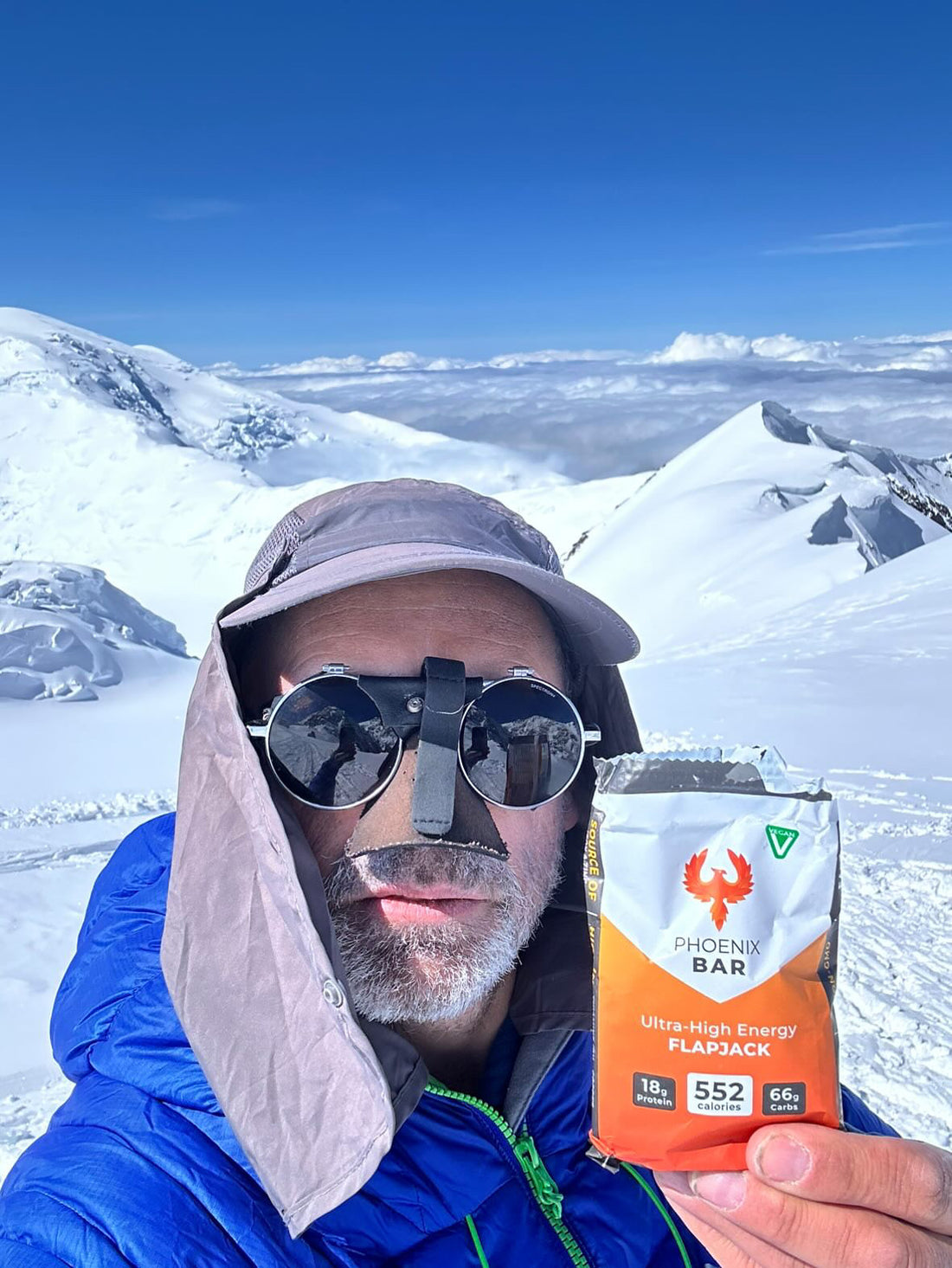
Big calories. Small bar.
Up to 557 calories in a compact, lightweight bar of only 120g, with up to 66g of carbs and 19g of protein. Eat it whole, break it into pieces over a few hours, or mix it with water or milk for porridge.
Easy to eat, easy to digest and not sickly sweet. Customers have eaten them at -45°C and through the heat of the Marathon des Sables, and they keep for up to 2 years, so they work on a mountain, on a night shift, or at home on days when eating enough feels hard.
- 557 calories in only 120g (529 to 557 by flavour)
- 4.6 calories per gram
- 66g carbs per bar (up to)
- 19g protein per bar (up to)
