
Lembas Bread: The Story, the Recipe and the Real-World Equivalent
Written by James, founder of Flaming Phoenix and the maker of Phoenix Bars. Updated August 2026.
Lembas bread is the elven waybread of J.R.R. Tolkien's The Lord of the Rings: a thin, golden travel cake made by the Elves of Lothlórien, famous for the claim that a single small bite is enough to sustain a grown traveller for a full day of hard work. It is not real, but it is arguably the most perfectly imagined piece of food design in fiction, and the questions people ask about it are surprisingly good ones. What would it be made of? How many calories would one cake need to hold? Could anything real ever do its job? This guide covers the story, the real foods that inspired it, the calorie maths, a vegan and gluten-free recipe you can bake this afternoon, and the closest thing you can actually put in a rucksack.
What is lembas bread?
In the books, lembas is the Elves' most treasured travel food. The name is Sindarin for waybread, and in Quenya it is called coimas, which translates as life-bread. The cakes are described as thin, baked light brown on the outside and the colour of cream inside, pleasant to eat and astonishingly sustaining. The Elves of Lothlórien send the Fellowship on their way with a supply of it, each cake wrapped in leaves of the golden mallorn tree, and as long as that wrapping stays unbroken the bread keeps fresh for a remarkably long time.
Two details do most of the work in the legend. The first is the claim, made when the Fellowship first receives it, that one small bite will keep a grown man on his feet through a long day's labour. The second is that the recipe is a guarded secret: the making of lembas belongs to the Elves alone, and they share it rarely and reluctantly. Tolkien also gives it a moral dimension. When Frodo and Sam offer it to Gollum, he cannot stomach it, gagging on it as though it were ash. Food that pure is intolerable to something that corrupted. And in one of the quiet, lovely details of the later chapters, lembas is said to feed the will as much as the body: it does not delight the appetite, it keeps you going when everything else has run out.
Is lembas bread real?
No. Lembas is fiction, the recipe was never written down even inside the fiction, and nothing sold anywhere is the real thing. But it did not come from nowhere, and the question of what it is based on has a genuinely interesting answer.
The leading real-world ancestor is hardtack, the rock-hard flour-and-water biscuit that fed sailors and soldiers for four centuries precisely because it refused to spoil. Tolkien knew this class of food personally: he served on the Western Front in the First World War, where British Army biscuit was a daily reality, and the idea of a compact, imperishable ration that keeps an exhausted soldier moving is written all over lembas. Where hardtack was joyless, lembas is hardtack perfected, which is exactly how Tolkien treats the comparison inside his own books: the men of Dale bake a plain waybread called cram, sustaining but dreary, and the Elves regard it with polite pity. Tolkien scholars have also long noted a quieter echo. Coimas means life-bread, Tolkien was a devout Catholic, and a sacred, sustaining bread given for a hard journey carries an unmistakable resonance, one he acknowledged in spirit even while insisting his stories were not allegory.
So the honest answer to "what is lembas bread based on" is: four hundred years of real expedition rations, elevated by a veteran who knew exactly what it felt like to need one.
How many calories would lembas bread have?
Here is where it gets fun, because this is our home ground: we spend our working lives trying to get as much energy into as little food as physics allows, and lembas cheerfully breaks physics.
A full day of hard walking with a load burns somewhere between 3,000 and 5,000 calories, and serious mountain days or ultramarathons can go well beyond that. Now look at the ceiling nature sets. The most energy-dense substance you can eat is pure fat, at 9 calories per gram; carbohydrate and protein hold 4. A small bite of food might weigh 5 grams, so even if lembas were somehow a bite of pure fat, it would deliver about 45 calories, roughly one per cent of that day's requirement. For a single thin cake, call it 50 grams, the absolute physical maximum is around 450 calories, and no palatable baked food gets anywhere near its theoretical ceiling. To do what the Elves claim, lembas would need to be about a hundred times more energy-dense than the laws of chemistry allow. It is, in the most literal sense, magic.
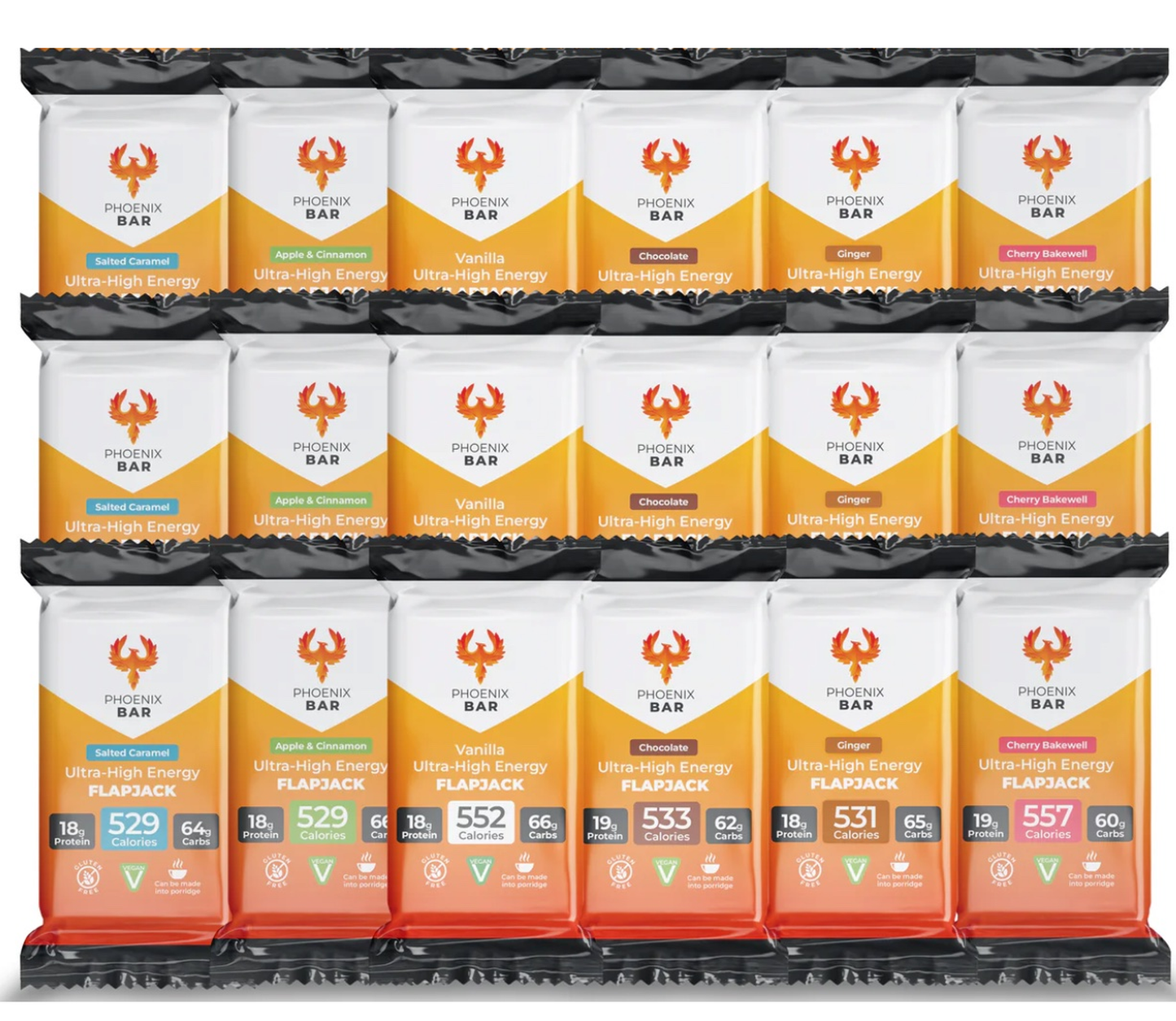
What does the real ceiling look like? The best real-world travel foods, the ones built for expeditions rather than snack aisles, reach roughly 4.5 to 5 calories per gram by combining fats, slow carbohydrates and protein in a form that stays edible when you are tired. That is the honest modern answer to the lembas problem, and it is the entire design brief behind high calorie bars: our own bar packs 557 calories into 120 grams, which works out at 4.64 calories per gram, about as close to lembas as the real world currently gets. If you want to see how the whole category stacks up on that measure, we have ranked the highest calorie bars in the UK by exactly this number.

Phoenix Bars: Up to 557 Calories Per Bar
Highly compact, low-volume, calorie-dense bars. Soft, easy to eat whole or as a warm porridge. Vegan, gluten-free and contain up to 66g of carbohydrates, 19g of protein & 8 vitamins & minerals.
A vegan, gluten-free lembas bread recipe
Tolkien never specifies the recipe, which means every lembas bake is an act of interpretation. The fan tradition has settled on a shortbread-style cake, buttery, lightly sweet, scored with a cross or a leaf pattern, and that tradition is right: it matches the books' description of a thin, cream-centred, faintly sweet cake far better than actual bread does. Ours departs from tradition in one way. The Elves never mention dairy or wheat, and we make everything vegan and gluten free, so this version is both. If you get the baking bug afterwards, our guide to how to make your own high calorie barsapplies the same thinking to something you would genuinely carry up a hill.
Makes about 10 cakes.
- 150g gluten-free oat flour (certified gluten free matters here; you can blitz certified GF oats to a fine flour)
- 100g ground almonds
- 100g cold vegan block butter, cubed
- 60ml maple syrup
- 1 teaspoon vanilla extract
- Finely grated zest of half a lemon, or half a teaspoon of ground cinnamon if you prefer the classic fan flavour
- Quarter teaspoon fine sea salt
- Heat the oven to 160C fan and line a baking tray with parchment.
- Rub the vegan butter into the oat flour, almonds and salt until the mixture looks like damp sand.
- Stir in the maple syrup, vanilla and zest, then press together into a firm dough. If it feels crumbly, add cold water half a teaspoon at a time.
- Chill for 20 minutes, then roll out to about 1cm thick between two sheets of parchment.
- Cut into squares roughly 8cm across and score each one corner to corner with the back of a knife, the traditional cross, or freehand a leaf vein if you are feeling elvish.
- Bake for 15 to 18 minutes until pale gold at the edges. They will feel soft; leave them on the tray for ten minutes and they firm into a tender, shortbread-like cake.
Wrap each cooled cake in a square of baking parchment folded like a leaf and tied with string, which is as close to mallorn as Surrey gets. They keep for about a week in an airtight tin. Each cake comes out at roughly 200 calories, which makes for a lovely elevenses and an important piece of honesty: a genuinely pleasant homemade lembas is a biscuit, not a day's rations. The gap between those two things is the entire story of expedition food.
Why do the hobbits eat so much lembas?
This question exists because of one of the best jokes in the films. Moments after the Fellowship is told that one small bite will fill the stomach of a grown man, Pippin admits to having eaten four entire cakes. The book's answer is more interesting than the gag. Tolkien writes that lembas sustains endurance rather than satisfying desire: it keeps the body and the will going, but it does not give the comfort or pleasure of a real meal. The hobbits, far from home and living on it for weeks, eat plenty of it and still daydream about proper food, because being fuelled and being fed are not quite the same thing. Anyone who has spent day six of a long expedition fantasising about a Sunday roast while chewing another ration will recognise the distinction instantly. It is one of the most quietly accurate pieces of sports nutrition ever written by a man who never heard the phrase.
The rest of the Middle-earth menu
Lembas is the star, but Tolkien built a whole larder around it, and the contrasts are half the point. Cram, the waybread of Dale and Esgaroth, is the mortal attempt at the same idea: it keeps you alive and that is the kindest thing anyone in the books can say about it. Beorn, the bear-man of The Hobbit, sends Bilbo and the dwarves off with twice-baked honey cakes that keep well on the road, probably the most bakeable food in the whole legendarium. And then there is the hobbit eating schedule, the opposite philosophy to lembas entirely. The books tell us hobbits were fond of six meals a day when they could get them, and the films stretched the joke into the now-famous roll call of breakfast, second breakfast, elevenses, luncheon, afternoon tea, dinner and supper. Terry Pratchett later completed the joke from the other direction with Discworld's dwarf bread, a ration so inedible that its true nourishment lies in inspiring you to find literally anything else to eat instead. Between elven perfection, mortal adequacy, hobbit abundance and dwarfish deterrence, Middle-earth accidentally maps the entire real-world design space of travel food.
Ultra runners basically eat like hobbits
Here is the twist: modern endurance science sided with the hobbits. The evidence on long efforts is clear that little and often beats big and rare, with most guidance landing around 60 to 90 grams of carbohydrate per hour, eaten before you feel you need it. Second breakfast and elevenses are not a joke at mile 40 of an ultra; they are the fuelling plan. The practical challenge is that appetite fades exactly when the need is greatest, which is why what you carry matters so much: it has to be small, dense and easy to get down when you are tired. That problem is precisely what we built our bars around, and if you are choosing your own trail larder, we have written detailed, honest guides to the best energy bars for hiking and the best energy bars for ultra running, including where ours genuinely fits and where it does not.
The closest real-world thing to lembas bread
Strip away the magic and lembas is a specification: as much energy as possible in something small and light, that keeps for a long time without refrigeration, that stays pleasant to eat when you are exhausted, and that quietly covers more than just quick sugar. Nothing real meets the whole spec, but that specification is exactly what we chase at Phoenix. Our bars are vegan, gluten free, 120 grams, and built to carry maximum calories in minimum volume, which is why they get carried on multi-day endurance events including the Marathon des Sables, and why customers rate them 4.9 out of 5 across more than 380 reviews. A bar that can stand in for a full meal when stopping is not an option is the nearest thing the real world has to waybread, and if that is the job you need doing, our guide to the best meal replacement bars in the UK compares every serious option, or you can go straight to the source and try Phoenix Barsfor yourself. One small bite will not fill you for a day. Four or five proper bites of the right thing genuinely might get you over the next ridge, though, and unlike the Elves, we will happily tell you what's in it.
Lembas bread FAQ
What is lembas bread made of? Tolkien never says: the recipe is a guarded elven secret even within the story. The books describe thin cakes, light brown outside and cream-coloured inside, faintly sweet and extraordinarily sustaining. Fan bakers have settled on shortbread-style recipes as the closest match to that description.
Does lembas bread exist in real life? No. Its closest real inspirations are historical travel rations, above all hardtack, the long-keeping ship's biscuit Tolkien would have known from his First World War service. The closest modern equivalents are calorie-dense expedition bars built for the same job.
How many calories would lembas bread need? To sustain an adult through a day of hard travel on one bite, a lembas cake would need to be roughly a hundred times more energy-dense than pure fat, which is physically impossible. The densest real travel foods top out around 4.5 to 5 calories per gram.
What does lembas bread taste like? The books describe it as pleasant and lightly sweet, more agreeable than the plain waybread of Men, though it sustains the traveller rather than delighting them. Most fan recipes land somewhere between shortbread and a soft honey biscuit.
Why can't Gollum eat lembas? In The Two Towers, Gollum tries it and chokes it down like dust and ashes. Tolkien's implication is that food this pure and elven is unbearable to a creature as corrupted as Gollum has become. It is one of the story's neatest ways of measuring how far gone he is.
What is the closest real food to lembas bread? For the historical spirit, hardtack and pemmican. For the actual job description, a modern high-calorie bar: small, light, long-keeping and dense enough that a few bites genuinely carry you for hours.
Lembas is a fictional food from the works of J.R.R. Tolkien. Flaming Phoenix has no affiliation with the Tolkien Estate or Middle-earth Enterprises, and nothing on this page is official or endorsed. It is written by one food obsessive in honest admiration of another.


Flaming Phoenix



Contact Us
Declare withdrawal
Please fill out the following form to declare your withdrawal from the contract.

