

Youth Expedition Food: How to Fuel a First Multi-Day Expedition
In diesem Leitfaden

A young person on a first multi-day expedition needs food that is light to carry, simple to prepare with minimal equipment, and easy to eat even when they are tired and not very hungry. The most common mistake is not what teenagers pack, but how little they actually eat once they are cold, tired and far from home. This guide explains how much energy a multi-day expedition really demands, how to keep food light without going short, and how to make sure a young person eats enough to stay warm, think clearly and enjoy it.
The real challenge most guides miss
Most expedition food advice is simply a list of meals. The harder problem, and the one expedition leaders see every year, is that young people often under-eat on their first trip. Unfamiliar food, an early start, nerves, and the way a long day on the move dulls appetite all combine, and meals get skipped. On a physically demanding expedition that is not a small thing. Under-fuelling shows up as flagging energy on the afternoon climbs, feeling the cold more at camp, low mood, and the small navigational mistakes that come from a tired brain. So forget a calorie target and pack food a young person will actually eat, in a form that is easy to get down even when they do not feel like eating.
How much energy a multi-day expedition needs
A multi-day expedition is far more demanding than a normal day, and carrying a pack over rough ground for hours uses considerably more energy than usual, often roughly double. So pack more food than for a normal day, weight it toward the moments a young person will actually eat, and make sure nothing gets skipped. In practice that means steady fuelling rather than three big meals: a solid breakfast, food that can be grazed while walking, a proper hot meal in the evening for warmth and morale, and snacks within easy reach. The same principle underpins all hiking and trekking nutrition and longer multi-day backpacking.
Why weight, and calorie density, matter most
Every gram of food has to be carried, so the most useful property of expedition food is how much energy it gives per gram. Food that provides more energy for less weight lets a young person carry enough fuel without an unmanageable pack, especially on the longer silver and gold expeditions where food is carried for several days.
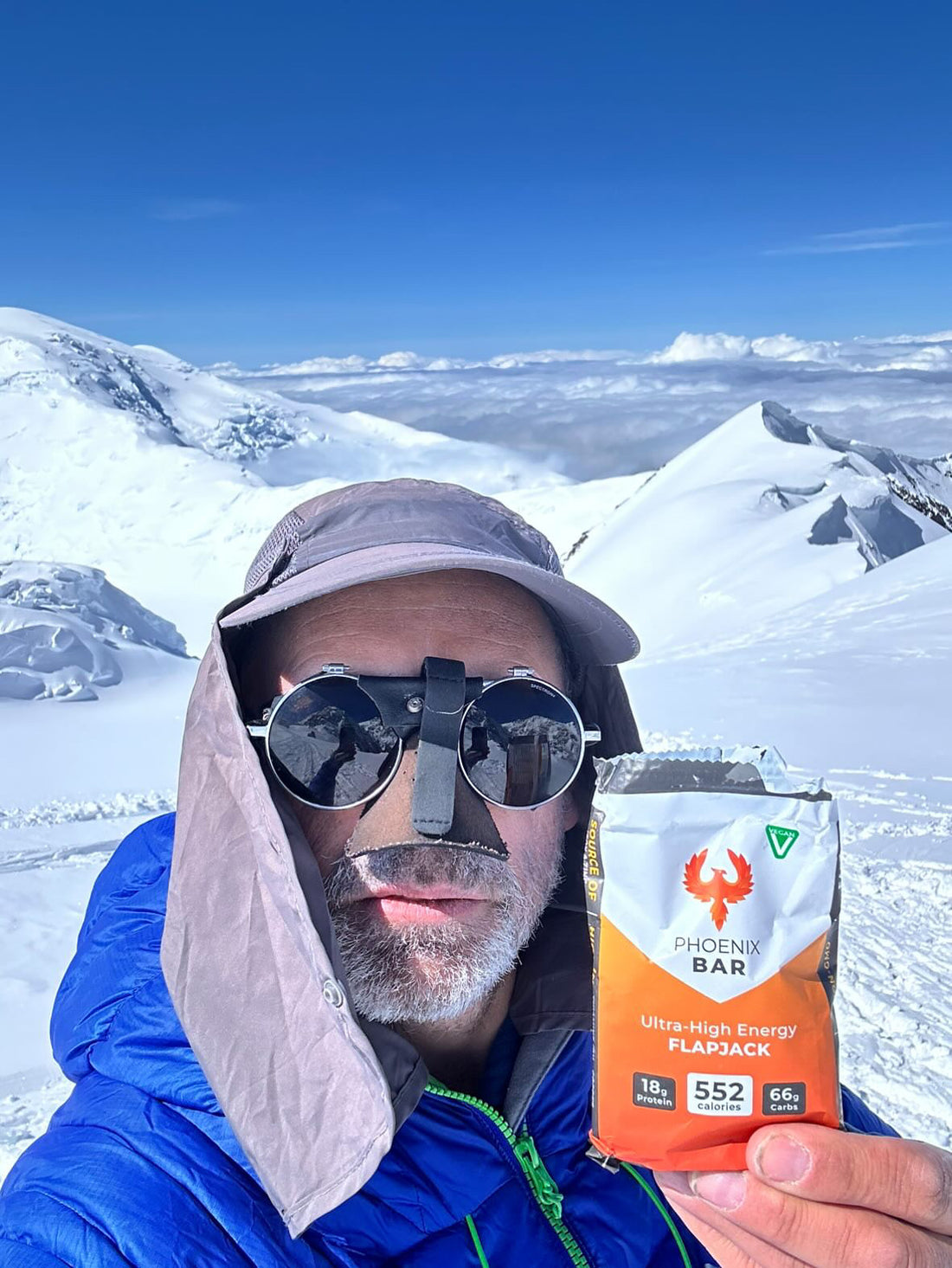
This is where a lot of ordinary camping food falls down. Tins are heavy, and a pasta dinner plus sauce plus snacks adds up quickly. The principle behind packing light is explained in more depth in this guide to calorie-dense foods, but the short version is that dried and concentrated foods carry far more energy per gram than anything wet or tinned. As a reference point, a single high-calorie Phoenix Bar provides up to 557 calories in 120 grams, around 4.6 calories per gram, which is a simple way to add reliable energy for very little weight.
Building the day
Breakfast. Something warm and quick sets up the morning. Porridge is the classic choice because oats keep you going through the morning, and powdered milk keeps it light. If a young person would rather not cook first thing, a bar or a pain au chocolat eaten in the tent works just as well.
Lunch. This is usually eaten on the move, so it should need no cooking. Wraps and pittas travel better than sliced bread, filled with hard cheese, nut butter, or a tuna or chicken pouch. Pick food that survives being squashed in a rucksack.
Dinner. The evening meal is the one that warms everyone up and lifts morale after a long day. Pasta, rice or couscous with a sachet sauce is simple and filling, and a boil-in-the-bag meal is the easy option where budget allows. A warm pudding or a hot chocolate lifts spirits on a cold night.
Snacks. Steady grazing between meals is often where young people take on most of their energy, because it needs no stopping or cooking. Nuts, dried fruit, flapjacks and chocolate that does not melt all work well, and our ranking of the best energy bars for expeditions compares bars by calories per gram. Keep them in a hip pocket so they actually get eaten rather than left in the pack.
When a young person will not eat
If a teenager goes off their food on expedition, the answer is variety, familiarity and ease, not pressure. Pack a few things they already know they like, keep snacks constantly within reach so grazing is effortless, and lean on foods that are easy to eat when appetite is low rather than meals that take effort to prepare and chew.
Parents and leaders can plan for this before the trip. The broader approach is covered in what to eat when appetite is low, but on expedition specifically, avoid relying on one big evening meal a tired young person has to cook, because that is the meal most likely to be picked at and abandoned. Softer, simpler foods tend to go down when a dense meal will not. A bar that can be eaten as it is, or stirred into water to make a high-calorie porridge, gives a tired young person an easy way to take on real energy without much effort. The method is set out in how to make a Phoenix Bar into porridge.
Vegan, vegetarian and gluten-free
Dietary needs are common on youth expeditions, and they should never mean going short on energy. Many boil-in-the-bag ranges now offer vegan and gluten-free options, and a lot of snacks are naturally suitable. Phoenix Bars are both vegan and gluten-free, which makes them a straightforward way to cover a young person who cannot eat standard camp food without packing something separate for them.
A simple way to pack it
The approach experienced leaders recommend is to split food into one waterproof bag per day, labelled, and shared across the group so no one carries everything. Plan each day with a breakfast, grazing food for the move, an evening meal and snacks, then add a little extra simple food as a buffer in case a meal is skipped or the day runs long. The same packing discipline applies to any wild camping trip.
For schools, groups and expedition leaders
If you are organising food for a group rather than one young person, the priorities shift toward simplicity, dietary coverage and predictable energy across a mix of eaters. Our high calorie bars come in bundles suited to this, and we can arrange bulk supply for schools, groups and expedition providers. Get in touch through the contact page to discuss group pricing.
Where Phoenix Bars fit
Most of a young person's pack will and should be ordinary supermarket food. Phoenix Bars cover the easy-to-eat slot: vegan and gluten-free, up to 557 calories in a 120 gram bar, a shelf life of up to two years so a spare can live in the pack, and the option to eat them as a bar or make them into porridge with water when a young person is too tired to face a full meal. The Starter bundle is a sensible way to try them before a first expedition, and the Essential bundle suits a longer trip.
Frequently asked questions
How much should a young person eat on a multi-day expedition? More than on a normal day. A multi-day expedition is physically demanding, so the practical aim is to pack more food than usual, spread across breakfast, grazing food, an evening meal and snacks, and to make sure meals are not skipped. Aim for enough to stay warm and alert; there is no exact figure to hit.
What food is best for a first expedition? Food that is light, needs little or no cooking, survives being squashed, and is easy to eat when tired. In practice that means porridge or a bar for breakfast, wraps or pittas for lunch on the move, a simple pasta or rice dinner, and accessible snacks such as nuts, dried fruit and flapjacks.
What if a teenager will not eat camp food? Pack familiar foods they already like, keep snacks within easy reach so grazing is effortless, and rely on easy-to-eat foods rather than meals that take effort when appetite is low. Softer or simpler foods, including a bar or a porridge made from one, often go down when a heavy cooked meal will not.
Is dehydrated or wet food better for a youth expedition? Wet boil-in-the-bag meals are heavier but pre-hydrated and often taste better, which suits shorter expeditions. Dehydrated and freeze-dried meals are lighter and pack smaller, so they suit longer expeditions where food is carried for several days. Many groups mix the two.
How do you keep expedition food light? Avoid tins and anything wet you do not need to carry, and choose dried and concentrated foods that provide more energy per gram. Sharing group items like sauces, packing per day, and including a few high-energy, low-weight items keeps total pack weight manageable.
Written by James Frost, founder of Flaming Phoenix. James developed Phoenix Bars after more than 150 conversations with people who struggle to eat enough or to fuel long days outdoors, and has supplied bars to ultra-endurance athletes and expedition teams. Read more on the my story page.
Viele Kalorien. Kleiner Riegel.
Bis zu 557 Kalorien in einem kompakten, leichten Riegel von nur 120 g, mit bis zu 66 g Kohlenhydraten und 19 g Protein. Im Ganzen essen, über ein paar Stunden in Stücken essen oder mit Wasser oder Milch zu Porridge verrühren.
Leicht zu essen, leicht verdaulich und nicht zu süß. Kunden haben sie bei -45 °C und in der Hitze des Marathon des Sables gegessen, und sie sind bis zu zwei Jahre haltbar: für die Berge, die Nachtschicht oder zu Hause, an Tagen, an denen genug zu essen schwerfällt.
- 557 Kalorien in nur 120 g (529 bis 557 je nach Sorte)
- 4,6 Kalorien pro Gramm
- 66g Kohlenhydrate pro Riegel (bis zu)
- 19g Protein pro Riegel (bis zu)
Widerruf erklären
Füllen Sie das folgende Formular aus, um Ihre Widerrufserklärung abzugeben.

