
High-Calorie Food for Elderly People with Low Appetite
About This Guide
Many older adults struggle to eat enough to maintain a healthy weight.
Appetite often decreases with age, and factors like medication side effects, dental difficulties, fatigue, and reduced mobility can make eating even harder. Over time, this can lead to unintentional weight loss, loss of muscle mass, and increased vulnerability to falls, fractures, and illness.
This guide focuses specifically on practical approaches to maintaining calorie intake for older adults when appetite is limited and normal meals feel difficult.
Rather than focusing on traditional meal planning, it explores approaches that many people find easier to manage, including:
- choosing foods that deliver more calories in smaller portions
- adapting texture and preparation to make eating less effortful
- using calorie-dense options to supplement rather than replace meals
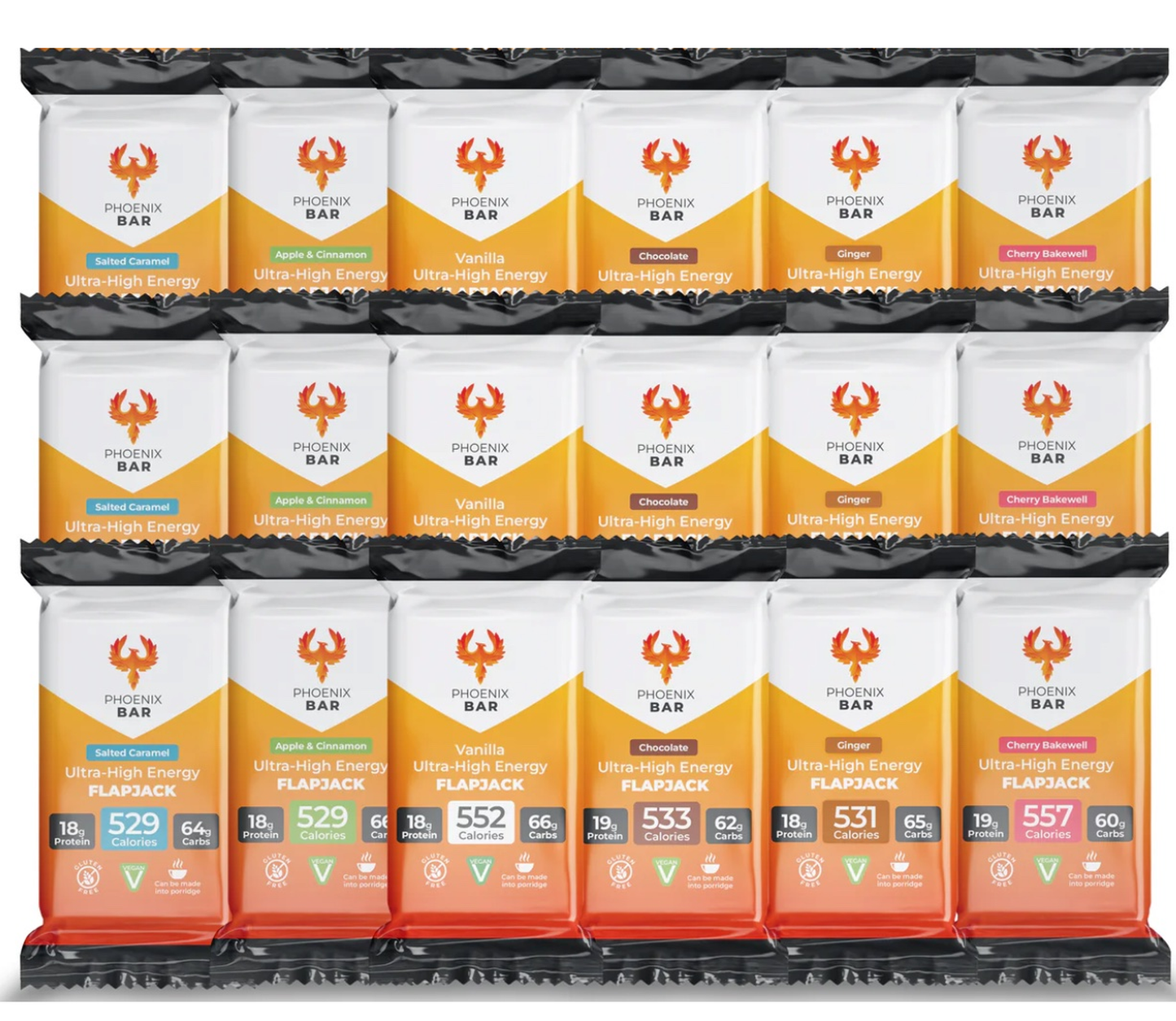
It also explains how some people use Phoenix Bars, compact 557-calorie flapjacks originally developed for extreme endurance expeditions, to help maintain calorie intake when eating feels difficult.
This guide is informational and should not replace advice from a doctor, dietitian, or medical professional.
Last updated: March 2026
Contents
- Why eating often becomes harder with age
- Common eating challenges for older adults
- What makes food easier to eat when appetite is low
- Practical strategies to increase calorie intake
- Why calorie density matters for older adults
- When compact foods can help
- How Phoenix Bars can be used when appetite is low
- Practical suggestions for daily use
- For family members and carers
- Frequently asked questions
- Experiences from people managing low appetite
- Related guides
Why Eating Often Becomes Harder with Age
Appetite naturally declines as we age. Research suggests calorie intake can drop by as much as 500–700 calories per day between young adulthood and later life.
This isn't usually a conscious choice. The body's hunger signals become weaker, portions feel sufficient more quickly, and the physical and mental effort involved in shopping, preparing, and eating food increases.
For many older adults, the result is a gradual decline in calorie intake that leads to weight loss — even when the body still needs those calories to maintain muscle mass, immune function, and energy.
If weight loss has become noticeable, see our broader guide to unintentional weight loss for additional strategies.
Common Eating Challenges for Older Adults
Although everyone's experience is different, several challenges are frequently reported among older adults.
- Feeling full very quickly, even after a few bites
- Medications that suppress appetite or alter how food tastes
- Dental problems, dentures, or mouth soreness that make chewing painful
- Fatigue that makes cooking and meal preparation difficult
- Reduced mobility that makes shopping harder
- Eating alone, which can reduce motivation to prepare full meals
- Chronic conditions that affect digestion or nutrient absorption
These factors compound over time. What begins as a slight reduction in appetite can gradually become a pattern of consistently undereating.
What Makes Food Easier to Eat When Appetite Is Low
When appetite is limited, certain food characteristics can make eating feel more manageable.
Many older adults find it helpful to choose foods that are:
- soft and easy to chew
- small in portion but high in calories
- not sickly sweet or overwhelming in flavour
- easy to prepare or ready to eat
- suitable for eating gradually rather than all at once
Because appetite can come and go unpredictably, keeping simple, ready-to-eat foods nearby can help. When hunger briefly returns, having something available makes it easier to take advantage of those moments.
Phoenix Bars: up to 557 calories per bar, £4.99. Buy Phoenix Bars
Practical Strategies to Increase Calorie Intake
Several approaches can help older adults maintain calorie intake without relying on larger meals.
Eating smaller portions more frequently can sometimes feel more manageable than three full meals. Five or six small snacks spread across the day can deliver the same calories with less effort.
Adding calorie-dense ingredients to existing meals is another effective strategy. Drizzling olive oil over vegetables, stirring nut butter into porridge, using full-fat dairy instead of low-fat alternatives, and adding cheese to soups or pasta can all increase calorie content without increasing portion size.
Choosing calorie-dense snacks between meals can also help. Foods like nuts, cheese, avocado, and calorie-dense barsprovide meaningful energy in a small, manageable format.
Why Calorie Density Matters for Older Adults
Calorie density refers to how many calories a food delivers per gram. A calorie-dense food provides more energy in a smaller portion — which is exactly what's needed when appetite is limited and larger meals feel impossible.
For context: a standard slice of toast delivers around 80 calories. A tablespoon of peanut butter adds around 95. A single Phoenix Bar delivers up to 557 calories in a compact, soft format — the equivalent of a small meal, without needing to cook or prepare anything.
When the goal is simply to get enough calories in, calorie density is the most important characteristic of the food you choose.

Phoenix Bars: Up to 557 Calories Per Bar
Soft, easy to eat whole or as a warm porridge. Low volume, two-year shelf life.
When Compact Foods Can Help
Preparing full meals is not always realistic for older adults, particularly on days when energy is low or when eating alone reduces motivation to cook.
In these situations, compact foods can help bridge gaps in calorie intake.
Some people prefer foods that can be eaten gradually throughout the day rather than sitting down for a formal meal. Others prefer snacks that require no preparation and can be eaten whenever appetite briefly returns.
Foods that provide substantial calories in small portions can be particularly useful in these situations — not as a replacement for meals, but as a practical way to increase total calorie intake when meals alone aren't enough.
How Phoenix Bars Can Be Used When Appetite Is Low
Phoenix Bars were originally developed for extreme endurance athletes and expedition teams who need maximum calories in minimum weight and volume. The same qualities that make them effective in those environments make them practical for older adults managing low appetite.
Each bar delivers up to 557 calories, 66g of carbohydrates, and 19g of protein. They are soft in texture, easy to chew, and can be broken into smaller pieces to eat gradually throughout the day. They are not sickly sweet, which matters when appetite is already fragile.
Critically, Phoenix Bars can be mixed with hot water or milk to make a warm, nutritious porridge. For older adults who find solid food difficult — whether due to dental issues, fatigue, or simply not feeling hungry — the porridge format delivers the same calories in a form that can feel much easier to manage. For more on this, see how people use Phoenix Bars in practice.
Phoenix Bars are vegan, gluten-free, and made from natural ingredients including oats, coconut oil, and plant-based protein. They have a two-year shelf life, so they can be kept in a cupboard and used whenever needed — there is no urgency to consume them quickly.
Because each full bar contains over 550 calories, even eating half a bar provides more calories than many typical snacks or light meals.
Practical Suggestions for Daily Use
Morning: Half a bar mixed into porridge at breakfast adds approximately 275 calories to the morning meal without significantly changing the portion size.
Afternoon: A whole bar broken into small pieces and eaten gradually across the afternoon provides a steady calorie intake without requiring a formal meal.
Evening: A bar made into a warm porridge in the evening provides a comforting, easy-to-eat option on days when cooking a full dinner is not realistic.
Throughout the day: Keeping a bar broken into chunks in a small container nearby means calories are always within reach when appetite briefly returns.
For Family Members and Carers
If you are reading this on behalf of a parent, grandparent, or someone you care for, Phoenix Bars can be a simple addition to their routine. They do not require cooking, they are soft enough to eat without difficulty, and they store for up to two years in a cupboard.
Many of our customers order on behalf of a family member. You can set up a recurring subscription so the bars arrive automatically on a schedule — one less thing for anyone to think about or manage.
If you are unsure whether Phoenix Bars would be suitable for your relative's situation, feel free to contact me directly. I am always happy to talk it through.
Frequently Asked Questions
Why do older adults lose appetite?
Appetite naturally declines with age due to weaker hunger signals, medication side effects, dental difficulties, reduced mobility, and changes in taste and smell. Chronic conditions and eating alone can also contribute.
What foods are best for elderly people with low appetite?
Foods that are calorie-dense, soft, easy to prepare, and not overwhelming in portion size are often the most practical. Options include nut butters, full-fat dairy, avocados, and compact high-calorie foods like Phoenix Bars.
How can you help an elderly person gain weight?
Focusing on calorie-dense foods in smaller, more frequent portions is generally more effective than trying to increase meal sizes. Adding calorie-rich ingredients to existing meals and keeping ready-to-eat snacks nearby can also help.
Can Phoenix Bars be made into porridge?
Yes. Adding hot water or milk to a Phoenix Bar creates a warm, soft porridge with up to 557 calories. This can be easier to eat for people who find solid food difficult to manage.
How many calories does an older adult need?
Individual needs vary depending on weight, activity level, and health conditions. As a general guide, most older adults need at least 1,600–2,000 calories per day. If unintentional weight loss is occurring, calorie intake may need to be higher. A doctor or dietitian can provide personalised guidance.
How People Use Phoenix Bars When Eating Feels Difficult
"The Phoenix Bar I purchased was absolutely lovely and digested so easily. It gave me a lot of energy on a day where I was very tired."
"I made it into a porridge — easy to crumble, very tasty and filling. I did use milk but will try it with water next time around."
Related Guides
You may also find these guides helpful:
- Low Appetite & Difficulty Eating Enough Calories — understanding why appetite drops and what helps
- Calorie-Dense Foods: What They Are and When They Help — a full overview of calorie density
- How To Use Phoenix Bars — practical guidance including the porridge method
If you have any questions about using Phoenix Bars for an elderly relative or someone with low appetite, contact me directly - I am always happy to help.
James Frost
Founder, Flaming Phoenix
07990 519422


Flaming Phoenix



Contact Us
Widerruf erklären
Füllen Sie das folgende Formular aus, um Ihre Widerrufserklärung abzugeben.

