

Expedition Kit List: What to Pack When There's No Shop for Two Weeks
In this guide

Quick answer: An expedition kit list is a multi-day hiking list with five extra layers bolted on: environment-specific systems for cold, heat or altitude, communications that work beyond phone signal, a power strategy, a repair kit, and the paperwork. Underneath those sits the one principle that separates expedition packing from holiday packing: nothing can fail unfixably, because there is no shop, no swap and no quick way home. And running through all of it is the food problem, since at 800 grams per day, two unsupported weeks means carrying over 11 kilograms of eating, which is why calorie density stops being a preference and becomes the plan.
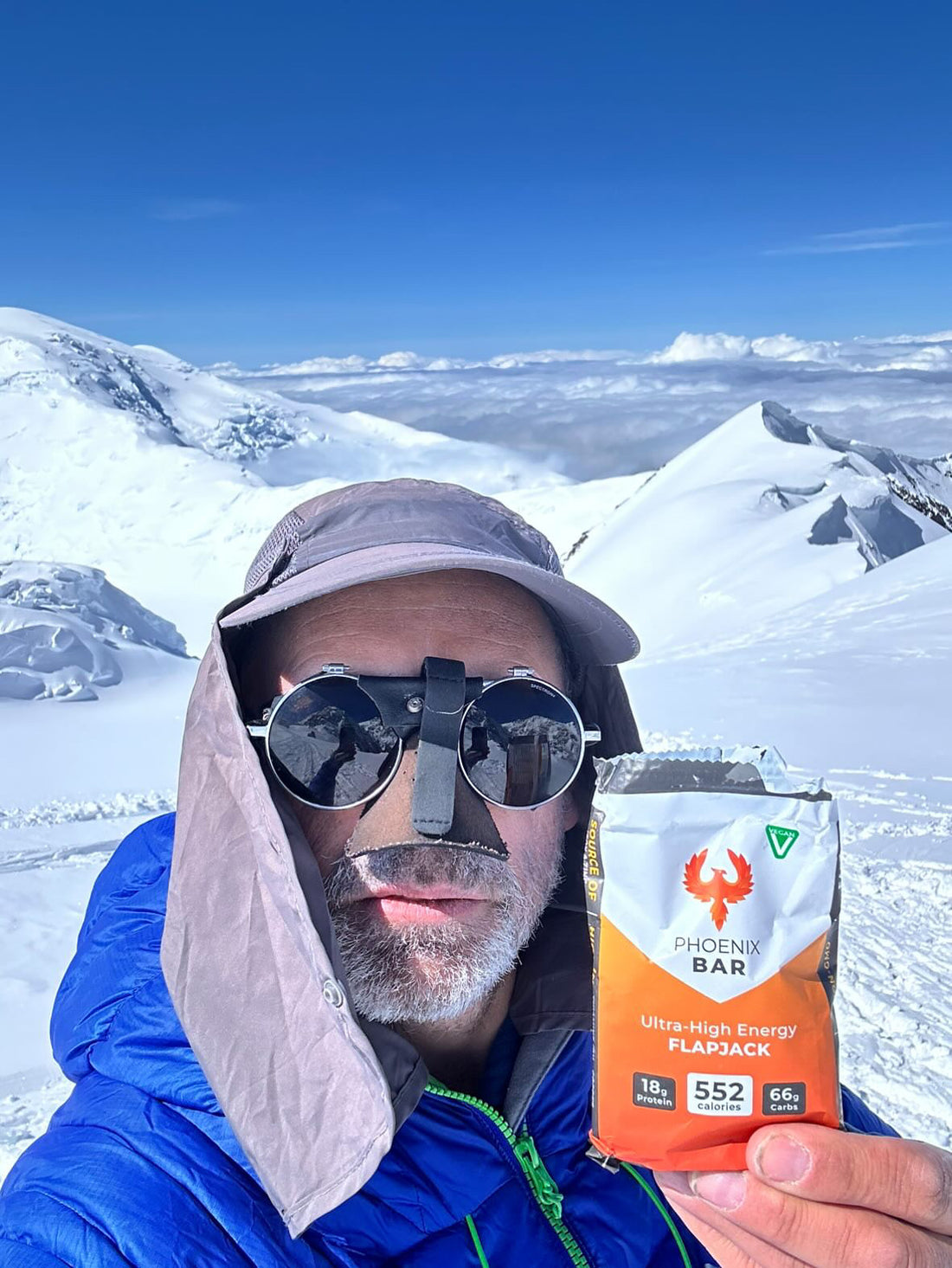
A note on the word expedition: if you're packing for a DofE expedition, follow the award's official kit list and your leader's word, that's a different job to this page. This list is for the grown-up version: remote treks, unsupported crossings, charity challenges, polar training weekends, jungle and desert trips, fieldwork seasons, the fortnight-plus adventures where you carry your world. It's built from an unusual seat: our high calorie protein bars have been carried to the summit of Everest, across the Marathon des Sables and to the South Pole, and years of kit conversations with the people doing the carrying are distilled here.
The expedition principle: robust beats light, and critical means redundant
On a weekend hike, a snapped pole or a dead lighter is a story. On day nine of nineteen, it's the trip. So expedition packing inverts one hiking instinct: where the multi-day kit list chases grams, expeditions chase failure tolerance, and the grams follow. In practice that means two rules. Critical systems travel with a backup: two ways to make fire, two ways to light the dark, two ways to purify water, two ways to navigate. And everything else must be fixable with what's in the repair pouch. Groups get to share the load, one stove per pair, one big first aid kit, one repair kit, which is the quiet logistical advantage of not going alone.
The core
The base of the pack is the standard multi-day setup and lives in full on the master kit list: pack (60 to 80 litres at expedition scale), shelter, sleep system rated honestly for the coldest night not the average one, layered clothing, cooking kit, water treatment, navigation and first aid. Everything below is what expeditions add.
Layer one: environment systems
This is where generic lists die, because a jungle list and a polar list share a spine but not a wardrobe. Cold expeditions add serious insulation (a proper down jacket sized over all your layers), insulated boots, liner and shell gloves plus spares, goggles, and a sleep system rated 10 degrees below the forecast. Hot ones add full sun coverage, a wide hat, UPF layers, gaiters against sand, and electrolyte planning. Altitude adds its own rules for pacing, appetite and kit, which we cover separately in our high altitude nutrition guide, since appetite failing at 4,000 metres is a kit problem you solve at the food bag. Whatever the environment, the test is the same: kit chosen for the worst plausible day, not the brochure day.
Layer two: communications and remote safety
Beyond phone signal, carry a satellite messenger or personal locator beacon, know how it works before you need it, and agree a check-in schedule with someone at home, including what they do if you miss two. The group first aid kit steps up to expedition grade, and your personal medical pouch carries your own prescriptions for the full duration plus margin, in original packaging where borders are involved. Write the emergency protocol down: evacuation points, insurer's emergency line, nearest real medical care. And on insurance: read the activity list and the altitude ceiling on the policy, because standard travel cover routinely excludes exactly the thing you're going to do, and discovering that mid-evacuation is the most expensive way to find out.
Layer three: power
Sum your daily draw (phone, GPS, headtorch, camera, sat device), multiply by days, add half again, and that's the battery budget. Two smaller power banks beat one big one, redundancy again, and past ten days a folding solar panel starts earning its weight in sunny climates. Cold murders batteries, so electronics sleep in the sleeping bag, and everything charges opportunistically, never from empty.
Layer four: the repair kit
A hundred grams that saves expeditions: proper fabric repair tape, a tent pole sleeve, sleeping mat patches, needle and heavy thread, spare buckle and shoelaces, cable ties, a small tube of glue, spare stove seals, and a real multitool. The doctrine is simple: everything structural you carry should have a known fix in that pouch.
Layer five: admin
Passport and visas, permits printed, insurance documents printed, cash in the right currency for places card machines haven't reached, and photographed copies of the lot stored where a lost bag can't take them.
Food at expedition scale: the biggest thing you'll carry
Now the arithmetic that dominates expedition packing. At a typical 700 to 1,000 grams of food per day, an unsupported fortnight is 10 to 14 kilograms, usually more than every other category combined, and unlike your tent, it's a weight that grows with every day the route demands. Three doctrines manage it. First, density: every food choice is a calories-per-gram decision, and moving your ration from average density toward the top of the calorie-dense foods table can strip kilograms from the start weight without stripping a single calorie. Second, the day-bag system: ration each day into its own bag at home, breakfast, evening meal, and generous daytime fuel, so the maths is done once, in the kitchen, not nightly in a tent. Third, morale: expeditions run calorie deficits almost by definition, appetite gets strange when you're worked hard, and the ration that survives contact is the one you actually want to eat on day eleven, which is why every experienced ration plan protects a daily treat. This is the world our bars were built for and tested in: up to 557 calories in 120 grams, about 4.6 calories per gram, no cooking, no washing up, eatable with gloves on and stirrable into a porridge with water, which is why they've ended up at the poles and the big hills. My round-up of the best energy bars for expeditions ranks the alternatives by calories per gram and how they cope with cold. Add a sealed spare day of food per person as the non-negotiable reserve, the logic our emergency food guide runs on, and plan daytime eating deliberately with the snacks that survive a pack. The full eating strategy sits with our hiking nutrition guide until its expedition-scale sibling arrives.
The condensed expedition kit list
Core, per the master list: 60 to 80L pack and liner, shelter, sleep system rated below the worst night, layered clothing, stove and fuel budget, water treatment twice over, navigation twice over, first aid. Environment layer: the insulation, sun or altitude additions your trip demands. Comms: satellite messenger or PLB, check-in plan, written emergency protocol, insurance that actually covers the activity. Power: budgeted banks, solar past ten days, electronics kept warm. Repairs: tape, pole sleeve, mat patches, sewing kit, buckles, laces, cable ties, multitool. Admin: documents, permits, cash, copies. Food: day bags at 700 to 1,000g per day, density-led, morale protected, one sealed spare day each.
Frequently asked questions
What's the difference between an expedition kit list and a multi-day hiking list? The hiking core plus five layers: environment systems, satellite communications, a power strategy, repairs, and admin, all governed by redundancy for anything critical, because there's no resupply and no early exit.
How much food do you carry per day on expedition? 700 to 1,000 grams per day at good calorie density, bagged by day, with a sealed spare day in reserve. Over two weeks that makes food the heaviest single category in the pack, which is why density is the first decision, not the last.
Do I really need a satellite messenger? Beyond reliable phone signal, yes. It's the difference between an incident and an emergency, and modern units weigh around 100 grams.
How do I keep devices charged for weeks? Budget the draw, carry it in two banks rather than one, add solar past ten days, charge little and often, and keep everything warm at night.
What insurance do I need? A policy that names your activity and your maximum altitude and includes evacuation. Read the exclusions before you pay, not after.
Written by James Frost, founder of Flaming Phoenix. Our bars have been carried on expeditions to Everest, the South Pole and the Sahara, and this list is borrowed from the people who carried them. Last updated July 2026.
Big calories. Small bar.
Up to 557 calories in a compact, lightweight bar of only 120g, with up to 66g of carbs and 19g of protein. Eat it whole, break it into pieces over a few hours, or mix it with water or milk for porridge.
Easy to eat, easy to digest and not sickly sweet. Customers have eaten them at -45°C and through the heat of the Marathon des Sables, and they keep for up to 2 years, so they work on a mountain, on a night shift, or at home on days when eating enough feels hard.
- 557 calories in only 120g (529 to 557 by flavour)
- 4.6 calories per gram
- 66g carbs per bar (up to)
- 19g protein per bar (up to)
Declare withdrawal
Please fill out the following form to declare your withdrawal from the contract.

