

Lightest high calorie backpacking food: 56 foods ranked
In this guide

 Written by James Frost, founder of Flaming Phoenix. Updated October 2026.
Per gram carried, the lightest high calorie foods for backpacking are oils (about 9 kcal per gram), nuts such as macadamias and pecans (7.5 and 6.9) and peanut butter (6.1). White bread manages 2.4. Aim for a food bag that averages at least 4 kcal per gram, and 4,000 kcal a day then weighs about 1kg.
The ranked list below uses UK values from McCance and Widdowson's food tables, US FoodData Central where the UK tables have no entry, and brand labels for packaged meals and bars, all checked in October 2026. It is written for wild campers, thru-hikers, fastpackers and anyone carrying several days of food between shops.
Density is only half of it. The other half is what you can still face eating on day four, when your appetite has gone and your hands are cold, so the second half of this guide deals with that.
In this guide
- Why to count calories per gram, not just total calories
- The ranked list: kcal per gram for over 50 trail foods
- How many calories per gram to aim for, and how much food per day
- A worked example: four days of food through Knoydart, weighed two ways
- Why the densest food is not always the right food
- Where bars fit, common mistakes, and questions people ask
Free download
Free: the Ultra & Expedition Fuelling Checklist
A printable 2-page plan with your hourly carb targets, race-week plan and pack-weight maths. Free, sent straight to your inbox.
Free. Unsubscribe anytime. Privacy policy
Why count calories per gram instead of total calories?
Calories per gram decide how heavy your food bag is, and on a self-supported trip of a week the gap between dense and ordinary food is several kilograms. The daily calorie target is the easy part; carrying it up hills is the hard part.
Here is the arithmetic for a 7-day trip at 3,500 kcal a day, which is 24,500 kcal of food in total:
- At 2.5 kcal per gram (bread, bagels, most dried fruit): 9.8kg of food.
- At 4.5 kcal per gram (dense bars, flapjack, freeze-dried dinners, a nut-heavy bag): 5.4kg.
- At 6 kcal per gram (nuts and nut butter alone): 4.1kg.
The difference between the first two bags is 4.4kg, which is more than a two-person tent, a sleeping bag and a stove put together on most ultralight set-ups. Once you have trimmed the big items, food density is the biggest weight saving left.
The usual benchmarks come from US hiking writers. REI's ultralight meal planning guide sets a floor of 100 calories per ounce (3.5 kcal per gram) and calls 125 or more better. The long-distance hiker Andrew Skurka packs 2 to 2.25lb (about 0.9 to 1kg) of food a day on long trips and aims for at least 125 calories per ounce, about 4.4 kcal per gram. For the wider principles behind density in everyday eating, see our guide to calorie-dense foods.
What are the most calorie-dense foods for backpacking?
The most calorie-dense backpacking foods are pure fats at 7.4 to 9 kcal per gram, then nuts and seeds at 5.5 to 7.5, then chocolate and savoury snacks at around 5 to 6.
How the list was made: figures are kcal per gram, taken from the per 100g values in McCance and Widdowson's Composition of Foods (CoFID 2021), the UK government's food tables. Items marked (US) come from USDA FoodData Central because CoFID has no entry; items marked (label) use the brand's own figures. Dry foods are weighed dry. To convert calories per ounce, divide by 28.35.
Fats (7.4 to 9.0 kcal per gram)
- Olive oil: 9.0 kcal/g; decant into a small screw-top bottle and add it to dinner.
- Coconut oil: 9.0 kcal/g; sets solid in a cold pack, so it leaks less than olive oil.
- Ghee: 8.8 kcal/g; a spoonful melts into porridge, mash or noodles.
- Butter: 7.4 kcal/g; fine for the first two or three days in cool weather.
Nuts, seeds and nut butters (5.5 to 7.5 kcal per gram)
- Macadamias, salted: 7.5 kcal/g; the densest nut on the list.
- Pecans: 6.9 kcal/g.
- Walnuts: 6.9 kcal/g.
- Brazil nuts: 6.8 kcal/g.
- Hazelnuts: 6.5 kcal/g.
- Cashews, roasted and salted: 6.1 kcal/g.
- Peanut butter, smooth: 6.1 kcal/g; squeeze pouches save the weight of a jar.
- Peanuts, roasted and salted: 6.0 kcal/g; the salt helps on hot days.
- Pistachios, roasted and salted: 6.0 kcal/g, weighed without shells.
- Sunflower seeds: 5.8 kcal/g.
- Pumpkin seeds: 5.7 kcal/g.
- Almonds, whole: 5.5 kcal/g; lower than their reputation suggests.
Chocolate and savoury snacks (4.9 to 6.1 kcal per gram)
- Pork scratchings: 6.1 kcal/g; a very British trail snack.
- Dark chocolate, 70 to 85% cocoa: 6.0 kcal/g (US).
- Desiccated coconut: 6.0 kcal/g; stir it into porridge.
- Chocolate hazelnut spread: 5.5 kcal/g.
- Milk chocolate: 5.2 kcal/g; softens and smears on warm days.
- Peanut M&Ms: 5.2 kcal/g (US).
- Banana chips: 5.2 kcal/g (US); fried, which is why they beat other dried fruit.
- Salami snack sticks: 5.0 kcal/g.
- Whole milk powder: 5.0 kcal/g (US).
- Crisps: 4.9 kcal/g; dense by weight but bulky in a pack.
- Snickers-style bars: 4.9 kcal/g (US).
Bars, flapjack and hard cheese (3.8 to 4.6 kcal per gram)
- Homemade flapjack: 4.6 kcal/g.
- Phoenix Bars: 4.4 to 4.6 kcal/g (label); up to 557 calories in a compact, lightweight 120g bar.
- Oatcakes: 4.5 kcal/g.
- Greenbelly Meal2Go: 4.2 to 4.5 kcal/g (label); 650 to 695 calories in a 155g two-bar pack.
- Shop-bought flapjack: 4.3 kcal/g.
- Trail mix: 4.3 kcal/g.
- Cheddar: 4.2 kcal/g; keeps for days in cool weather.
- Parmesan: 4.2 kcal/g; grate it over dinner.
- Beef jerky: 4.1 kcal/g (US); good protein, modest calories.
- Clif Bar: 3.8 kcal/g (label); 258 calories in a 68g bar.
Dehydrated meals and dry staples (3.2 to 5.0 kcal per gram, dry weight)
- Expedition Foods 800 kcal Chicken Tikka with Rice: about 5.0 kcal/g (label); 805 calories in a 162g pouch.
- Instant ramen noodles: 4.4 kcal/g (US); most are fried before drying, which is where the fat comes from.
- Firepot Chilli con Carne: 4.4 kcal/g (label).
- Porridge oats: 3.8 kcal/g.
- Muesli: 3.7 kcal/g.
- Couscous: 3.6 kcal/g; only needs boiled water and a lid.
- White rice: 3.6 kcal/g.
- Dried pasta: 3.4 kcal/g; needs simmering, so it costs more gas than couscous.
- Instant mash powder: 3.2 kcal/g; add oil or cheese to lift it.
Dried fruit, wraps and bread (1.9 to 3.2 kcal per gram)
- Dried mango: 3.2 kcal/g (US).
- Soft wheat tortilla wraps: 2.9 kcal/g; flatter and tougher than bread.
- Bagels: 2.7 kcal/g.
- Raisins: 2.6 kcal/g.
- White bread: 2.4 kcal/g.
- Dried dates: 2.4 kcal/g.
- Dried apricots: 1.9 kcal/g.
Heavy for what they give (under 1.5 kcal per gram)
- Isotonic gels: about 1.4 kcal/g (label); a 60ml SiS GO Isotonic gel carries 87 calories.
- Tuna in brine, drained: 1.1 kcal/g.
- Bananas: 0.8 kcal/g.
Two results are worth a second look. Dried apricots, a staple of trail mix lists, carry less than a third of the calories of the same weight of peanuts. And a good freeze-dried dinner is denser than the pasta you would cook yourself, because the fat is already in it. The reason no food passes 9 kcal per gram is simple: fat carries 9 kcal per gram, and carbohydrate and protein 4 each, the conversion factors set out in the UK's food labelling rules.
How many calories per gram should backpacking food have?
Aim for an average of at least 4 kcal per gram across the whole food bag on trips of four days or more; 3.5 is fine for a weekend.
The common US rule of 100 calories per ounce works out at 3.5 kcal per gram. For a two-night trip that is plenty. For five days or more without a shop, or for 5,000 kcal days, 3.5 is mediocre, and 4 to 4.5 is the more useful target.
Hitting 4 is harder than it looks, because porridge, pasta, rice and couscous all sit between 3.4 and 3.8. To pull the average up you need anchor foods at 5 kcal per gram or more: nuts, nut butter, chocolate, oil, dense bars. A food bag that works usually has roughly 30 to 40% of its weight in anchor foods, 40 to 50% in dinners and dry staples, and the rest in wraps, dried fruit and drinks.
How much food should you carry per day?
Most backpackers need 2,500 to 4,500 kcal a day, which at 4 kcal per gram is 625g to 1.1kg of food. Both the calorie range and REI's food weight of 1.5 to 2lb a day (680 to 910g) come from its ultralight planning guide. Long days, cold weather and steep ground push you to the top of the range. To estimate your own burn, use our guide to calories burned hiking.
- Weekend (2 to 3 days, 3,000 to 3,500 kcal a day): density matters less. Eat what you enjoy at about 3.5 kcal per gram, roughly 1kg a day.
- 4 to 7 days (3,500 to 4,500 kcal a day): density starts to drive the plan. Aim for 4 kcal per gram, which is 875g to 1.1kg a day.
- 7 to 14 days (4,000 to 5,500 kcal a day): density is the plan. At 4.5 kcal per gram that is 890g to 1.2kg a day, and you should expect appetite to dip around day four or five.
- Long thru-hike stretches: many people carry less than they burn and catch up in town. Carrying 850g a day at 4.5 kcal per gram gives about 3,800 kcal, so the job is to keep the gap small, not to close it.
How heavy is four days of backpacking food?
Four days at about 4,200 kcal a day weighs 3.8kg in a dense food bag and 5.3kg in a typical supermarket one; the worked example below shows where the 1.5kg goes.
The example is the four-day carry from Glenfinnan through Knoydart to Shiel Bridge on the Cape Wrath Trail, where there is no shop; our Cape Wrath Trail food guide explains why four days, not three. Every figure comes from CoFID, using food you can buy in any UK supermarket.
Dense day: 945g, 4,205 kcal, 4.45 kcal per gram
- Breakfast: 100g porridge oats (381), 30g walnuts (206), 40g raisins (102).
- Snacks: 100g salted peanuts (602), 100g milk chocolate (519), a 120g shop-bought flapjack (521).
- Lunch: two tortilla wraps, 120g (342), 50g peanut butter (304), 60g Cheddar (250).
- Dinner: 125g couscous (455), 20g olive oil (180), 30g Parmesan (125), 50g salami (219).
Typical day: 995g, 3,147 kcal, 3.16 kcal per gram
- 100g muesli (366), two bagels, 170g (464), 60g Cheddar (250), 100g tuna in brine, drained (109).
- Four 35g fruit and nut cereal bars (496), 100g dried apricots (188), 100g fruit pastilles (327), 100g milk chocolate (519).
- 125g dried pasta (429).
The two days weigh almost the same, 945g against 995g, but the typical day is 1,058 kcal short. Over four days that is 4,232 kcal, a whole day's food. To match the dense bag's 4,205 kcal a day at 3.16 kcal per gram, you would carry 1.33kg a day: 5.3kg for the stretch against 3.8kg. The weight goes on in the low-density items. Dried apricots, tuna, bagels and fruit pastilles average 2.3 kcal per gram between them, while the peanuts, walnuts, olive oil and salami in the dense day are all above 4.3.
Why not just pack the densest food?
Because the densest foods are the hardest to eat in quantity, and food you cannot face on day four is dead weight.
The palatability ceiling comes first. You can carry 400g of peanut butter for a trip, but eating 400g in a day is grim, and most people stop well short. Plan around what you will actually eat at the pace you planned, not what looks best on a spreadsheet.
Digestion under effort is the second limit. Fat empties from the stomach slowly, so large amounts can sit heavily on a steep climb. Fat works best at camp and at breakfast; on the move, smaller pieces of mixed food go down more easily than spoonfuls of oil or cold nut butter.
Then there is fuel. Dinners that need boiling water bring a stove, pot and gas with them, and pasta needs more gas than couscous. Nuts, bars, cheese and wraps need nothing, which is why no-cook food sometimes wins even at a slightly lower density. Our guide to no-cook backpacking meals covers that route, and like most of the best camping snacks those foods need no prep at all.
Temperature is the last one. Chocolate smears in a warm hip-belt pocket, oil leaks, and some bars set hard in the cold. Whatever anchors your bag has to be edible at the temperatures you will meet.
What do most backpacking food lists get wrong?
Most lists rank food by density alone and assume American shops, so they miss what fails on day four and what you can buy in Britain.
Junk food as the foundation is the first problem. Pop-Tarts, Fritos and Peanut M&Ms turn up on many US lists. They are dense and cheap, and they are fine as a small part of a food bag, but a bag built on them can leave you sick of sugar by day three.
US staples are the second. Nido milk powder, Fritos, Trader Joe's products and US-only bars are hard to find in a UK village shop. The British equivalents are salted peanuts, oatcakes, Cheddar, flapjack, chocolate, wraps and couscous, all of which are in the list above. Even well-known US trail brands can mean import charges and a long wait, as our guide to Greenbelly meals in the UK explains.
Appetite loss is the third, and the one lists almost never mention. Around day four of a hard trip, sweet food often becomes hard to face. The food that survives is usually mild, soft, not very sweet and easy to eat in small pieces. Plan at least one food like that.
Where do high calorie bars fit in a backpacking food bag?
A dense bar is most useful as the no-cook snack you eat while walking and the breakfast you eat in a wet tent; it is not the densest item in the bag.
Phoenix Bars, which I make, are one option for that slot. Each carries up to 557 calories in only 120g, up to about 4.6 kcal per gram, which puts it above most sports bars and below nuts, oil and chocolate. They are soft, so they break into pieces you can eat across an hour, and they can be stirred into hot water or warm milk as a porridge if you have a stove. They are vegan and gluten-free.
Ian F, who uses them on multi-day ultras, put the pack-weight point plainly: "They are the most calorie per weight I could find, so they helped to reduce the weight of my running pack". Adam Eustace, bikepacking across Vancouver Island, noted they "Didn't break up in my bag, and could snack on them as needed".
They are not the right answer for every slot. Per gram, peanuts and olive oil beat them, and at £5.25 a bar they cost far more per calorie than a bag of supermarket peanuts. In a seven-day bag, I would use them for breakfast, for the long hours on the move, and as the backup for the days when nuts and chocolate stop appealing. For a side-by-side of other high calorie bars on weight carried and cold, see our comparison of the best energy bars for hiking, and for the porridge method see how to use Phoenix Bars.
What are the most common backpacking food mistakes?
The most common mistake is packing by guesswork instead of weighing, closely followed by relying on a single type of dense food.
- Not weighing food before you pack. A planned 700g day that is really 950g adds 2.5kg over ten days. A kitchen scale and a spreadsheet catch this.
- Treating gels as trail food. An isotonic gel carries about 1.4 kcal per gram, a third of a dense bar, because it is mostly water. Gels belong in races, not in a backpacking food bag.
- One source of density. If every anchor calorie is nuts and your stomach turns against them on day four, you have no backup. Carry two different anchor foods, say nuts and a soft bar, or oil and cheese.
- Forgetting the stove. If every meal needs boiling water, the stove, pot and gas are part of your food weight. Price that against a cold-soak or no-cook plan.
- Packing home food. What tastes good in your kitchen can be unbearable after eight hours of walking in the rain. Test new food on a day walk before you rely on it for a week.
Frequently asked questions
What is the lightest food you can eat? For calories carried, the lightest food is pure fat: olive oil, coconut oil and ghee carry about 9 kcal per gram, and no food can beat that, because fat holds 9 kcal per gram against 4 for carbohydrate and protein. In practice, nuts at 6 to 7.5 kcal per gram are the lightest food most people can eat all day.
What snack has 1,000 calories? About 165g of roasted salted peanuts holds 1,000 kcal, at 602 kcal per 100g. So does about 190g of milk chocolate or 135g of salted macadamias. Two dense 120g bars of around 530 to 557 calories each reach the same total in 240g and are easier to eat while walking.
Which bars have the most calories for multi-day hikes? Look for at least 4 kcal per gram on the label. Dense flapjack-style bars and meal bars sit at 4.2 to 4.6, while most sports bars sit nearer 3.8; a 68g Clif Bar, for example, carries 258 calories. If bars supply 1,500 to 2,000 kcal a day, choosing 4.5 kcal per gram over 3.8 saves roughly 300 to 400g across five days.
What is the highest calorie canned food? Among UK tins, sardines in oil (220 kcal per 100g, drained), corned beef (205) and coconut milk (169) are the densest; baked beans manage 81. That is fine for car camping, but the tin and liquid make canned food a poor choice for a rucksack, where 100g of peanuts carries 602.
Is olive oil worth carrying for its calories? Yes, if you cook dinner. A 20g splash adds about 180 kcal for almost no weight, and a 100g bottle carries about 900. It needs something to soak into, like couscous, mash or noodles. On a no-cook trip, it tends to come home unused, so carry nut butter instead.
What food still works when appetite goes on long trips? Mild, soft, not very sweet food eaten in small pieces: porridge, mash with olive oil, cheese on a wrap, nut butter, or a soft bar broken into chunks. Sweets and gels are usually the first to go. Pack at least one food like this for any trip longer than four days.
Related guides
- Calorie-dense foods: what they are and when they help
- High calorie low volume foods
- Best freeze-dried meals for backpacking
- Ultra-endurance and expedition nutrition guide
- Hiking and trekking nutrition
- Wild camping food planning
- Polar expedition nutrition
- How to use Phoenix Bars
Sources: McCance and Widdowson's Composition of Foods Integrated Dataset 2021; USDA FoodData Central (SR Legacy); Regulation 1169/2011, Annex XIV; REI, Meal planning for ultralight backpacking; Andrew Skurka, The 5,000-calories-per-day wilderness diet; brand and retailer labels for Greenbelly, Firepot, Expedition Foods, Clif and SiS, checked October 2026.
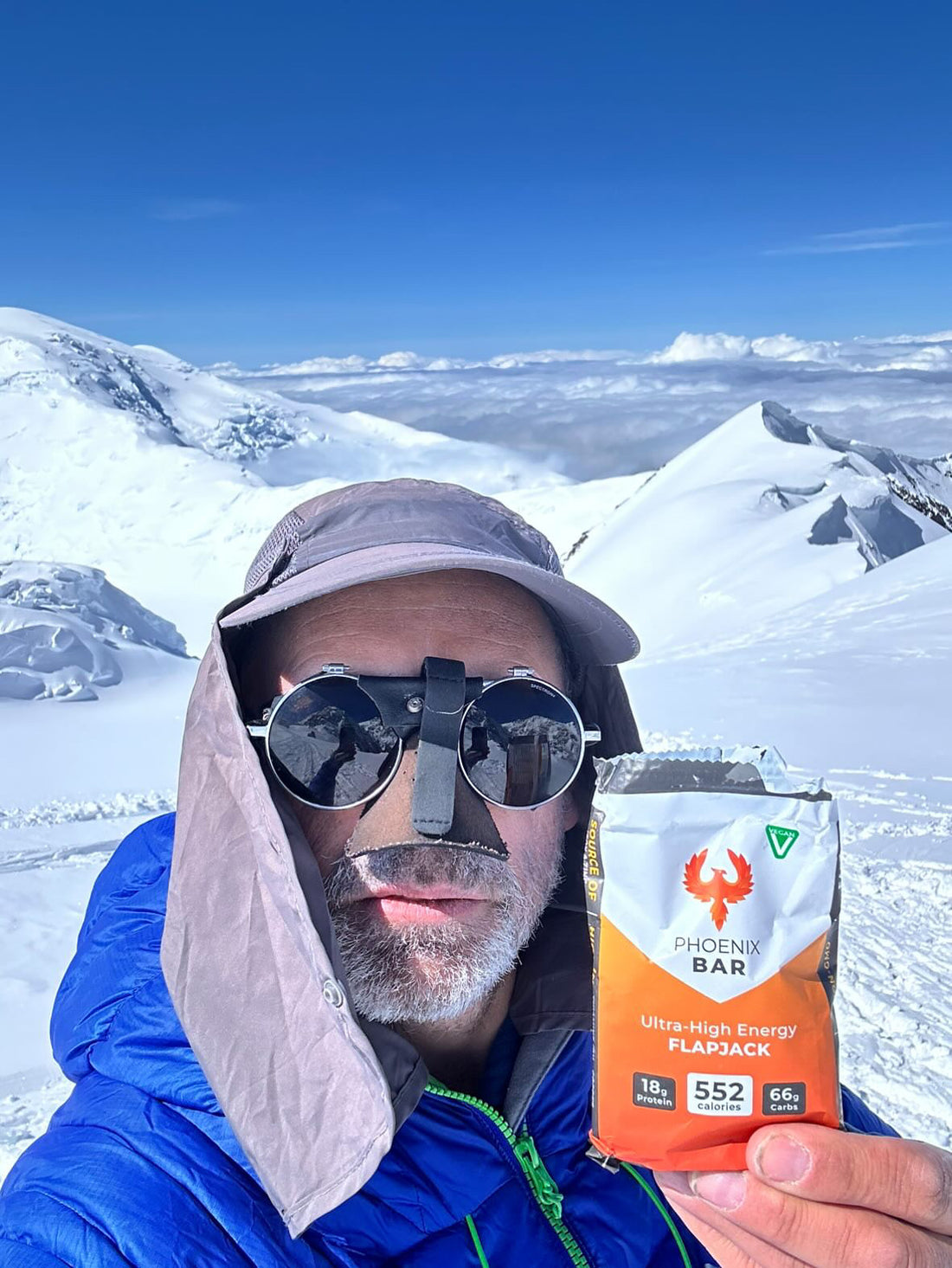
Big calories. Small bar.
Up to 557 calories in a compact, lightweight bar of only 120g, with up to 66g of carbs and 19g of protein. Eat it whole, break it into pieces over a few hours, or stir it into hot water or warm milk for porridge.
Easy to eat, easy to digest and not sickly sweet. Customers have eaten them at -45°C and through the heat of the Marathon des Sables, and they keep for up to 2 years, so they work on a mountain, on a night shift, or at home on days when eating enough feels hard.
- 557 calories in only 120g (529 to 557 by flavour)
- 4.6 calories per gram
- 66g carbs per bar (up to)
- 19g protein per bar (up to)
