Tour du Mont Blanc food: a calorie-dense nutrition plan for hikers, including vegan and gluten-free options
Hikers on the Tour du Mont Blanc burn between 4,000 and 6,000 calories per day across roughly 6 to 12 stages, depending on pace and itinerary. Half-board accommodation in refugios provides breakfast and a three-course dinner, but lunch, mid-stage snacks, and dietary-restricted alternatives must be carried. The trail crosses France, Italy, and Switzerland, and resupply is possible in towns like Chamonix, Courmayeur, and Champex-Lac, but mountain stages can run 20+ kilometres between supermarkets. Vegan, gluten-free, and dairy-free hikers face the largest planning challenge because regional cuisine is built around cheese, cured meat, and bread.
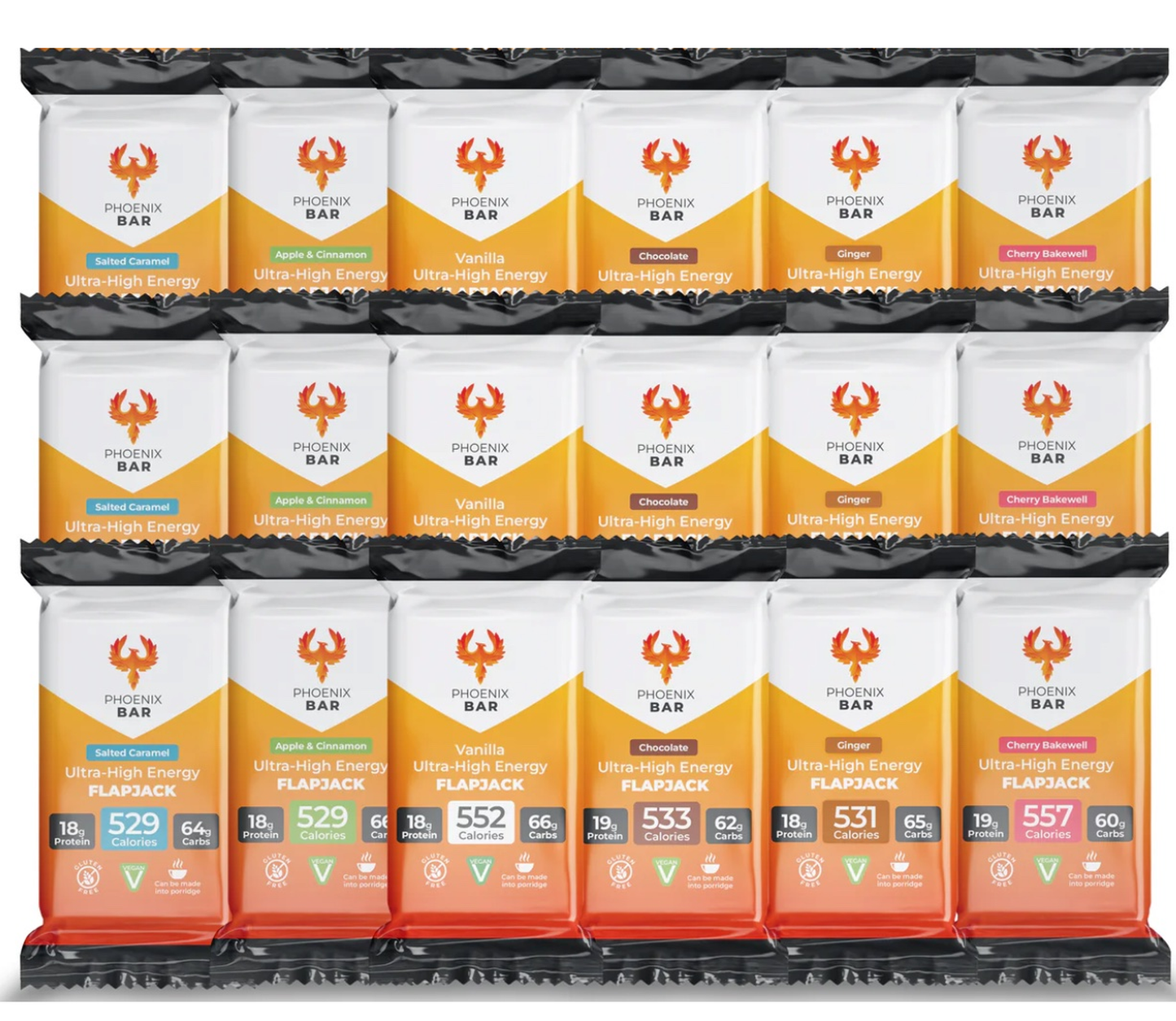
A practical daily nutrition stack for a TMB hiker is: a 600-800 calorie breakfast (provided by the refugio), 1,500-2,000 calories of carried trail food split across two to three eating windows, and a 1,200-1,500 calorie three-course evening meal (provided). The carried portion is where calorie density and pack weight matter most. Two 120g Phoenix Bars at 557 kcal each provide 1,114 calories in 240g, equivalent to 4,640 calories per kilogram, against an alpine cheese-and-bread lunch of roughly 2,200 calories per kilogram. For hikers with dietary restrictions, this gap is the difference between fuelled and bonking on stage 4.
Daily calorie needs on the Tour du Mont Blanc
The TMB covers approximately 165 kilometres with roughly 10,000 metres of cumulative ascent, typically completed in 6 to 12 days. A 75kg hiker carrying a 7-10kg daypack and walking 6-8 hours a day at moderate effort burns 4,000-5,500 calories. Fitter hikers covering more ground per day can push past 6,000.
These figures come from energy expenditure research on multi-day trekking and align with the recommendations of the Mont Blanc-region tour operators we surveyed. They are conservative for the standard 11-stage anti-clockwise itinerary and may underestimate burn for the classic 7-day fast itinerary or for hikers running sections.
The simplest way to underestimate calorie need on the TMB is to plan for typical day-to-day eating. A standard UK adult eats 2,000-2,500 calories. Hiking the TMB nearly doubles that requirement. Most first-time TMB hikers undershoot by 1,500 calories per day across the first three stages and feel it on stage 4.
What food is available along the route, and where the gaps are
Refugios and inns offer half-board (breakfast plus three-course dinner) at most overnight stops, which covers roughly 2,000-2,500 of your daily calories. The gap is the mid-day window: 1,500-2,500 calories that you carry, eat at huts that offer lunch service, or buy in villages.
Resupply points along the standard anti-clockwise route include Les Houches and Les Contamines (France), Courmayeur (Italy), Champex-Lac (Switzerland), and back to Chamonix. Between these towns, you may have access to refuge cafes serving simple lunches (soup, omelette, charcuterie plate, cake), but pricing is high and availability is weather-dependent.
The structural problem for hikers with dietary restrictions is not absence of food. It is absence of the right food. Cheese, cured meat, fresh bread, pastries, and pasta dishes are the dominant categories. Vegan and gluten-free options exist but are inconsistent: some refugios cater well, others provide only a basic carbohydrate substitute. According to the operator-published guides we reviewed, advance dietary requests at booking are the minimum, but supplementary food carried by the hiker is recommended for vegan, gluten-free, or dairy-free needs.
Why calorie density matters more than total calories
Pack weight is the silent constraint on the TMB. Each litre of water adds 1 kilogram. A standard 35-litre daypack with kit, layers, water, and lunch typically runs 7-10 kilograms before snacks. Every additional 100g of food in the pack is 100g you carry up roughly 1,000 metres of ascent on the longest stages.
The metric that matters is calories per gram. Bread and cheese delivers around 2.2 kcal/g. Cured meat sits at about 4 kcal/g. Trail mix runs 4.5-5 kcal/g. A nutrient-dense bar at 557 kcal in 120g delivers 4.6 kcal/g and resists heat, crushing, and the daily handling that destroys fresh food on stage 3. For comparison, the typical TMB lunch sandwich loses 30-40% of its appeal by mid-afternoon.
Calorie density is also why the standard advice of "snack every one to two hours" works structurally. Frequent small intakes match exertion to fuel availability. Compact, high-calorie food makes that habit possible without the weight penalty.
The Tour du Mont Blanc dietary restriction problem
This is where most TMB nutrition guides stop being useful. Vegan, gluten-free, dairy-free, and nut-allergy hikers face three problems that don't appear in standard guides:
Refugio menus default to cheese and cured meat. Both can be removed but rarely substituted with calorie-equivalent alternatives. A vegan refugio dinner is often pasta with tomato sauce and a side salad, around 600-800 calories where the standard meal would be 1,200-1,500.
Town supermarket selection narrows fast. Larger supermarkets in Chamonix and Courmayeur stock gluten-free and vegan products. Smaller villages stock white bread, regional cheese, charcuterie, and nothing else. If your itinerary takes you through smaller stops, you cannot rely on resupply.
Trail cafe lunches are similarly constrained. Salads exist. Soup with bread is available. A vegan calorie-dense lunch on the trail is genuinely hard to find above 800 calories.
The practical answer is to carry your dietary-specific calories. Two days of self-supported food (roughly 4,000 calories of vegan or gluten-free alternatives) covers any single resupply gap and removes the anxiety of arriving at a refugio that didn't get your dietary note.

Phoenix Bars: Up to 557 Calories Per Bar
Highly compact, low-volume, calorie-dense bars. Soft, easy to eat whole or as a warm porridge. Vegan, gluten-free and contain up to 66g of carbohydrates, 19g of protein & 8 vitamins & minerals.
A six-day TMB carried-food framework
This is a daily calorie-density stack built for the most common TMB itineraries. Adjust upward by 20-30% for fast itineraries (6-7 days) or downward for slow ones (10-12 days).
- Breakfast top-up (200-400 calories): A nutrient-dense bar eaten with the refugio breakfast. Refugio breakfasts are often light: bread, jam, coffee, occasionally cheese. A bar adds calories without adding weight to your day.
- Mid-morning fuel (300-500 calories): Eaten 90 minutes after starting walking. A bar or a handful of nut mix.
- Trail lunch (400-700 calories): A combination of refugio cafe purchase or carried food. Vegan and gluten-free hikers should plan to carry this rather than rely on cafe stops.
- Afternoon top-up (300-400 calories): Eaten before the day's biggest descent or on a final pass. Calorie-dense bar or trail mix.
- Pre-dinner snack (200-300 calories): Optional, useful on big-mileage stages.
That's 1,400-2,300 calories of carried food per day. Across a 6-day fast itinerary, total carried food weight is roughly 1.5-2.5kg if calorie density averages 4 kcal/g. Across an 11-day standard itinerary, you resupply twice in towns and never carry more than 4-5 days of food at once.
The porridge advantage on alpine mornings
Refugio breakfasts in the Mont Blanc region average 400-600 calories and often skew light. Most are bread, jam, butter, coffee, sometimes cereal or fruit. For a hiker burning 5,000 calories that day, that breakfast represents 8-12% of daily need.
Phoenix Bars work both as a bar and as porridge. Crumble a 120g bar into a mug, add 100ml of hot water from the refugio's morning kettle, stir, leave for 90 seconds. You get a 557-calorie warm porridge that adds to whatever the refugio served. This matters in cold morning weather (the refugio kitchen will give you hot water for free, even when full menu service is over) and for hikers with sensitive stomachs at altitude. Solid food in the first hour of walking is harder to digest at 2,200 metres than at sea level. Warm liquid food sits better.
This is the single behaviour change most TMB hikers make in their second TMB and wish they'd known on their first.
What Phoenix Bars buyers do on the TMB
Phoenix Bars are most often used by hikers who: (a) have dietary restrictions, (b) want predictable calorie intake regardless of refugio variation, (c) carry less weight than they would with bread-and-cheese trail lunches, (d) appreciate the porridge functionality on cold mornings.
Customers tackling the TMB typically purchase the Essential Bundle (18 bars) for a 6-7 day itinerary or the Complete Bundle (30 bars) for an 11-day itinerary plus pre-trek training. Bars travel through hold luggage without issue and have a 12-month shelf life, so over-ordering for the trip plus 2-3 weeks of training before is the norm.
Frequently asked questions
How many calories should I eat per day on the Tour du Mont Blanc? Most hikers need 4,000-5,500 calories per day, doubling typical adult intake. Faster itineraries or hikers covering more ground need closer to 6,000.
Is half-board enough food on the TMB? Half-board provides roughly 2,000-2,500 calories per day. You need to carry or buy an additional 1,500-2,500 calories of trail food daily.
Can vegans and gluten-free hikers complete the TMB without bringing their own food? It is possible but not recommended. Refugios and supermarkets have inconsistent selection for restricted diets. Two days' worth of carried calorie-dense alternatives is the practical minimum.
What's the lightest high-calorie food for the TMB? Foods with calorie densities above 4 kcal/g balance weight and energy efficiently. Examples include nuts and seeds, dried fruits with nut butters, and dense cereal bars. Phoenix Bars deliver 4.6 kcal/g.
Where can I resupply on the TMB? Major resupply points are Les Houches, Les Contamines (France), Courmayeur (Italy), and Champex-Lac (Switzerland). Smaller villages have variable stock.
Do I need to bring food from the UK? Not necessarily, but bringing your own UK-bought trail food provides predictability for dietary restrictions and avoids supermarket-roulette in smaller villages.
How heavy will my food bag be? Approximately 1.5-2.5kg for a 6-day fast itinerary at 4 kcal/g calorie density. Lower-density foods (bread, fresh produce) double or triple this weight for the same calorie load.
Can I eat Phoenix Bars cold or hot? Both. Eat as a bar on the trail. Crumble into a mug and add hot water for porridge in the morning or evening.
Related guides on Flaming Phoenix
For UK-based training treks and similar nutrition planning, see our companion guides:
- Marathon des Sables nutrition planning for ultra-distance, unsupported, multi-day desert racing
- Three Peaks Challenge food planning for single-push high-elevation UK efforts
- Long-distance walking nutrition for general multi-day route planning
- High-calorie breakfast options for fuelling early-start days
- Wild camping food and resupply for unsupported route logistics
- UK ultra race nutrition for racing-pace fuel planning
About the author
This guide was written by James Frost, founder of Flaming Phoenix and Phoenix Bars. James has spoken at the Marathon des Sables Expo in 2024 and 2025 about endurance nutrition, has supplied bars to over 50 MDS athletes, and built Phoenix Bars after 150+ pre-development conversations with ultra-endurance and expedition users about the calorie-density problem in long-format efforts. Phoenix Bars are manufactured by Lorama Foods, a SALSA-certified UK food production facility, and have over 350 verified five-star reviews on Judge.me.
Last updated: 1 May 2026.


Flaming Phoenix