
High Calorie High Protein Foods: The Ones That Do Both
High calorie high protein foods are the foods that give you a lot of both at once, rather than one or the other. The best examples are eggs, cheese and full-fat dairy, nuts and nut butters, oily fish, red meat, and legumes like beans and lentils, plus dense staples like oats. The trick is knowing which foods carry protein and calories together, because most foods are heavy on one and light on the other. For the wider list of dense foods, see calorie-dense foods.
This is the gap most advice leaves open. Search for high calorie foods and you get oils and butter, which are almost pure fat with barely any protein. Search for high protein foods and you get chicken breast and egg whites, which are lean and low in calories. What people usually want, especially when gaining weight, is the middle ground: foods that deliver both.
What makes a food high in both calories and protein?
It comes down to how the protein is packaged. Lean protein foods, like skinless chicken or white fish, are high in protein but low in calories, because they have little fat. The foods that are high in both are the ones where protein comes bundled with fat, or where a protein-rich food is also starchy.
So the sweet spot is foods like whole eggs, cheese, fatty fish, red meat and nuts, where protein sits alongside plenty of fat, and protein-rich staples like beans, lentils and oats, which bring carbohydrate calories with their protein. Those are the foods that move both numbers at the same time.
The best high calorie high protein foods
Here are the foods that carry a genuine amount of both, with rough figures per typical serving.
Eggs. Two large eggs are about 140 calories and 14g of protein, and cooking them in oil or butter pushes the calories up further.
Cheese and full-fat dairy. Around 30g of cheddar is about 125 calories and 7g of protein, a 150g pot of full-fat Greek yoghurt roughly 150 calories and 15g, and 300ml of whole milk about 195 calories and 10g.
Nuts and nut butters. Two tablespoons of peanut butter is around 190 calories and 8g of protein, and a 30g handful of almonds about 180 calories and 6g.
Oily fish. A 100g serving of salmon or mackerel is roughly 200 calories and 20g of protein, with the fat doing the calorie work.
Red meat. A 100g serving of beef mince is around 250 calories and 20g of protein.
Legumes. Cooked chickpeas are about 160 calories and 9g of protein per 100g, and lentils around 115 calories and 9g, which makes them the standout plant option.
Dense staples. A 50g serving of oats brings about 185 calories and 6g of protein, a useful base to build on.
For the plant-based angle specifically, see high calorie vegan foods, and for gluten-free, high calorie gluten free foods.

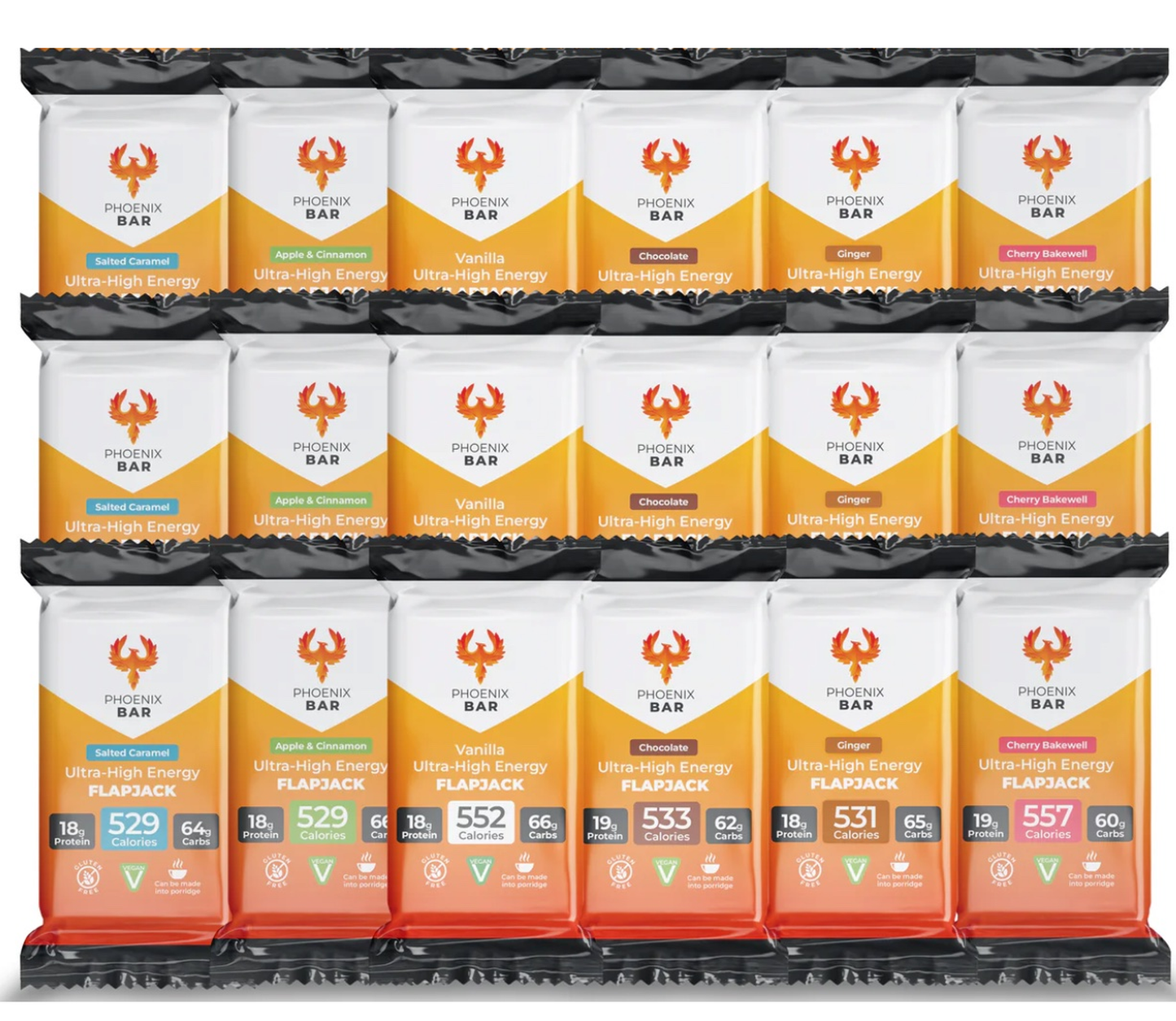
Phoenix Bars: Up to 557 Calories Per Bar
Highly compact, low-volume, calorie-dense bars. Soft, easy to eat whole or as a warm porridge. Vegan, gluten-free and contain up to 66g of carbohydrates, 19g of protein & 8 vitamins & minerals.
How to get more calories and protein together
The simplest approach is to pair a protein source with a fat, so a meal climbs on both counts. Cook eggs in oil, melt cheese over things, spread nut butter thickly, stir full-fat Greek yoghurt into breakfast, and add nuts and seeds to meals.
A few quick combinations: Greek yoghurt with nuts and honey, eggs fried in oil on buttered toast, a handful of cheese and nuts, or lentils cooked with a good glug of olive oil. Each one lands a solid dose of both protein and calories in a single serving.
For gaining weight and muscle
If you are trying to gain weight, the thing that adds it is a calorie surplus, eating more than you burn. Protein matters for what kind of weight you gain: paired with resistance training, a higher protein intake helps more of the gain come as muscle rather than fat. On its own, protein does not build anything, it is protein plus training plus enough calories.
Work out your target with how many calories to gain weight and see how to eat in a calorie surplus for the mechanism. The gym-focused side is covered in bulking.
A compact option with calories and protein
When you want both without cooking, a ready option helps.
Each of our high calorie bars is up to 557 calories in a 120g bar and provides up to 19g of protein, so it delivers a meaningful amount of both in one compact, no-prep form. It is vegan and gluten-free, comes in six flavours, and can be stirred into hot milk to make porridge. You can see the full range of high calorie bars on the homepage.
Frequently asked questions
What foods are high in both calories and protein?
Eggs, cheese and full-fat dairy, nuts and nut butters, oily fish, red meat, and legumes like beans and lentils are all high in both. So are protein-rich staples like oats. The common thread is protein packaged with fat, or protein alongside starch, rather than lean protein on its own.
What is the difference between high calorie and high protein foods?
High calorie foods are dense in energy, often mostly fat, like oils and butter, which are low in protein. High protein foods are rich in protein but can be low in calories if they are lean, like chicken breast. Foods high in both combine protein with fat or carbohydrate, so they move both numbers together.
What are high calorie high protein snacks?
Cheese and nuts, Greek yoghurt with nuts and honey, a nut butter sandwich, a handful of trail mix, or a boiled egg with something calorie-dense alongside. Each pairs a protein source with fat or carbohydrate, so it delivers both protein and calories in a small snack.
What are high calorie high protein vegan foods?
Legumes like beans, lentils and chickpeas, plus nuts, nut butters, seeds, tofu, tempeh and oats, all bring protein and calories together. Pairing them with plant oils lifts the calories further. Our guide to high calorie vegan foods covers the plant-based options in detail.
How much protein do I need to gain muscle?
It varies by body size and training, but a common guideline is roughly 1.6 to 2.2g of protein per kilogram of bodyweight per day when training to build muscle. Alongside that, you still need a calorie surplus and resistance training, since protein alone does not add muscle.
Related guides
For all dense foods, see calorie-dense foods. For plant-based and gluten-free versions, see high calorie vegan foods and high calorie gluten free foods. For gaining weight, see how many calories to gain weight and bulking. For the porridge method, see how to use Phoenix Bars.
Written by James Frost, Founder of Flaming Phoenix. James started Flaming Phoenix in 2024 and has spent the years since working out how to get the most calories into the least food, building and testing compact, calorie-dense recipes. He can be reached at jfrost@flaming-phoenix.co.uk. Last reviewed: June 2026.


Flaming Phoenix



Contact Us
Declare withdrawal
Please fill out the following form to declare your withdrawal from the contract.

