

High calorie foods for elderly people with a small appetite
In this guide

 Written by James Frost, founder of Flaming Phoenix. Updated October 2026.
The best high calorie foods for elderly people are soft, rich foods that fit a lot into a small portion, such as full-fat yoghurt, custard, porridge, cheese and nut butter. Age UK says six small meals and snacks a day are as good as three main meals, so offer a little, often, and enrich what they already enjoy.
If you are reading this, you are probably worried about someone: a parent who used to clear their plate and now leaves half of it, or a partner who says they are "just not hungry". This guide is for the family member or carer doing the shopping and the cooking. It sticks to ordinary food from a UK supermarket, in small portions, and it never suggests pushing anyone to eat.
The NHS notes that people aged 65 and over are particularly at risk of eating too little, and that weight loss is not an inevitable result of old age. So if someone is losing weight without trying, their eating has suddenly changed, or swallowing has become difficult, book a GP appointment alongside anything you try here. The signs to watch for are listed further down.
Why does appetite often get smaller in later life?
Appetite usually shrinks with age because taste and smell fade, people move less, and chewing or a dry mouth can make a full meal feel like hard work.
The British Nutrition Foundation notes that changes in taste and smell can affect appetite and how much someone enjoys food, and that thirst can fade too. Some medicines dull appetite or dry the mouth, which is worth raising with the pharmacist. Sore teeth or a loose denture can turn a roast dinner into something to avoid.
None of this happens overnight, so someone can slowly eat less without anyone, including them, quite noticing. When the amount eaten is small, what is eaten needs to do more.
What makes a food work for a small appetite?
Food works best for an older person with a small appetite when it is small in volume, rich, soft, familiar and quick to put on the table.
Small and rich means a modest portion still carries plenty. Soft means chewing is not the barrier. Familiar food helps more than people expect: the dish someone has liked for fifty years is the one they will finish. And little or no preparation helps, because the will to cook often goes before the appetite does. Our guide to calorie-dense foods explains the principle of getting more from less food in more detail.
What is the "food first" approach?
"Food first" means adding small amounts of rich food to ordinary meals, snacks and drinks so they carry more, before trying anything else.
Dietitians at Berkshire Healthcare NHS Foundation Trust, in their leaflet A Food First Approach, describe it as adding small amounts of high calorie foods to normal food and drink, alongside three meals and three snacks or nourishing drinks a day. Gateshead Health NHS Foundation Trust's high calorie, high protein diet sheet puts it as making small changes rather than eating more.
In practice it is quiet work: whole milk instead of semi-skimmed, butter and cheese stirred into mash, a milky drink between meals in place of a plain cup of tea. The person eats the same amount and gets more from it. Our page on easy ways to eat more calories is built around the same idea.
Which high calorie foods are best for elderly people?
Full-fat dairy, puddings, porridge, eggs, oily fish, nut butter, avocado and a little added butter, cream or oil give older people the most for the least effort.
Full-fat dairy. Whole milk, Greek yoghurt, cheese, custard and rice pudding are soft, familiar and easy to enrich, and they bring protein as well as calories. Protein matters more in later life, as our guide to protein for older adults explains. Oat, soya and coconut versions work the same way for anyone who prefers them.
Added fats. Butter, olive oil, cream and mayonnaise change the calories of a meal a great deal and its size hardly at all. A tablespoon of olive oil stirred into mashed potato adds about 120 calories, and nobody can see it on the plate.
Comforting starches. Porridge, mashed potato, soft white bread and pasta are gentle and take cheese, butter or cream well. Our high calorie porridge guide has ways to make a single bowl go further.
Eggs and fish. Scrambled eggs made with butter, and soft oily fish such as salmon or mackerel, are quick, soft and full of protein. Check fish carefully for bones.
Something sweet. A little of something sweet often tempts an appetite that has gone quiet. A small pudding after a few mouthfuls of dinner is still a good outcome.
If chewing is the main problem, my guide to high calorie soft foods goes through the soft options one by one, with portion sizes.
What are good high calorie snacks for elderly people?
Good high calorie snacks for elderly people are small, rich and ready to eat: buttered malt loaf, a scone with clotted cream, cheese and crackers, rice pudding, trifle or ice cream.
West Suffolk NHS Foundation Trust's high calorie snacks sheet gives sensible UK portions, and these are taken from it:
- A slice of malt loaf with a teaspoon of butter.
- A medium scone with a tablespoon of clotted cream and a teaspoon of jam.
- Two crackers with 30g of cheese, about the size of a small matchbox.
- A slice of toast with a teaspoon of butter and a tablespoon of peanut butter.
- A 150g pot of full-fat rice pudding, or an individual trifle pot.
- A 100g pot of luxury-range mousse, or an individual cheesecake.
- Two scoops of full-fat ice cream.
The same sheet suggests three small meals and three small snacks a day, and keeping snacks in sight as a reminder. A plate left on the side table gets picked at in a way a cupboard does not.
For a snack that needs no fridge and no preparation, Phoenix Bars, the soft high calorie bars I make, can be eaten a small piece at a time or stirred into warm milk as a porridge; how to use Phoenix Bars shows both. More ideas, ranked, are in our high calorie snacks guide.
What are good high calorie meals for elderly people?
The best high calorie meals for elderly people are familiar one-dish meals that are soft and easy to enrich, such as cottage pie, fish pie, macaroni cheese or soup with cheese.
Gateshead's diet sheet lists scrambled eggs with butter on toast, smoked haddock on toast, cauliflower cheese, macaroni cheese, shepherd's pie, corned beef hash, and soup with cream or cheese added and a buttered roll on the side. Ready-meal versions of all of these count. Serve a small portion on a small plate and offer more if it goes.
Breakfast is often the meal with the best appetite, so it is worth making it count; our high calorie breakfast guide has options. For full recipes, see my guide to meals for elderly people.
If cooking every day is not realistic, frozen ready-meal delivery is an option. Wiltshire Farm Foods, for example, delivers frozen meals to the door, with a smaller-portion Mini Meals range and a Softer Foods range made in several texture levels.
Which high calorie drinks suit elderly people?
Milky drinks made with full-cream milk suit most older people best, because they add calories and fluid together without any chewing.
- Hot chocolate or a malted drink made with full-cream milk instead of water. Kent Community Health NHS Foundation Trust's snack list puts a malted drink made with 200ml of full-cream milk in its 200 to 350 calorie group.
- A milkshake made with 150ml of fortified milk and a scoop of ice cream, from Gateshead's diet sheet.
- Fortified milk: four heaped tablespoons of milk powder whisked into a pint of full-cream milk, used for every cup of tea, bowl of cereal and sauce that day.
- A smoothie of full-fat yoghurt, banana and whole milk, which slips down when a meal will not.
Fluid matters as much as calories. The British Nutrition Foundation recommends six to eight drinks a day and points out that older people may not feel thirsty, so offer a drink rather than waiting to be asked. Have the nourishing drinks between meals instead of just before them, so they do not take the place of food. Our guide to high calorie drinks, smoothies and milkshakes has recipes.
How do you add calories to food for an elderly person?
Add calories by stirring small amounts of butter, cream, cheese, milk powder, honey or nut butter into food the person already eats, so the portion stays the same size.
- Milk powder: whisk it into milk as above, or stir a spoonful into porridge, soup or custard.
- Butter or olive oil: into mashed potato, vegetables, pasta and rice.
- Grated cheese: over soup, beans, scrambled egg and mash.
- Double cream: into porridge, soup, custard and scrambled egg.
- Honey, jam or syrup: over porridge, rice pudding and yoghurt.
- Nut butter: on toast, in porridge, blended into a milkshake.
What does a little-and-often day look like?
A little-and-often day is three small meals and three small snacks spaced two to three hours apart, each one rich enough to count.
Here is one example built from the foods above. Nothing on it is a big plate.
- 8am: a small bowl of porridge made with whole milk, with a spoon of honey or jam.
- 10.30am: a slice of buttered malt loaf and a milky coffee.
- 12.30pm: half a tin of cream of tomato soup with grated cheese stirred in, and a slice of soft buttered bread.
- 3pm: a 150g pot of full-fat rice pudding.
- 5.30pm: a small portion of fish pie or cottage pie, with extra butter beaten into the mash.
- 8pm: hot chocolate made with full-cream milk.
If one of those is refused, nothing is lost. Offer the next one at its time and let the day add up.
What mistakes do carers commonly make?
The most common mistakes are serving full-size plates, buying low-fat foods out of habit, and pressing someone to eat, all of which tend to make eating harder.
- Serving a full-size plate. A big plate can put someone off before they start. A small portion that gets finished feels better for everyone than a large one left half eaten.
- Buying low-fat and diet versions. General advice to cut fat is written for people who eat plenty. Age UK says full-fat milk and yoghurt are the ones to choose when weight needs keeping up.
- Low calorie snacks. A plain biscuit is about 36 calories, according to Gateshead's diet sheet, which counts it as not nourishing. West Suffolk's sheet suggests that plain fruit or vegetable sticks come with something richer, for example cheese or a dip.
- A cup of tea just before dinner. Drinks fill a small stomach. Offer them between meals or after.
- Pressing too hard. Pressure at the table rarely helps. Age UK's view is that it is better to eat something than nothing at all, so offer, accept a no calmly, and try again later. Our guide on what to do when an elderly person is not eating goes into this.
If appetite itself is the struggle, our guide on how to increase appetite covers gentle changes that can help.
When should you speak to a GP?
Speak to a GP if someone has lost a lot of weight without trying over the last 3 to 6 months, their eating has suddenly changed, or you are simply worried.
That timescale comes from the NHS, which also lists losing interest in eating and drinking, and feeling tired or weak all the time, as signs worth noticing. Age UK points out that a GP can rule out anything serious and refer to a dietitian if more specialist advice is needed. A pharmacist can check whether any medicines are dulling appetite.
Swallowing is more urgent. If eating or drinking makes someone cough or choke, food seems to stick, or their voice sounds wet or gurgly after eating, the NHS advice is to ask for an urgent GP appointment or call 111. Follow any texture advice they are given over anything on this page.
The ideas here are general guidance for everyday eating, not medical advice, and the bars mentioned above are an everyday food. They are not a medical product.
Frequently asked questions
What can I give an older person who has lost their appetite?
Offer small amounts of soft, rich food they already like, often through the day, rather than large meals. Full-fat yoghurt, porridge made with whole milk, a milkshake, buttered malt loaf or peanut butter on soft toast all work because a little goes a long way. Age UK's advice is that eating something is better than eating nothing.
What foods help an elderly person put weight back on?
Full-fat dairy, puddings, porridge, eggs, oily fish and cheese, enriched with butter, cream or milk powder, are the usual starting point. Spread them across three small meals and three snacks a day rather than bigger plates. If weight keeps falling, the GP can refer to a dietitian for a plan tailored to the person.
How often should someone with a small appetite eat?
Every two to three hours usually works: West Suffolk NHS Foundation Trust suggests three small regular meals and three small snacks each day. Six small occasions feel far less daunting than three large meals, and Age UK says they are just as good. Keep snacks within sight so they act as a reminder.
What if an elderly person refuses to eat?
Stay calm and do not insist. Leave something small and appealing within reach, offer again in an hour or two, and try a drink such as hot chocolate made with whole milk instead. If it carries on, or comes with weight loss or other changes that worry you, speak to their GP.
Is it normal for elderly people to lose their appetite?
A smaller appetite is common in later life: the British Nutrition Foundation notes that many people feel less hungry and less interested in food as they age. Losing weight is a different matter. The NHS says weight loss is not an inevitable result of old age, so unplanned weight loss is worth a GP appointment.
Related guides
Calorie-dense foods · Soft high calorie foods · Meals for elderly people · What to eat when your appetite is low · Protein for older adults · High calorie porridge · High calorie drinks, smoothies and milkshakes · High calorie snacks · Easy ways to eat more calories
Sources: NHS, unintentional weight loss and when to see a GP; NHS, swallowing problems; Age UK, the importance of eating well in later life; Berkshire Healthcare NHS Foundation Trust, a food first approach; British Nutrition Foundation, nutrition for older people; West Suffolk NHS Foundation Trust, high calorie snacks; Kent Community Health NHS Foundation Trust, high calorie snacks; Gateshead Health NHS Foundation Trust, high calorie, high protein diet.
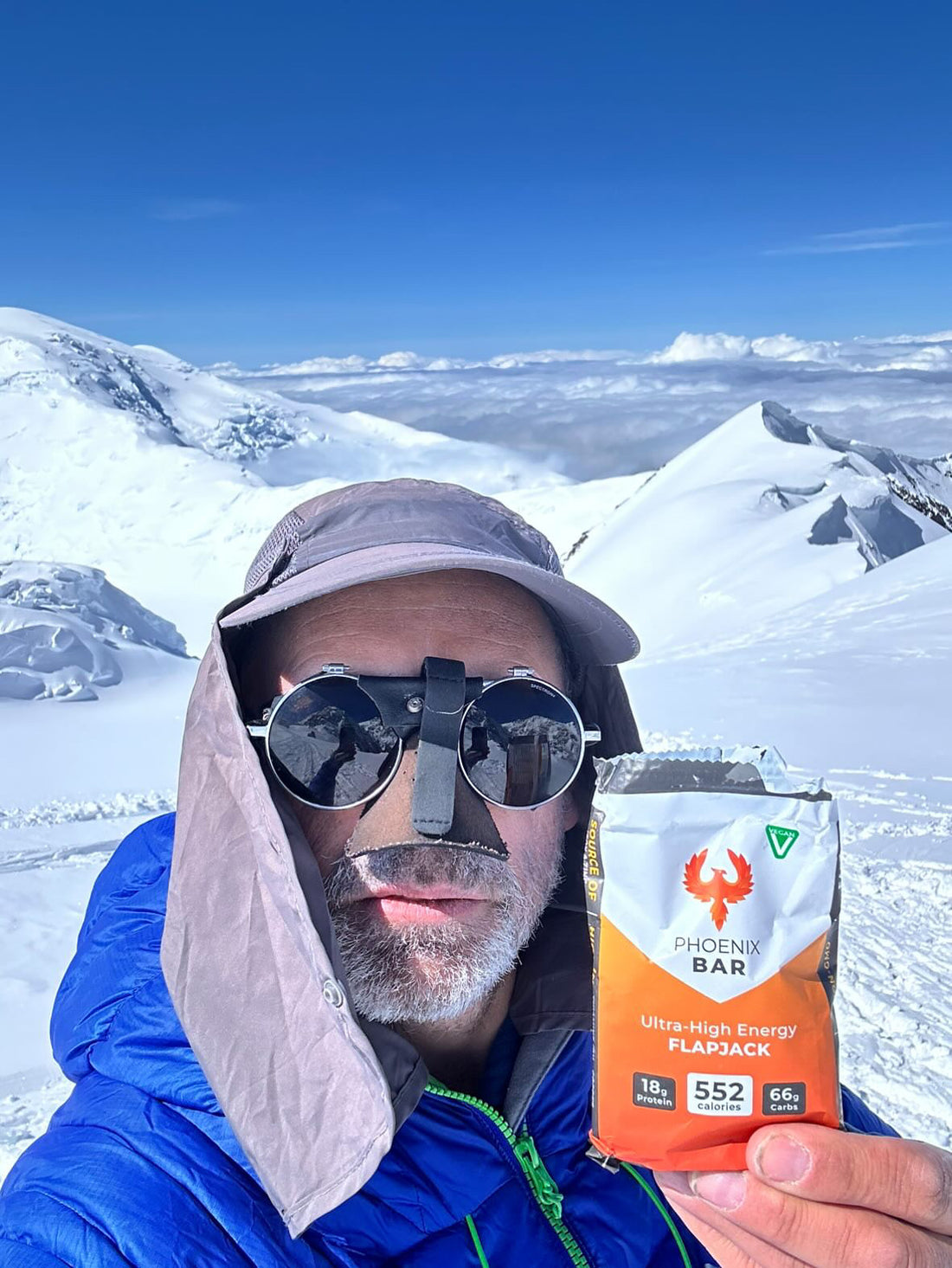
Big calories. Small bar.
Up to 557 calories in a compact, lightweight bar of only 120g, with up to 66g of carbs and 19g of protein. Eat it whole, break it into pieces over a few hours, or stir it into hot water or warm milk for porridge.
Easy to eat, easy to digest and not sickly sweet. Customers have eaten them at -45°C and through the heat of the Marathon des Sables, and they keep for up to 2 years, so they work on a mountain, on a night shift, or at home on days when eating enough feels hard.
- 557 calories in only 120g (529 to 557 by flavour)
- 4.6 calories per gram
- 66g carbs per bar (up to)
- 19g protein per bar (up to)
Declare withdrawal
Please fill out the following form to declare your withdrawal from the contract.

