

Tactical Athlete Nutrition: How Military, Police, Fire and Rescue Personnel Should Fuel
In diesem Leitfaden

Tactical athletes are military personnel, police officers, firefighters and rescue responders whose jobs demand athletic physical performance under load, stress and unpredictable conditions. Their core nutrition problem is an occupational calorie gap: the work routinely burns more energy than they manage to eat, because operations compress meals, suppress appetite and leave no time to cook. The fix is consistent: meet daily energy needs with enough carbohydrate and protein, then close the field gap with high calorie bars or other compact, calorie-dense food that needs no preparation and can be eaten on the move. The sections below cover what each role burns, how big the gap gets and what to eat to close it.
 Last updated: June 2026. Written by James Frost, founder of Flaming Phoenix, maker of Phoenix Bars, used by expedition teams and ultra-endurance athletes.
Key facts
- A tactical athlete is anyone in the military, law enforcement, fire or rescue services who needs trained physical performance to do the job.
- Demanding operations and selection can drive expenditure to 4,000 to 6,000 calories a day, with the most extreme sustained cases, wildland firefighting, measured up to roughly 6,260 calories a day, rivalling Tour de France cyclists. NWCGMountain Tactical Institute
- During sustained selection and operations, one review reported an average deficit of around 3,000 calories a day, alongside roughly 3% body mass loss and disrupted sleep. nih
- Single tactical tasks can cost over 1,000 calories before environmental load is even counted. PubMed Central
- The limiting factor is rarely the food provided. It is how much actually gets eaten under operational tempo, fatigue and appetite suppression.
What is a tactical athlete?
A tactical athlete is a person whose occupation requires athletic physical capacity, covering military and special operations personnel, police and tactical law enforcement, firefighters, and search and rescue or emergency medical responders. The defining feature is that physical performance is a job requirement with real-world stakes, not a sport. The concept exists because these roles share the training, fuelling and recovery needs of athletes, but face conditions no sport imposes.
Unlike a marathon with a known distance and a feed station every few miles, tactical work is unpredictable in duration and intensity, performed under heavy load and protective equipment, in temperature extremes, and frequently on broken sleep. A 2025 review summarising the field put it plainly: tactical operations show metabolic demands similar to elite sport, but with prolonged exertion, limited food and water, and disrupted recovery and circadian rhythm.
Why do tactical athletes have different nutrition needs?
Tactical athletes differ from sport athletes because they cannot choose when they perform, cannot reliably pause to eat, and carry the equipment that fatigues them. Four stressors stack up: heavy load carriage, environmental extremes, sleep deprivation, and an unpredictable operational clock. Each one raises calorie cost on its own and lowers the chance of eating enough.
Load is the big multiplier. Carrying 25 to 40kg over distance raises the energy cost of every step, which is why fuelling for rucking and load carriage is its own problem. Cold raises expenditure further because the body spends energy maintaining core temperature, the same dynamic covered in cold-weather and high-altitude operations and polar conditions. Heat and protective equipment suppress appetite and accelerate fluid loss. And shift patterns scramble the body clock, which is why eating well on night shifts matters as much for a watch-keeping firefighter or a response officer as the food itself.
How many calories do tactical athletes burn?
Tactical athletes commonly burn 4,000 to 6,000 or more calories a day on demanding operations, training and selection, well above the roughly 2,000 to 2,600 a typical adult needs. The figure varies by role, load and environment, but the pattern is consistent across the professions.
Infantry and special operations soldiers on sustained patrol burn 4,000 to 6,000 plus calories a day depending on load, terrain and climate, which is the focus of supplementing ration packs in the field. Wildland firefighters sit at the extreme end, with research using the gold-standard doubly-labelled-water method recording up to about 6,260 calories a day. Structural firefighting is shorter but ferociously intense, reaching around 10 calories a minute at the hardest tasks in heavy protective gear. Tactical police and rescue work is more intermittent, long static periods punctuated by maximal bursts, but still elevated, and is covered in nutrition for emergency services personnel. Mountain Tactical InstituteNSCA
What is the tactical calorie gap?
The tactical calorie gap is the shortfall between the energy a tactical athlete expends and the smaller amount they actually eat in the field. It exists because operational tempo, fatigue, appetite suppression and the effort of preparing food all reduce intake below what is provided, and the deficit compounds across multi-day operations.
The mechanisms are well documented: high tempo compresses or cancels meal breaks, hot meals that need water and a stove get skipped when there is no time, soldiers strip snacks from packs to save weight, and exertion plus sleep loss blunt the hunger signal so people stop feeling hungry before they have eaten enough. So the deficit rolls on from one day to the next. One synthesis of selection and operational data reported an average gap of around 3,000 calories a day, with measurable losses in body mass, sleep and mood. By day three or four of a hard exercise, the accumulated shortfall runs into thousands of missing calories, and that is when judgement, endurance and injury resistance start to slide. nih
What should tactical athletes eat?
Tactical athletes should build daily intake around carbohydrate as the primary working fuel, adequate protein for repair and muscle maintenance, and enough total calories to cover the day, then add calorie-dense, no-preparation food to close the field gap.
Carbohydrate is the fuel for moderate and high-intensity work, so it should anchor meals before and during demanding tasks. Protein contributes to the growth and maintenance of muscle mass, with practical targets in the region of 0.7 to 1.0 grams per pound of body weight for those building or maintaining muscle. Heat and load drive heavy sweat losses, so drink to a plan and replace electrolytes, not just water. And because eating large meals mid-effort causes stomach trouble, intake is better spread into small, frequent amounts, the same principle behind training your gut to absorb more carbs. A calorie-dense breakfast banks calories before the day goes sideways, and keeping fuel ticking over prevents the sudden energy collapse explained in hitting the wall.
How should tactical athletes fuel in the field or on shift?
In the field, the most useful food is compact, calorie-dense, climate-stable and ready to eat with no water, stove or utensils, so it gets eaten when there is no time to stop. Preparation is the enemy of intake: anything that needs boiling water or ten spare minutes will be skipped when tempo is high.
The defining metric is calorie density, calories per gram carried, because every gram competes with ammunition, water and kit. Expedition teams face the same trade-off, so the best energy bars for expeditions are judged on it too. It is why calorie-dense foods and soft, easy-to-eat high-calorie foods go in the pocket first, and why alternatives to energy gels matter for people who cannot stomach sugary gels over long days. Eating on the move, small bites every 30 to 60 minutes rather than waiting for a break, keeps intake steady without stopping. For practical methods including turning a bar into hot porridge with flask water, see how to use Phoenix Bars.
How do tactical athletes fuel for selection and training?
For selection courses and physical training, tactical athletes should eat to support work capacity and recovery, with consistent protein, carbohydrate timed around hard sessions, and enough total calories to avoid under-fuelling across a multi-week block. Selection is where the calorie gap does the most damage, because output is extreme and eating windows are short.
The training year is not uniform, so intake should flex with it: a small surplus and steady protein through strength phases, carbohydrate prioritised around power and conditioning work, and a deliberate recovery focus between hard blocks. The consistent thread is protein every few hours to protect muscle, and never letting a long selection day end in a deep deficit, because the next day starts from that hole. On prolonged high-output courses where eating chances are brief, a pocket-sized calorie source that goes down in seconds during a short rest is worth more than a meal that never gets eaten.
Where Phoenix Bars fit
Phoenix Bars are a compact supplementary food for these conditions: up to 557 calories and up to 19g of protein in a small, soft 120g bar that needs no preparation. They are designed to close the field calorie gap alongside issued rations or station meals, not to replace them.
On heat and cold, customers report that they hold up: a Marathon des Sables runner found they kept their shape even in desert temperatures, and Liam Steinbeck, who ate five on the Spine Race, said they don't freeze easily. They unwrap and eat one-handed on the move, the texture is soft and quick to eat when fatigue is high, the six flavours avoid the sweetness fatigue that makes many bars intolerable by day two, and they are vegan and made with gluten-free oats for personnel whose dietary needs rations do not cover. They also turn into a warm porridge with hot water, and keep for up to two years sealed (12 months for Cherry Bakewell), so they can be stocked well ahead. Military readers should also see supplementing ration packs in the field; fire, police and rescue readers, nutrition for emergency services personnel.
Frequently asked questions
What is a tactical athlete?
A tactical athlete is a person whose occupation requires athletic physical performance, including military and special operations personnel, police and tactical law enforcement, firefighters, and search, rescue and emergency medical responders. The role demands trained fitness with real-world stakes.
How many calories does a tactical athlete need?
On demanding operations, training and selection, tactical athletes commonly need 4,000 to 6,000 or more calories a day, against roughly 2,000 to 2,600 for a typical adult. The exact figure depends on load carried, terrain, climate and operational tempo.
Why do tactical athletes struggle to eat enough?
High operational tempo compresses meals, food that needs preparation gets skipped, weight-saving strips snacks from packs, and exertion plus sleep loss suppress appetite. Intake falls below what is provided, creating a deficit that compounds over several days.
What is the best food for tactical athletes in the field?
Compact, calorie-dense, climate-stable food that needs no preparation and can be eaten on the move, because preparation and time are the main barriers to eating enough. Calorie density, calories per gram carried, is the key metric when load is already heavy.
Are energy bars good for tactical athletes?
Yes, calorie-dense bars are well suited as a supplement because they are pocket-sized, need no preparation and can be eaten during brief rest windows. They work best alongside issued rations or meals rather than as a replacement for them.
Related guides
Military field nutrition, emergency services nutrition, rucking nutrition, night shift nutrition, calorie-dense foods, and how to use Phoenix Bars.
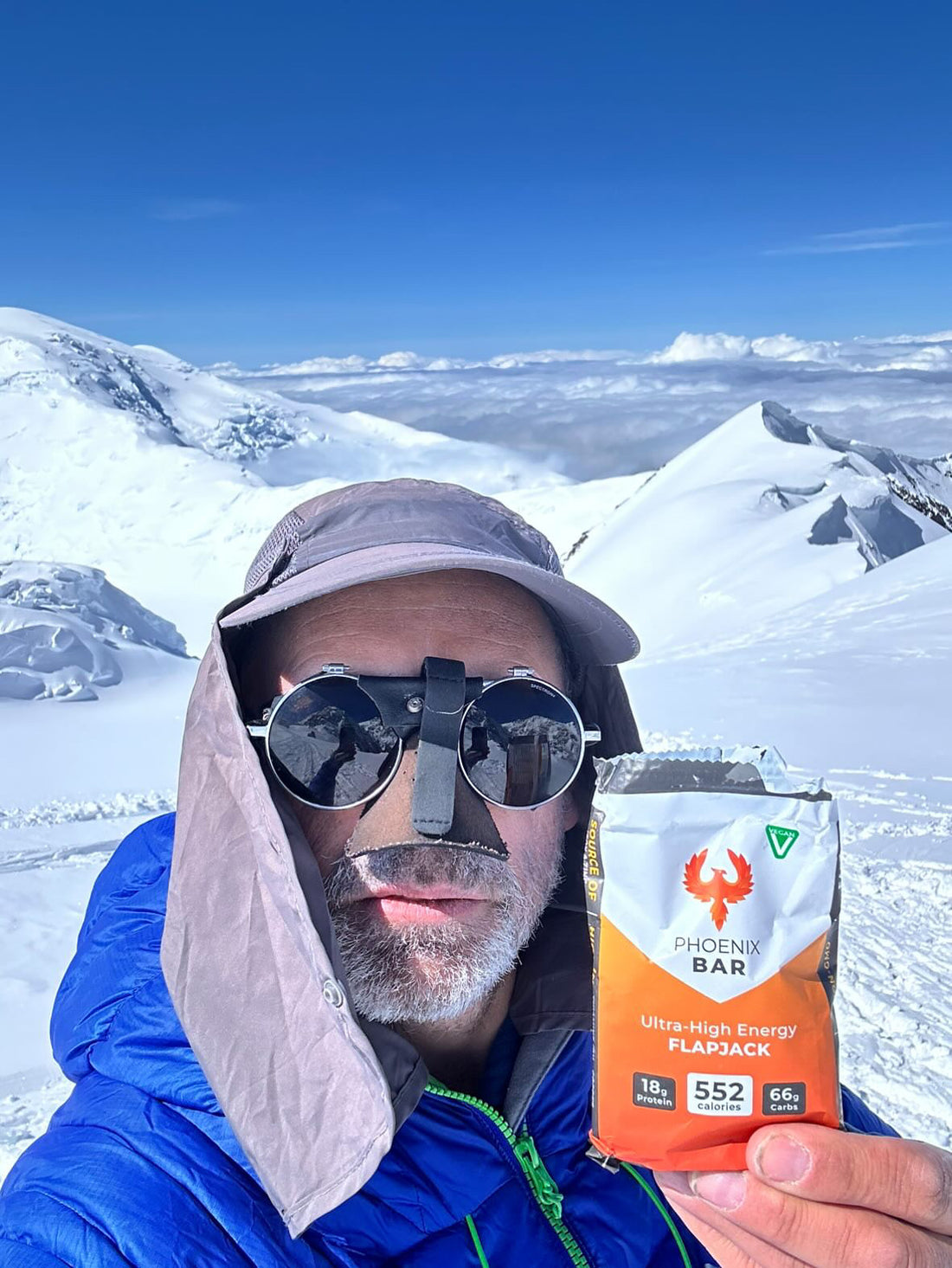
Viele Kalorien. Kleiner Riegel.
Bis zu 557 Kalorien in einem kompakten, leichten Riegel von nur 120 g, mit bis zu 66 g Kohlenhydraten und 19 g Protein. Im Ganzen essen, über ein paar Stunden in Stücken essen oder mit heißem Wasser oder warmer Milch zu Porridge verrühren.
Leicht zu essen, leicht verdaulich und nicht zu süß. Kunden haben sie bei -45 °C und in der Hitze des Marathon des Sables gegessen, und sie sind bis zu zwei Jahre haltbar: für die Berge, die Nachtschicht oder zu Hause, an Tagen, an denen genug zu essen schwerfällt.
- 557 Kalorien in nur 120 g (529 bis 557 je nach Sorte)
- 4,6 Kalorien pro Gramm
- 66g Kohlenhydrate pro Riegel (bis zu)
- 19g Protein pro Riegel (bis zu)
Widerruf erklären
Füllen Sie das folgende Formular aus, um Ihre Widerrufserklärung abzugeben.

