
Offshore Workers Nutrition: Eating Well on Rotation
The honest answer: most offshore installations feed you extremely well, so for the average worker the nutrition challenge offshore is overeating, not under-fuelling. Rigs and platforms run a 24-hour galley with hearty, calorie-dense meals, and weight gain is the industry's real dietary issue, not a shortage of food. So a high-calorie product like ours is the wrong tool for the galley-fed worker, and we will not pretend otherwise. Where carried food earns a place is the hours you spend away from the galley: offshore wind technicians out on the turbines all day, deck and drilling crews tied up in long operations, and vessel or survey teams on smaller boats, plus the cold, demanding transits and climbs in between. For those situations you need portable, no-prep fuel that survives a kit bag and works in North Sea cold. This guide is about exactly those moments, and honest about the rest.
About this guide
I am James Frost, founder of Flaming Phoenix. We make Phoenix Bars, a 120g vegan, gluten-free bar that packs a lot of easily digested energy into a small package and can be made into a warm porridge. I am not an offshore medic or a dietitian, so where this gets specific I draw on published research into offshore work and on the realities of fuelling physical work in the cold. I will be straight throughout about where our product helps offshore and where it does not. This page sits alongside our night shift nutrition and military field nutrition guides. Last reviewed June 2026.
Key points
- For most galley-fed offshore workers the dietary challenge is overconsumption, not a lack of food, so a high-calorie bar is not what they need.
- The genuine fit is the hours away from the galley: offshore wind technicians on the turbines, deck and drilling crews in long operations, and vessel or survey crews on smaller boats.
- North Sea cold and the demanding bursts, like vessel-to-turbine transfers and ladder climbs in heavy PPE, raise energy needs in short, sharp spikes.
- Offshore wind is the clearest case, because technicians transit out, climb and work at height for long days, and eat packed food far from any galley.
- Night shifts need their own approach, because the body handles food differently overnight.
- Carried food offshore should be portable, no-prep, and able to survive a kit bag and be eaten one-handed, even in gloves.
Contents
- The honest picture: when does carried food matter offshore?
- The real demand: cold, transits and physical bursts
- Offshore wind: a day away from the galley
- Oil, gas and the physical roles
- Night shifts and the offshore body clock
- What to keep in your bag
- Where Phoenix Bars fit
- Frequently asked questions
1. The honest picture: when does carried food matter offshore?
Start with the truth that any offshore worker already knows: the food is good, and there is a lot of it. Rigs, platforms and accommodation vessels run a galley around the clock, with hearty meals served several times a day, free and prepared for you. The well-known consequence is weight gain, to the point that the average offshore worker's weight has risen sharply over the decades and helicopter winch limits are being tightened for safety.
So for the typical galley-fed worker, the honest nutrition advice has nothing to do with carrying food. It is about portion awareness and not treating every break as a meal, which is not what a high-calorie bar brand is here to sell you.
The exception, and the only reason this page exists, is the time you spend away from the galley. Plenty of offshore roles involve long stretches where the mess is simply not reachable: out on the wind turbines, deep in a drilling operation, or on a smaller vessel without full catering. In those windows, going without fuel for hours in the cold genuinely hurts performance, and that is where portable food matters. The rest of this guide is about those situations, and about the cold and the physical bursts that make fuelling them worthwhile.
2. The real demand: cold, transits and physical bursts
Offshore work is not a steady high-burn job for most people, which is part of why the galley adds weight. Studies that strapped heart-rate monitors and accelerometers to offshore wind technicians found their days were mostly sitting and standing, punctuated by short, intense bursts rather than constant exertion.
But those bursts are demanding, and they are what carried food supports. The vessel-to-turbine transfer and the ladder and tower climbs are the spikes, often performed carrying roughly 8.8kg of lifejacket, harness and PPE, plus a sea survival suit of around 2.5kg on top. Doing that cold, at height, in a moving sea state, is hard work concentrated into a few sharp moments.
Then there is the cold itself. The North Sea is rarely warm, the wind is relentless, and keeping your core temperature up while working outdoors raises your energy demand on its own. Cold also blunts appetite and makes fiddly food a chore, so warmth and simplicity both matter. The broader principles of fuelling physical work in the cold are covered in our military field nutrition guide, and the load-carriage side, relevant to anyone moving heavy kit and PPE, in our rucking nutrition guide.
3. Offshore wind: a day away from the galley
Offshore wind is where carried food genuinely earns its place, and it is the fastest-growing part of the sector, so it is worth treating on its own. A technician's day is built around being away from any galley for hours at a time.
It usually starts with a transit, by crew transfer vessel or from an accommodation vessel, that can take an hour or more across open, often rough water. Then comes the transfer onto the turbine and the climb, up internal or external ladders in full PPE, to work in the confined nacelle at height. A team might spend several hours on a single turbine, or move between turbines across a long shift, with lunch taken at the base of the turbine, in the vessel, or even at the top.
That is a packed-food situation by definition. There is no mess to nip back to, the conditions are cold and exposed, and your hands are often gloved and busy. What works is compact, calorie-dense, no-prep food that survives a kit bag, can be eaten quickly between tasks, and ideally can be turned into something warm. A flask and food you can heat lift a cold day on a turbine far more than the calories alone. This is a different world from yacht racing, which our offshore sailing nutrition guide covers separately, but the carried-fuel logic overlaps.
4. Oil, gas and the physical roles
On oil and gas installations the galley is always there, so the carried-food case is narrower and supplementary rather than essential. It applies mainly to the physical outdoor roles and the long operations.
Deck crew, drillers, roustabouts, riggers, crane operators and rope-access teams do hard manual labour in cold, wet, windy conditions, and during a long drilling or lifting operation they may be committed on the deck or derrick for hours without a realistic break to sit down in the mess. A dense snack in a pocket bridges that gap and keeps energy steady through the operation, the same grazing logic that helps shift workers in our emergency services nutrition guide.
The other case is travel days. Mobilisation, the early heliport start in a survival suit, the helicopter or boat out, and the wait before you are settled and fed can make for a long stretch on little food. Something in your bag for the transit out smooths that over. For most other platform roles, though, the galley has you covered, and honestly you will not need to carry anything.

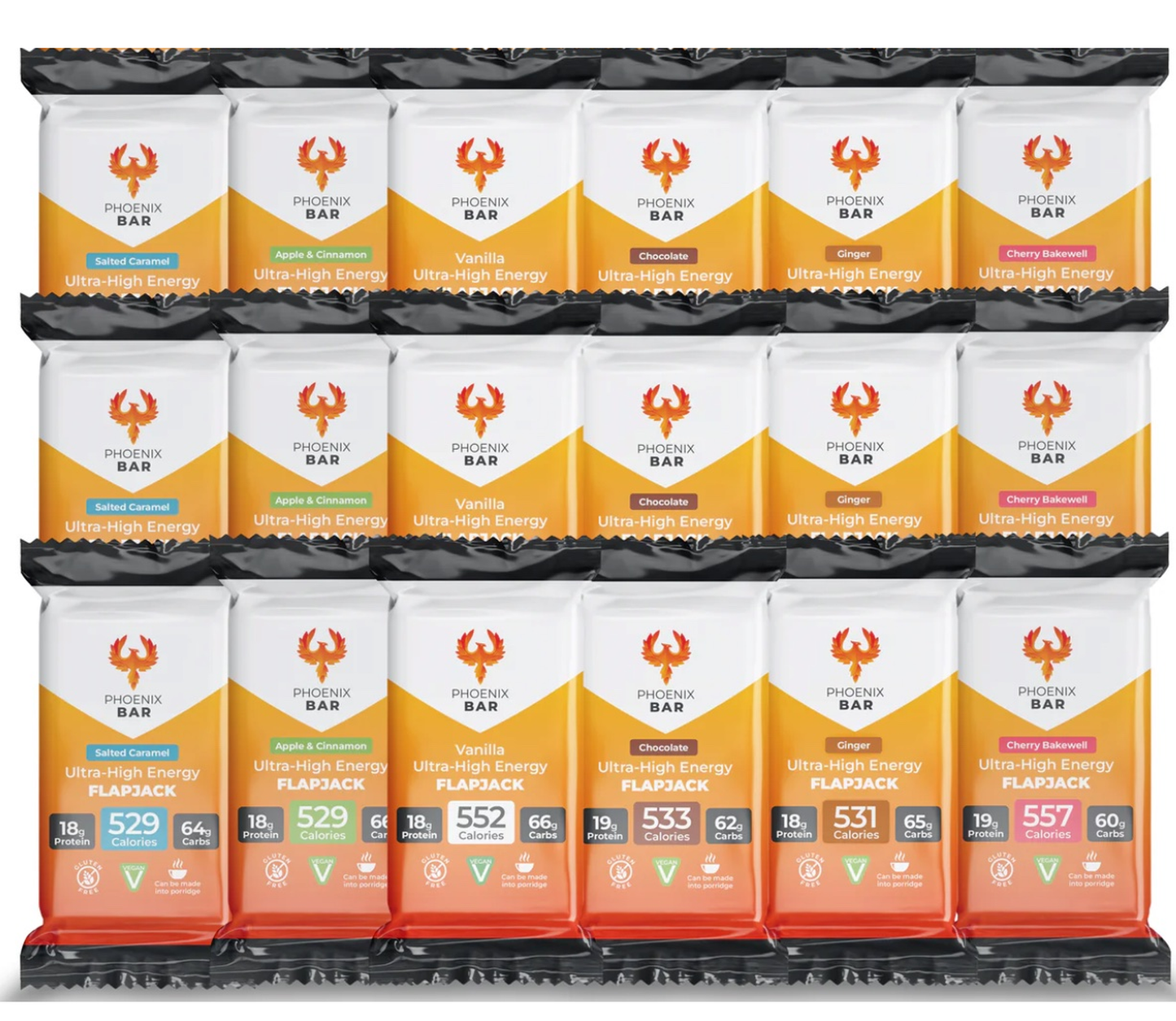
Phoenix Bars: Up to 557 Calories Per Bar
Soft, easy to eat whole or as a warm porridge. Low volume, two-year shelf life.
5. Night shifts and the offshore body clock
Offshore work runs 24 hours, so night shifts are routine, often on a swinging two-week rotation of twelve-hour shifts. The galley caters through the night, which is convenient but creates its own problem: heavy, calorie-dense meals eaten in the small hours.
The body processes food less efficiently overnight, so a large galley feed at 3am tends to sit badly, add weight, and disrupt the daytime sleep that follows. Lighter, steadier fuelling through the night usually works better than one heavy meal, and that is as true offshore as it is onshore. Our night shift nutrition guide goes into the timing in detail, and it is the most relevant companion to this page for anyone working nights on rotation.
6. What to keep in your bag
For the away-from-galley situations, the food that works offshore follows simple rules. It needs to be portable, need no preparation, survive being knocked around in a kit bag, and be eatable one-handed, sometimes in gloves and cold hands.
The reliable options are the dense, durable ones: nuts, dried fruit, oatcakes, flapjack and compact bars give plenty of energy for little weight and space. On a cold day on a turbine or deck, anything you can turn into a warm drink or meal with a flask of hot water does more for you than the same food eaten cold, which is where instant porridge and soup come in. Our calorie-dense foods guide, high calorie snacks guide and high calorie breakfast guide cover the options in more depth.
The point is not to carry a lot. It is to have one or two reliable things for the hours when the galley is not an option, then eat normally when you are back on the installation.
7. Where Phoenix Bars fit
Let me be straight, because the honest version is the only one worth giving here. If you work a galley-fed platform role with full access to the mess, you do not need our bars, and the industry's weight data says the opposite product would serve you better. We are not going to tell you otherwise.
Where a Phoenix Bar genuinely helps is the time away from the galley. For an offshore wind technician on the turbines all day, a deck or drilling crew committed to a long operation, or a vessel or survey crew on a smaller boat, it delivers up to 557 calories in a 120g package the size of a phone, so a couple of bars cover a missed meal in a kit bag that has no spare room. It needs no preparation, survives the bag, and can be eaten quickly between tasks. And because it can be made into a warm porridge with hot water, it suits the cold North Sea days when a hot bite matters more than the calories, which our how to use Phoenix Bars guide and high calorie porridge guide explain.
It is vegan and gluten-free, which is useful when the catering on a smaller vessel is limited and you want one option that always works, and it comes in six flavours, Apple and Cinnamon, Cherry Bakewell, Chocolate, Vanilla, Salted Caramel and Ginger, so it holds up over a long rotation. At £5.25 a bar it is a premium product, and what you are paying for is the density, the no-prep convenience and the warm option. A sensible way to try it across a trip is the starter bundle of 12 bars, or the essential and complete bundles to keep a kit bag stocked for a full rotation. You can see the range in the Phoenix Bars collection and the bundles collection.
8. Frequently asked questions
Is the food good on an offshore rig or platform?
Yes, generally very good and very plentiful. Most installations run a 24-hour galley with hearty, calorie-dense meals provided free, which is why weight gain, not under-eating, is the industry's main dietary concern. For galley-fed roles, the sensible focus is portion awareness rather than carrying extra food.
What do offshore wind technicians eat during the day?
Technicians eat packed food, because they are away from any galley for long stretches, taking lunch at the base of the turbine, in the transfer vessel, or in the nacelle. Portable, no-prep, calorie-dense food that survives a kit bag and can be eaten quickly between tasks works best, ideally with something warm from a flask in cold conditions.
Do offshore workers need to carry their own food?
On most platform roles, no, because the galley covers you. The exceptions are offshore wind technicians, deck and drilling crews tied up in long operations, and vessel or survey crews on smaller boats, who are away from full catering and benefit from carrying a snack or two for the gap.
How do you eat on a 12-hour offshore shift?
On a galley-served installation you eat at the galley around your shift, keeping night-time meals lighter. When your role takes you away from the galley for hours, carry portable food and graze through the demanding parts of the shift rather than going without, so you are not depleted for the transit or climb back.
What should you eat for a cold offshore day?
Favour energy-dense food and, where you can, something warm, because cold raises your energy demand and blunts appetite. A flask of hot water with instant porridge, soup or a broken-up bar lifts a cold day on a turbine or deck more than the same food eaten cold.
Are there vegan or gluten-free options offshore?
Larger installations usually cater for dietary needs, but smaller vessels and away-from-galley situations can be limited, so carrying a reliable vegan or gluten-free snack takes the uncertainty out of it. A vegan, gluten-free bar is a simple option that works wherever you are.
Related guides
Closest companions: our night shift nutrition guide for working nights on rotation, our military field nutrition and emergency services nutrition guides for other demanding occupational settings, and our rucking nutrition guide for load-carrying roles. If you mean offshore yacht racing rather than energy work, that is covered in our offshore sailing nutrition guide. For getting the most energy from the least weight, see our calorie-dense foods and high calorie snacksguides. This page sits within our wider ultra-endurance and expedition nutrition guide.


Flaming Phoenix



Contact Us
Widerruf erklären
Füllen Sie das folgende Formular aus, um Ihre Widerrufserklärung abzugeben.

