
Emergency Services Nutrition: How to Eat Well on Shift
The short version: the hardest part of eating well in the emergency services is not what to eat, it is whether you ever get the chance to eat it. Shift work scrambles your mealtimes, callouts interrupt food you have already prepared, and on a late shift the only options are often a vending machine or a drive-through. The practical answer is to stop relying on sit-down meals and build a stash of transportable, no-prep, calorie-dense food you can eat one-handed in the cab, the appliance or the back of the vehicle between jobs. The work itself can be extremely demanding, with firefighting in particular burning huge amounts of energy, so the goal is to graze steadily through a shift rather than gamble on one proper meal that may never happen. This guide covers the demands of each service and exactly how to keep yourself fuelled when the job will not let you stop.
About this guide
I am James Frost, founder of Flaming Phoenix. We make Phoenix Bars, a 120g vegan, gluten-free bar designed to deliver a lot of easily digested energy in a small package you can eat anywhere, which is the exact problem shift work in the emergency services creates. I am not a serving officer or a dietitian, so where this gets technical I draw on published research into occupational energy demands and shift-work eating. This guide sits alongside our military field nutrition and night shift nutrition guides. Last reviewed June 2026.
Key points
The biggest barrier to eating well on shift is timing, not food choice. Callouts and night shifts routinely wreck normal mealtimes, and food prepared in advance often goes uneaten.
Emergency work can be extremely physical. Firefighting on a hard shift can burn thousands of calories, and fire crews are studied as tactical athletes alongside soldiers and elite cyclists.
The advice given to hard-working crews is to graze, taking small amounts of food every couple of hours to keep energy and concentration steady, rather than relying on one large meal.
The food that works on shift is transportable, needs no preparation, survives a locker or kit bag, and can be eaten one-handed between jobs.
Night shifts need their own approach, because the body handles food less efficiently overnight.
Keep a stash in your locker, your vehicle and your pocket, so that when a meal break disappears, you still eat something.
Contents
The real nutrition problem in emergency services. How much energy the job demands. Fire and rescue. Police. Ambulance and paramedics. Search and rescue, mountain rescue and lifeboat crews. How to actually eat across a shift. Where Phoenix Bars fit. Frequently asked questions.
The real nutrition problem in emergency services
The core challenge is not knowing what to eat, it is getting the chance to eat it. Research into UK police officers found that the most common effect of shift work on diet was simply a loss of consistency in meal timing, with officers regularly sleeping through normal mealtimes and unable to hold any routine.
Even when food is prepared in advance, it often does not get eaten, because the on-the-go nature of the job interrupts any attempt at a proper meal. Long shifts and forced overtime leave little time or energy to cook between shifts, so food gets bought on duty instead.
The options on duty are frequently poor. With station canteens largely gone and few healthy choices available late at night, many crews fall back on vending machines, forecourts and fast food. The result is predictable: under-fuelling during the demanding parts of a shift, then over-eating convenience food when the chance finally comes.
Solving this is less about willpower and more about logistics. If you accept that sit-down meals will sometimes vanish, the fix is to always have transportable, no-prep food within reach, so a missed break does not have to mean a missed meal.
How much energy the job demands
Emergency work swings between long periods of readiness and sudden bursts of intense physical effort, and the effort end of that range is significant. Wildland firefighting is one of the most metabolically demanding jobs ever studied, with measured total daily energy expenditure ranging from roughly 2,950 to 6,260 calories a day, a figure that rivals soldiers in the field and Tour de France cyclists.
Structural firefighting carries its own load: working in heavy turnout gear, in extreme heat, hauling equipment and people, all in short maximal bursts. Police foot pursuits and restraint, paramedics lifting and carrying patients, and rescue crews working for hours on a hillside or at sea all sit at the demanding end too.
The guidance for hard-working fire crews is revealing. Rather than one big meal, the recommendation is to eat small amounts, in the region of 150 to 200 calories every couple of hours through a shift, to keep blood glucose and concentration steady, much like an ultra-endurance athlete. A long-standing recommendation is to take an energy bar between breakfast and lunch and another between lunch and the evening.
The studies also show a consistent pattern of under-eating relative to output during the hardest deployments, which is exactly the deficit that leaves people fatigued and slow to think late in a shift. For the everyday demands of a heavy, physical job, our calorie-dense foods guide and high calorie snacks guide cover the broader picture.
Fire and rescue
Firefighters are best understood as tactical athletes: long shifts, disrupted sleep, and unpredictable, maximal bursts of work in punishing conditions. The body is asked to go from standing to full output in minutes, and to keep functioning physically and mentally for hours once committed to an incident.
That makes steady fuelling between calls more important than a single perfect meal. Keeping easy energy on hand at the station, and something compact in a pocket or bag for a prolonged incident, helps avoid the slump that comes from a long job on an empty stomach. Crews who carry and haul heavy kit will also recognise the load-carriage demands covered in our rucking nutrition guide.
Because a shift can be quiet for hours then suddenly intense, the practical habit is to eat opportunistically: top up during the lulls so you are not starting a demanding job already depleted. A bar you can keep at the ready and eat in a couple of minutes, or turn into a quick porridge at the station, fits that pattern well.

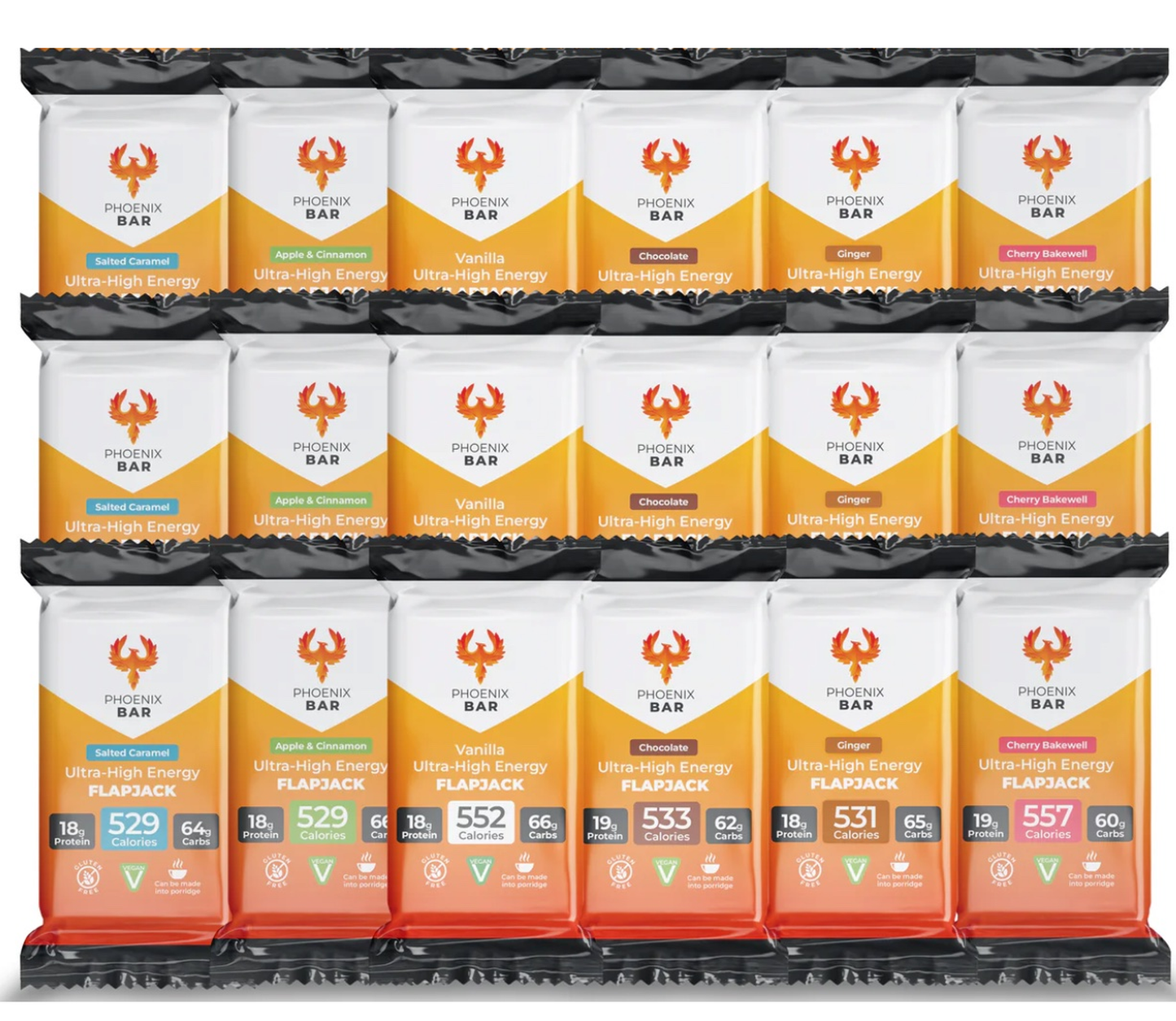
Phoenix Bars: Up to 557 Calories Per Bar
Soft, easy to eat whole or as a warm porridge. Low volume, two-year shelf life.
Police
For police officers, the defining nutritional problem is the one the UK research highlighted: meals that are planned but never happen. A response shift can turn on a single call, and a meal break can vanish or slip by hours, so any food that depends on sitting down to eat is unreliable.
The job also blends long sedentary periods with sudden, intense physical effort: a foot pursuit, a restraint, a search. Going into those moments under-fuelled, late in a shift, after sleeping through breakfast, is common and avoidable.
The realistic fix is a personal stash that does not need a canteen, a microwave or even a free hand for long. Something in the vest pocket, the locker and the vehicle means that when the break disappears, you still get fuel in. Night shifts add another layer, which our night shift nutrition guide covers in more depth.
Ambulance and paramedics
Ambulance crews face the meal-timing problem in its sharpest form, often going from job to job with breaks delayed or lost entirely across a twelve-hour shift. Research following new paramedics into rotating shift work has documented the diet and body-composition changes that come with it.
The physical demands are real and repetitive: lifting and carrying patients, manoeuvring equipment, working at awkward angles, often through the night. Combined with high stress and broken sleep, this is a recipe for skipping meals and then grabbing whatever is quickest.
What works is food that survives in the cab and can be eaten in the brief window between clearing one job and being assigned the next: no prep, no mess, one hand. Keeping a couple of options on the vehicle means a late or lost break does not leave you running on empty for the back half of a shift.
Search and rescue, mountain rescue and lifeboat crews
Search and rescue teams, mountain rescue, and lifeboat and coastguard crews sit at the most expedition-like end of the emergency services. Callouts can be long, cold, wet and physically arduous, often in remote terrain or at sea, with no chance to resupply once committed.
For these crews the priorities mirror expedition nutrition: compact, lightweight, high-energy food that can be carried in a pack and eaten on the move. A long hillside search or a sustained shout can run for many hours, and the cold itself raises energy demand, so carried calories matter more than usual.
This is the same problem our high-altitude and wild-camping guidance addresses, and the principles in our ultra-endurance and expedition nutrition guide carry straight across. A dense bar that can be eaten cold or made into a warm meal with hot water from a flask earns its place in a rescue pack.
How to actually eat across a shift
The single most useful habit is to graze rather than gamble on one meal. Take small amounts regularly through the shift, so your energy and concentration stay level and you are never relying on a break that might not come. This is the same logic that fire crews are taught and that ultra-endurance athletes live by.
Build a stash in three places: your locker, your vehicle or appliance, and your pocket or kit bag. Stock it with food that needs no preparation, does not spoil across a shift, survives being knocked about, and can be eaten one-handed. That is the difference between eating something and eating nothing on a bad night.
Treat night shifts as their own problem. The body processes food less efficiently overnight, so heavy meals in the small hours tend to sit badly and disrupt the sleep that follows. Lighter, steady fuelling through the night usually works better, and our night shift nutrition guide goes into the timing in detail.
Do not forget fluids. It is easy to under-drink across a busy shift, especially in turnout gear or body armour, and mild dehydration shows up as fatigue and poor concentration long before you feel thirsty.
Where Phoenix Bars fit
Phoenix Bars are built for exactly the constraint that defines this work: getting real energy in when you cannot stop for a meal. A bar needs no preparation, can be eaten one-handed in the cab or on an incident, survives a locker or kit bag, and delivers up to 557 calories in a compact package of only 120g the size of a phone, so two bars can cover a missed meal.
They are vegan and gluten-free, so the same product works across a watch or a crew without anyone needing a separate option, and they come in six flavours (Apple and Cinnamon, Cherry Bakewell, Chocolate, Vanilla, Salted Caramel and Ginger) so they do not get boring over a run of shifts. On a cold rescue or a quiet night at the station, a bar can also be made into a warm porridge with hot water, which our how to use Phoenix Bars guide explains.
The honest limits: a bar is fuel for the gaps, not a replacement for proper meals on your days off, and it will not undo a diet built on forecourt food. What it does is make sure that when the break disappears, you still eat. At £5.25 a bar it is a premium product, and what you are paying for is the energy density and the no-prep convenience that the job rewards.
A practical way to try them across a few shifts is the starter bundle of 12 bars, or the essential and complete bundles to keep a locker and a vehicle stocked. You can see the full range in the Phoenix Bars collection and the bundles collection.
Frequently asked questions
What should emergency services workers eat on shift? Eat transportable, no-prep, calorie-dense food in small amounts through the shift rather than relying on one meal break that may be interrupted. Good options include nuts, dried fruit, oatcakes, bananas and high-calorie bars, kept in your locker, vehicle and pocket so a missed break does not become a missed meal.
How many calories do emergency services jobs burn? It varies enormously by role and task, but the physical end is high: wildland firefighting has been measured at up to around 6,260 calories a day, rivalling soldiers and professional cyclists. Even away from that extreme, the mix of long shifts and sudden intense effort means under-eating is common, which is why steady fuelling matters.
How do you eat when you do not have time to stop? Keep a stash of food you can eat in two minutes with one hand, and graze during the quiet periods so you are topped up before the busy ones. The guidance given to fire crews is to take small amounts, around 150 to 200 calories, every couple of hours, rather than gambling on a single sit-down meal.
What is the best food to keep in your locker or vehicle? Choose food that needs no preparation, does not spoil over a long shift, survives being knocked around, and can be eaten one-handed: nuts, dried fruit, jerky, oatcakes and high-calorie bars all qualify. The point of a stash is that it is always there when a meal break is not.
How should night shift workers in the emergency services eat? Favour lighter, steady fuelling through the night rather than a heavy meal in the small hours, because the body handles food less efficiently overnight and large night-time meals can disrupt the sleep that follows. Our night shift nutrition guide covers the timing in detail.
Are there good vegan options for shift work? Yes: nuts, dried fruit, oatcakes, bananas, nut butter and plant-based high-calorie bars all travel well and need no preparation. A vegan, gluten-free bar is a simple way to keep one option that works for everyone on a crew with mixed dietary needs.
Related guides
Closest companions: our military field nutrition guide for tactical and field eating, our night shift nutrition guide for the shift-timing detail, and our rucking nutrition guide for load-carrying roles. For the broader picture see our calorie-dense foods and high calorie snacks guides, and the ultra-endurance and expedition nutrition guide this page sits within. If you are instead looking for home emergency food supplies, that is a different topic, covered in our emergency food preparedness guide.
Keep one in your locker, your vehicle and your pocket. Try the starter bundle of 12 bars, or stock up with the essentialand complete bundles. Up to 557 calories per bar, no prep, eat it anywhere.
Get the free shift-fuelling checklist. Enter your email and we will send a one-page guide to stocking your locker, vehicle and kit bag, plus our porridge method, so a lost meal break never leaves you running on empty.
Training a watch, a station or a team? Email me directly at jfrost@flaming-phoenix.co.uk. James Frost, founder, Flaming Phoenix.


Flaming Phoenix



Contact Us
Widerruf erklären
Füllen Sie das folgende Formular aus, um Ihre Widerrufserklärung abzugeben.

